When Did Your Business Stop Being Fun?

When Did Your Business Stop Being Fun?

There was a time when your business felt exciting.

Remember that?

The early days when every new customer felt like a win.

When every sale brought a sense of achievement.

When you couldn’t wait to tell people about your idea.

When your business represented freedom, possibility and opportunity.

Back then, the long hours didn’t seem to matter.

  • The challenges felt exciting.
  • The future looked full of potential.
  • You were building something.
  • Creating something.
  • Chasing something bigger.

But somewhere along the way, for many business owners, something changes.

The excitement starts to fade.

The pressure starts to grow.

The to-do list gets longer.

The responsibilities multiply.

And without even realising it, the business that once energised you starts to drain you.

The question is:

When did your business stop being fun?

It Doesn’t Happen Overnight

Very few business owners wake up one morning and suddenly decide they no longer enjoy their business.

It’s usually much more subtle than that.

A little more stress.

A few more responsibilities.

Another team member to manage.

More customer expectations.

More bills.

More administration.

More compliance.

More decisions.

More pressure.

Little by little, the business grows.

But so does the weight of running it.

Until one day you realise you’re spending more time solving problems than pursuing opportunities.

More time reacting than creating.

More time surviving than enjoying.

And that’s often the moment business starts feeling different.

The Dream Was Never About More Emails

Let’s be honest.

  • Nobody starts a business because they dream of spending their day buried in emails.
  • Nobody starts a business because they love chasing invoices.
  • Nobody starts a business because they enjoy dealing with staffing issues.
  • Nobody starts a business because they want to spend weekends catching up on paperwork.

Yet for many business owners, that’s exactly where they end up.

The business grows.

Complexity grows.

Administration grows.

Responsibilities grow.

And suddenly the business owner spends less time doing what they love and more time doing what the business demands.

The dream wasn’t supposed to look like this.

    Growth and enjoyment don't always increase together.
Unless you're intentional about building both.

    Success Can Create New Problems

    One of the biggest surprises in business is that growth doesn’t automatically make life easier.

    In fact, growth often introduces entirely new challenges.

    A larger customer base means more demands.

    A larger team means more leadership responsibilities.

    More revenue often means more moving parts.

    More complexity.

    More decisions.

    More pressure.

    This catches many business owners off guard.

    They achieve goals they once dreamed about and then wonder why they still feel exhausted.

    Why do they still feel overwhelmed?

    Why does the business still feel harder than it should?

    The answer is simple.

    Growth and enjoyment don’t always increase together.

    Unless you’re intentional about building both.

    The Trap of Becoming the Business

    Many small business owners start out wearing every hat:

    • Sales.
    • Marketing.
    • Operations.
    • Customer service.
    • Finance, and
    • Administration.

    It’s understandable.

    In the beginning, there may be nobody else.

    The challenge comes when the business continues to rely on the owner for everything.

    Every decision.

    Every approval.

    Every customer issues.

    Every problem.

    Every opportunity.

    The business becomes dependent on one person.

    And that person becomes trapped.

    What started as freedom slowly turns into obligation.

    Instead of owning a business, the business starts owning you.

    That’s a dangerous place to be.

    Not because the business is failing.

    But because the business can no longer function without your constant involvement.

    The Warning Signs

    Many business owners don’t realise they’ve reached this point until they see some of the warning signs.

    You might recognise a few of these:

    You check emails first thing in the morning and last thing at night.

    You struggle to switch off on weekends.

    You feel guilty taking holidays.

    You answer messages while you’re with family.

    You constantly think about work.

    You feel exhausted even after a day off.

    You find yourself saying things like:

    “If I don’t do it, it won’t get done properly.”

    Or:

    “It’s just easier if I do it myself.”

    Or:

    “I’ll deal with that later.”

    These aren’t signs of commitment.

    They’re often signs that the business has become too dependent on you.

    Why Fun Actually Matters

    Some people dismiss the idea of fun in business.

    They think business should be serious.

    Professional.

    Disciplined.

    Structured.

    And while all of those things have their place, enjoyment matters too.

    A lot.

    Because when business stops being enjoyable, several things start happening.

    Creativity declines.

    Energy declines.

    Motivation declines.

    Decision making suffers.

    Opportunities get missed.

    Burnout becomes more likely.

    The reality is that business owners perform better when they enjoy what they’re building.

    Not because it’s easy.

    But because it feels meaningful.

    When enjoyment disappears, business becomes something you endure rather than something you create.

    And that’s a very different experience.

      What Would Make Business More Enjoyable Again?

      This is one of my favourite questions to ask business owners.

      Not:

      “How do you grow?”

      Not:

      “How do you make more money?”

      But:

      “What would make your business more enjoyable?”

      Most business owners already know the real challenge isn't necessarily growth.
It's creating a business that feels sustainable.
A business that supports their life instead of consuming it.

      The answers are fascinating:

      • Some want more time.
      • Some want less stress.
      • Some want better systems.
      • Some want more clarity.
      • Some want a stronger team.
      • Some want to stop worrying about cash flow.
      • Some want to take a holiday without checking their phone every five minutes.

      What’s interesting is that very few people answer:

      “I need more customers.”

      Most business owners already know the real challenge isn’t necessarily growth.

      It’s creating a business that feels sustainable.

      A business that supports their life instead of consuming it.

      The Difference Between Building a Business and Building a Life

      At some point every business owner faces a choice.

      Will the business become the centre of their life?

      Or will the business support the life they want to create?

      They’re very different goals.

      One creates dependency.

      The other creates freedom.

      One creates constant pressure.

      The other creates options.

      One requires endless sacrifice.

      The other creates balance.

      The most successful business owners I’ve met understand this distinction.

      They don’t simply focus on building a bigger business.

      They focus on building a better business.

      One that creates profit.

      One that creates opportunities.

      One that creates freedom.

      One that allows them to enjoy the journey.

      Because what’s the point of building something successful if you never get to enjoy it?

      The Three Questions Worth Asking Yourself

      If business isn’t feeling as enjoyable as it once did, start with these three questions.

      1. What Am I Spending Too Much Time Doing?

      Look honestly at your week.

      What’s draining your energy?

      What’s consuming your time?

      What’s keeping you stuck in the weeds?

      Awareness is the first step.

      2. What Am I Avoiding?

      Sometimes the biggest frustrations come from problems we’ve been avoiding.

      A pricing issue.

      A staffing issue.

      A systems issue.

      A process issue.

      What conversation needs to happen?

      What decision needs to be made?

      3. What Would Make Business Feel Lighter?

      Not bigger.

      Not faster.

      Not more complicated.

      Lighter.

      What would create more breathing room?

      More confidence?

      More enjoyment?

      More freedom?

      The answer may be closer than you think.

      Business Was Never Meant to Be a Punishment

      Running a business will always involve challenges.

      That’s part of the journey.

      There will always be problems to solve.

      Decisions to make.

      Obstacles to overcome.

      But that doesn’t mean the journey should feel like a punishment.

      You didn’t start your business to become stressed, exhausted and overwhelmed.

      You started because you wanted something better:

      • More freedom.
      • More flexibility.
      • More opportunity.
      • More impact, and
      • More life.

      And perhaps that’s the reminder many business owners need.

      Success isn’t just about making more.

      It’s about keeping more.

      Keeping more time.

      Keeping more energy.

      Keeping more freedom.

      Keeping more enjoyment.

      Because at the end of the day, business should help you create a life you love.

      Not distract you from living it.

      Final Thoughts

      If your business isn’t feeling as fun as it once did, don’t ignore it.

      It’s often a sign that something needs attention.

      Not because you’re failing.

      Not because you’re doing anything wrong.

      But because growth changes things.

      Responsibilities change things.

      Life changes things.

      The goal isn’t to go backwards.

      The goal is to build a business that evolves with you.

      One that creates opportunity without consuming your life.

      One that gives you confidence instead of constant stress.

      One that allows you to make more, keep more and enjoy the ride.

      Ready to Find Out What’s Holding Your Business Back?

      The EDGE Business Health Check helps you uncover the hidden opportunities, blind spots and challenges inside your business.

      In less than 20 minutes, you’ll gain valuable insights across profitability, cash flow, growth, systems, leadership and CEO visibility.

      Because the more clarity you have, the easier it becomes to build a business that supports your goals and your lifestyle.

      Take The EDGE Business Health Check today and discover where your next opportunity is hiding.

      Take The EDGE Business Health Check today and discover where your next opportunity is hiding.

      #HowToResetMyMoneyMindset #NewYearFinancialMindset #HowToStartFreshWithMoney  emergency fund australia, money management, family savings #SmallBusinessOwner #BusinessGrowth #CashflowManagement #BusinessSuccess
      #EntrepreneurMindset
       

      Busy Is Not Profitable: 7 Financial Foundations Every Business Owner Needs

      Busy Is Not Profitable: 7 Financial Foundations Every Business Owner Needs

      There’s a big myth in small business that if you just work hard enough, everything will eventually click into place.

      Spoiler alert: hard work matters, but hard work without financial foundations can leave you exhausted, underpaid, and wondering why your business still feels so heavy.

      I see this all the time with small business owners, tradies, franchisees, coaches, and self-employed professionals.

      They are flat out. Clients are coming in. Invoices are going out. The calendar is packed.

      And yet… There is still stress. Still pressure. Still that sinking feeling of, “Why does it feel like I’m doing all this work and not getting ahead?”

      Here’s why:

      Because busy is not profitable. And being great at your trade or profession is not the same as having strong money systems.

      The good news? You do not need a finance degree to fix this. You just need the right foundations.

      Here are seven of the most important ones.

      1. A cashflow system that tells the truth

      Cashflow is not something you check when you are already in trouble.
      It is something you build so you can stay out of trouble.

      A good cashflow system shows you:

      • what is coming in
      • what is going out
      • what bills are approaching
      • what is available to spend
      • what needs to be set aside for tax, super, wages, and future costs

      Cashflow gives you visibility. Visibility gives you control.

      2. Clear separation between personal and business money

      Using your personal account like a business overdraft creates confusion fast.

      It becomes harder to track spending, harder to know what the business is really earning, and harder to make clean decisions.

      Separating business and personal finances is one of the fastest ways to reduce chaos.
      It is not about being fancy. It is about being clear.

      3. Pricing that actually protects your profit

      So many business owners price from fear.

      Fear of losing the sale.
      Fear of seeming too expensive.
      Fear of being judged.

      But underpricing does not make you more professional. It makes your business more fragile.

      Your pricing needs to cover more than the job in front of you. It needs to reflect overheads, admin time, tax obligations, profit goals, and the actual value you deliver.

      Pricing with confidence is not greedy.
      It is responsible.

      4. A plan to pay yourself properly

      Using your personal account like a business overdraft creates confusion fast.

      It becomes harder to track spending, harder to know what the business is really earning, and harder to make clean decisions.

      Separating business and personal finances is one of the fastest ways to reduce chaos.
      It is not about being fancy. It is about being clear.

      5. Weekly and monthly money rhythms

      You do not need to stare at your numbers every day.
      But you do need a rhythm.

      That might include:

      • checking cashflow weekly
      • reviewing key reports monthly
      • monitoring expenses and margins
      • tracking unpaid invoices
      • spotting small issues before they turn into big ones

      Confidence with numbers is built through repetition, not perfection.

      6. Knowing your numbers without drowning in them

      You do not need to obsess over every metric.
      You do need to know the numbers that matter.

      Think:

      • revenue
      • gross profit
      • operating expenses
      • net profit
      • cash position
      • debt levels
      • wage costs
      • tax set-asides

      The goal is not more complexity.
      The goal is better decisions.

      When you know what your numbers are saying, you stop making emotional decisions and start making strategic ones.

      7. A business structure that can handle growth

      Growth is exciting, but if your systems are messy, it can magnify every weakness.

      That is why foundations matter before scaling.

      You want business systems that support:

      • clear accounts setup
      • simple automations
      • better reporting
      • cleaner budgeting
      • stronger decision-making
      • less burnout

      Strong structure makes growth feel possible instead of painful.

      Business foundations create freedom

      Why this matters right now

      The business landscape is not getting easier.
      Costs are rising. Margins can be tight. Pressure builds quickly when you do not have clarity.

      That is exactly why now is the time to stop relying on memory, hope, and hustle alone.

      The strongest business owners are not always the loudest or busiest.
      They are the ones who know their numbers, trust their systems, and make decisions early.

      Foundations Create freedom

      Let’s make this simple. When your financial foundations are solid, you get:

      • less panic
      • less avoidance
      • less confusion
      • better decisions
      • stronger profit
      • more confidence
      • more breathing room

      And honestly? More enjoyment.

      Because business should not feel like one long financial mystery.

        A business structure will help you handle growth

        Your invitation to stop winging it

        If you know your foundations need work, you are not alone.
        And you do not have to figure it all out the hard way.

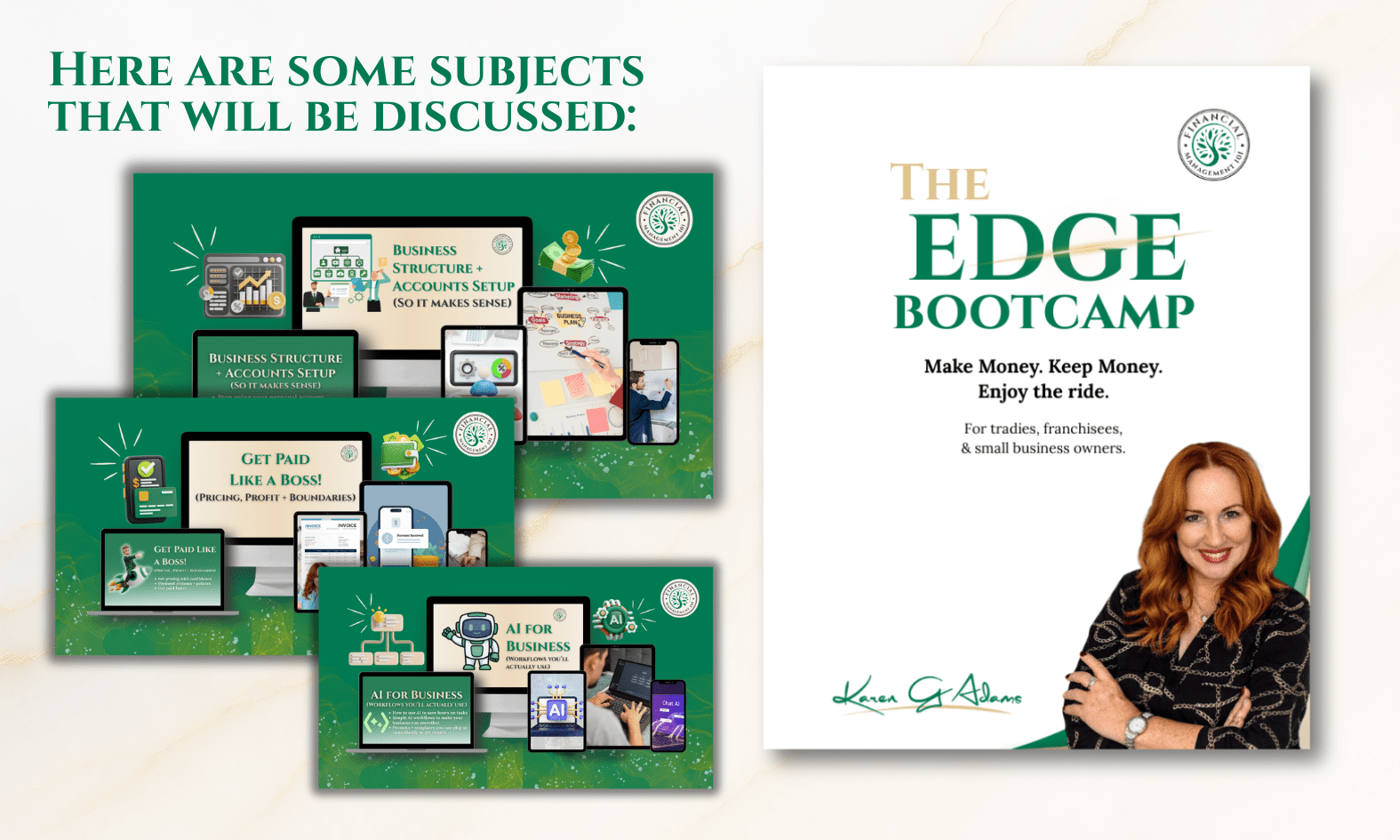
        That is exactly what The Edge Bootcamp is designed to help you do.

        Over two practical, high-impact days, we dig into the real foundations of profitable business: money systems, CEO mindset, cashflow, paying yourself, pricing, budgets, business setup, reading your numbers, leadership, growth stages, and more.

        This is for business owners who want results, not just motivation.

        Join The Edge Bootcamp in May and give your business the foundations it needs to make money, keep money, and enjoy the ride.

        Because being flat out is not the goal.
        Building a business that works for you is.

        Join The Edge Bootcamp

        #HowToResetMyMoneyMindset #WhyDoIFeelOutOfControlWithMoney #HowToFeelInControlOfFinances #ResetMoneyMindset2025 #NewYearFinancialMindset #HowToStartFreshWithMoney  emergency fund australia, money management, family savings 


        Budgeting Without the Boring: The Money Map Method That Actually Works

        Budgeting Without the Boring: The Money Map Method That Actually Works

        Let’s be honest for a second. The word “budget” has the same vibe as:

        • “We need to talk…”
        • “Your call is being transferred…”
        • “Please see the attached invoice…”

        It makes people tense. Defensive. Slightly sweaty. 😅

        And here’s the irony: most people don’t hate having a plan. They hate the way budgeting has been sold to them – like it’s punishment for daring to enjoy life.

        So today, I’m giving you a different approach.

        Not a strict budget.
        Not a spreadsheet that needs a PhD to operate.
        Not a system that makes you feel like you have to track every piece of gum you’ve ever purchased.

        This is Money Mapping – the method I use with clients who want to feel in control, not controlled.

        Because your money doesn’t need a prison.

        It needs a plan. A plan that fits your actual life. Not the version of you who meal preps on Sundays and never impulse buys at Kmart.

        (If that version of you exists, I’d like to meet her. She sounds organised and slightly intimidating.)

        Why Traditional Budgets Fail (and why it’s not your fault)

        Most budgets fail for three reasons:

        1) They’re too restrictive

        People try to cut everything at once: coffees, fun, birthdays, little treats, takeaway, holidays… and then wonder why they rebound like a rubber band.

        If a budget feels like suffering, you won’t stick to it.
        Your brain will treat it like a threat.
        And humans don’t do “threat” long-term.

        2) They’re too complicated

        Forty-seven categories. Daily tracking. Constant adjustments.
        You miss one thing and suddenly you feel like you’ve “failed.”

        A budget that requires constant maintenance becomes another job.
        And nobody needs a second job that doesn’t pay.

        3) They’re built on guilt, not goals

        Many budgets are basically: “Stop spending money on things that make you happy.”

        No thanks.

        Money mapping works because it’s:

        • simple
        • flexible
        • based on priorities
        • designed for consistency, not perfection

        What is a Money Map?

        A Money Map is a simple plan that tells your money where to go before life grabs it.

        It answers these questions:

        1. What must be paid? (essentials + bills)
        2. What matters to you? (your priorities)
        3. What are we building? (savings, emergency fund, investing, debt reduction)
        4. How do we keep your life enjoyable while still making progress? (yes, fun stays)

        A money map is not about tracking every dollar.
        It’s about creating a flow.

        And when your money flows with intention, financial stress drops fast

        A Money Map is a simple plan that tells your money where to go before life grabs it.

        The Big Mindset Shift: A Budget Isn’t Restriction – It’s Permission

        I want you to reframe this:

        A budget isn’t a list of things you can’t do.
        It’s a permission slip that says:

        ✅ “Yes, you can spend money on what you love.”
        ✅ “Yes, you can have fun.”
        ✅ “Yes, you can enjoy your life.”
        and also
        ✅ “Yes, you can build wealth and feel safe.”

        That’s the goal: enjoying today while protecting tomorrow.

        The Money Map Framework (Simple, Powerful, Real-Life Friendly)

        Here’s the structure I recommend. It’s clean and easy:

        Category 1: Essentials (Must Pays)

        These are the costs of keeping your life running:

        • mortgage/rent
        • utilities
        • groceries
        • fuel/transport
        • insurance
        • minimum debt repayments
        • childcare/school essentials
        • basic medical

        These are your “keep the lights on” expenses.

        Category 2: Future You (Your Financial Muscle)

        This is where you build safety and wealth:

        • emergency fund
        • sinking funds (car rego, Christmas, school costs, rates, holidays)
        • extra debt repayments
        • investing/super top-ups (where appropriate)

        Future You deserves funding. Not “whatever’s left.”

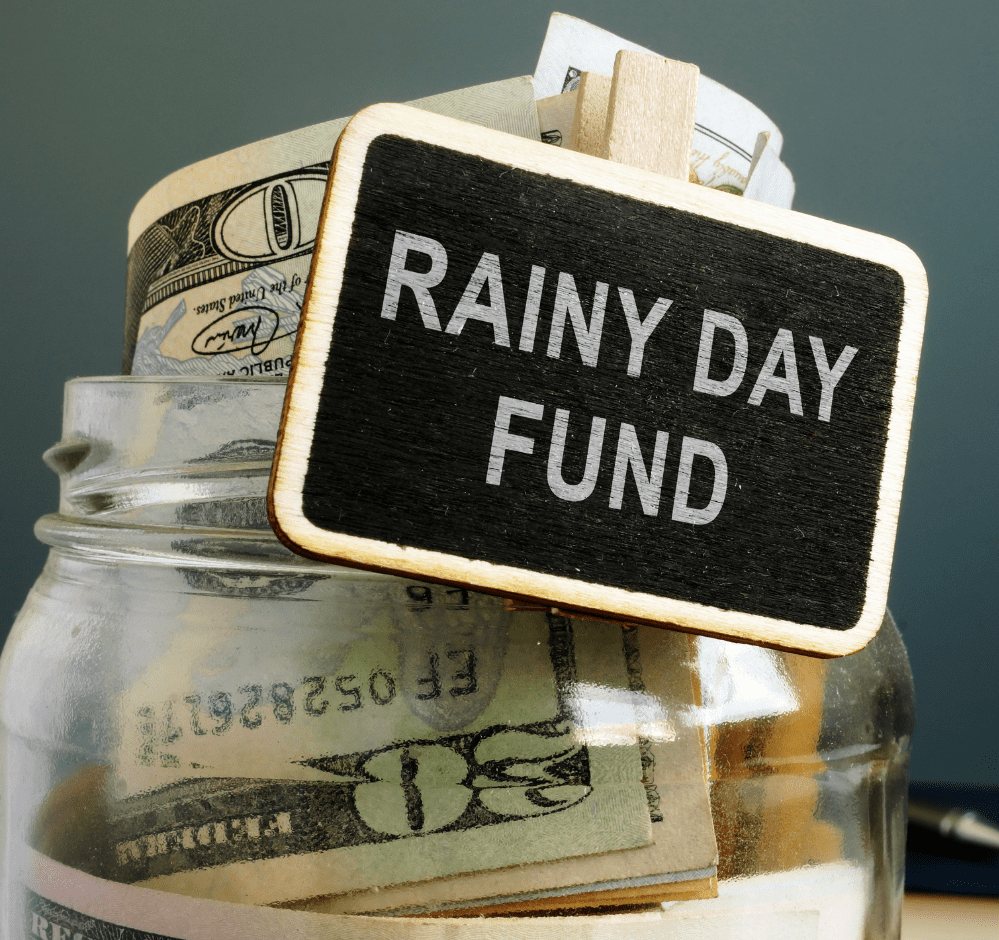
        Rainy Day Fund or Emergency Fund

        Category 3: Fun & Freedom (Guilt-Free Spending)

        This is the category that keeps you sane:

        • coffees
        • dinners out
        • entertainment
        • hobbies
        • shopping (within reason, Karen… within reason 😄)
        • little treats

        The reason most budgets fail is because this category is either missing or unrealistically small.

        We’re not doing that here.

        Step-by-Step: How to Build Your Money Map in Under an Hour

        Grab a pen, notes app, or whatever you use when you’re feeling productive for five minutes.

        Step 1: Find your baseline numbers

        Look at the last 4–8 weeks of spending (not because we love pain, but because data helps).

        Write down:

        • total income (after tax)
        • total essentials
        • average weekly spending (groceries, fuel, eating out, shopping)
        • debt minimums
        • any annual bills that sneak up (rego, insurance, school, rates)

        You’re not judging. You’re observing.

        Step 2: Choose your “Money Map style”

        There are two main styles:

        1. A) Weekly Flow Map (best for people paid weekly/fortnightly)
        • Allocate money each pay into Essentials / Future You / Fun
        1. B) Monthly Map (best for salaried monthly pay)
        • Set amounts for each category and automate them

        If you’ve tried budgeting before and it didn’t stick, weekly is usually easier because it gives faster feedback.

        Step 3: Set up separate accounts (this is where the magic happens)

        I’m going to say this lovingly:

        If all your money sits in one account, your brain will treat it like it’s all available.
        That’s not a discipline problem. That’s a human brain problem.

        A simple setup is:

        1. Bills account (Essentials)
        2. Spending account (groceries/fuel/fun)
        3. Future You account (emergency + sinking funds)

        Automation is your best friend. Because you’re busy.
        And your money system should run even when you’re tired.

        Step 4: Decide your “non-negotiables”

        These are your priorities — the things you want your money to reflect.

        Examples:

        • “I want to stop feeling anxious about bills.”
        • “I want an emergency fund.”
        • “I want to pay off this debt.”
        • “I want to travel without putting it on a credit card.”
        • “I want to stop fighting with my partner about money.”

        Your money map should support your real goals — not someone else’s idea of financial success.

        Step 5: Allocate your numbers (start simple)

        Here’s a starting point many people can relate to:

        • Essentials: 60–75%
        • Future You: 10–20% (even 5% is a start if money is tight)
        • Fun & Freedom: 10–20%

        If your essentials are currently higher than 75% — you’re not alone. Cost of living has been doing the most.

        This is where strategy matters: we might need to reduce leaks, renegotiate bills, or adjust the debt plan to create breathing room.

        Step 6: Create one weekly “Money Date” (10 minutes)

        Once a week:

        • check what’s coming out
        • check what’s coming in
        • make sure bills are covered
        • adjust your spending category if needed

        No drama. No self-lectures. Just a quick check-in.

        Think of it like brushing your teeth. You don’t do it once and call it done forever.

        The “I Hate Tracking” Version: The 3-Number Method

        If you’re someone who rebels against tracking (I see you), do this instead:

        Pick three numbers each week:

        1. Your weekly spending limit (food + fuel + fun)
        2. Your weekly Future You transfer
        3. Your “buffer amount” you want to keep in your spending account

        Then the rule is simple:
        When spending hits the limit… you stop spending until next week.
        No guilt. Just boundaries.

        This is the system many of my clients love because it’s:

        • quick
        • clear
        • low-maintenance
        • effective

        Money Map in Real Life: What This Looks Like (Example)

        Let’s say your household brings in $2,500 a week after tax.

        You might map it like this:

        • $1,700 Essentials (bills, groceries, fuel, minimum debt)
        • $400 Future You (emergency fund + sinking funds + extra debt)
        • $400 Fun & Freedom (eating out, treats, spending money)

        Then you automate:

        • $1,700 goes straight into Bills account
        • $400 into Future You account
        • $400 stays in Spending account

        Now you’re not trying to “budget” daily.
        You’re simply spending from the right place.

        And when your Spending account runs low, it gives you a clear signal:
        “That’s it for this week.”

        No spreadsheet required.

        What If There’s Not Enough Money to Map?

        This is the part where I get very real with you:

        If you feel like there’s never enough, it doesn’t mean you’re failing.
        It means your map needs to include leak-plugging and breathing space first.

        Here’s what I do with clients when money is tight:

        1. tighten obvious leaks (subscriptions, lazy renewals, bank fees)
        2. build a tiny emergency buffer (even $500 can change your stress levels)
        3. stabilise bills and reduce panic spending
        4. create sinking funds for predictable expenses
        5. then build momentum

        You don’t jump from stressed to thriving in one week.
        But you can absolutely move from chaos to calm with the right steps.

        The Most Important Part: Your Money Map Must Match Your Personality

        Some people need structure.
        Some need flexibility.
        Some need boundaries.
        Some need permission.

        So here are a few personality-based tweaks:

        If you’re an overspender:

        • reduce “available money” in your spending account
        • use separate “fun” cash or a dedicated card
        • increase automation

        If you’re an underspender/anxious saver:

        • allocate guilt-free fun money and actually spend it
        • focus on safety targets (emergency fund)
        • build confidence with small consistent steps

        If you’re a “set and forget” person:

        • automate everything
        • schedule the weekly money check-in
        • keep categories very simple

        If you’re a couple/family:

        • do a shared Money Map + personal spending allowances
        • agree on the weekly “household number”
        • remove judgement from the conversation

        Money mapping isn’t one-size-fits-all.
        It’s “your life, your values, your plan.”

        If You Want This to Stick, Join the Membership

        Now, if you’re reading this thinking:

        “Okay… this makes sense. But I need help setting it up properly.” or “I’ve tried before and I fall off the wagon.” or “I want a system that actually fits my life.”

        That’s exactly what my Membership is for.

        Because here’s the truth:

        Most people don’t need more information. They need support, structure, and someone to keep them consistent.

        Inside the Membership, we don’t just talk about budgeting. We:
        ✅ build your personal Money Map (based on your real numbers)
        ✅ set up accounts and automation so it runs without willpower
        ✅ create sinking funds so life stops surprising you
        ✅ learn how to manage spending without guilt
        ✅ build financial muscle with ongoing guidance and community

        You’re not meant to do this alone.

        If you’re ready to stop winging it and start feeling calm and in control, join the Membership.
        Let’s build your Money Map together — and get your financial house in order the smart way.

        budgeting without spreadsheets, simple budget method, cash flow planning, how to budget in Australia, reduce financial stress, personal finance tips, money management system, budgeting for beginners, weekly money check-in, sinking funds, financial management 101, Karen G Adams, financial coaching


        Why Do Most People Fail at Their New Year’s Resolutions and How Can I Actually Stick to My Financial Goals This Year?

        Why Do Most People Fail at Their New Year’s Resolutions and How Can I Actually Stick to My Financial Goals This Year?

        New Year, Same Resolutions? Let’s Talk About It.

        Ahhh January the month of green smoothies, gym selfies, and freshly purchased planners that are definitely going to change your life this time, right?

        If you’re like most people, you’ve probably made a few New Year’s resolutions that sounded amazing on January 1st… but by February? They’re long forgotten, buried under Uber Eats receipts and good intentions.

        And when it comes to money goals? Ohhh, this is where the guilt hits hard.

        So let’s break it down: Why do New Year’s resolutions fail and what can you do instead to actually stick to your financial goals this year?

        Spoiler: It’s not about willpower. It’s about building financial muscle and that’s what I help people do every day.

        The Stats Don’t Lie – Most Resolutions Don’t Last

        According to research:

        • 43% of people expect to fail their resolutions by February
        • Only 9% actually feel successful by the end of the year
        • The most common failed resolutions? Diet, fitness… and yes — money

        Why? Because most resolutions are made in the heat of a moment – not rooted in a system, a strategy, or support.

        We say things like:

        • “I’m going to save $5,000 this year!”
        • “I’m cutting up ALL my credit cards!”
        • “I’ll never spend money on takeout again!”

        …but we don’t have a real plan behind it. Just hope, hype, and maybe a pretty notebook.

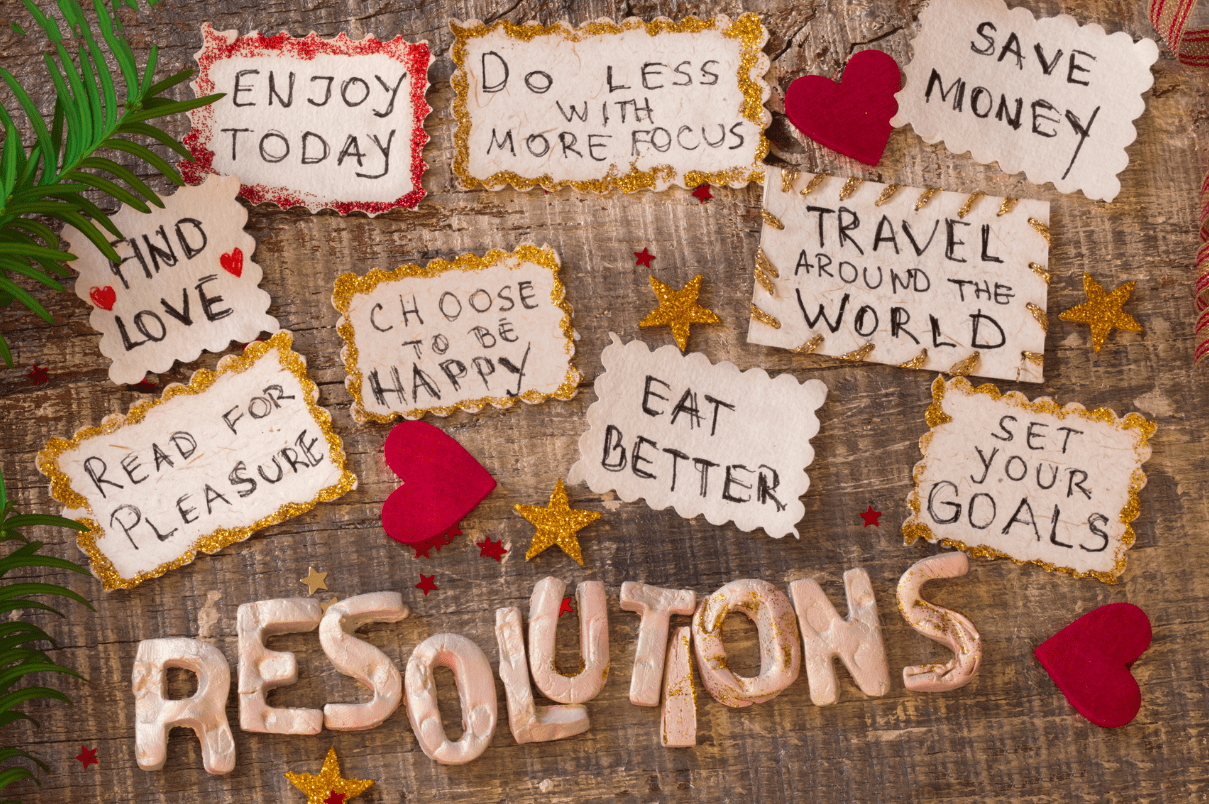
        New Year’s Resolutions

        Why Financial Resolutions Fail: The Real Talk

        Here’s what I’ve seen in my coaching practice over and over:

        1. The goal is too vague.
          “Get better with money” isn’t a goal – it’s a wish. Your brain doesn’t know what to do with that.
        2. There’s no timeline.
          Saving “someday” or “this year” doesn’t create urgency or clarity.
        3. You try to do too much, too fast.
          Going from zero to “never spending a dollar unless it’s pre-budgeted” is like deciding to run a marathon when you haven’t walked around the block in months.
        4. No accountability.
          When you’re the only one who knows your goals… it’s easy to quit. Life gets busy, bills pile up, and suddenly, your “big resolution” is a tab you closed weeks ago.
        5. Shame gets in the way.
          One slip-up, and your inner critic screams, “See?! You always mess this up!” And so you give up again.

        Sound familiar?

        So What Actually Works? (This Is Where It Gets Fun)

        Instead of setting rigid resolutions, try this instead:

        ✅ Set Clear Financial Intentions – Not Punishments

        Financial intentions focus on who you want to become and how you want to feel – not just what you want to do.

        For example:

        • “I want to feel peaceful when I check my bank account.”
        • “I want to be someone who saves consistently.”
        • “I want to feel proud of my money decisions.”

        From there, we build small, tangible goals that align with that intention. That’s the sweet spot.

        ✅ Build Micro Goals That Stack Into Momentum

        Instead of “Save $5,000 this year,” try:

        • “Transfer $100 every payday to my savings account.”
        • “Do 1 no-spend weekend per month.”
        • “Track my spending daily for 30 days.”

        These small actions feel doable and when done consistently, they change everything.

        ✅ Have a System – Not Just a Goal

        Anyone can write a goal. But what’s your system to get there?

        Here’s a basic system I teach inside my Financial Muscle Coaching:

        1. Weekly money check-ins (10 minutes)
        2. Monthly budget reviews
        3. Track 1 habit at a time (like spending or debt payments)
        4. Celebrate progress every month.

        Have a Money Budgeting System

        Systems create structure and structure creates success. Don’t wait – join the membership now and start living your best life from today.

        Join Financial Muscle Coaching Now

        #WhyDoResolutionsFail #HowToStickToFinancialGoals #WhyCantIKeepNewYearGoals #NewYearMoneyResolutionHelp #HowToMakeMoneyGoalsThatLast #MoneyGoalsNotResolutions #HowToStayMotivatedWithMoney #BreakTheCycleWithMoney #SmartFinancialGoals2025 #BuildBetterMoneyHabits #NewYearsResolutionFail #MoneyGoals2025 #FinancialGoalsThatStick #BudgetGoals #MoneyHabits #ResolutionReset #MoneyCoaching #FinancialMuscle #GoalSettingTips #SmartMoneyMoves