Nobody Warns You About This Part of Business Ownership (And It’s Not Cash Flow)

Nobody Warns You About This Part of Business Ownership (And It’s Not Cash Flow)

When people talk about running a business, they usually talk about the exciting stuff:

  • The freedom.
  • The flexibility.
  • The ability to be your own boss, and
  • The opportunity to build wealth and create a life on your terms.

Scroll through social media and you’ll see plenty of business owners talking about growth, success, scaling, marketing, and revenue.

You’ll see photos of awards, new clients, packed events, business milestones and smiling faces.

What you don’t often see is what happens behind the scenes;

  • The pressure.
  • The responsibility.
  • The sleepless nights.
  • The moments of doubt, and
  • The weight that comes with being the person everyone depends on.

Because nobody really warns you about this part of business ownership.

And yet, for many small business owners, it’s the hardest part.

The Weight Nobody Sees

When you start a business, you’re usually driven by a dream…..

  • Maybe you wanted more freedom.
  • Maybe you wanted to escape the corporate world.
  • Maybe you wanted to create something meaningful, or
  • Maybe you simply wanted to provide a better future for your family.

What many people don’t realise is that owning a business isn’t just a job.

It’s a responsibility.

A responsibility that often follows you home.

You don’t simply clock off at 5pm.

You don’t leave your worries at the office.

You don’t hand difficult decisions to someone else.

You carry them. Every single day.

  • You carry the responsibility of paying wages.
  • You carry the responsibility of keeping customers happy.
  • You carry the responsibility of generating income.
  • You carry the responsibility of solving problems, and 
  • You carry the responsibility of making decisions that impact your team, your family and your future.

And while many people see the business owner as the person with freedom, the reality is that many business owners quietly carry a burden that few people truly understand.

The Lonely Side of Leadership

One of the things I hear most often from business owners is this:

“I feel like I’m carrying everything.”

Not because they aren’t capable.

Not because they’re failing.

But because leadership can be lonely.

  • Your staff come to you with problems. 
  • Your customers come to you with questions.
  • Your suppliers come to you with issues.
  • Your accountant wants information.
  • The tax office wants payments.
  • Your family wants your time, and
  • Somewhere in the middle of all that, you’re expected to keep moving the business forward.

Many business owners become the problem solver for everyone else while having very few people they can lean on themselves.

That’s not a weakness. That’s reality.

The challenge is that over time, carrying everything can become exhausting.

Not physically.

Mentally.

Emotionally.

And that’s where many business owners begin to lose the spark they once had.

The Pressure to Have All the Answers

There seems to be an unspoken belief that business owners should always know what they’re doing.

Always have a plan.

Always have the answer.

Always appear confident.

The truth?

Most business owners are figuring things out as they go.

They are making decisions based on the information they have at the time.

  • They are adapting.
  • Learning.
  • Adjusting, and
  • Growing.

Just like everyone else.

The difference is that they often feel they can’t admit uncertainty because everyone is looking to them for direction.

This creates enormous pressure.

  • Pressure to appear confident.
  • Pressure to stay positive.
  • Pressure to keep going even when they’re tired, and
  • Pressure to make the right decision every single time.

But here’s something important to remember:

  • You do not need to have all the answers.
  • You simply need to keep asking better questions.

Many business owners become the problem solver for everyone else while having very few people they can lean on themselves.

Success Doesn’t Eliminate Pressure

Many people assume that once a business reaches a certain level, things become easier.

That once revenue grows, the pressure disappears.

That once the business is successful, the worries vanish.

Unfortunately, that’s rarely how it works.

Growth often creates new challenges.

  • More customers.
  • More staff.
  • More systems.
  • More decisions.
  • More complexity, and
  • More responsibility.

The business may become larger, but the need for leadership grows right alongside it.

This is why some business owners reach revenue goals they once dreamed about and still feel stressed.

Still feel overwhelmed.

Still wonder if they’re doing enough.

Success does not automatically create peace of mind.

Clarity does.

The Hidden Cost of Constant Decision Making

Business owners make hundreds of decisions every week.

  • Some small.
  • Some significant.
  • What should we charge?
  • Should we hire?
  • Can we afford another team member?
  • Should we invest in marketing?
  • Is this client worth keeping?
  • Should we expand?
  • Should we change direction?
  • Should we say yes?
  • Should we say no?

Every decision consumes energy.

Every decision requires attention.

Every decision carries consequences.

Over time, decision fatigue becomes very real.

This is often why business owners feel mentally exhausted even when they haven’t done physically demanding work.

Their brain has been making decisions all day.

Every day.

Week after week.

Month after month.

Year after year.

Without realising it, many business owners become mentally overloaded.

And when that happens, even simple decisions start to feel difficult.

The Business Starts Running You

Most people start a business seeking freedom.

Yet many eventually find themselves trapped by the very thing they created.

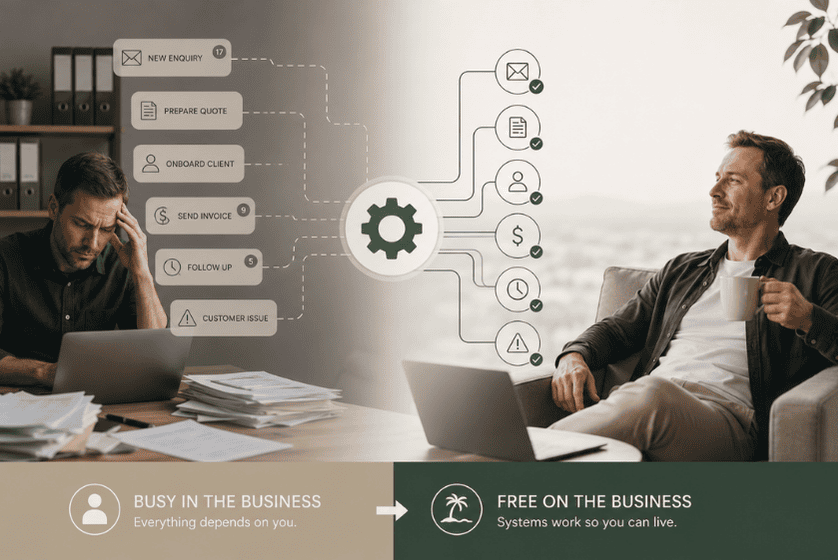
The business becomes dependent on them.

Every question comes to them.

Every approval comes to them.

Every problem comes to them.

Every decision comes to them.

The result?

The business cannot move without them.

Vacations become difficult.

Time off feels impossible.

Weekends become catch-up days.

And the business owner slowly becomes an employee in their own business.

Not because they’re doing anything wrong.

But because systems, visibility and structure haven’t kept pace with growth.

This happens more often than people realise.

And it doesn’t happen overnight.

It happens one small decision at a time.

Why Business Owners Need More Than Motivation

The business world loves motivation.

  • Inspirational quotes.
  • Motivational videos.
  • Success stories.

And while motivation has its place, it isn’t enough.

Because motivation doesn’t solve uncertainty.

Motivation doesn’t provide clarity.

Motivation doesn’t help you make better business decisions.

Business owners don’t need more hype.

They need better information.

They need visibility.

They need confidence in the decisions they’re making.

They need to understand what’s really happening inside their business.

Not what they think is happening.

Not what they hope is happening.

What’s actually happening.

Because when you can see clearly, decision making becomes easier.

  • Confidence increases.
  • Stress decreases.
  • Momentum improves.

The Businesses That Thrive Aren’t Necessarily the Smartest

This might surprise you. The businesses that thrive are not always run by the smartest people.

They’re often run by the people who have the clearest view of what’s going on.

They know what matters.

They know where to focus.

They know what’s working.

They know what isn’t.

They know where their biggest opportunities exist.

And they know where they’re leaking time, money and energy.

That level of visibility changes everything.

Because when you know where to look, you stop guessing.

And when you stop guessing, you start making better decisions.

The businesses that thrive are not always run by the smartest people.
They're often run by the people who have the clearest view of what's going on.

You Were Never Meant to Carry It Alone

One of the biggest myths in business is that successful people do everything themselves.

They don’t.

Successful business owners build support around them.

  • They seek advice.
  • They use systems.
  • They use data.
  • They use frameworks, and
  • They surround themselves with people who help them see what they cannot see themselves.

Business ownership should not feel like a solo sport.

You shouldn’t have to carry every challenge on your own.

You shouldn’t have to guess your way through important decisions.

You shouldn’t have to wonder whether you’re focusing on the right things.

The right support doesn’t remove responsibility.

But it can make the journey significantly easier.

Final Thoughts

If you’ve ever felt overwhelmed by the responsibility of running a business, you’re not alone.

If you’ve ever questioned whether you’re doing enough, you’re not alone.

If you’ve ever felt like you’re carrying the weight of the business on your shoulders, you’re definitely not alone.

The truth is that many business owners experience these feelings.

They just don’t often talk about them.

The good news?

You don’t need to work harder.

You don’t need to carry more.

You don’t need to have all the answers.

You simply need greater clarity about what’s happening inside your business so you can make better decisions with confidence.

Because business ownership shouldn’t just be about surviving.

It should be about building a business that supports your life, not consumes it.

Ready to See What’s Really Going On Inside Your Business?

The first step is understanding where your business is today.

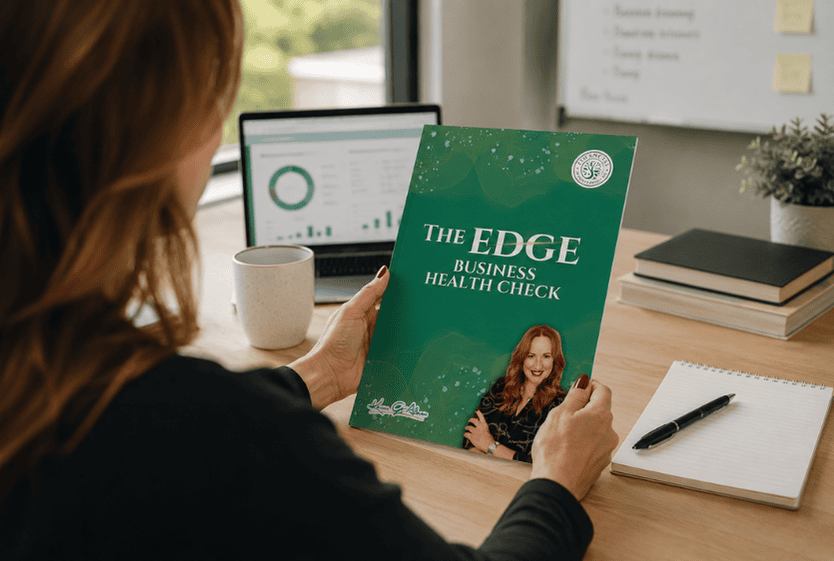
THE EDGE Business Health Check helps you uncover what’s working, what’s holding you back, and where your biggest opportunities for growth exist.

In less than 20 minutes, you’ll gain valuable insights into the health of your business across profitability, cash flow, growth, systems, leadership and CEO visibility.

Because the clearer the picture, the better the decisions.

And better decisions lead to a better business.

Take THE EDGE Business Health Check today and discover where your next opportunity is hiding.

THE EDGE BUSINESS HEALTH CHECK

#HowToResetMyMoneyMindset #NewYearFinancialMindset #HowToStartFreshWithMoney  emergency fund australia, money management, family savings #SmallBusinessOwner #BusinessGrowth #CashflowManagement #BusinessSuccess
#EntrepreneurMindset

 

Small Business Burnout: Why Exhausted Business Owners Are Struggling to Grow

Small Business Burnout: Why Exhausted Business Owners Are Struggling to Grow

The Hidden Cost of Stress, Overwork and Financial Pressure on Small Business Success

There’s a conversation many small business owners are quietly having behind closed doors right now.

A conversation about exhaustion. Not just physical exhaustion.

Mental exhaustion. Emotional exhaustion. Financial exhaustion.

The kind of exhaustion that comes from constantly carrying the weight of everything.

The pressure to make money. The pressure to keep the business going. The pressure to pay staff. The pressure to find customers. The pressure to stay positive. The pressure to hold it all together.

And for many business owners, it’s becoming overwhelming. From the outside, the business may still appear successful.

The social media posts continue. The clients still come through the door. The business still looks “busy.”

But internally? Many business owners are running on empty. And honestly, this is becoming one of the biggest hidden crises in small business today. Because burnout is no longer just a personal issue. It’s a business issue.

Burnout Has Become Normalised in Business Culture

Somewhere along the way, business owners were taught that exhaustion was simply part of success.

Long hours became something to brag about. Being “flat out” became normal. Skipping holidays became expected. Sacrificing health, sleep, relationships, and peace became almost celebrated in entrepreneurial culture.

But here’s the truth. Burnout is not a badge of honour. It’s a warning sign.

And many small business owners have ignored those warning signs for far too long. They push through exhaustion. Push through stress. Push through overwhelm. Push through anxiety.

Until eventually, the pressure starts affecting everything:

  • decision-making
  • leadership
  • relationships
  • confidence
  • health
  • Motivation, and
  • Business performance itself

Because exhausted people do not lead powerfully. And businesses often reflect the energy of the person leading them.

Your nervous system affects your business performance.

The Emotional Weight Small Business Owners Carry

One of the hardest parts of being a business owner is the invisible pressure. Employees go home and switch off. Business owners often don’t.

Even when they’re technically not working, their mind rarely stops. They think about:

  • cashflow
  • bills
  • staff
  • customers
  • marketing
  • debt
  • tax
  • competition
  • growth
  • uncertainty

The mental load becomes constant. And during difficult economic periods, that pressure intensifies.

Many business owners silently carry fear around:

  • losing everything
  • not making enough money
  • disappointing their family
  • letting employees down
  • failing publicly
  • or not being able to sustain the business long term

But most don’t openly talk about it.

Instead, they keep showing up. Keep smiling. Keep pushing through. Even when they’re exhausted. And this is why burnout can become so dangerous.

Because many business owners don’t realise how depleted they’ve become until their health, relationships, motivation, or business performance begins suffering significantly.

Burnout Impacts Business Performance

This is the part many people underestimate. Burnout is not just emotional. It directly impacts business results.

When business owners are constantly stressed and overwhelmed, they often:

  • make reactive decisions
  • lose focus
  • struggle with creativity
  • avoid important tasks
  • procrastinate
  • become emotionally drained
  • and operate from survival mode instead of strategy

Over time, this affects profitability, leadership, communication, customer experience, and growth.

Because stress changes how people think. It narrows the perspective. It increases emotional decision-making. And it keeps business owners trapped in constant firefighting mode.

This is why many business owners feel like they’re working harder than ever while making less progress. Their nervous system is overloaded. And overloaded leaders struggle to build sustainable businesses.

The Nervous System and Business Success

This is a conversation more business owners need to understand. Your nervous system affects your business performance.

When your body is constantly operating in stress mode, your brain focuses primarily on survival. Not creativity. Not innovation. Not long-term strategy.

Survival.

And many business owners have unknowingly spent years operating from chronic stress. That constant pressure eventually impacts:

  • sleep
  • concentration
  • confidence
  • patience
  • emotional regulation
  • energy, and
  • Physical health

Which then impacts business performance. Because business growth requires capacity. Capacity to think clearly. Capacity to lead. Capacity to make decisions. Capacity to handle uncertainty. And when your nervous system is constantly overloaded, that capacity shrinks.

This is one of the reasons so many business owners feel emotionally exhausted right now. They’ve been carrying unsustainable pressure for too long.

Working Harder Is No Longer the Solution

For years, many business owners responded to stress by simply working harder. More hours. More sacrifice. More pushing.

But eventually, that approach stops working. Because there comes a point where more effort no longer creates better outcomes.

It simply creates deeper exhaustion. And many business owners are reaching that point now. The old hustle model is breaking.

Business owners are starting to realise that constant stress is not sustainable leadership. The businesses that thrive moving forward will not be the businesses destroying themselves through burnout. They’ll be the businesses building smarter systems, stronger foundations, healthier leadership habits, and more sustainable growth models.

Because sustainable success requires sustainability from the owner too.

The Identity Trap Many Business Owners Fall Into

Another major reason burnout happens is because many business owners tie their identity entirely to their business.

The business becomes:

  • their self-worth
  • their validation
  • their financial security
  • their identity
  • their proof of success

So when the business struggles, they feel like they’re struggling personally. This creates enormous emotional pressure. Especially for high-achieving business owners who are used to being strong, capable, and successful.

Many feel they cannot slow down. Cannot ask for help. Cannot admit they’re overwhelmed. So they keep carrying everything alone. 

But leadership does not mean self-destruction. And strength is not pretending everything is fine while quietly burning out behind the scenes.

Real leadership includes self-awareness. It includes boundaries. It includes recognising when the current way of operating is no longer sustainable.

Small Business Owners Need Better Systems – Not More Sacrifice

One of the biggest shifts happening right now is that business owners are beginning to realise they don’t necessarily need to work harder.

They need: 

  • Better systems
  • Better visibility
  • Better structure.
  • Better delegation.
  • Better financial clarity.
  • Better support.
  • Better leadership habits.

Because many business owners are not failing due to lack of effort.

They’re exhausted from carrying too much manually. Too much mentally. Too much emotionally. Too much operationally.

This is where systems become powerful. Systems reduce chaos. Systems reduce decision fatigue. Systems create structure. And structure creates breathing room.

The businesses that thrive over the next decade will not rely entirely on exhausted owners holding everything together through sheer force of will.

They’ll rely on smarter foundations.

Boundaries Are a Business Strategy

This is another mindset shift many business owners need to hear.

Boundaries are not weakness. Boundaries are leadership.

Protecting your energy is not selfish. It’s strategic.

Because if the business owner burns out completely, the business often suffers too. This is why high-performing leaders learn how to:

  • protect their time
  • protect their energy
  • simplify decisions
  • prioritise recovery
  • create routines
  • delegate effectively
  • and avoid unnecessary chaos

Not because they’re lazy. But because clarity and energy are business assets. 

The calmer the leader, the clearer the decisions. And clear decisions create stronger businesses.

Success Should Not Cost You Your Health 

This is perhaps one of the most important conversations of all. Success without health is not real success.

Neither is:

  • wealth without peace
  • revenue without freedom
  • growth without happiness
  • or achievement without fulfilment

Yet many business owners have built businesses that consume every part of their life. And eventually they reach a point where they quietly ask themselves:

“What’s the point of all this if I’m miserable?”

That question matters. Because the goal of business was never supposed to be constant suffering.

The goal was to create opportunity. Freedom. Impact. Growth. A better life. Not endless exhaustion.

The Future Belongs to Sustainable Leaders

The business world is changing. And one of the biggest shifts happening right now is that business owners are redefining success.

Success is no longer simply about working the longest hours. It’s about sustainability. It’s about building businesses that:

  • generate profit
  • support wellbeing
  • create freedom
  • and allow owners to actually enjoy their life

The future belongs to business owners who understand:

  • leadership
  • emotional resilience
  • systems
  • financial clarity
  • boundaries
  • energy management
  • and sustainable growth

Because business performance and personal wellbeing are deeply connected. And perhaps the biggest shift of all is realising this:

Your business should support your life – not consume it.

The Future Belongs to Sustainable Leaders

You Don’t Need to Burn Yourself Out to Succeed

If you’re feeling exhausted right now, you’re not alone. Many business owners are navigating enormous pressure behind the scenes. But burnout should not become your normal.

You do not need to sacrifice your health, peace, relationships, or happiness to build a successful business. In fact, some of the strongest businesses are built by leaders who learn how to:

  • simplify
  • create systems
  • protect their energy
  • lead strategically
  • and build sustainably

Because long-term success is not built through constant exhaustion. It’s built through clarity. Leadership. Intentionality. And businesses designed to support both profit and wellbeing.

The goal was never just to survive business ownership.

The goal was to create a business and a life you genuinely enjoy living.

Ready to Stop Surviving and Start Leading?

This FREE Business Performance Audit™ will help you uncover:
💰 Hidden money leaks
💰 Profit and cashflow gaps
💰 CEO bottlenecks
💰 Outdated systems slowing growth
💰 Operational inefficiencies
💰 Decision-making blind spots
💰 Leadership pressure points, and
💰 AI opportunities that could save time and increase performance.

In just a few minutes, you’ll gain powerful insight into what may really be slowing down your business growth, profitability, and peace of mind.

Take the FREE Business Performance Audit™ and start identifying the hidden gaps holding your business back.

Membership - FM101

#HowToResetMyMoneyMindset #NewYearFinancialMindset #HowToStartFreshWithMoney  emergency fund australia, money management, family savings #SmallBusinessOwner #BusinessGrowth #CashflowManagement #BusinessSuccess
#EntrepreneurMindset

 

The Silent Killer of Small Business Growth: What Your Numbers Are Trying to Tell You

The Silent Killer of Small Business Growth: What Your Numbers Are Trying to Tell You

Why Business Owners Who Don’t Understand Their Numbers Stay Stuck, Stressed and Financially Reactive

Most small business owners know their sales.

Very few truly know their business.

And that might sound harsh, but it’s one of the biggest reasons so many businesses struggle to grow profitably.

Because being busy is not the same as being financially healthy.

And turnover is not the same as business success.

Right now, thousands of small business owners across Australia are making decisions every single day without fully understanding what their business numbers are actually trying to tell them.

They’re:

  • pricing based on guesswork
  • hiring too early
  • underpaying themselves
  • overspending in the wrong areas
  • relying on inconsistent cashflow
  • and operating without real financial visibility

Then they wonder why growth feels hard…. Why stress keeps increasing… Why revenue keeps going up… but there’s still never enough money left over.

The truth is, many businesses don’t fail because the owner lacks passion or work ethic. They fail because the owner is financially blind.

Most Business Owners Were Never Taught How to Read a Business Properly

This is one of the biggest gaps in small business education.

Most people start businesses because they’re good at something.

They’re good tradespeople.
Good creatives.
Good consultants.
Good service providers.
Good operators.

But nobody teaches them how to actually interpret the financial behaviour of a business.

So many owners spend years:

  • looking at their bank balance
  • hoping sales improve
  • chasing more customers
  • reacting to bills
  • and trying to “work it out as they go”

without ever properly understanding:

  • profitability
  • margins
  • cashflow timing
  • operational costs
  • pricing structure
  • forecasting
  • or financial performance indicators

That creates dangerous blind spots. Because when you don’t understand your numbers, your business starts running you emotionally instead of strategically.

Your Bank Account Is Lying to You

This is one of the biggest mistakes small business owners make.

They judge the health of the business purely by what’s sitting in the bank account.

But the bank account never tells the full story.

Money sitting in the account today may already belong to:

  • GST
  • tax
  • suppliers
  • wages
  • superannuation
  • software subscriptions
  • loan repayments
  • or future expenses

Which means many owners believe they’re doing better financially than they actually are.

Until suddenly:

  • BAS arrives
  • tax is due
  • equipment breaks
  • a quiet month hits
  • or unexpected expenses appear

Then panic sets in.

This is why true business visibility matters so much. Because reactive business owners constantly operate from surprise.

Strategic business owners operate from preparation.

important aspects of business finances

Revenue Can Hide Serious Business Problems

One of the most dangerous things in business is high revenue with poor visibility. Why?

Because revenue can disguise:

  • poor profit margins
  • overspending
  • inefficient systems
  • pricing issues
  • operational waste
  • staffing problems
  • and cashflow leaks

I’ve seen businesses generating impressive turnover while the owner is still financially stressed every single month.

Why?

Because more sales do not automatically solve financial problems.

In fact, sometimes growth magnifies broken systems.

If pricing is wrong, more sales can actually increase pressure.

If margins are weak, growth can increase exhaustion without increasing profitability.

If systems are poor, growth creates chaos.

This is why understanding the quality of revenue matters just as much as the quantity.

The Most Dangerous Phrase in Business

    One of the most dangerous phrases a business owner can say is: “I think we’re doing okay.”

    Think? Or know?

    Successful business owners don’t rely purely on assumptions.

    They use visibility.

    Because assumptions create risk.

    Visibility creates control.

    The strongest businesses know:

    • where profit is generated
    • what services perform best
    • where cashflow pressure exists
    • what expenses are excessive
    • how much the business truly costs to operate
    • and what financial patterns are emerging

    That level of clarity changes decision-making completely.

    The 5 Biggest Financial Blind Spots in Small Business

      1. Underpricing

      Many business owners are significantly undercharging without realising it. Why?

      Because they price emotionally instead of strategically.

      They fear losing customers.
      They compare themselves to competitors.
      They undervalue their expertise.

      But when pricing doesn’t properly account for:

      • overheads
      • wages
      • time
      • tax
      • growth
      • and profit

      The business becomes financially fragile.

      Underpricing creates exhaustion because owners must work harder simply to survive.

      2. Poor Cashflow Visibility

      Cashflow problems are one of the biggest causes of stress in small businesses.

      Yet many owners still don’t forecast cashflow properly.

      They react month-to-month instead of planning proactively.

      That creates constant uncertainty.

      And uncertainty destroys confidence.

      3. Not Understanding Margins

      Not all sales are equal.

      Some products, services, or clients may consume enormous amounts of time while generating very little actual profit.

      Without understanding margins, many owners stay busy but financially stuck.

      4. Emotional Spending

      Many business owners spend emotionally during growth periods.

      They upgrade software.
      Hire too quickly.
      Spend heavily on marketing.
      Purchase unnecessary tools.

      Then quieter periods arrive and financial pressure increases.

      Visibility creates discipline.

      5. Lack of Financial Reporting Rhythm

      Many owners only look at numbers when something goes wrong.

      That’s reactive leadership.

      Strong businesses create regular financial visibility rhythms:

      • weekly reviews
      • monthly reporting
      • dashboard tracking
      • forecasting
      • performance analysis

      Because what gets measured gets improved.

      Financial Visibility Reduces Stress

        1. Underpricing

        Many business owners are significantly undercharging without realising it. Why?

        Because they price emotionally instead of strategically.

        They fear losing customers.
        They compare themselves to competitors.
        They undervalue their expertise.

        But when pricing doesn’t properly account for:

        • overheads
        • wages
        • time
        • tax
        • growth
        • and profit

        The business becomes financially fragile.

        Underpricing creates exhaustion because owners must work harder simply to survive.

        2. Poor Cashflow Visibility

        Cashflow problems are one of the biggest causes of stress in small businesses.

        Yet many owners still don’t forecast cashflow properly.

        They react month-to-month instead of planning proactively.

        That creates constant uncertainty.

        And uncertainty destroys confidence.

        3. Not Understanding Margins

        Not all sales are equal.

        Some products, services, or clients may consume enormous amounts of time while generating very little actual profit.

        Without understanding margins, many owners stay busy but financially stuck.

        4. Emotional Spending

        Many business owners spend emotionally during growth periods.

        They upgrade software.
        Hire too quickly.
        Spend heavily on marketing.
        Purchase unnecessary tools.

        Then quieter periods arrive and financial pressure increases.

        Visibility creates discipline.

        5. Lack of Financial Reporting Rhythm

        Many owners only look at numbers when something goes wrong.

        That’s reactive leadership.

        Strong businesses create regular financial visibility rhythms:

        • weekly reviews
        • monthly reporting
        • dashboard tracking
        • forecasting
        • performance analysis

        Because what gets measured gets improved.

        Financial Visibility Reduces Stress

        One of the most powerful transformations I see in business owners is the moment they finally understand their numbers clearly.

        You can literally feel the shift.

        They stop operating from panic.

        They stop catastrophising.

        They stop guessing.

        And instead, they begin making calmer, smarter, more strategic decisions.

        Because clarity creates confidence.

        When you know:

        • your cashflow position
        • your break-even point
        • your profitability
        • your expenses
        • your opportunities

        You stop fearing the unknown.

        And that changes how you lead entirely.

        Modern Businesses Need Modern Visibility

        Business today moves fast.

        Owners can no longer afford to operate blindly.

        The businesses growing successfully today are leveraging:

        • dashboards
        • reporting systems
        • AI tools
        • automation
        • forecasting
        • and real-time visibility

        Not because they’re obsessed with spreadsheets. But because visibility creates agility. And agility matters in uncertain economies.

        Business owners who understand their numbers adapt faster.
        Make decisions faster.
        Solve problems faster.
        And grow with far more confidence.

        Your Numbers Tell the Truth

        At the end of the day, your numbers are always telling a story.

        They reveal:

        • strengths
        • weaknesses
        • opportunities
        • inefficiencies
        • growth patterns
        • and pressure points

        The question is whether business owners are willing to listen.

        Because financial blindness doesn’t just slow business growth. It creates emotional exhaustion. It creates stress. It creates reactive leadership.

        But financial visibility? That creates power.

        Power to make better decisions.
        Power to lead strategically.
        Power to grow sustainably.
        Power to stop surviving and start building intentionally.

        And perhaps that’s the real shift small business owners need right now.

        Not more hustle. Not more guessing. More visibility. More clarity. More financial intelligence.

        Because businesses grow strongest when owners can finally see clearly what’s really happening underneath the surface.

        Gain powerful insight into what may really be slowing down your business growth, profitability, and peace of mind. Because once you can SEE what’s broken… you can finally fix it.

        Get the FREE Business Performance Audit™ and start identifying the hidden gaps holding your business back.

        Membership - FM101

        #HowToResetMyMoneyMindset #WhyDoIFeelOutOfControlWithMoney #HowToFeelInControlOfFinances #ResetMoneyMindset2025 #NewYearFinancialMindset #HowToStartFreshWithMoney  emergency fund australia, money management, family savings 


        Why Small Business Owners Are Working Harder Than Ever — But Making Less Profit

        Why Small Business Owners Are Working Harder Than Ever — But Making Less Profit

        The Shift Every Business Owner Must Understand to Survive and Thrive in Today’s Economy

        There was a time when hard work almost guaranteed success in business.

        If you stayed committed, put in the hours, sacrificed weekends, pushed through exhaustion, and gave your business everything you had, eventually the rewards would come.

        At least that’s what many small business owners were taught to believe.

        But today?

        Things feel very different.

        Across Australia, many small business owners are working harder than ever before, yet they’re feeling more stressed, overwhelmed, and financially stretched than they did years ago.

        They’re putting in longer hours.

        Taking fewer breaks.

        Carrying more responsibility.

        Worrying more about cashflow.

        And despite all the effort… many still feel like they’re not truly getting ahead.

        If that sounds familiar, you’re not alone.

        Right now, thousands of business owners are quietly asking themselves the same question:

        “Why does it feel like I’m working harder than ever… but making less profit?”

        The answer is confronting but important.

        The old way of doing business no longer works in today’s economy.

        And the businesses that will thrive over the next decade will not necessarily be the businesses working the hardest.

        They’ll be the businesses operating the smartest.

        That’s a massive shift.

        Because many business owners were conditioned to believe that success comes purely from hustle.

        Work harder.
        Push harder.
        Do more.
        Sacrifice more.

        But in today’s world, hard work without systems, visibility, strategy, and leadership often leads straight to burnout.

        And burnout is becoming one of the biggest silent killers of small business success.

        The Hidden Trap Many Business Owners Fall Into

        One of the biggest issues I see with small business owners is that they unknowingly create businesses that rely entirely on them to survive.

        They become:

        • the salesperson
        • the marketer
        • the customer service team
        • the accounts department
        • the operations manager
        • the problem solver
        • the social media manager
        • the decision maker

        Every problem flows through them.

        Every question lands on their desk.

        Every fire becomes theirs to put out.

        At first, this level of involvement feels normal.

        In the early stages of business, most owners wear multiple hats because they have to.

        But the problem is many businesses never evolve beyond this stage.

        Instead of building scalable businesses, owners end up creating stressful jobs for themselves.

        And over time, the pressure becomes exhausting.

        The scary part?

        Many business owners start believing this level of stress is simply “part of business.”

        But it shouldn’t be.

        Because while hustle may build a business initially, hustle alone rarely sustains long-term success.

        Across Australia, many small business owners are working harder than ever before, yet they’re feeling more stressed, overwhelmed, and financially stretched than they did years ago.

        Exhaustion Is Not a Business Strategy

        Somewhere along the way, burnout became glorified in business culture.

        Working 12-hour days became something to brag about.

        Skipping holidays became normal.

        Being “busy” became a badge of honour.

        But exhausted people do not make powerful business decisions.

        When business owners are constantly stressed and overwhelmed, they often begin operating emotionally instead of strategically.

        They react instead of lead.

        They focus on urgent problems instead of important ones.

        They become trapped inside the daily chaos of the business instead of building a business designed for growth.

        And eventually, the cracks begin to show.

        Relationships suffer.
        Health suffers.
        Energy drops.
        Decision-making weakens.
        Creativity disappears.
        And often… profitability suffers too.

        Because here’s the truth many people don’t want to admit:

        You cannot scale chaos.

        Revenue Does Not Equal Profit

        One of the biggest misconceptions in business is believing that high turnover automatically means success.

        It doesn’t.

        There are businesses turning over hundreds of thousands, even millions, of dollars that are still struggling financially behind the scenes.

        Why?

        Because revenue and profit are two very different things.

        Turnover is not profit.

        Profit is not cashflow.

        And cashflow is not personal wealth.

        This is where many business owners get caught.

        From the outside, the business may appear successful.

        The branding looks great.
        Customers are coming through the door.
        Sales are happening.

        But internally, the owner is stressed, overwhelmed, and wondering where all the money keeps disappearing to.

        And honestly?

        This creates enormous emotional pressure for business owners.

        Because when the numbers don’t make sense, uncertainty grows.

        And uncertainty creates stress.

        Why Financial Visibility Changes Everything

        One of the most powerful things a business owner can have is visibility.

        Not complicated spreadsheets.

        Not confusing accounting jargon.

        Real visibility.

        Understanding:

        • where your money is going
        • what’s actually profitable
        • what products or services are underperforming
        • where cashflow leaks are happening
        • what your numbers are really telling you

        Because numbers tell stories.

        They reveal habits.
        Patterns.
        Blind spots.
        Strengths.
        Weaknesses.
        Opportunities.

        And when business owners truly understand their numbers, something powerful happens.

        Confidence returns.

        Decision-making improves.

        Stress reduces.

        Growth becomes more strategic instead of reactive.

        But many owners avoid looking deeply at their numbers because they feel confronting.

        So instead, they rely on gut instinct.

        They check the bank account balance instead of understanding the bigger financial picture.

        And while instinct matters in business, instinct without data can become dangerous.

        The businesses thriving right now are the ones combining intuition with visibility.

        Because when you can clearly see what’s happening in your business, you stop operating from fear.

        You start operating from clarity.

        The Business World Has Changed

        Another reason hard work alone is no longer enough is because business itself has changed dramatically.

        Consumers have changed.

        Technology has changed.

        Marketing has changed.

        Attention spans have changed.

        And artificial intelligence is now reshaping industries faster than many business owners realise.

        Yet many businesses are still operating using outdated systems and outdated models.

        This creates a dangerous gap between effort and results.

        Some owners are working incredibly hard… but inefficiently.

        They’re manually doing tasks technology could streamline.

        They’re overwhelmed by admin.

        They’re spending hours creating content.

        They’re reacting to problems all day instead of building systems that reduce problems.

        And as a result, they stay trapped in operational overwhelm.

        The future belongs to business owners who learn how to combine human leadership with smart systems and modern technology.

        This doesn’t mean removing the personal side of business.

        In fact, human connection matters more than ever.

        But it does mean removing unnecessary friction.

        It means creating efficiency.

        It means building businesses that don’t completely rely on the owner being “on” 24/7.

        The Shift From Operator to CEO

        This is one of the most important transformations a business owner can make.

        The shift from operator to CEO.

        Operators stay trapped in the daily chaos.

        CEOs create systems.

        Operators react emotionally.

        CEOs make strategic decisions.

        Operators focus purely on revenue.

        CEOs focus on profitability and sustainability.

        Operators stay busy.

        CEOs stay intentional.

        This shift changes everything.

        Because the goal of business ownership should not be constant exhaustion.

        The goal should be building a business that creates freedom, opportunity, and long-term sustainability.

        But that requires leadership.

        It requires visibility.

        And it requires the willingness to evolve.

        The Businesses That Will Thrive in the Future

        The businesses that will thrive over the next decade are not necessarily the biggest businesses.

        They are the businesses willing to adapt.

        The businesses are willing to modernise.

        The businesses willing to embrace:

        • financial clarity
        • leadership
        • systems
        • automation
        • smarter decision-making
        • visibility
        • sustainable growth

        The future small business owner needs more than technical skills.

        They need:

        • emotional resilience
        • financial intelligence
        • strategic thinking
        • leadership capability
        • adaptability
        • communication skills
        • modern business systems

        Because business growth is no longer just about effort.

        It’s about alignment.

        Alignment between:

        • strategy
        • systems
        • leadership
        • financial visibility
        • personal wellbeing
        • and sustainable growth

        Success is building a business that supports your life.

        Your Business Should Support Your Life – Not Consume It

        This is the conversation more business owners need to start having.

        Because too many owners are trapped inside businesses that are draining them emotionally, mentally, physically, and financially.

        And that’s not success.

        Success is building a business that supports your life.

        A business that creates opportunity.

        A business that allows you to grow financially without destroying your health or relationships in the process.

        A business that gives you freedom instead of constant anxiety.

        And perhaps the biggest shift of all is this:

        The goal was never just to work harder.

        The goal was always to build better.

        To build smarter.

        To build more intentionally.

        To create stronger systems.

        To understand your numbers properly.

        To lead with clarity instead of chaos.

        And to create a business that actually works for you – instead of one that constantly burns you out.

        Because the businesses that thrive in this new era will not be the businesses grinding themselves into the ground.

        They’ll be the businesses willing to evolve.

        The businesses willing to simplify.

        The businesses willing to lead differently.

        And the business owners who understand that shift will create something far more powerful than just revenue.

        They’ll create sustainability.

        Freedom.

        Profitability.

        And a business and life – they genuinely enjoy.

        Ready to Stop Surviving and Start Leading?

        If you’re tired of feeling overwhelmed, financially stretched, or stuck working harder without seeing the results you deserve, maybe it’s time to stop asking:

        “How can I work harder?”

        And start asking:

        “How can I build smarter?”

        Because sometimes the biggest breakthrough in business doesn’t come from doing more.

        It comes from finally doing things differently.

        Take the FREE Business Performance Audit™ and uncover what’s really slowing your business down.

        Membership - FM101

        #HowToResetMyMoneyMindset #NewYearFinancialMindset #HowToStartFreshWithMoney  emergency fund australia, money management, family savings #SmallBusinessOwner #BusinessGrowth #CashflowManagement #BusinessSuccess
        #EntrepreneurMindset

         

        Pay Yourself First: The Habit That Transforms Your Business (and Your Life)

        Pay Yourself First: The Habit That Transforms Your Business (and Your Life)

        Let’s start with a simple but uncomfortable question:

        Is your business actually paying you?

        Not occasionally.
        Not “when there’s something left over”.
        Not just enough to cover the basics.

        But consistently… and properly.

        Because if the answer is no, you’re not alone.

        This is one of the most common and most overlooked issues in small business. On the surface, everything can look like it’s working. Sales are coming in. Clients are being served. The business is running.

        But behind the scenes, the business owner isn’t getting paid the way they should be.

        And over time, that creates a problem.

        Not just financially, but mentally and emotionally as well.

        Because when you’re putting in the effort, taking the risk, and carrying the responsibility of running a business, but not seeing the reward… It starts to wear you down.

        You lose motivation.
        You feel stuck.
        You question whether it’s all worth it.

        And that’s not why you started your business.

        In fact, some of the most powerful improvements come from small, simple changes.Most business owners don’t set out to avoid paying themselves.

        It just happens gradually.

        At the beginning, it makes sense. You’re getting things off the ground. You reinvest everything back into the business. You tell yourself, “I’ll pay myself later.”

        Then expenses grow. The business gets busier. More money comes in, but more goes out as well.

        And somehow, “later” never arrives.

        Instead, you fall into a pattern where the business gets paid first.

        Suppliers get paid.
        Subscriptions get paid.
        Overheads get covered.

        And whatever is left… if anything… goes to you.

        The problem with this approach is that it puts you last in your own business.

        And when that happens, the business might survive, but it doesn’t truly support your life.

        This is where the concept of paying yourself first comes in.

        It’s simple in theory, but powerful in practice.

        Instead of waiting to see what’s left over, you flip the order.

        Money comes into the business…
        You take a percentage for yourself…
        And the business runs on the rest.

        That’s it.

        No complicated systems. No perfect timing required.

        Just a shift in priority.

        And while it might feel uncomfortable at first, that discomfort is often a sign that something needs to change.

        Because if your business can’t afford to pay you, even in a small way, that’s not something to ignore, it’s something to address.

        One of the biggest misconceptions around paying yourself is that you need to start big.

        You don’t.

        In fact, starting small is often the best approach.

        Even setting aside 5% of your income is enough to begin building the habit.

        It’s not about the amount, it’s about consistency.

        Because once you start, something interesting happens.

        You become more aware.

        You start paying closer attention to your numbers. You notice where money is going. You question expenses that you previously ignored.

        And without even realising it, you start making better decisions.

        As your business grows and becomes more stable, you can gradually increase that percentage.

        Maybe it moves from 5% to 10%.
        Then from 10% to 15% or 20%.

        Over time, it becomes a normal part of how your business operates.

        And instead of hoping to get paid, you expect it.

        What makes this approach so powerful is the way it influences everything else in your business.

        Most business owners don’t set out to avoid paying themselves.

        When you commit to paying yourself first, it forces clarity.

        You can’t ignore your pricing anymore, because if your prices are too low, there won’t be enough to go around.

        You can’t ignore your expenses, because every dollar matters.

        You can’t ignore inefficiencies, because they directly impact what you take home.

        In other words, paying yourself first doesn’t just improve your income, it improves how you run your business.

        It also changes your mindset in a subtle but important way.

        When you’re not getting paid properly, it’s easy to start undervaluing what you do.

        You hesitate when quoting prices.
        You second-guess your worth.
        You accept clients or projects that aren’t the right fit.

        But when you start paying yourself, even in small amounts, it reinforces something important:

        Your work has value.

        And that confidence carries through into every part of your business.

        Now, of course, there are a few common challenges that come up when you start implementing this.

        One of the biggest is inconsistency.

        You might pay yourself one week, skip the next, then try again later.

        But inconsistency makes it hard to build momentum.

        It also makes it difficult to manage your personal finances, because you never know what’s coming in.

        That’s why consistency matters more than size.

        A small, regular payment is far more powerful than a large, occasional one.

        Another challenge is waiting too long to start.

        It’s easy to think, “I’ll do this when the business is more stable” or “I’ll start once I’m making more money.”

        But the reality is, if you don’t build the habit early, it becomes harder to introduce later.

        Because as your income grows, your expenses often grow with it.

        So there’s never a perfect time.

        There’s only the decision to start.

        There’s also the fear that taking money out of the business will create pressure.

        And to be fair, it might.

        But that pressure isn’t a bad thing.

        It encourages you to run a smarter business.

        It pushes you to review your pricing, reduce unnecessary costs, and focus on what actually drives profit.

        It brings clarity to your numbers.

        And clarity is what leads to better decisions.

        A simple way to implement this is to set up a separate account specifically for your pay.

        When money comes into your business, transfer your chosen percentage into that account straight away.

        Treat it as non-negotiable.

        Not something you’ll “get to later.”

        This creates a clear boundary between your business finances and your personal income.

        And it reinforces the habit over time.

        It’s also important to understand that paying yourself is not just about income, it’s about sustainability.

        A business that doesn’t support you financially is very difficult to sustain long-term.

        Because eventually, something has to give.

        Either you burn out.
        You lose motivation.
        Or, you start questioning whether it’s worth continuing.

        But when your business supports you, even in a small but consistent way – it creates a completely different experience.

        You feel rewarded.
        You feel motivated.
        You feel in control.

        And that energy carries into how you show up every day.

        This is where many business owners realise that the issue isn’t just about paying themselves, it’s about understanding how their business actually works financially.

        Because once you start paying yourself, you naturally start asking better questions.

        • How much can the business afford?
        • Where is money being wasted?
        • Are my prices set correctly?
        • What needs to change to increase profitability?

        And those questions lead to better decisions.

        The challenge is that without guidance, it can feel overwhelming to figure all of this out on your own.

        You’re already managing so many moving parts in your business. Adding financial strategy on top can feel like just another thing to worry about.

          But this is the part that makes everything else easier.

          Because when your finances are clear and structured, you stop guessing.

          You stop reacting.

          And you start running your business with intention.

          That’s exactly what we focus on inside the Financial Hub Membership.

          It’s designed to help small business owners move from uncertainty and inconsistency to clarity and confidence.

          Not through complicated systems, but through simple, practical strategies that actually work in real businesses.

          Inside, you’ll learn how to:

          • Pay yourself consistently (without stressing your cash flow)
          • Understand exactly where your money is going
          • Price your services properly so your business is profitable
          • Identify and fix profit leaks
          • Build a business that supports your life, not just your expenses

          And just as importantly, you’ll have ongoing support and structure to help you implement what you learn.

          Because knowing what to do is one thing, but following through consistently is where the real transformation happens.

          At the end of the day, your business isn’t just there to cover costs.

          It’s there to support you.

          To give you freedom.
          To create opportunities.
          To build the life you wanted when you started.

          And that starts with one simple but powerful habit.

          Paying yourself first. Not later. Not eventually. Now.

          Even if it’s small. Even if it feels uncomfortable.

          Because that one decision has the power to change how your entire business operates.

          And when your business starts working for you, instead of the other way around, that’s when things really begin to shift.

          Ready to Get Started?

          If you’re serious about changing your money…

          Not just thinking about it…

          Join the membership and let’s build this together!

          Membership - FM101

          #HowToResetMyMoneyMindset #WhyDoIFeelOutOfControlWithMoney #HowToFeelInControlOfFinances #ResetMoneyMindset2025 #NewYearFinancialMindset #HowToStartFreshWithMoney  emergency fund australia, money management, family savings 


          The Profit Leak Audit: How to Stop Losing Money in Your Business (Without Working More)

          The Profit Leak Audit: How to Stop Losing Money in Your Business (Without Working More)

          If you’ve ever looked at your sales and thought…

          “We’re making money… so why doesn’t it feel like it?”

          You’re not alone.

          This is one of the most common frustrations for small business owners. You’re busy. You’re bringing in revenue. Work is getting done. Clients are coming through the door.

          But when you check your bank account, something doesn’t add up.

          There’s not as much left as there should be.

          And naturally, the first thought is: I need more sales.

          More clients. More customers. More revenue.

          But here’s the truth that often gets overlooked:

          You don’t always have a revenue problem.
          You often have a profit leak problem.

          And until you fix that, more sales won’t necessarily solve anything, they might just make the problem bigger.

          Let’s break this down in a simple way.

          A profit leak is exactly what it sounds like. It’s money that is quietly leaving your business without delivering real value in return.

          It’s not always obvious. In fact, most of the time it’s hidden in small, everyday decisions that don’t seem like a big deal on their own.

          A subscription here.
          An underpriced service there.
          A bit of wasted time.
          An inefficient process.

          Individually, these things might seem minor.

          But over time, they compound.

          And before you know it, thousands of dollars have slipped through the cracks.

          The tricky part about profit leaks is that they don’t usually announce themselves.

          You don’t get a warning notification saying, “You’re losing money here.”

          Instead, it shows up as:

          • Constant pressure on cash flow
          • Feeling like you’re working too hard for what you’re earning
          • Struggling to build savings or reinvest
          • Wondering why growth feels so slow

          And because it’s not always obvious, most business owners focus on the wrong solution.

          They try to grow faster instead of tightening what’s already there.

          But imagine this for a moment.

          If you had a bucket full of water with small holes in the bottom, what would make more sense?

          Pouring more water in as fast as possible…
          Or fixing the holes first?

          That’s exactly what a profit leak audit helps you do.

          Now, the good news is that finding and fixing profit leaks doesn’t require a complete overhaul of your business.

          In fact, some of the most powerful improvements come from small, simple changes.


          You just need to know where to look.

          Let’s start with one of the biggest and most common areas: expenses.

          Most businesses accumulate expenses over time. You sign up for software, tools, subscriptions, memberships, services and they slowly become part of your “normal”.

          But here’s the thing.

          Just because something made sense six months ago doesn’t mean it still makes sense now.

          And this is where money quietly disappears.

          It might be:

          • A subscription you rarely use
          • A tool you replaced but never cancelled
          • A service that no longer delivers value
          • Overpaying for something you haven’t reviewed in years

          Individually, these might only cost $20, $50, or $100 a month.

          But combined?

          They add up quickly.

          One of the simplest and most effective things you can do is review every single expense in your business and ask one question:

          “Is this helping me grow or run my business effectively?”

          If the answer is no, it’s worth reconsidering.

          Not everything needs to go, but everything should be intentional.

          The next major area where profit leaks hide is time.

          This one is often underestimated because time doesn’t show up as a line item on your bank statement.

          But it absolutely impacts your profitability.

          Every hour you spend on low-value tasks is time you’re not spending on activities that generate income or move your business forward.

          This might look like this:

          • Repetitive admin work
          • Tasks that could be automated
          • Doing everything yourself instead of delegating
          • Spending too long on small details that don’t matter

          When your time is stretched across too many low-impact activities, your efficiency drops and so does your profit.

          Because at the end of the day, time is one of your most valuable resources.

          And how you use it matters.

          Another major profit leak, one that shows up again and again, is underpricing.

          We touched on this in the pricing blog, but it’s worth reinforcing here because of how much impact it has.

          If your prices are too low, every sale you make is leaving money on the table.

          And the frustrating part?

          You often don’t notice it immediately.

          You’re busy. Sales are coming in. It feels like things are working.

          But over time, the numbers tell a different story.

          You’re working harder than you should be for the income you’re generating.

          Even a small price increase can make a significant difference.

          Even a small price increase can make a significant difference.

          For example, increasing your pricing by just 10% doesn’t just increase your revenue; it often increases your profit at a much higher rate because your costs don’t rise at the same pace.

          That’s the power of pricing done properly.

          Then there are inefficiencies in your systems and processes.

          This is where things can quietly slow your business down and cost you money without you realising it.

          It might be:

          • Manual processes that could be automated
          • Poor systems that create errors or delays
          • Lack of clear workflows
          • Repeating the same tasks over and over

          When your systems aren’t working for you, everything takes longer.

          And when things take longer, costs increase – whether that’s your time, your team’s time, or missed opportunities.

          Improving efficiency doesn’t mean making things complicated.

          In most cases, it’s about simplifying.

          Finding easier ways to do things. Removing unnecessary steps. Creating consistency.

          Small improvements here can create big gains over time.

          Inventory and stock can also be a hidden profit leak for product-based businesses.

          Holding too much stock ties up cash. Holding the wrong stock creates waste. And slow-moving products can quietly drain your profitability.

          It’s not just about what you sell; it’s about how efficiently you manage what you have.

          Now here’s the part that often surprises people.

          You don’t need massive changes to see meaningful results.

          Even small adjustments can have a huge impact over time.

          Saving $50 a week? That’s over $2,500 a year.
          Saving $100 a week? That’s over $5,000 a year.

          And that’s without increasing your workload or finding new customers.

          That’s simply keeping more of what you already earn.

          So how do you actually start?

          Keep it simple and practical.

          Set aside some time, maybe an hour and run a basic audit.

          Look at your expenses.
          Look at your time.
          Look at your pricing.
          Look at your processes.

          You don’t need to fix everything at once.

          Just identify one area where money is being lost and make an improvement.

          Then repeat.

          Because momentum builds quickly when you start taking action.

          What often holds business owners back isn’t a lack of opportunity – it’s a lack of clarity.

          When you don’t know where your money is going, it’s hard to make confident decisions.

          You second-guess yourself. You hesitate. You stay stuck.

          But when you understand your numbers, everything changes.

          You see where to focus.
          You know what to adjust.
          You make decisions with confidence.

          And your business starts to feel a lot more in control.

          This is exactly why having structure and guidance around your finances is so powerful.

          Because while the concept of a profit leak audit is simple, consistently applying it and knowing what to prioritise is where the real difference is made.

          If you’re trying to figure all of this out on your own, it can feel overwhelming.

          You’re juggling everything already. Adding “financial analysis” on top can feel like just another thing on the list.

          But this is the work that moves your business forward.

          Inside the Financial Hub Membership, this is exactly what we focus on.

            Not complicated spreadsheets or overwhelming theory, but practical, real-world strategies that help you understand your numbers, identify where money is being lost, and make simple adjustments that improve your profitability.

            You learn how to:

            • Track and understand your cash flow
            • Identify profit leaks quickly
            • Price your services properly
            • Make confident financial decisions
            • Build a business that actually pays you

            And most importantly, you’re not doing it alone.

            Because knowing what to do is one thing, but having the support, accountability, and structure to actually follow through is what creates results.

            At the end of the day, building a profitable business isn’t just about earning more.

            • It’s about keeping more of what you already earn.
            • It’s about running your business intentionally, not reactively.
            • It’s about understanding your numbers so you can make decisions with clarity and confidence.
            • And it’s about creating a business that works for you, not one that constantly feels like a struggle.

            So before you go out and try to grow faster or sell more, take a step back.

            Look at what’s already happening inside your business.

            Find the leaks. Fix them. Strengthen your foundation.

            Because when you do that, everything else becomes easier.

            And that’s when your business truly starts to grow.

            Ready to Get Started?

            If you’re serious about changing your money…

            Not just thinking about it…

            Join the membership and let’s build this together!

            Membership - FM101

            #HowToResetMyMoneyMindset #WhyDoIFeelOutOfControlWithMoney #HowToFeelInControlOfFinances #ResetMoneyMindset2025 #NewYearFinancialMindset #HowToStartFreshWithMoney  emergency fund australia, money management, family savings