
Why Is Cashflow Always Tight?

Why Is Cashflow Always Tight?

The biggest reason small business owners struggle with money has nothing to do with how much they’re earning.

Have you ever looked at your bank account on a Friday afternoon and thought…

“Where has all the money gone?”

It’s one of the most common questions I hear from business owners.

You’ve been flat out.

The phone hasn’t stopped ringing.

The invoices are going out.

Customers are saying yes.

Your accountant tells you revenue has increased.

Yet somehow, you’re still wondering whether there’s enough money to pay wages next week, cover your BAS, replace a piece of equipment or simply pay yourself.

If that sounds familiar, I want you to know something.

You’re not alone.

And more importantly…

You’re probably asking the wrong question.

Most business owners ask:

“Why don’t I have enough money?”

The better question is:

“Where is my cash flowing?”

That one small change in thinking can completely transform the way you run your business. Because cash flow isn’t just about money. It’s about movement. It’s about timing. It’s about decisions.

And ultimately, it’s about the health of your business.

Cash Flow Is the Lifeblood of Every Business

We’ve all heard the saying that cash flow is the lifeblood of a business.

But have you ever stopped to think about why?

Imagine the human body.

Your heart beats around 100,000 times every single day, pumping blood through your arteries and veins.

That blood carries oxygen and nutrients to every organ, every muscle and every cell.

Without healthy blood flow, your body begins to struggle. Your organs don’t receive what they need. Your muscles weaken. Your energy drops.

Eventually, if blood flow stops completely, life stops with it.

Cash Flow Is the Lifeblood of Every Business

Business works exactly the same way:

  • Money is constantly moving.
  • Customers pay invoices.
  • Suppliers need paying.
  • Employees expect wages.
  • The ATO wants its share.
  • Software subscriptions are deducted.
  • Insurance renewals arrive.
  • Equipment breaks down.
  • Vehicles need servicing.
  • Marketing costs money.
  • Rent leaves your account every month whether you’ve had a good month or not.

Your business survives because money is continually flowing through it.

That’s why I prefer to think of cashflow as the circulation system of a business.

Profit is incredibly important.

But profit alone doesn’t keep a business alive.

Cash does.

I’ve seen businesses making healthy profits on paper that still couldn’t pay their bills.

I’ve also seen businesses with modest profits thrive because they managed their cashflow brilliantly.

The difference wasn’t how much they earned. It was how well they managed the movement of money.

The Bucket That Never Fills

One of the easiest ways to understand cashflow is to imagine trying to fill a bucket with water.

Revenue is the hose filling the bucket.

Expenses are the holes in the bottom.

Most business owners focus almost entirely on getting a bigger hose.

They chase more customers.

More advertising.

More sales.

More jobs.

More turnover.

Very few stop to ask:

“How many holes are already in my bucket?”

You can double the size of the hose.

But if the holes are getting bigger too, the bucket never fills.

That’s why so many businesses become busier without becoming wealthier.

The extra revenue simply leaks back out through rising wages, higher overheads, poor pricing, discounts, inefficient systems, rework, overdue invoices and unnecessary expenses.

The answer isn’t always earning more.

Sometimes it’s plugging the leaks.

Your Bank Balance Is Lying to You

This might surprise you.

Your bank account is one of the worst places to judge the health of your business.

I know that’s how many owners make decisions.

“We’ve got money in the bank.” “We’ll be okay.”

But the bank account only tells you one thing. How much money happens to be sitting there today.

It doesn’t tell you:

  • How much GST belongs to the ATO.
  • How much PAYG you’ve collected.
  • Whether your BAS is due next month.
  • How many supplier invoices are waiting to be paid.
  • Whether a major insurance renewal is coming.
  • Whether a customer still hasn’t paid a $20,000 invoice or
  • Whether next month’s payroll has already been committed.

In other words…

Your bank balance is a snapshot.

Cashflow is the movie.

One moment in time can never tell the whole story.

Healthy business owners learn to look ahead instead of only looking at today.

The Feast and Famine Cycle

If you’ve been in business for any length of time, you’ve probably experienced it.

  • One month feels incredible.
  • Money is flowing in.
  • You’re relaxed.
  • Confident.
  • Optimistic.

Then suddenly…

Everything slows down.

  • Invoices aren’t being paid.
  • Quoting becomes quiet.
  • Expenses keep arriving.
  • Stress starts creeping back in.

Welcome to the feast and famine cycle.

The problem isn’t always inconsistent income.

It’s inconsistent planning.

Healthy businesses understand what’s coming before it arrives.

They forecast. They build buffers. They prepare for quieter months. They know seasonal trends. They don’t wait until the bank account is screaming for help. They act before the pressure arrives.

That’s one of the biggest mindset shifts I teach business owners.

Stop reacting.

Start anticipating.

Because anticipation creates confidence.

The Real Job of a CEO

Many business owners believe their primary job is generating revenue.

I disagree.

Your first responsibility as a CEO is protecting cashflow.

Because cashflow gives you options:

  • It allows you to hire.
  • To invest.
  • To upgrade equipment.
  • To market confidently.
  • To survive economic uncertainty.
  • To pay yourself consistently.
  • To sleep at night.

Your first responsibility as a CEO is protecting cashflow.

Every decision you make either strengthens or weakens the circulation system of your business.

And when you begin seeing cashflow this way, something remarkable happens.

You stop chasing money.

You start managing it with intention.

That’s when business becomes less stressful, more predictable and infinitely more enjoyable.

Because healthy cashflow isn’t luck.

It’s a habit.

And like every healthy habit, it begins with awareness.

Want more awareness in your business then take a 20 minute “The EDGE Business Health Check” and see what’s happening with your cashflow.
Want more awareness in your business then take a 20 minute “The EDGE Business Health Check” and see what’s happening with your cashflow.

#HowToResetMyMoneyMindset #NewYearFinancialMindset #HowToStartFreshWithMoney  emergency fund australia, money management, family savings #SmallBusinessOwner #BusinessGrowth #CashflowManagement #BusinessSuccess
#EntrepreneurMindset

 

The $50,000 Question Most Business Owners Never Ask

The $50,000 Question Most Business Owners Never Ask

Imagine I walked into your business today and handed you a cheque for $50,000.

No strings attached.

No tax implications.

No catch.

Just an extra $50,000 sitting in your business account tomorrow morning.

What would you do with it?

It’s an interesting question.

Most business owners spend so much time trying to make more money that they rarely stop and think about what they would actually do if more money arrived.

  • Would you invest it?
  • Pay off debt?
  • Hire someone?
  • Upgrade equipment?
  • Increase marketing?
  • Take some money out for yourself?
  • Put it aside for a rainy day?

The answers are often surprisingly unclear.

And that’s not a criticism.

It’s simply a reality for many business owners.

Because while most businesses focus on generating income, very few spend enough time deciding how to strategically use that income.

The result?

Many businesses work incredibly hard to grow revenue without creating a clear plan for what that growth is supposed to achieve.

And that’s where things become interesting.

More Money Doesn’t Automatically Solve Problems

One of the biggest misconceptions in business is that more money will solve everything.

If revenue increased, life would be easier.

If sales doubled, stress would disappear.

If a big contract landed, everything would fall into place.

Yet I’ve worked with enough business owners over the years to know that’s rarely what happens.

In fact, more money often magnifies existing problems.

  • If your systems are weak, growth exposes them.
  • If your pricing is wrong, growth exposes it.
  • If your team structure isn’t working, growth exposes it.
  • If you’re already stretched thin, growth often adds more pressure.

Money doesn’t automatically create clarity.

In many cases, it simply gives you a larger version of the same challenges.

That’s why some businesses can double their revenue and still feel stuck.

Because growth without strategy often creates complexity instead of freedom.

The Real Question Isn’t “How Do I Make More?”

The real question is:

“What am I trying to build?”

It’s surprising how many business owners can’t answer that question clearly.

Not because they lack ambition.

But because they’re busy:

  • Busy serving customers.
  • Busy managing staff.
  • Busy solving problems.
  • Busy keeping the wheels turning.

The days become weeks.

The weeks become months.

And before they know it, they’re operating the business rather than intentionally building it.

This is why the $50,000 question matters.

Because it forces you to stop and think.

If extra money arrived tomorrow, what purpose would it serve?

What would it help you achieve?

What would it change?

Because unless you know where you’re going, every dollar becomes reactive rather than strategic.

    More Money Doesn't Automatically Solve Problems

    Four Common Responses to the $50,000 Question

    When I ask business owners this question, their answers usually fall into four categories.

    1. “I’d Pay Off Debt”

    There’s nothing wrong with this answer.

    Debt can create pressure.

    Reducing debt can improve cash flow and reduce stress.

    But here’s the follow-up question:

    Would eliminating that debt actually change the way your business operates?

    Or, would you simply create new financial pressure six months later?

    Without addressing the root cause, debt reduction can sometimes become a temporary fix rather than a permanent solution.

    2. “I’d Hire Someone”

    This answer is becoming increasingly common.

    Many business owners are overwhelmed.

    They’re doing too much.

    They’re stretched too thin.

    Hiring sounds like the obvious answer.

    But hiring before understanding where the business is truly constrained can create expensive mistakes.

    The right hire can transform a business.

    The wrong hire can create frustration, stress and additional costs.

    Growth should be intentional.

    Not emotional.

    3. “I’d Spend More on Marketing”

    Marketing is important.

    Visibility matters.

    Lead generation matters.

    But here’s the challenge.

    If your business already has operational bottlenecks, adding more customers can actually create more problems.

    • More leads.
    • More quotes.
    • More work.
    • More pressure.
    • More delivery challenges.

    Marketing works best when the foundations underneath it are strong.

    Otherwise you’re pouring fuel onto a fire that isn’t burning efficiently.

    4. “I’d Keep It in the Bank”

    This answer often comes from business owners who have experienced uncertainty.

    Cash provides comfort.

    Cash provides options.

    Cash provides security.

    And sometimes that’s exactly the right answer.

    But if the money simply sits there without purpose, it isn’t helping the business move forward.

    Money should have a job.

    • Every dollar should support a goal.
    • Every dollar should serve a purpose.
    • Every dollar should help build the future you’re trying to create

    The Difference Between Busy Businesses and Valuable Businesses

    One of the most important lessons business owners can learn is this:

    A busy business is not necessarily a valuable business.

    You can have:

    • Lots of customers
    • Lots of staff
    • Lots of activity
    • Lots of revenue

    And still feel trapped.

    • Still feel exhausted.
    • Still feel uncertain.
    • Still feel like you’re running harder every year.

    A valuable business looks different.

    It creates profit.

    It creates cash flow.

    It creates options.

    It creates freedom.

    It creates opportunities.

    It creates sustainability.

    And most importantly, it supports the life the owner wants to live.

    That’s the goal.

    Not simply more activity.

    Not simply more revenue.

    A better business.

    Building a Business That Supports Your Life

    This is where many business owners experience a shift.

    At some point, they stop asking:

    “How do I make more money?”

    And start asking:

    “How do I build a business that works for me?”

    That’s a completely different conversation.

    Because success isn’t simply measured by turnover.

    The businesses that thrive are not always run by the smartest people.
They're often run by the people who have the clearest view of what's going on.

    Success is measured by:

    • Time freedom
    • Financial confidence
    • Peace of mind
    • Better decision making
    • Sustainable growth
    • Enjoyment

    After all, what’s the point of building a successful business if you never get to enjoy the rewards?

    Too many business owners sacrifice their health, relationships and happiness chasing growth.

    Only to realise later that they built a business that depends entirely on them.

    That’s not freedom.

    That’s dependency.

    And it often comes at a significant personal cost.

    What Would the Best CEO Do?

    Here’s a question worth considering.

    If you were the CEO of a large company, how would you allocate that extra $50,000?

    Would you make decisions based on emotion?

    Or, would you make decisions based on evidence?

    Would you react?

    Or, would you strategically invest?

    Would you focus on short-term relief?

    Or, long-term outcomes?

    Great CEOs don’t simply spend money.

    They allocate resources intentionally.

    They understand priorities.

    They understand leverage.

    They understand the return on investment.

    And most importantly, they understand what moves the business forward.

    Small business owners need to think the same way.

    Not because they need a corporate mindset.

    But because they deserve the clarity that comes from making informed decisions.

    The Businesses That Grow Best Know Where to Focus

    The most successful business owners I’ve met aren’t necessarily the hardest working:

    • They’re often the clearest thinkers.
    • They know where their opportunities are.
    • They know what’s driving results.
    • They know what’s slowing them down.
    • They know what deserves attention.
    • And just as importantly, they know what doesn’t.

    That level of clarity changes everything.

    Because once you know where to focus, decisions become easier.

    Growth becomes easier.

    Leadership becomes easier.

    Business becomes more enjoyable.

    Final Thoughts

    The next time you find yourself thinking about how to make more money, pause for a moment.

    Ask yourself a different question.

    If an extra $50,000 landed in my business tomorrow, what would I do with it?

    Your answer may reveal more about your business than you realise.

    Because business success isn’t just about generating money.

    It’s about knowing how to use it.

    It’s about making decisions with confidence.

    It’s about building something that supports your goals, your lifestyle and your future.

    And that starts with understanding where your business stands today.

    Ready to Discover Your Biggest Opportunity?

    The EDGE Business Health Check helps business owners uncover what’s really happening inside their business.

    In less than 20 minutes, you’ll gain clarity across profitability, cash flow, growth, systems, leadership and CEO visibility.

    You’ll identify strengths, uncover blind spots and discover opportunities that could make a meaningful difference to your business.

    Because better decisions start with better insights.

    And better insights create better businesses.

    Take The EDGE Business Health Check today and discover where your next opportunity is hiding.

    The EDGE Business Health Check helps business owners uncover what's really happening inside their business.

    #HowToResetMyMoneyMindset #NewYearFinancialMindset #HowToStartFreshWithMoney  emergency fund australia, money management, family savings #SmallBusinessOwner #BusinessGrowth #CashflowManagement #BusinessSuccess
    #EntrepreneurMindset

     

    Nobody Warns You About This Part of Business Ownership (And It’s Not Cash Flow)

    Nobody Warns You About This Part of Business Ownership (And It’s Not Cash Flow)

    When people talk about running a business, they usually talk about the exciting stuff:

    • The freedom.
    • The flexibility.
    • The ability to be your own boss, and
    • The opportunity to build wealth and create a life on your terms.

    Scroll through social media and you’ll see plenty of business owners talking about growth, success, scaling, marketing, and revenue.

    You’ll see photos of awards, new clients, packed events, business milestones and smiling faces.

    What you don’t often see is what happens behind the scenes;

    • The pressure.
    • The responsibility.
    • The sleepless nights.
    • The moments of doubt, and
    • The weight that comes with being the person everyone depends on.

    Because nobody really warns you about this part of business ownership.

    And yet, for many small business owners, it’s the hardest part.

    The Weight Nobody Sees

    When you start a business, you’re usually driven by a dream…..

    • Maybe you wanted more freedom.
    • Maybe you wanted to escape the corporate world.
    • Maybe you wanted to create something meaningful, or
    • Maybe you simply wanted to provide a better future for your family.

    What many people don’t realise is that owning a business isn’t just a job.

    It’s a responsibility.

    A responsibility that often follows you home.

    You don’t simply clock off at 5pm.

    You don’t leave your worries at the office.

    You don’t hand difficult decisions to someone else.

    You carry them. Every single day.

    • You carry the responsibility of paying wages.
    • You carry the responsibility of keeping customers happy.
    • You carry the responsibility of generating income.
    • You carry the responsibility of solving problems, and 
    • You carry the responsibility of making decisions that impact your team, your family and your future.

    And while many people see the business owner as the person with freedom, the reality is that many business owners quietly carry a burden that few people truly understand.

    The Lonely Side of Leadership

    One of the things I hear most often from business owners is this:

    “I feel like I’m carrying everything.”

    Not because they aren’t capable.

    Not because they’re failing.

    But because leadership can be lonely.

    • Your staff come to you with problems. 
    • Your customers come to you with questions.
    • Your suppliers come to you with issues.
    • Your accountant wants information.
    • The tax office wants payments.
    • Your family wants your time, and
    • Somewhere in the middle of all that, you’re expected to keep moving the business forward.

    Many business owners become the problem solver for everyone else while having very few people they can lean on themselves.

    That’s not a weakness. That’s reality.

    The challenge is that over time, carrying everything can become exhausting.

    Not physically.

    Mentally.

    Emotionally.

    And that’s where many business owners begin to lose the spark they once had.

    The Pressure to Have All the Answers

    There seems to be an unspoken belief that business owners should always know what they’re doing.

    Always have a plan.

    Always have the answer.

    Always appear confident.

    The truth?

    Most business owners are figuring things out as they go.

    They are making decisions based on the information they have at the time.

    • They are adapting.
    • Learning.
    • Adjusting, and
    • Growing.

    Just like everyone else.

    The difference is that they often feel they can’t admit uncertainty because everyone is looking to them for direction.

    This creates enormous pressure.

    • Pressure to appear confident.
    • Pressure to stay positive.
    • Pressure to keep going even when they’re tired, and
    • Pressure to make the right decision every single time.

    But here’s something important to remember:

    • You do not need to have all the answers.
    • You simply need to keep asking better questions.

    Many business owners become the problem solver for everyone else while having very few people they can lean on themselves.

    Success Doesn’t Eliminate Pressure

    Many people assume that once a business reaches a certain level, things become easier.

    That once revenue grows, the pressure disappears.

    That once the business is successful, the worries vanish.

    Unfortunately, that’s rarely how it works.

    Growth often creates new challenges.

    • More customers.
    • More staff.
    • More systems.
    • More decisions.
    • More complexity, and
    • More responsibility.

    The business may become larger, but the need for leadership grows right alongside it.

    This is why some business owners reach revenue goals they once dreamed about and still feel stressed.

    Still feel overwhelmed.

    Still wonder if they’re doing enough.

    Success does not automatically create peace of mind.

    Clarity does.

    The Hidden Cost of Constant Decision Making

    Business owners make hundreds of decisions every week.

    • Some small.
    • Some significant.
    • What should we charge?
    • Should we hire?
    • Can we afford another team member?
    • Should we invest in marketing?
    • Is this client worth keeping?
    • Should we expand?
    • Should we change direction?
    • Should we say yes?
    • Should we say no?

    Every decision consumes energy.

    Every decision requires attention.

    Every decision carries consequences.

    Over time, decision fatigue becomes very real.

    This is often why business owners feel mentally exhausted even when they haven’t done physically demanding work.

    Their brain has been making decisions all day.

    Every day.

    Week after week.

    Month after month.

    Year after year.

    Without realising it, many business owners become mentally overloaded.

    And when that happens, even simple decisions start to feel difficult.

    The Business Starts Running You

    Most people start a business seeking freedom.

    Yet many eventually find themselves trapped by the very thing they created.

    The business becomes dependent on them.

    Every question comes to them.

    Every approval comes to them.

    Every problem comes to them.

    Every decision comes to them.

    The result?

    The business cannot move without them.

    Vacations become difficult.

    Time off feels impossible.

    Weekends become catch-up days.

    And the business owner slowly becomes an employee in their own business.

    Not because they’re doing anything wrong.

    But because systems, visibility and structure haven’t kept pace with growth.

    This happens more often than people realise.

    And it doesn’t happen overnight.

    It happens one small decision at a time.

    Why Business Owners Need More Than Motivation

    The business world loves motivation.

    • Inspirational quotes.
    • Motivational videos.
    • Success stories.

    And while motivation has its place, it isn’t enough.

    Because motivation doesn’t solve uncertainty.

    Motivation doesn’t provide clarity.

    Motivation doesn’t help you make better business decisions.

    Business owners don’t need more hype.

    They need better information.

    They need visibility.

    They need confidence in the decisions they’re making.

    They need to understand what’s really happening inside their business.

    Not what they think is happening.

    Not what they hope is happening.

    What’s actually happening.

    Because when you can see clearly, decision making becomes easier.

    • Confidence increases.
    • Stress decreases.
    • Momentum improves.

    The Businesses That Thrive Aren’t Necessarily the Smartest

    This might surprise you. The businesses that thrive are not always run by the smartest people.

    They’re often run by the people who have the clearest view of what’s going on.

    They know what matters.

    They know where to focus.

    They know what’s working.

    They know what isn’t.

    They know where their biggest opportunities exist.

    And they know where they’re leaking time, money and energy.

    That level of visibility changes everything.

    Because when you know where to look, you stop guessing.

    And when you stop guessing, you start making better decisions.

    The businesses that thrive are not always run by the smartest people.
They're often run by the people who have the clearest view of what's going on.

    You Were Never Meant to Carry It Alone

    One of the biggest myths in business is that successful people do everything themselves.

    They don’t.

    Successful business owners build support around them.

    • They seek advice.
    • They use systems.
    • They use data.
    • They use frameworks, and
    • They surround themselves with people who help them see what they cannot see themselves.

    Business ownership should not feel like a solo sport.

    You shouldn’t have to carry every challenge on your own.

    You shouldn’t have to guess your way through important decisions.

    You shouldn’t have to wonder whether you’re focusing on the right things.

    The right support doesn’t remove responsibility.

    But it can make the journey significantly easier.

    Final Thoughts

    If you’ve ever felt overwhelmed by the responsibility of running a business, you’re not alone.

    If you’ve ever questioned whether you’re doing enough, you’re not alone.

    If you’ve ever felt like you’re carrying the weight of the business on your shoulders, you’re definitely not alone.

    The truth is that many business owners experience these feelings.

    They just don’t often talk about them.

    The good news?

    You don’t need to work harder.

    You don’t need to carry more.

    You don’t need to have all the answers.

    You simply need greater clarity about what’s happening inside your business so you can make better decisions with confidence.

    Because business ownership shouldn’t just be about surviving.

    It should be about building a business that supports your life, not consumes it.

    Ready to See What’s Really Going On Inside Your Business?

    The first step is understanding where your business is today.

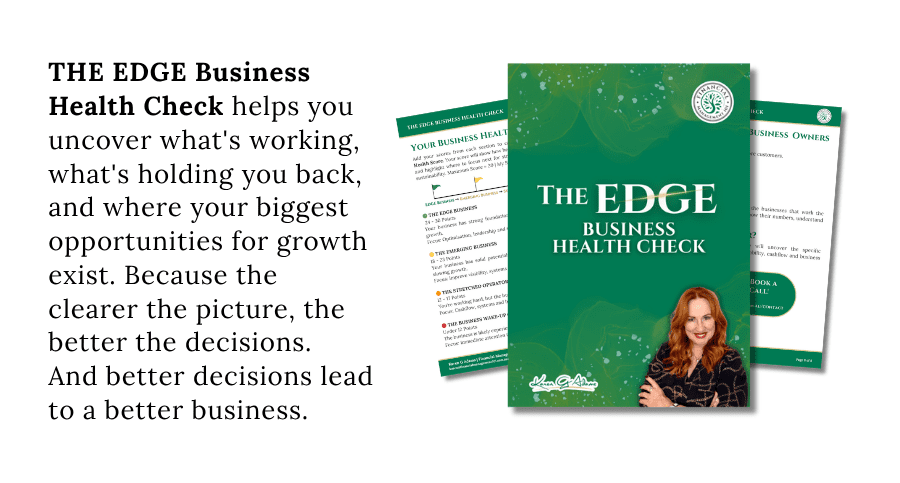
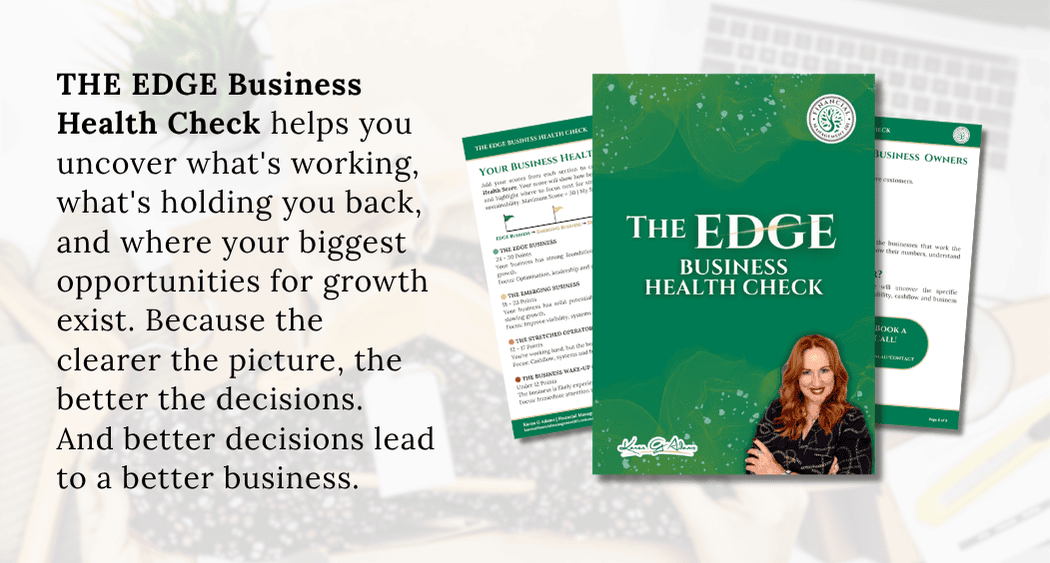
    THE EDGE Business Health Check helps you uncover what’s working, what’s holding you back, and where your biggest opportunities for growth exist.

    In less than 20 minutes, you’ll gain valuable insights into the health of your business across profitability, cash flow, growth, systems, leadership and CEO visibility.

    Because the clearer the picture, the better the decisions.

    And better decisions lead to a better business.

    Take THE EDGE Business Health Check today and discover where your next opportunity is hiding.

    THE EDGE BUSINESS HEALTH CHECK

    #HowToResetMyMoneyMindset #NewYearFinancialMindset #HowToStartFreshWithMoney  emergency fund australia, money management, family savings #SmallBusinessOwner #BusinessGrowth #CashflowManagement #BusinessSuccess
    #EntrepreneurMindset

     

    The Profit Leak Audit: How to Stop Losing Money in Your Business (Without Working More)

    The Profit Leak Audit: How to Stop Losing Money in Your Business (Without Working More)

    If you’ve ever looked at your sales and thought…

    “We’re making money… so why doesn’t it feel like it?”

    You’re not alone.

    This is one of the most common frustrations for small business owners. You’re busy. You’re bringing in revenue. Work is getting done. Clients are coming through the door.

    But when you check your bank account, something doesn’t add up.

    There’s not as much left as there should be.

    And naturally, the first thought is: I need more sales.

    More clients. More customers. More revenue.

    But here’s the truth that often gets overlooked:

    You don’t always have a revenue problem.
    You often have a profit leak problem.

    And until you fix that, more sales won’t necessarily solve anything, they might just make the problem bigger.

    Let’s break this down in a simple way.

    A profit leak is exactly what it sounds like. It’s money that is quietly leaving your business without delivering real value in return.

    It’s not always obvious. In fact, most of the time it’s hidden in small, everyday decisions that don’t seem like a big deal on their own.

    A subscription here.
    An underpriced service there.
    A bit of wasted time.
    An inefficient process.

    Individually, these things might seem minor.

    But over time, they compound.

    And before you know it, thousands of dollars have slipped through the cracks.

    The tricky part about profit leaks is that they don’t usually announce themselves.

    You don’t get a warning notification saying, “You’re losing money here.”

    Instead, it shows up as:

    • Constant pressure on cash flow
    • Feeling like you’re working too hard for what you’re earning
    • Struggling to build savings or reinvest
    • Wondering why growth feels so slow

    And because it’s not always obvious, most business owners focus on the wrong solution.

    They try to grow faster instead of tightening what’s already there.

    But imagine this for a moment.

    If you had a bucket full of water with small holes in the bottom, what would make more sense?

    Pouring more water in as fast as possible…
    Or fixing the holes first?

    That’s exactly what a profit leak audit helps you do.

    Now, the good news is that finding and fixing profit leaks doesn’t require a complete overhaul of your business.

    In fact, some of the most powerful improvements come from small, simple changes.


    You just need to know where to look.

    Let’s start with one of the biggest and most common areas: expenses.

    Most businesses accumulate expenses over time. You sign up for software, tools, subscriptions, memberships, services and they slowly become part of your “normal”.

    But here’s the thing.

    Just because something made sense six months ago doesn’t mean it still makes sense now.

    And this is where money quietly disappears.

    It might be:

    • A subscription you rarely use
    • A tool you replaced but never cancelled
    • A service that no longer delivers value
    • Overpaying for something you haven’t reviewed in years

    Individually, these might only cost $20, $50, or $100 a month.

    But combined?

    They add up quickly.

    One of the simplest and most effective things you can do is review every single expense in your business and ask one question:

    “Is this helping me grow or run my business effectively?”

    If the answer is no, it’s worth reconsidering.

    Not everything needs to go, but everything should be intentional.

    The next major area where profit leaks hide is time.

    This one is often underestimated because time doesn’t show up as a line item on your bank statement.

    But it absolutely impacts your profitability.

    Every hour you spend on low-value tasks is time you’re not spending on activities that generate income or move your business forward.

    This might look like this:

    • Repetitive admin work
    • Tasks that could be automated
    • Doing everything yourself instead of delegating
    • Spending too long on small details that don’t matter

    When your time is stretched across too many low-impact activities, your efficiency drops and so does your profit.

    Because at the end of the day, time is one of your most valuable resources.

    And how you use it matters.

    Another major profit leak, one that shows up again and again, is underpricing.

    We touched on this in the pricing blog, but it’s worth reinforcing here because of how much impact it has.

    If your prices are too low, every sale you make is leaving money on the table.

    And the frustrating part?

    You often don’t notice it immediately.

    You’re busy. Sales are coming in. It feels like things are working.

    But over time, the numbers tell a different story.

    You’re working harder than you should be for the income you’re generating.

    Even a small price increase can make a significant difference.

    Even a small price increase can make a significant difference.

    For example, increasing your pricing by just 10% doesn’t just increase your revenue; it often increases your profit at a much higher rate because your costs don’t rise at the same pace.

    That’s the power of pricing done properly.

    Then there are inefficiencies in your systems and processes.

    This is where things can quietly slow your business down and cost you money without you realising it.

    It might be:

    • Manual processes that could be automated
    • Poor systems that create errors or delays
    • Lack of clear workflows
    • Repeating the same tasks over and over

    When your systems aren’t working for you, everything takes longer.

    And when things take longer, costs increase – whether that’s your time, your team’s time, or missed opportunities.

    Improving efficiency doesn’t mean making things complicated.

    In most cases, it’s about simplifying.

    Finding easier ways to do things. Removing unnecessary steps. Creating consistency.

    Small improvements here can create big gains over time.

    Inventory and stock can also be a hidden profit leak for product-based businesses.

    Holding too much stock ties up cash. Holding the wrong stock creates waste. And slow-moving products can quietly drain your profitability.

    It’s not just about what you sell; it’s about how efficiently you manage what you have.

    Now here’s the part that often surprises people.

    You don’t need massive changes to see meaningful results.

    Even small adjustments can have a huge impact over time.

    Saving $50 a week? That’s over $2,500 a year.
    Saving $100 a week? That’s over $5,000 a year.

    And that’s without increasing your workload or finding new customers.

    That’s simply keeping more of what you already earn.

    So how do you actually start?

    Keep it simple and practical.

    Set aside some time, maybe an hour and run a basic audit.

    Look at your expenses.
    Look at your time.
    Look at your pricing.
    Look at your processes.

    You don’t need to fix everything at once.

    Just identify one area where money is being lost and make an improvement.

    Then repeat.

    Because momentum builds quickly when you start taking action.

    What often holds business owners back isn’t a lack of opportunity – it’s a lack of clarity.

    When you don’t know where your money is going, it’s hard to make confident decisions.

    You second-guess yourself. You hesitate. You stay stuck.

    But when you understand your numbers, everything changes.

    You see where to focus.
    You know what to adjust.
    You make decisions with confidence.

    And your business starts to feel a lot more in control.

    This is exactly why having structure and guidance around your finances is so powerful.

    Because while the concept of a profit leak audit is simple, consistently applying it and knowing what to prioritise is where the real difference is made.

    If you’re trying to figure all of this out on your own, it can feel overwhelming.

    You’re juggling everything already. Adding “financial analysis” on top can feel like just another thing on the list.

    But this is the work that moves your business forward.

    Inside the Financial Hub Membership, this is exactly what we focus on.

      Not complicated spreadsheets or overwhelming theory, but practical, real-world strategies that help you understand your numbers, identify where money is being lost, and make simple adjustments that improve your profitability.

      You learn how to:

      • Track and understand your cash flow
      • Identify profit leaks quickly
      • Price your services properly
      • Make confident financial decisions
      • Build a business that actually pays you

      And most importantly, you’re not doing it alone.

      Because knowing what to do is one thing, but having the support, accountability, and structure to actually follow through is what creates results.

      At the end of the day, building a profitable business isn’t just about earning more.

      • It’s about keeping more of what you already earn.
      • It’s about running your business intentionally, not reactively.
      • It’s about understanding your numbers so you can make decisions with clarity and confidence.
      • And it’s about creating a business that works for you, not one that constantly feels like a struggle.

      So before you go out and try to grow faster or sell more, take a step back.

      Look at what’s already happening inside your business.

      Find the leaks. Fix them. Strengthen your foundation.

      Because when you do that, everything else becomes easier.

      And that’s when your business truly starts to grow.

      Ready to Get Started?

      If you’re serious about changing your money…

      Not just thinking about it…

      Join the membership and let’s build this together!

      Membership - FM101

      #HowToResetMyMoneyMindset #WhyDoIFeelOutOfControlWithMoney #HowToFeelInControlOfFinances #ResetMoneyMindset2025 #NewYearFinancialMindset #HowToStartFreshWithMoney  emergency fund australia, money management, family savings 


      How to Thrive (Not Just Survive) During Tough Economic Times as a Small Business Owner

      How to Thrive (Not Just Survive) During Tough Economic Times as a Small Business Owner

      There’s no sugar-coating it, running a small business during tough economic times can feel heavy.

      Costs are rising. Customers are thinking twice before spending. Margins are tighter than they used to be. And everywhere you look, there’s talk of uncertainty, downturns, and slowing growth.

      It’s enough to make even the most confident business owner feel like they’re constantly on edge.

      So what do most people do when things get hard?

      They switch into survival mode.

      They cut back.
      They play small.
      They hold on and hope things improve.

      And while that might feel like the safest move, it’s often the very thing that keeps businesses stuck.

      Because here’s the truth most people don’t talk about enough:

      Some businesses don’t just survive tough economic conditions… they grow.

      They become more profitable, more efficient, and more resilient than ever before.

      And it’s not because they’re lucky. It’s because they’re intentional.

      If you want your business to not just get through challenging times, but actually come out stronger, then it starts with shifting how you think, how you plan, and how you act.

      The first shift is moving from reactive to proactive.

      When things feel uncertain, it’s easy to fall into a pattern of reacting. You wait for something to happen, and then you respond. A slow week leads to panic. A quiet month leads to cutting prices. A drop in sales leads to second-guessing everything.

      But reactive businesses are always one step behind.

      Thriving businesses take a different approach. They plan ahead. They look at their numbers regularly. They make decisions early, not when things are already tight.

      This doesn’t mean you need to predict the future perfectly; it simply means you stay aware of what’s happening in your business and act before small issues become big problems.

      One of the most powerful ways to do this is by getting clear on your cash flow.

      Cash flow is the heartbeat of your business. It’s what keeps everything running day to day.

      And yet, so many business owners focus only on revenue or profit, without really understanding their cash position.

      You can be “profitable” on paper and still struggle to pay your bills if your cash flow isn’t managed properly.

      So instead of just looking at monthly totals, start paying attention to what’s happening week by week.

      How much money is coming in?
      How much is going out?
      Are there any gaps coming up?

      When you have clarity around your cash flow, everything changes. You make better decisions. You feel more in control. And you reduce that constant underlying stress that comes from not knowing.

      Another key strategy during tough times is focusing on what actually makes you money.

      Not all revenue is equal.

      Some services or products might look good on the surface, but when you dig deeper, they take more time, deliver lower margins, or create unnecessary complexity in your business.

      In a strong economy, you might be able to get away with that.

      In a tighter economy, it becomes a problem.

      This is where simplification becomes your best friend.

      Take a step back and look at your offers. Which ones are the most profitable? Which ones are the easiest to sell? Which ones create the best experience for your customers?

      Those are the ones you want to double down on.

      At the same time, it’s worth asking what you can reduce, pause, or remove altogether. Letting go of underperforming offers can free up time, energy, and resources that can be reinvested into what’s actually working.

      And often, less really is more.

      Your existing customers also become incredibly valuable during uncertain times.

      When things tighten, many business owners focus all their energy on finding new clients. But what they overlook is the opportunity sitting right in front of them.

      Your current customers already know you. They already trust you. They’ve already chosen to spend money with you.

      That makes them your most valuable asset.

      Cash flow is the heartbeat of your business. It’s what keeps everything running day to day.

      People don’t stop buying during tough times, they just become more selective. They look for businesses they trust. Businesses that deliver real value. Businesses that communicate clearly.

      This is your chance to strengthen those relationships.

      Check in with your clients. Understand what they need right now. Look for ways to support them beyond just the transaction.

      Sometimes it’s as simple as better communication. Sometimes it’s refining your offer to better match their current situation.

      When you build strong relationships, you don’t just retain customers, you create loyalty. And loyalty is incredibly powerful during uncertain times.

      Now let’s talk about something that often happens when the pressure builds – panic pricing.

      Sales slow down, and the first instinct is to drop prices.

      It feels logical. Lower the price, make it easier for people to buy, and bring in more sales.

      But this approach can backfire quickly.

      When you reduce your prices, you also reduce your margins. That means you need more sales just to make the same amount of money. And during tough times, that’s not always realistic.

      It can also impact how people perceive your business. If your prices drop too quickly, it can signal a lack of confidence or reduce the perceived value of what you offer.

      Instead of focusing on being cheaper, focus on being better.

      Look at how you can improve your offer. Can you add value? Can you make the experience smoother? Can you solve your customer’s problem more effectively?

      When you focus on value, price becomes less of the deciding factor.

      Another area where many businesses pull back, but shouldn’t – is visibility.

      When things get uncertain, marketing is often one of the first things to go. It feels like an easy expense to cut.

      But here’s the problem: if people don’t see you, they can’t buy from you.

      And while your competitors are going quiet, this is actually your opportunity to stand out.

      You don’t need to do more, you just need to stay consistent.

      Keep showing up. Keep sharing your message. Keep reminding people how you can help.

      Consistency builds trust. And trust drives sales.

      It’s also important to remember that you don’t need to control everything, you just need to control what you can.

      You can’t control the economy. You can’t control customer sentiment. You can’t control external conditions.

      But you can control your pricing.
      You can control your costs.
      You can control your strategy.
      You can control how you show up.

      When you focus your energy on what’s within your control, you move out of fear and back into action.

      And finally, one of the most important things you can do during tough times is think long-term.

      Short-term pressure can lead to reactive decisions – cutting too deeply, pulling back too far, or making choices that feel good now but hurt later.

      Thriving businesses don’t disappear when things get hard. They adapt, they refine, and they keep moving forward.

      They understand that tough seasons are part of the journey, and how they respond during those seasons shapes their future.

      If you’re wondering where to start, keep it simple.

      Look at your business this week and identify three things:

      • Your top revenue driver
      • Your biggest expense or inefficiency
      • One relationship you can strengthen

      Focus on those, and you’ll already be moving in the right direction.

      Now here’s the part most business owners don’t want to hear, but need to.

      You don’t have to figure all of this out on your own.

      Running a business can feel isolating, especially during challenging times. You’re making decisions, managing finances, trying to grow, and often doing it without a clear roadmap.

      That’s exactly why having the right support, structure, and guidance makes such a difference.

      Because when you understand your numbers, have a clear strategy, and know what actions to take, everything becomes easier.

      You stop guessing.
      You stop reacting.
      You start leading your business with confidence.

      If you’re ready to move from survival mode into a more strategic, profitable way of running your business, this is exactly what we focus on inside the Financial Hub Membership.

      It’s designed for small business owners who want clarity around their finances, practical strategies they can actually implement, and the confidence to make smarter decisions, especially during uncertain times.

      Inside, you’ll learn how to:

      • Understand and manage your cash flow properly
      • Price your services for profit
      • Identify and fix profit leaks
      • Build a business that pays you consistently
      • Make decisions based on data, not stress

      More importantly, you’ll have ongoing support, guidance, and a structure to help you stay on track, because knowing what to do is one thing, but actually doing it consistently is where the real results happen.

      At the end of the day, tough economic times don’t define your business.

      How you respond to them does.

      You can stay in survival mode, constantly reacting and hoping things improve…

      Or you can take control, make intentional decisions, and build a business that not only withstands challenges but also grows through them.

      And if you’re ready to take that next step, the support is there for you.

      Because you weren’t meant to just survive in business.

      You were meant to thrive.

      Ready to Get Started?

      If you’re serious about changing your money…

      Not just thinking about it…

      Join the membership and let’s build this together!

      Membership - FM101

      #HowToResetMyMoneyMindset #WhyDoIFeelOutOfControlWithMoney #HowToFeelInControlOfFinances #ResetMoneyMindset2025 #NewYearFinancialMindset #HowToStartFreshWithMoney  emergency fund australia, money management, family savings 


      How to Price Your Products or Services Properly (Without Undervaluing Yourself)

      How to Price Your Products or Services Properly (Without Undervaluing Yourself)

      Pricing your products or services can feel like one of the most uncomfortable parts of running a business.

      You sit there staring at a number, wondering:

      Is this too high?
      Is this too low?
      Will people actually pay this?
      What if I lose customers?

      So instead of making a clear, strategic decision, you do what most small business owners do…

      You guess.

      Maybe you look at what competitors are charging and land somewhere in the middle. Maybe you choose a number that “feels reasonable”. Or maybe you go lower than you’d like, just to be safe.

      And while that might feel like the least risky option, it’s actually one of the biggest reasons businesses struggle to grow.

      Because pricing isn’t just about making a sale, it’s about building a business that actually works.

      If your pricing is off, everything feels harder. You work more, earn less, and constantly feel like you’re chasing your tail. But when your pricing is right, things start to click. You attract better clients, your workload becomes more manageable, and your business becomes far more sustainable.

      So let’s break this down properly and give you a clear, practical approach to pricing your products or services, without the guesswork.

      The first thing to understand is that pricing is not just a financial decision. It’s also a positioning decision.

      The price you set tells your customers something about your business before you even speak to them.

      A lower price often signals affordability and accessibility, but it can also suggest lower value. A higher price can position you as premium, but only if the experience and results match.

      Neither approach is right or wrong, but it has to be intentional.

      The problem is that many business owners don’t choose a position. They end up somewhere in the middle, without a clear strategy, trying to appeal to everyone, and ultimately attracting the wrong customers.

      And this is where pricing starts to create stress.

      Because when your pricing doesn’t align with your costs, your value, and your positioning, you feel it every single day in your business.

      Because when your pricing doesn’t align with your costs, your value, and your positioning, you feel it every single day in your business.<br />

      One of the most common mistakes is relying too heavily on competitor pricing.

      It seems like the logical place to start. After all, if everyone else is charging a certain amount, it must be the “right” price… right?

      Not necessarily.

      You don’t know their financial situation. You don’t know their cost structure. You don’t know their profit margins. And you definitely don’t know whether they’re actually making money.

      There are plenty of businesses out there that look successful on the surface but are barely breaking even behind the scenes.

      So when you base your pricing on competitors, you’re not creating a strategy – you’re copying someone else’s guess.

      And that’s a risky way to run a business.

      Instead, your pricing needs to start with your numbers.

      At its simplest level, pricing comes down to one core idea: Your price must cover your costs and generate a profit.

      Sounds straightforward, but this is where most business owners get it wrong. Because they don’t fully understand their costs.

      When people think about costs, they often focus on the obvious ones; materials, stock, or direct expenses tied to delivering a product or service.

      But there are so many hidden costs that get overlooked.

      Your time is a cost. Admin work is a cost. Emails, phone calls, quoting, planning, travel—it all adds up. Even things like software subscriptions, marketing tools, insurance, and professional services need to be factored in.

      If you’re not accounting for all of these, you’re underpricing – whether you realise it or not. And that’s where the frustration begins. You’re busy. You’re making sales. But at the end of the month, there’s not much left over.

      Not because your business isn’t working, but because your pricing isn’t supporting it.

      Then there’s the topic of profit.

      This is where things get a little uncomfortable for many business owners. Because profit can feel… optional. Something extra. Something you’ll get to “eventually”.

      But here’s the reality: Profit is not a bonus. It’s a requirement. Profit is what allows you to:

      • Pay yourself properly
      • Reinvest in your business
      • Handle unexpected expenses
      • Grow sustainably

      Without profit, your business becomes a job and often not a very well-paid one. So instead of hoping there’s money left at the end, you need to build profit into your pricing from the start.

      Even if it’s small to begin with, it needs to be intentional.

      Now, once you understand your costs and include a profit margin, the next step is thinking about value. Because pricing isn’t just about covering costs – it’s also about what your customer is receiving.

      This is where value-based pricing comes into play

      Let’s say you’re offering a service that helps a client increase their revenue, save time, or reduce stress. The value of that outcome is often far greater than the time it takes you to deliver it.

      If you’re only charging based on time, you’re limiting your earning potential. But if you price based on the result you provide, you open the door to higher, more sustainable pricing.

      This doesn’t mean ignoring your costs; it means combining both approaches.

      Know your baseline (your costs and required profit), then position your pricing based on the value you deliver.

      Of course, even when you understand all of this, there are still a few traps that can quietly pull your pricing down.

      One of the biggest is underpricing to win customers

      It feels like a smart move to make your offer more attractive, get more sales, and build momentum.

      But what often happens is that you attract price-sensitive customers who are always looking for the cheapest option. They’re harder to please, quicker to leave, and less loyal overall. And because your margins are lower, you need more of them just to stay afloat.

      That’s not a recipe for a healthy business.

      Another common trap is discounting too quickly. A customer hesitates, and before they even ask, you offer a lower price. It might help close the sale in the moment, but it also reduces your perceived value and sets a precedent.

      Over time, it trains customers to expect discounts and makes it harder to charge your full price.

      Then there’s the habit of avoiding price increases altogether.

      Costs go up. Expenses rise. But your prices stay the same.

      This slowly erodes your profitability, often without you noticing until things feel tight.

      Raising your prices doesn’t have to be dramatic. Even small, regular adjustments can make a big difference over time.

      And in most cases, customers expect it, especially if you’re continuing to deliver value.

      If the idea of increasing your prices feels uncomfortable, you’re not alone.

      But here’s a helpful way to think about it.

      When you raise your prices, you’re not just charging more – you’re creating space.

      Space to:

      • Deliver a better experience
      • Reduce stress and burnout
      • Focus on quality over quantity
      • Build a more sustainable business

      And while you might lose a small number of customers, you often gain better ones.

      Clients who value what you do, respect your time, and are willing to pay for quality.

      Confidence in pricing doesn’t come from mindset alone – it comes from clarity.

      When you understand your numbers, your costs, and your value, pricing becomes less emotional and more strategic.

      You stop second-guessing yourself. You stop apologising for your prices. And you start making decisions that support the business you actually want to build.

      So where should you start?

      Keep it simple. Choose one product or service and break it down properly.

      Work out what it truly costs you to deliver. Include your time. Add a profit margin. Then compare that to what you’re currently charging.

      If there’s a gap, adjust. Not perfectly. Not all at once. Just intentionally. Because small improvements in pricing can have a huge impact over time.

      At the end of the day, pricing properly isn’t about being the most expensive or the cheapest.

      It’s about building a business that works for you.

      A business that pays you properly.
      A business that supports your lifestyle.
      A business that gives you room to grow.

      And that starts with one decision, stopping the guesswork and taking control of your pricing.

      Ready to Get Started?

      If you’re serious about changing your money…

      Not just thinking about it…

      Join the membership and let’s build this together!

      Membership - FM101

      #HowToResetMyMoneyMindset #WhyDoIFeelOutOfControlWithMoney #HowToFeelInControlOfFinances #ResetMoneyMindset2025 #NewYearFinancialMindset #HowToStartFreshWithMoney  emergency fund australia, money management, family savings