Debt Freedom: 3 Simple Shifts That Accelerate Your Payoff Plan (Without Losing Your Mind!)

Debt Freedom: 3 Simple Shifts That Accelerate Your Payoff Plan (Without Losing Your Mind!)

Let’s get honest for a second. Debt… it’s a heavy word, right? For many of us, just hearing it triggers:

  • A knot in the stomach.
  • A wave of shame or regret.
  • That overwhelming thought: “Will I ever get out of this?”

If this sounds familiar, take a deep breath – you are not alone. Whether it’s credit cards, student loans, car payments, or that lingering medical bill, debt can feel like a mountain that just keeps growing. But here’s the truth most people won’t tell you:

Debt freedom isn’t just about paying more toward your balances – it’s about shifting the way you think, act, and plan with your money.

Today, I’m going to walk you through:

  • Why traditional debt payoff advice often backfires.
  • The three powerful mindset shifts that can accelerate your debt payoff (without sucking all the joy out of your life).
  • How your credit score, saving, and debt freedom are more connected than you think.
  • Simple steps you can take right now to start feeling empowered and in control.

And yes, we’ll keep it light, fun, and inspiring, because you deserve to feel good about your money journey, even while tackling debt.

? The Problem with Traditional Debt Advice (Why It Doesn’t Work for Most People)

Let’s start here. If you’ve ever Googled “how to pay off debt fast,” you’ve probably seen some version of this advice:

  • “Cut out all unnecessary spending.”
  • “Stop eating out.”
  • “Work a second (or third) job.”
  • “Sell everything you own.”

And sure… some of these tips can help in extreme situations. But for most people, this kind of advice:

  • Feels impossible to stick with long-term.
  • Creates a cycle of guilt and burnout.
  • Ignores the emotional and psychological side of debt.

Here’s the truth:

Debt isn’t just a numbers problem, it’s a behavior and mindset problem, too. Yes, we need to talk about strategy, but if we skip the emotional side of debt, we’ll never create lasting results.

Getting Out of Debt Starts in Your Mind

Why Getting Out of Debt Starts in Your Mind (Not Just Your Wallet)

Debt can feel like quicksand, but it’s often not just about the math. It’s about:

  • The stories you tell yourself about money.
  • The shame or guilt you carry from past mistakes.
  • The anxiety that makes you want to avoid looking at your accounts.

Think about it:

  • How many times have you avoided checking your credit card balance?
  • How often do you think, “I’ll deal with this later,” when it comes to debt?
  • How many times have you paid off a balance, only to end up back in debt again later?

This isn’t about being “bad” with money – it’s about being human.

We live in a world that encourages overspending, instant gratification, and comparison. Debt happens. But freedom from it? That happens when you combine practical steps with internal shifts.

? The 3 Simple Shifts That Can Speed Up Your Debt Freedom Journey

Let’s dive into the real magic. Here are the three powerful mindset shifts that can help you:

  • Pay off debt faster.
  • Stop the cycle of yo-yo debt.
  • Build financial confidence along the way.

Shift #1: From Shame to Ownership

Here’s the thing about debt: It thrives in secrecy.

The more we hide from it, the more it grows, and the worse we feel. Shame sounds like:

  • “I should have known better.”
  • “I’m terrible with money.”
  • “I’ll never get ahead.”

But here’s the truth:

  • Debt doesn’t define you.
  • Your past mistakes don’t determine your future.
  • You can learn new skills and create different results.

The first step toward debt freedom isn’t cutting expenses, it’s cutting the shame.

Action Step:

  • Write down your total debt, every dollar, every balance.
  • Look at it with neutrality – this is data, not a character flaw.

Say this out loud:

“This is where I am right now. It’s not permanent. I have the power to change it.” This simple shift from shame to ownership changes everything.

Shift #2: From Scarcity to Empowered Planning

Many people approach debt payoff from a place of fear:

“I need to get rid of this ASAP or else!”

“I have to sacrifice everything until I’m debt-free.”

But here’s the problem:

  • Extreme approaches rarely last.
  • Scarcity leads to burnout and yo-yo spending.

Instead, approach debt payoff from a place of empowerment: “I am intentionally choosing where my money goes each month.”

This means:

  • Making a realistic debt payoff plan that fits your actual life.
  • Balancing progress with joy, you don’t have to cut everything you love.
  • Prioritising consistency over speed.

Action Step: Choose a debt payoff method that feels good to you:

  • Debt Snowball: Pay off the smallest balance first for quick wins.
  • Debt Avalanche: Pay off the highest-interest debt first to save money long-term.

Create a monthly payment plan that includes money for fun and savings. This way, you’ll stay motivated—and avoid slipping back into debt later.

Create a monthly payment plan that includes money for fun and savings.

Shift #3: From Avoidance to Proactive Credit Care

Ah, credit scores, the mysterious numbers that somehow rule our financial lives. Many people either obsess over their credit or completely avoid it. But here’s the truth:

  • Your credit score isn’t your enemy, it’s just a tool.
  • You don’t need to obsess over it daily, but ignoring it won’t help either.

Proactive credit care means:

  • Checking your credit report at least once a year (you can do this for free!).
  • Disputing any errors that could be dragging your score down.
  • Making consistent, on-time payments to build positive credit history.
  • Keeping credit utilization low (aim for under 30% of your limits).

Action Step:

  • Go to equifax.com.au and pull your free credit report.
  • Check for errors or suspicious activity.
  • Set up automatic payments for at least the minimum on all debts to protect your score.

When you face your credit head-on, it becomes a tool, not a threat.

? Debt Freedom & Saving: The Power Duo

Here’s something most debt advice misses: Paying off debt without saving at the same time can backfire. Why? Because if you throw every dollar at debt but don’t have any savings, guess what happens the next time life throws a curveball? Yep – you end up right back in debt.

Even while you’re paying off debt, it’s essential to:

  • Build a starter emergency fund (even just $500 to $1,000).
  • Save a little every month, even if it’s $10 or $25.

This small cushion keeps you from relying on credit when unexpected expenses pop up, and they will.

Action Step:

  • Open a separate savings account (nicknamed “Safety Net” if you like!).
  • Set up automatic transfers – even small ones.
  • Celebrate every deposit, no matter how small.

This helps break the cycle of debt for good.

? Why Debt Freedom Is More Emotional Than You Think

Here’s something I see all the time in my coaching work: People think paying off debt will automatically make them feel better.

But here’s the secret:

  • Debt freedom feels amazing, but it also brings up unexpected emotions.
  • Many people feel a strange sense of loss when they finish paying off debt.
  • Others struggle with identity shifts – “Who am I without debt?”
  • And some even self-sabotage and fall back into debt again.

This is why working on your money mindset while paying off debt is so important. It’s not just about the numbers, it’s about your emotional relationship with money, freedom, and self-worth.

Working on your money mindset while paying off debt is so important.

? Your Debt-Free Future Starts with One Step (But It’s Not What You Think)

If you’re feeling overwhelmed by your debt right now, here’s what I want you to know:

You don’t need to:

  • Have a perfect plan.
  • Pay it all off overnight.
  • Deprive yourself to succeed.

You just need to:

  • Get clear on your numbers.
  • Shift your mindset from shame to empowerment.
  • Take consistent, small actions.

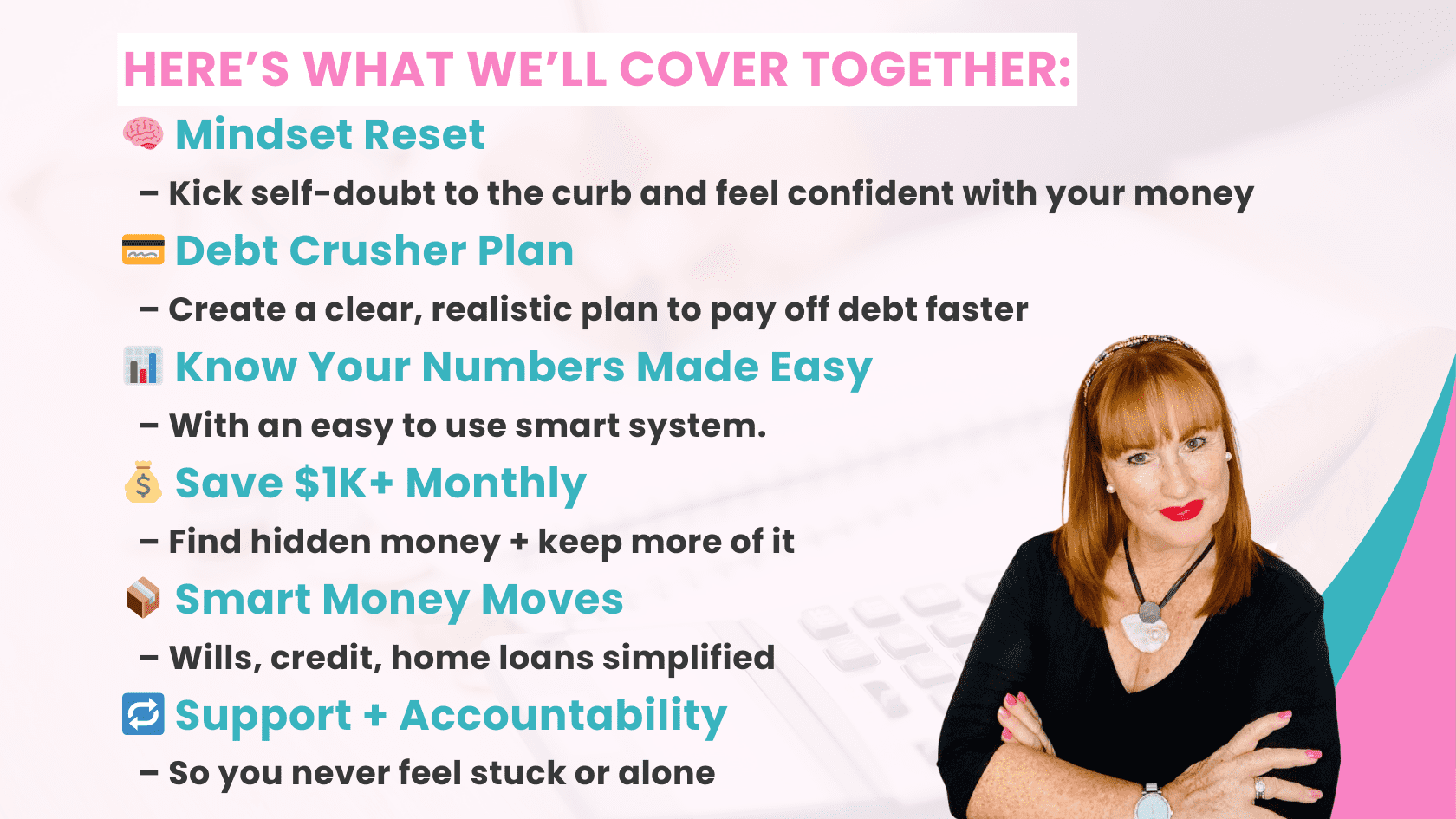
And yes – this is exactly why inside my Your Financial Freedom Breakthrough™ – 90 Day Money Makeover program, we don’t just talk about debt payoff tactics. We go deep into:

  • Money mindset shifts that last.
  • Customised debt payoff strategies that work for your real life.
  • Credit confidence – so you’re empowered, not intimidated.
  • Saving alongside debt payoff to build true financial stability.

It’s about creating a debt-free life you love – not one that feels like a punishment. 

? Ready to Take Action? (Mini Challenge!)

Let’s finish this post with a quick action step to help you get started today.

Debt Freedom Mini Challenge:

  1. Write down your current total debt balance – no judgment, just facts.
  2. Choose your preferred payoff method: Snowball (smallest balance first) or Avalanche (highest interest first).
  3. Set a realistic target date for your first major milestone – paying off ONE account.
  4. Automate your minimum payments, plus an extra small amount toward your top-priority debt.
  5. Start a tiny emergency fund – even just $10 this week – to protect your progress.

Take one step at a time, and watch the momentum build.

? Final Thoughts: You’re Closer to Debt Freedom Than You Think

Here’s what I want you to walk away with today: Debt freedom isn’t about punishment – it’s about empowerment. You don’t have to wait to feel good about your money – you can start now, even while in debt. Small, consistent shifts – both practical and emotional – are what create lasting change.

And if you’re ready to take this work deeper – so you can finally break free from debt, grow your savings, and feel peaceful with your money? Your Financial Freedom Breakthrough™ – 90 Day Money Makeover program opens on September 10th. Inside, we’ll tackle:

  • Debt payoff (without shame or extreme restrictions).
  • Credit confidence (in plain English!).
  • Sustainable saving habits.
  • And the deep money mindset work that makes all the difference.

This isn’t just another debt payoff plan, it’s a total transformation for your financial life. Get ready, friend – your next chapter starts soon.

Your Financial Freedom Breakthrough™
Your Financial Freedom Breakthrough™ - Scope
Year-End Financial Check-Up: 7 Key Steps to Close 2024 with Confidence

Year-End Financial Check-Up: 7 Key Steps to Close 2024 with Confidence

As the year wraps up, it’s time to give your finances a little TLC and prepare to start the new year strong! Think of this as your yearly financial check-up, a simple routine that sets you up for a financially fit future. Here are seven straightforward steps to help you close out 2024 with confidence.

1. Review Your Budget with Fresh Eyes

December is perfect for giving your budget a quick health check. Ask yourself:

    • Did you stick to your budget most months?
    • Are there categories where you regularly overspent?

If you find that certain areas of your budget were tough to stick to, don’t worry; you’re not alone! Make notes on what worked and what didn’t, and consider if those categories need adjusting. Next year’s budget will feel easier to manage if it aligns more closely with your actual spending patterns.

2. Evaluate Your Financial Goals for 2024

Reflect on the goals you set at the beginning of 2024. Did you aim to build an emergency fund, pay off a certain amount of debt, or save for a big purchase? Take a moment to celebrate any wins, big or small, you’ve earned it! If there were goals you couldn’t reach, try to pinpoint what might have held you back. Life happens, and sometimes, adjustments are necessary. Use these reflections to set realistic goals for 2025 that build on the progress you’ve made.

Audit Your Subscriptions and Recurring Expenses

3. Audit Your Subscriptions and Recurring Expenses

Subscriptions can sneak up on you! Take a look at all the services you’re subscribed to, streaming platforms, gym memberships, software, meal kits and decide if they’re still worth the monthly or annual fee. Ask yourself:

    • Do you use each service enough to justify the cost?
    • Are there better deals or bundles that could help you save?

Canceling or downgrading services you no longer use can free up cash you can redirect toward your savings or debt goals.

4. Set a Holiday Spending Plan

The holiday season can be a big budget-buster if you’re not careful. This December, approach holiday spending with a clear plan:

    • Set a total holiday budget and stick to it.
    • Focus on meaningful gifts within your budget and avoid last-minute splurges.
    • Consider experiences instead of material items, they often make more memorable gifts and can be cost-effective.

You’ll thank yourself in January when your credit card bills aren’t sky-high!

5. Check-in On Your Emergency Fund


Your emergency fund is your financial safety net, and December is a great time to assess its status. Ideally, you want enough to cover three to six months’ worth of essential expenses.

If your fund has been depleted due to unexpected expenses this year, make a plan to rebuild it. If it’s in good shape, well done!

Consider adding a little extra, even if it’s just a small amount each month, it’s always better to be prepared.

You want enough to cover three to six months’ worth of essential expenses on your emergency fund

5. Update Your Financial Goals for 2025

End the year by setting some intentional goals for 2025. These don’t have to be massive changes; small, achievable goals can have a big impact on your financial future. A few ideas:

    • Set a target for increasing your savings rate, even if it’s by a modest amount.
    • Commit to paying down a certain percentage of your debt.
    • Plan to invest in education or skills that could lead to higher income opportunities.

Whatever your financial goals, write them down and keep them visible. By starting now, you’ll be well-prepared to tackle them come January.

End the year by setting some intentional goals for 2025.

Final Thoughts

Closing out the year with a financial check-up is a powerful way to put yourself in the driver’s seat for 2025. These six steps are simple but effective and give you a clear view of your financial health. Here’s to closing out 2024 strong and stepping into 2025 with confidence!

Are you ready to make 2025 your breakthrough year?

MASTER YOUR MONEY is for YOU if you are tired of financial stress and ready to transform your relationship with money. Whether you’re managing a family, building your career, or chasing your dreams, this is your chance to gain the clarity, confidence, and habits you need to thrive.

This is more than a mindset shift—it’s a transformational program that puts you on the path to lasting financial success! ? Click the button below to book a call with Karen to see if this program is right for you!

Mastering Budget and Saving Techniques
The Importance of a Personalised Budgeting System

The Importance of a Personalised Budgeting System

Whether you’re saving for your first home, planning a big holiday, or just trying to ensure you don’t run out of cash before payday, a budget tailored to your needs can make all the difference.

What is a Personalised Budgeting System?

A personalised budgeting system is a financial plan designed to suit your unique income, expenses, lifestyle, and goals. Unlike generic budgeting methods, which often take a one-size-fits-all approach, a personalised budget takes into account your specific situation. This means it can help you manage your money more effectively and achieve your financial goals more efficiently.

Personalised Budgeting System

Why Is It Important?

1. CONTROL OVER YOUR FINANCES

A personalised budget gives you a clear picture of where your money is going. This control helps you make informed decisions about spending and saving. By knowing exactly how much you have and what you need to cover, you can avoid overspending and reduce financial stress.

2. TAILORED TO YOUR GOALS

Whether you’re saving for a down payment on a house in Perth, planning a trip across Europe, or building an emergency fund, a personalised budget helps you allocate funds towards your specific goals. This targeted approach means you can make steady progress without feeling deprived.

3. FLEXIBILITY

Life is unpredictable, and a personalised budget can adapt to changes in your circumstances. If you get a pay rise, change jobs, or face unexpected expenses, your budget can be adjusted to reflect your new reality. This flexibility ensures that your financial plan remains relevant and effective no matter what life throws at you.

4. BETTER SPENDING HABITS

By tracking your expenses, a personalised budget can help you identify and eliminate bad spending habits. You might be surprised at how much you spend on takeaway coffees or impulse buys. Recognising these patterns is the first step towards making more mindful choices.

5. PEACE OF MIND

Knowing you have a plan in place can significantly reduce financial anxiety. With a personalised budget, you can prepare for the future with confidence, knowing you have a roadmap to guide you. This peace of mind allows you to enjoy life more fully without constantly worrying about money.

With a personalised budget, you can prepare for the future with confidence.

Learn the fundamental concepts of how budgeting and saving are important to your financial well-being. Registration is now open for the course: Mastering Budget and Saving Techniques. This is a hands-on course with me guiding you on how to budget, track and look at managing your money like a pro.

ENTER THE CODE WORD: BUDGETING2024 to get $100 off this course.

Mastering Budget and Saving Techniques
How Can I Reduce My Monthly Expenses?

How Can I Reduce My Monthly Expenses?

Reducing your monthly expenses involves a combination of identifying where you can cut costs and implementing habits that foster financial efficiency. Here are some strategies:

TRACK YOUR SPENDING

Start by tracking all your expenses for a month. This will give you a clear picture of where your money is going.

CREATE A BUDGET

Once you understand your spending patterns, create a budget. Allocate amounts for necessities like rent, groceries, utilities, and savings, and then see how much is left for other expenses.

CUT UNNECESSARY SUBSCRIPTIONS

Cancel any subscriptions you don’t use regularly, like streaming services, magazines, or gym memberships.

REDUCE UTILITY BILLS

Try to lower your electricity, water, and gas usage. This can be done by turning off lights when not in use, fixing leaks, and using energy-efficient appliances.

SAVE ON GROCERIES

Plan your meals, use coupons, buy in bulk, and choose store brands over name brands. Also, avoid eating out frequently.

LIMIT IMPULSE BUYS

Avoid making unplanned purchases. If you see something you want, wait a few days to decide if you really need it.

USE PUBLIC TRANSPORTATION

If possible, use public transportation, carpool, bike, or walk instead of driving. This can save money on gas, parking, and maintenance.

Save money on groceries

Focus on budget-friendly foods to save money on groceries.

NEGOTIATE BILLS

Call service providers for things like insurance, cell phone, and internet to see if you can get a better rate.

DIY WHEN POSSIBLE

Do tasks yourself instead of paying someone else, like home repairs, car washes, and landscaping.

SHOP SECOND-HAND

Buy used items when possible. This can include clothes, furniture, and electronics.

AUTOMATE SAVINGS

Set up an automatic transfer to your savings account each payday. This ensures you save before you have a chance to spend.

LOOK FOR FREE ENTERTAINMENT

Take advantage of free community events, parks, and libraries for entertainment instead of spending money on outings.

REVIEW INSURANCE POLICIES

Ensure you’re not over-insured and that you’re getting the best rate for your needs.

PAY DOWN HIGH-INTEREST DEBTS

Prioritise paying off high-interest debt, which can be a significant drain on your finances.

Take advantage of free community events, parks, and libraries for entertainment

BUY IN BULK

For items you use regularly, buying in bulk can offer significant savings.

By implementing these strategies, you can effectively reduce your monthly expenses and improve your overall financial health. Remember, small changes can add up to big savings over time.

Learn the fundamental concepts of how budgeting and saving are important to your financial well-being. Registration is now open for the course: Mastering Budget and Saving Techniques. This is a hands-on course with me guiding you on how to budget, track and look at managing your money like a pro.

ENTER THE CODE WORD: BUDGETING2024 to get $100 off this course.

Mastering Budget and Saving Techniques

Mortgage Basics – Helping You Understand Your Home Loan Better

Mortgage Basics – Helping You Understand Your Home Loan Better

Hey, fellow financial mavericks, I want to share a quick bite-size piece of information about your home loan, or, if you’re looking to dive into the property market as a first home buyer, then here are some of the mortgage terminology to help you understand what you’re getting into.

Buying a home and financing your new home is one of the biggest purchases of your life and is both exciting and nerve-racking.  Firstly, it takes enormous amounts of your income to pay and smash down the home loan, however, it’s also one of the most rewarding things to see you owning your own home, whether it’s your first home or building an investment portfolio.

UNDERSTANDING MORTGAGES: THE BASICS

A mortgage is essentially a loan that helps you buy a property. When you take out a mortgage, you’re borrowing money from a lender (usually a bank or mortgage company) to purchase a home. The twist? The home itself serves as collateral for the loan. This means if you fail to make your payments, the lender has the right to take ownership of the property through a process known as foreclosure.

THE PLAYERS: LENDER AND BORROWER

In the mortgage world, the lender is the financial institution lending you the money. You, the homebuyer, are the borrower. Lenders evaluate your creditworthiness based on factors like your credit score, income, debts, and employment history. This evaluation helps determine how much they’re willing to lend you and at what interest rate.

YOUR MORTGAGE: THE KEY COMPONENTS

Let’s break down the basics of what a mortgage is, including terms like interest rates, principal, what amortisation means, and what it means when you look to refinancing. 

So let’s start with:

Principal: This is the amount of money you borrow to buy a home. For example, if you buy a house for $500,000 and make a down payment or deposit of $80,000, your principal would be $420,000.

Interest Rate: The lender charges you interest as a cost of borrowing money. Interest rates can be fixed (remaining the same throughout the term) or variable (changing with market conditions). The rate impacts your monthly payment and the total cost over the life of the loan.

Amortisation: This refers to the process of spreading out the loan payments over a set period, typically 20 to 30 years for mortgages. Each payment includes a portion that goes toward the principal and a portion that goes toward interest. In the early years, a larger part of each payment goes toward interest; later, more goes toward reducing the principal.

Lenders Mortgage Insurance (LMI): Insurance added onto a home loan where your deposit or down payment is less than 20%, which is there to protect the lender if you default on the loan.

Government & Property Taxes: Whenever you purchase a property in Australia, the government charges you stamp duty and other costs, which you can either pay the amount owing at time of settlement, or, you can add the govt costs into your home loan.

Refinancing: This is the process of replacing your existing mortgage with a new one, usually to take advantage of lower interest rates. Refinancing can reduce your monthly payments or shorten your loan term, but it may involve additional costs like settlement fees.

Monthly Payments: Your monthly mortgage payment typically includes:

        • Principal repayment: Reduces your outstanding loan amount.
        • Interest payment: The cost of borrowing the principal.

Long-term Costs: Over the life of the mortgage, you’ll pay back the principal plus the total interest accrued. A higher interest rate or a longer term means more money paid in interest. 

For instance, a $420,000 mortgage at 6% interest over 30 years will cost less in monthly mortgage repayments, however you will be paying more in total interest than the same mortgage at 6% interest over a 25 year period.  With a lower loan term, you will be paying higher monthly payments, but in total lower interest costs.

Generally a more extended loan term, helps make the repayment more manageable.

Successful Mortgage Management

THE MORTGAGE PROCESS: STEP-BY-STEP

    • Pre-Approval: Before house hunting, you may want to get pre-approved for a mortgage. This gives you a better idea of how much you can afford and shows sellers you’re serious.
    • Find a Home: Once pre-approved, you can shop for a home within your budget.
    • Apply for a Mortgage: After finding a home, apply for a mortgage. You’ll need to provide detailed information about your finances.
    • Underwriting/Assessment: The lender reviews your application, verifies your financial information, and assesses the property’s value.
    • Approval & Settlement: If the loan is approved, you’ll sign the loan documents, your solicitor or settlement agent will assist you in finalising the loan contract and then once settles, the home is yours!

TIPS FOR SUCCESSFUL MORTGAGE MANAGEMENT

    • Understand Your Budget: Know what you can afford monthly,, to avoid financial stress.
    • Improve Your Credit Score: A higher credit score can secure a better interest rate, saving you money in the long run.
    • Save for the Deposit/ Down Payment: The bigger your deposit payment, the less you have to borrow, and the less you pay in interest and possibly mortgage insurance.
    • Use a Mortgage Broker: Work with a mortgage broker research for you on who is going to offer you the best deal, based on your own personal financing position. Your mortgage broker will offer you a product comparison, highlighting a few lenders rates, terms and features and benefits.

Understanding these quick basics, helps in making informed decisions about buying a home and choosing the right mortgage. It’s essential to consider both the monthly affordability and the long-term financial implications when selecting a mortgage type and term.

CONCLUSION

Navigating the world of mortgages can feel overwhelming, but armed with the right information, you can make decisions with confidence. Remember, a mortgage is one of the biggest financial commitments you’ll make, so it pays to understand the basics and consider your options carefully. 

As your financial and mortgage coach, I’m here to guide you through this journey, ensuring you feel empowered and informed every step of the way.

Understanding your home loan is about more than just signing papers; it’s about taking control of your financial future and making the dream of homeownership a reality. 

If you want to know whether your home loan is working effectively for you and your personal finances contact me at karen@harkenfinance.com for a chat.