
Is Money Stress the Missing Piece in Your Wellbeing Strategy?

Is Money Stress the Missing Piece in Your Wellbeing Strategy?

You provide mental health support, but money is often part of the stress employees are carrying. Here’s how practical financial wellbeing education complements your EAP, without straying into personal advice.

We know how much thought goes into a wellbeing strategy. The EAP is in place. The mental health training has been rolled out. Leaders have been coached to check in on their people.

And still, something doesn’t quite add up. Engagement scores plateau. Absenteeism doesn’t shift the way you’d expect. People say they’re “fine” and clearly aren’t.

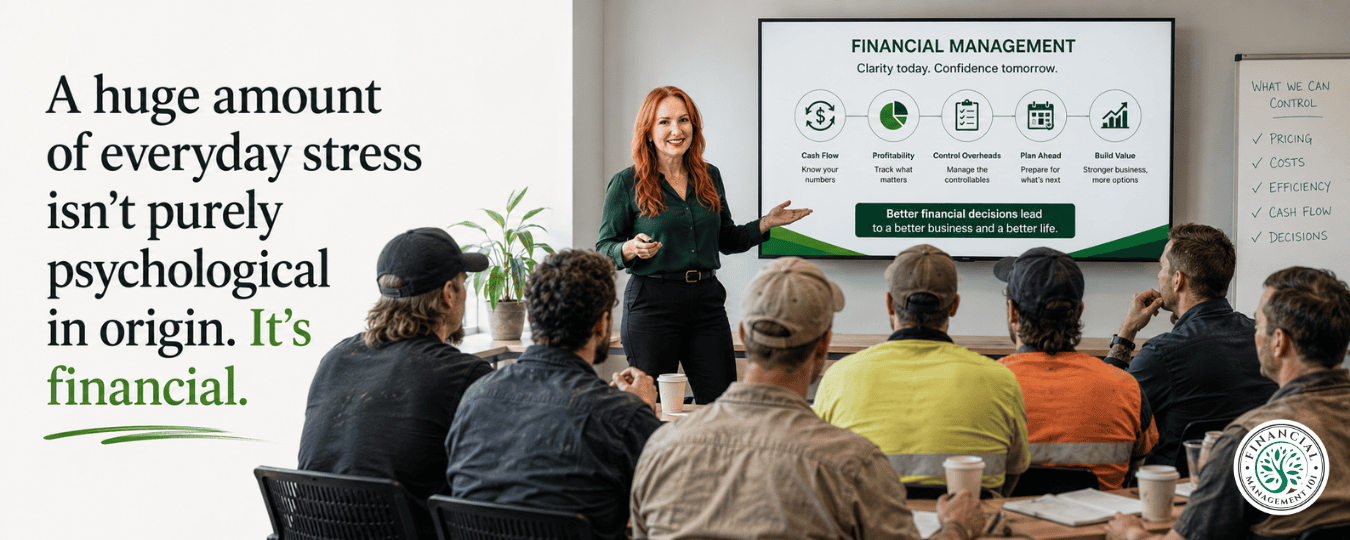
Here’s what often gets missed: a huge amount of everyday stress isn’t purely psychological in origin. It’s financial. And most wellbeing strategies aren’t built to touch it.

By the end of this, you’ll know why financial stress behaves differently to other workplace stressors, and how practical financial education sits alongside your EAP rather than competing with it.
Your employees don’t need another financial webinar.
They need personal, practical support that actually changes how they feel and what they do with their money.

Money stress doesn’t look like a “money” problem at work

Financial stress rarely walks into HR and announces itself. It shows up as distraction, short tempers, disengagement, or someone quietly declining opportunities that would help their career because the timing feels too risky.

It’s also one of the few stressors that follows people to work every single day, rather than arriving as a one-off event. A restructure or a difficult client eventually resolves. A mortgage rate rise, or not knowing where next month’s numbers land, doesn’t switch off at 9am.

Why your EAP alone doesn’t close this gap

Your EAP is doing exactly what it’s designed to do; professional, confidential support for people in genuine distress. That matters, and it isn’t in question here.

What an EAP isn’t built for is teaching everyday financial capability. Counselling can help someone process the anxiety money is causing them. It generally isn’t set up to help them understand their pay structure, build a spending plan, or feel confident having a money conversation with a partner.

That’s a different kind of support, practical, skill-based, and preventative rather than crisis-response.

Where financial wellbeing education fits

This is where financial wellbeing education does its work: building everyday money confidence and capability, in plain English, before things reach crisis point.

It’s general education, not personal advice. Nobody’s reviewing an individual’s mortgage or telling them what to do with their super. It’s giving people the foundations; how budgeting actually works, how debt behaves, how to read their own numbers, so they can make their own informed decisions.

Layered with an EAP, you get both ends covered: support for people who are already struggling, and education that helps prevent financial stress building into something bigger in the first place.

What this can look like in practice

Financial wellbeing education for workplaces can sit alongside existing programmes in a few different ways:

  • A standalone session or short series, run like any other professional development topic.
  • Content woven into an existing wellbeing calendar, alongside mental health and physical health initiatives.
  • A resource employees can return to in their own time, for privacy around a genuinely personal topic.

Done well, it’s positioned the same way physical or mental health education is a normal, non-judgemental part of supporting people, not a red flag that something’s wrong.

The Takeaway

A strong wellbeing strategy supports the whole person, and for most people, money is part of that picture whether it’s named or not. An EAP handles the crisis. Financial wellbeing education handles the everyday end, building the confidence and capability that helps prevent the crisis in the first place.

Together, they give your people a genuinely complete safety net, not just a mental health one.

If you’d like to explore what financial wellbeing education could look like for your team, we’d love to talk it through with you.

The Financial Wellbeing Solution Your People Deserve — and Your Workplace Needs

#HowToResetMyMoneyMindset #NewYearFinancialMindset #HowToStartFreshWithMoney  emergency fund australia, money management, family savings #SmallBusinessOwner #BusinessGrowth #CashflowManagement #BusinessSuccess #EAP #EmployeeAssistanceProgram
#EntrepreneurMindset

 

The Business Health Check I Wish Every Business Owner Would Take

The Business Health Check I Wish Every Business Owner Would Take

Imagine this.

You’ve been feeling tired for months. Not terrible. Not enough to end up in hospital. Just not quite right. Your energy isn’t what it used to be. You’re not sleeping as well. Something feels off.

So you book an appointment with your doctor. They run a few tests. Check your blood pressure. Review your cholesterol. Look at a few key indicators. And before long, they can tell you exactly what’s going on.

  • What’s working.
  • What isn’t.
  • What needs attention.
  • What should be monitored.
  • What changes might improve your overall health.

Now imagine if your doctor said this:

“Let’s skip the tests. Just keep going and hope for the best.”

Sounds ridiculous, doesn’t it?

Yet that’s exactly how many business owners run their business.

Every day.

Every week.

Every month.

Every year.

Without ever stopping to check what’s really happening beneath the surface.

Your Business Has a Pulse Too

Every business leaves clues.

Little signs. Signals. Indicators. Messages.

The challenge is that most business owners are too busy running the business to notice them.

  • A tightening cash flow position.
  • Shrinking margins.
  • Increasing workloads.
  • Staff frustration.
  • Customer complaints.
  • Longer working hours.
  • Declining energy, and
  • Growing stress.

None of these things happen overnight.

Just like health problems, they often develop slowly.

Quietly.

Gradually.

Until eventually they become impossible to ignore.

The problem isn’t that the warning signs aren’t there.

The problem is that most business owners never stop long enough to look for them.

The “I’m Too Busy” Trap

One of the most common things I hear from business owners is:

“I know I should spend more time looking at the business, but I’m too busy.”

And I get it.

You’re serving customers. Managing staff. Putting out fires. Quoting work. Following up invoices. Trying to keep everything moving.

The irony is that the busier a business owner becomes, the more important it is to pause and assess what’s really happening.

Because being busy doesn’t automatically mean things are working.

  • You can be incredibly busy while profitability declines.
  • You can be incredibly busy while cash flow tightens.
  • You can be incredibly busy while opportunities slip through the cracks.

Activity and progress are not the same thing.

And that’s a lesson many business owners learn the hard way.

The irony is that the busier a business owner becomes, the more important it is to pause and assess what's really happening.

What If Your Business Could Talk?

Let’s have a little fun.

Imagine your business could sit across the table from you over a coffee.

What might it say?

Would it tell you it’s thriving?

Would it tell you it’s exhausted?

Would it tell you it needs better systems?

Would it tell you your pricing needs attention?

Would it tell you you’re spending time in the wrong areas?

Would it tell you you’re carrying too much yourself?

Would it tell you that you’re closer to success than you realise?

Most business owners assume they know the answers.

But assumptions can be dangerous.

Because assumptions often hide blind spots.

And blind spots can become expensive.

The Questions Every Business Owner Should Be Asking

If you haven’t checked the health of your business recently, here are a few questions worth considering.

Is My Business Actually Profitable?

  • Not busy.
  • Not growing.
  • Not generating revenue.
  • Profitable.

Those are very different things.

Many businesses create impressive turnover while producing disappointing profits.

Without visibility, it’s difficult to know the difference.

Is My Cash Flow Supporting Growth?

Growth requires resources.

Resources require cash.

Many businesses don’t fail because they aren’t making sales.

They struggle because cash flow can’t keep pace with growth.

Understanding your cash position creates confidence.

And confidence allows better decisions.

Am I Building a Business or Creating a Job?

This is one of the most important questions of all.

Can your business operate without your constant involvement?

Or does everything depend on you?

The answer often reveals whether you’ve built a business or simply created a demanding job for yourself.

Do I Know Where My Biggest Opportunity Exists?

Most business owners focus on fixing problems.

Few spend enough time identifying opportunities.

Yet opportunities often create far greater results than problem-solving alone.

The challenge is knowing where to look.

Am I Thinking Like a CEO?

This isn’t about titles.

It’s about perspective.

Are you spending your time reacting?

Or leading?

Are you making decisions based on evidence?

Or assumptions?

Are you focusing on the future?

Or simply surviving the present?

These questions matter because they influence every decision you make.

The Businesses That Thrive Aren’t Perfect

Here’s something worth remembering.

The strongest businesses aren’t perfect.

They don’t have perfect systems.

Perfect teams.

Perfect profitability.

Perfect leadership.

What they do have is awareness.

They know what’s working.

They know what isn’t.

They know where they’re improving.

They know where they need help.

And they know where opportunities exist.

That awareness gives them an advantage.

Because you can’t improve what you can’t see.

Why Most Business Owners Wait Too Long

Unfortunately, many business owners don’t seek clarity until something goes wrong.

Cash flow becomes tight.

Profit drops.

Stress increases.

Staff leave.

Customers complain.

Growth stalls.

Only then do they start asking questions.

But imagine how different things would look if those questions were asked earlier.

  • Imagine identifying a problem before it became expensive.
  • Imagine spotting an opportunity before your competitors did.
  • Imagine making decisions based on facts rather than assumptions.

That’s the power of regularly checking the health of your business.

It’s proactive rather than reactive.

Strategic rather than emotional.

Intentional rather than accidental.

Clarity Changes Everything

One of the greatest gifts a business owner can give themselves is clarity.

  • Clarity reduces stress.
  • Clarity improves confidence.
  • Clarity supports better decisions.
  • Clarity helps you focus on what matters, and
  • Clarity often reveals opportunities that have been hiding in plain sight.

Many business owners don’t need more information.

They need better visibility.

They need a clearer understanding of where they are today and where they should focus next.

That’s often the difference between feeling overwhelmed and feeling in control.

One of the greatest gifts a business owner can give themselves is clarity.

The Best CEOs Ask Better Questions

Great business leaders aren’t successful because they know everything.

They’re successful because they ask better questions.

  • What’s working?
  • What’s not?
  • What’s changing?
  • What’s improving?
  • What’s slowing us down?
  • What’s our next opportunity?

Those questions create awareness.

Awareness creates insight.

Insight creates action.

And action creates results.

The businesses that continue to improve are usually the businesses willing to stop, assess and adjust.

Again and again.

The Small Investment That Could Change Everything

Many business owners will happily spend thousands of dollars on equipment.

  • Advertising.
  • Software.
  • Vehicles.
  • Technology.

Yet they’ll spend very little time assessing the overall health of the business itself.

That’s a bit like buying a new treadmill while ignoring your annual health check.

The tools matter.

But understanding what’s happening underneath matters even more.

Because once you know where the opportunities are, everything becomes easier.

You know where to focus.

You know where to invest.

You know what deserves attention.

And you stop wasting energy on things that don’t move the needle.

Final Thoughts

Your doctor doesn’t perform a health check because they expect something to be wrong.

They perform a health check because they want to understand what’s happening.

Your business deserves the same level of attention. Not because it’s broken. Not because it’s failing.

But because understanding where you stand today helps you make better decisions tomorrow.

The most successful business owners aren’t necessarily the hardest working.

  • They’re often the most aware.
  • They know what matters.
  • They know where to focus.
  • They know where opportunities exist, and
  • They regularly check the health of their business to ensure they’re heading in the right direction.

So let me ask you one final question.

When was the last time you gave your business a proper health check?

If the answer is “I can’t remember,” now might be the perfect time.

Ready to Check the Health of Your Business?

The EDGE Business Health Check has been designed specifically for small business owners who want greater clarity, stronger decision-making and better business performance.

In less than 20 minutes you’ll uncover valuable insights across:

✔ Profitability & Cash Flow

✔ CEO Visibility

✔ Business vs Job

✔ Growth & Scaling

✔ Systems, AI & Automation

✔ Leadership & Decision Making

You’ll gain a clearer picture of where your business stands today and where your greatest opportunities may be hiding.

Because the first step to improving anything is understanding it.

Take The EDGE Business Health Check today and discover where your next opportunity is hiding.

Make More. Keep More. Enjoy The Ride.

Take The EDGE Business Health Check today and discover where your next opportunity is hiding.

#HowToResetMyMoneyMindset #NewYearFinancialMindset #HowToStartFreshWithMoney  emergency fund australia, money management, family savings #SmallBusinessOwner #BusinessGrowth #CashflowManagement #BusinessSuccess
#EntrepreneurMindset


Your Team Might Look Fine – But Financial Stress Could Be Costing More Than You Think

Your Team Might Look Fine – But Financial Stress Could Be Costing More Than You Think

“They seem fine.”

It is one of the most common assumptions leaders make.
And to be fair, it is an easy one to make.

Most employees are not walking into work announcing that they are worried about bills, debt, interest rates, or the rising cost of everyday life.

They keep going.
They keep performing.
They keep pushing through.

But financial stress has a way of showing up quietly.

It can look like a distraction.
Low energy.
Mood changes.
Reduced confidence.
Increased absenteeism.
Burnout.
Or eventually, a resignation that seems to come out of nowhere.

The employee looked fine.
But they were not fine.

The silent pressure many employees are carrying

The current financial climate is affecting people in deeply personal ways.
Even capable, high-performing employees can be under enormous pressure.

When money stress builds, people can feel:

  • mentally overloaded
  • emotionally flat
  • ashamed to ask for help
  • trapped in a cycle of stress and avoidance
  • worried about keeping up with household costs
  • fearful about debt, repayments, or unexpected expenses

And because money is still a sensitive topic, many employees suffer in silence.

That silence can be expensive.

The current financial climate is affecting people in deeply personal ways.
Even capable, high-performing employees can be under enormous pressure.

Why this is bigger than employee perks

Free lunches, social events, and workplace rewards all have their place.
But they do not solve financial anxiety.

When someone is lying awake worrying about bills, a pizza party is not going to restore their peace of mind.

This is why financial wellbeing deserves more attention inside workplaces.
It addresses a real problem that affects people’s everyday lives and their capacity to function well at work.

It is practical. It is human. And right now, it is incredibly relevant.

What financial wellbeing support actually does

A strong financial wellbeing approach helps employees move from stress and confusion to clarity and confidence.

That might involve helping them:

  • understand where their money is going
  • create simple systems that reduce overwhelm
  • identify savings opportunities they have missed
  • tackle debt with a clearer plan
  • improve money habits and mindset
  • feel more hopeful and less stuck

Notice that this is not about judgement. It is about support.

Financial pressure can affect anyone. The goal is not to shame people for needing help. The goal is to give them tools that genuinely make life feel more manageable.

What employers gain when they take this seriously

When businesses support staff with financial wellbeing, the impact can ripple through the whole workplace.

You may see:

  • better focus and engagement
  • increased productivity
  • lower staff turnover
  • stronger trust and loyalty
  • reduced burnout risk
  • a more supportive workplace culture

People remember employers who support them through hard seasons.
Not just with words, but with meaningful action.

Reassurance is part of support

Let’s pause here for something important.

If you are an employee feeling the pressure right now, please hear this:

You are not weak.
You are not bad with money just because things feel hard.
You are not the only one feeling stretched.

This season may be challenging, but it does not define you.
With the right support, practical tools, and small consistent changes, things can improve.

And if you are an employer reading this, never underestimate how powerful it is to create a workplace where people feel safe to get support before they hit breaking point.

    Reassurance is part of support

    Support before crisis is the smarter move

    Too often, workplaces respond after the damage is done.
    After the burnout.
    After the resignation.
    After the drop in performance.
    After the personal crisis spills into professional life.

    But early support changes that.

    When businesses proactively offer financial wellbeing resources, they help staff build resilience before the pressure becomes overwhelming.
    That is better for the employee and better for the organisation.

    A more compassionate and practical workplace benefit

    There is a reason financial wellbeing is becoming such an important conversation.
    It sits at the intersection of performance, retention, mental wellbeing, and culture.

    It is not about fixing everything overnight.
    It is about giving people a starting point.
    A plan.
    A sense that they are not alone.
    A pathway back to confidence.

    And in uncertain times, that kind of support matters more than ever.

    My Financial Wellbeing Program helps workplaces support staff with practical money tools, confidence-building education, and real guidance that reduces stress and strengthens wellbeing.

    Because when your people feel better about money, they often feel better at work too.

    And that is good for everyone.

    Financial Wellbeing Program

    #HowToResetMyMoneyMindset #WhyDoIFeelOutOfControlWithMoney #HowToFeelInControlOfFinances #ResetMoneyMindset2025 #NewYearFinancialMindset #HowToStartFreshWithMoney  emergency fund australia, money management, family savings 


    Financial Stress at Work Is Real: How Employers Can Support Staff Through Uncertain Times

    Financial Stress at Work Is Real: How Employers Can Support Staff Through Uncertain Times

    Let’s talk about the thing many workplaces feel but few talk about openly.

    Financial stress.

    Right now, many employees are carrying a heavy mental load. Rising living costs, debt pressure, interest rate worries, and the emotional weight of trying to “hold it all together” can quietly affect how people show up at work.

    The tricky part?
    A lot of struggling employees do not look like they are struggling.

    They still show up.
    They still smile in meetings.
    They still get the work done.

    But underneath the surface, they may be losing sleep, feeling distracted, or wondering how they are going to stay on top of everyday life.

    This is not just a personal issue. It is a workplace issue too.

    The hidden impact of financial pressure

    When an employee is stressed about money, it rarely stays neatly at home.
    It follows them into the workday.

    Financial stress can affect:

    • concentration
    • confidence
    • energy levels
    • productivity
    • decision-making
    • mental wellbeing
    • workplace engagement

    And when it goes unaddressed for too long, people often do not just want more money.
    They want relief.
    They want stability.
    They want support.

    Sometimes, that means they leave.

    When an employee is stressed about money, it rarely stays neatly at home.
It follows them into the workday.

    Why a pay rise is not always the answer

    This is where many employers get caught off guard.

    They assume financial stress is only about income, so they respond with a pay rise when possible. While higher income can help, it does not automatically solve poor money habits, lack of structure, debt overwhelm, or financial anxiety.

    Because financial wellbeing is not just about how much people earn.
    It is also about how confidently they manage what they have.

    That is why some employees can get a raise and still feel overwhelmed.
    And why some workplaces offer perks, rewards, and recognition but still experience turnover, burnout, or disengagement.

    People do not always leave for a bigger paycheck.
    Sometimes they leave because they are chasing less stress.

    What employees really need

    In uncertain times, employees need more than surface-level support.
    They need practical help that builds real confidence.

    That can look like:

    • education that makes money feel less overwhelming
    • simple systems to manage spending and bills
    • tools to reduce financial chaos
    • strategies to tackle debt with a plan
    • guidance that helps them feel more in control
    • a safe, shame-free space to get support

    When people feel financially stronger, they often feel emotionally stronger too.
    And that changes how they show up in every area of life, including work.

    The role employers can play

    The role employers can play

    Employers do not need to become financial advisers.
    But they can become part of the support system.

    A workplace that genuinely cares about financial wellbeing sends a powerful message:

    “We see the pressure. We care about the person, not just the performance.”

    That kind of support builds trust.
    It strengthens loyalty.
    And it helps create a workplace culture where people feel valued in a real way.

    Simple ways employers can help include:

    • offering financial wellbeing education
    • normalising money conversations without stigma
    • providing access to coaching or structured support
    • recognising the connection between financial stress and performance
    • focusing on prevention, not just crisis response

    Why this matters for business outcomes too

    Supporting employee financial wellbeing is not just kind. It is smart.

    When employees feel less stressed about money, businesses often benefit from:

    • improved focus
    • better productivity
    • lower turnover
    • stronger morale
    • healthier workplace culture
    • more trust between staff and leadership
    When employees feel less stressed about money, businesses often benefit

    In other words, supporting financial wellbeing is not a “soft” benefit.
    It is a practical one.

    And in times of uncertainty, practical support is exactly what people remember.

    Comfort matters too

    There is one more piece that deserves attention.

    People do not just need solutions. They need reassurance.

    Many employees are currently feeling shame about money. They may feel embarrassed that they are stressed. They may think they “should” have it sorted. They may stay silent because they would rather not look incapable.

    That is why comfort matters.

    It helps to remind people:

    • they are not alone
    • financial pressure is affecting many households
    • struggling does not mean failing
    • support is available
    • change is possible with the right tools and guidance

    Sometimes the most powerful first step is simply helping someone feel seen.

    Creating a more supportive workplace

    If you are an employer, leader, or HR decision-maker, this is your opportunity to think bigger about what support really means.

    Financial wellbeing is no longer a “nice to have”.
    It is one of the most practical and human ways to support your team.

    And it does not require overcomplicating things. It starts with awareness.

    Then it moves into education, tools, and support that help people take back a sense of control.

    A better path forward

    The world feels heavy for many people right now. That is real. But so is the opportunity to respond differently.

    Instead of waiting for burnout, disengagement, or unexpected resignations, employers can choose to act earlier.


    They can offer support that helps employees feel steadier, calmer, and more capable. And when that happens, everybody wins.

    If you want to support your team in a practical, meaningful way, my Financial Wellbeing Program helps employees build confidence, reduce money stress, and create healthier financial habits with real tools and support.

    Because sometimes the best staff benefit is not another perk.
    It is helping your people feel safer, stronger, and more in control of their lives.

    Financial Wellbeing Program

    #HowToResetMyMoneyMindset #WhyDoIFeelOutOfControlWithMoney #HowToFeelInControlOfFinances #ResetMoneyMindset2025 #NewYearFinancialMindset #HowToStartFreshWithMoney  emergency fund australia, money management, family savings