
Your Team Might Look Fine – But Financial Stress Could Be Costing More Than You Think

Your Team Might Look Fine – But Financial Stress Could Be Costing More Than You Think

“They seem fine.”

It is one of the most common assumptions leaders make.
And to be fair, it is an easy one to make.

Most employees are not walking into work announcing that they are worried about bills, debt, interest rates, or the rising cost of everyday life.

They keep going.
They keep performing.
They keep pushing through.

But financial stress has a way of showing up quietly.

It can look like a distraction.
Low energy.
Mood changes.
Reduced confidence.
Increased absenteeism.
Burnout.
Or eventually, a resignation that seems to come out of nowhere.

The employee looked fine.
But they were not fine.

The silent pressure many employees are carrying

The current financial climate is affecting people in deeply personal ways.
Even capable, high-performing employees can be under enormous pressure.

When money stress builds, people can feel:

  • mentally overloaded
  • emotionally flat
  • ashamed to ask for help
  • trapped in a cycle of stress and avoidance
  • worried about keeping up with household costs
  • fearful about debt, repayments, or unexpected expenses

And because money is still a sensitive topic, many employees suffer in silence.

That silence can be expensive.

The current financial climate is affecting people in deeply personal ways.
Even capable, high-performing employees can be under enormous pressure.

Why this is bigger than employee perks

Free lunches, social events, and workplace rewards all have their place.
But they do not solve financial anxiety.

When someone is lying awake worrying about bills, a pizza party is not going to restore their peace of mind.

This is why financial wellbeing deserves more attention inside workplaces.
It addresses a real problem that affects people’s everyday lives and their capacity to function well at work.

It is practical. It is human. And right now, it is incredibly relevant.

What financial wellbeing support actually does

A strong financial wellbeing approach helps employees move from stress and confusion to clarity and confidence.

That might involve helping them:

  • understand where their money is going
  • create simple systems that reduce overwhelm
  • identify savings opportunities they have missed
  • tackle debt with a clearer plan
  • improve money habits and mindset
  • feel more hopeful and less stuck

Notice that this is not about judgement. It is about support.

Financial pressure can affect anyone. The goal is not to shame people for needing help. The goal is to give them tools that genuinely make life feel more manageable.

What employers gain when they take this seriously

When businesses support staff with financial wellbeing, the impact can ripple through the whole workplace.

You may see:

  • better focus and engagement
  • increased productivity
  • lower staff turnover
  • stronger trust and loyalty
  • reduced burnout risk
  • a more supportive workplace culture

People remember employers who support them through hard seasons.
Not just with words, but with meaningful action.

Reassurance is part of support

Let’s pause here for something important.

If you are an employee feeling the pressure right now, please hear this:

You are not weak.
You are not bad with money just because things feel hard.
You are not the only one feeling stretched.

This season may be challenging, but it does not define you.
With the right support, practical tools, and small consistent changes, things can improve.

And if you are an employer reading this, never underestimate how powerful it is to create a workplace where people feel safe to get support before they hit breaking point.

    Reassurance is part of support

    Support before crisis is the smarter move

    Too often, workplaces respond after the damage is done.
    After the burnout.
    After the resignation.
    After the drop in performance.
    After the personal crisis spills into professional life.

    But early support changes that.

    When businesses proactively offer financial wellbeing resources, they help staff build resilience before the pressure becomes overwhelming.
    That is better for the employee and better for the organisation.

    A more compassionate and practical workplace benefit

    There is a reason financial wellbeing is becoming such an important conversation.
    It sits at the intersection of performance, retention, mental wellbeing, and culture.

    It is not about fixing everything overnight.
    It is about giving people a starting point.
    A plan.
    A sense that they are not alone.
    A pathway back to confidence.

    And in uncertain times, that kind of support matters more than ever.

    My Financial Wellbeing Program helps workplaces support staff with practical money tools, confidence-building education, and real guidance that reduces stress and strengthens wellbeing.

    Because when your people feel better about money, they often feel better at work too.

    And that is good for everyone.

    Financial Wellbeing Program

    #HowToResetMyMoneyMindset #WhyDoIFeelOutOfControlWithMoney #HowToFeelInControlOfFinances #ResetMoneyMindset2025 #NewYearFinancialMindset #HowToStartFreshWithMoney  emergency fund australia, money management, family savings 

     

    The Secrets of Financial Independence – It’s Not Just for the Rich

    The Secrets of Financial Independence – It’s Not Just for the Rich

    Ever dream of telling your boss “I quit” and living life on your own terms? Welcome to the concept of financial independence (FI). Spoiler: You don’t have to be rich to achieve it. With the right mindset, strategies, and determination, anyone can reach financial independence and enjoy the freedom that comes with it.

    What is Financial Independence?

    Financial independence means having enough savings, investments, and income to cover your living expenses without relying on a traditional job. It’s about having the financial freedom to make choices based on what you want to do, rather than what you have to do to earn a paycheck. 

    The Path to Financial Independence

    Achieving financial independence is a journey that requires planning, discipline, and a willingness to make some sacrifices. Here’s how you can get started:

    STEP 1. LIVE BELOW YOUR MEANS

    Living below your means is the foundation of financial independence. It’s about spending less than you earn and saving the difference. This simple but powerful principle helps you build savings and avoid debt.

    Action Steps:

    1. Create a Budget: Start by tracking your income and expenses. Create a budget that prioritizes savings and limits discretionary spending.
    2. Cut Unnecessary Expenses: Identify areas where you can reduce spending. This might include dining out less, canceling unused subscriptions, or finding cheaper alternatives for everyday items.
    3. Embrace Frugality: Adopt a frugal mindset by focusing on needs over wants. Find joy in simple, low-cost activities and avoid the trap of lifestyle inflation.

    Living below your means allows you to save more and invest in your future, bringing you closer to financial independence.

    Use Budgeting Apps

    Find Deals and Discounts for Everyday Items

    Coupons are a great way to save money on groceries, household items, and even clothing. You can find coupons in newspapers, magazines, and online. Many retailers also offer digital coupons that you can download and use.

    STEP 2: SAVE AGGRESSIVELY

    To achieve financial independence, you need to save a significant portion of your income. Aim to save at least 50% of your income if possible. While this might seem ambitious, it’s doable with careful planning and commitment.

    Action Steps:

    1. Automate Your Savings: Set up automatic transfers to your savings and investment accounts. This ensures you save consistently without having to think about it.
    2. Increase Your Savings Rate Gradually: If saving 50% seems impossible, start with a smaller percentage and gradually increase it. Every little bit helps.
    3. Take Advantage of Tax-Advantaged Accounts: Maximize contributions to retirement accounts like superannuation, 401(k)s and IRAs. These accounts offer tax benefits that can help your savings grow faster.

    Aggressive saving speeds up your journey to financial independence by allowing you to accumulate a sizable financial cushion.

    STEP 3: INVEST WISELY

    Investing is critical for increasing your wealth and becoming financially independent. By investing in a variety of assets, you can generate passive income and build a strong financial portfolio.

    Action Steps:

    1. Educate Yourself About Investing: Learn the basics of investing, including different asset classes, risk management, and investment strategies. Books, blogs, and online courses can be valuable resources.
    2. Diversify Your Portfolio: Spread your investments across different asset classes, such as stocks, bonds, and real estate. Diversification reduces risk and increases potential returns.
    3. Focus on Low-Cost Index Funds: Consider investing in low-cost index funds or ETFs. These funds offer broad market exposure and have lower fees compared to actively managed funds.
    4. Reinvent Dividends: Automatically reinvest dividends to benefit from compound interest and grow your investments over time.

    Smart investing helps you build wealth and generate passive income, which is essential for financial independence.

    STEP 4: DEVELOP MULTIPLE INCOME STREAMS

    Relying on one source of income can be risky. To achieve financial independence, diversify your income streams by looking into side hustles, passive income opportunities, and business ventures.

    Action Steps:

    1. Identify Your Skills and Talents: Consider how you can monetise your skills and hobbies. This could include freelancing, consulting, or starting a small business.
    2. Explore Passive Income Opportunities: Look into passive income sources like rental properties, dividend stocks, or creating digital products (e.g., eBooks, online courses).
    3. Invest in Real Estate: Real estate can be a valuable addition to your income streams. Consider rental properties, REITs (Real Estate Investment Trusts), or real estate crowdfunding.
    4. Create a Side Hustle: A side hustle can provide extra income and potentially grow into a full-time business. Choose something you enjoy and are passionate about.

    Multiple income streams improve your financial stability and speed up your journey to financial independence.

    Develop Multiple Income Streams

    Develop Multiple Income Streams

    With several income sources, you can potentially earn more money than relying on a single job or business. Multiple income streams can also allow you to pursue various interests and passions, leading to a more fulfilling career and it can speed up your journey to financial independence!

    STEP 5: MINDSET SHIFT: FOCUS ON THE LONG TERM

    To achieve financial independence, you must change your mindset. Instead of seeking immediate gratification, consider the long-term benefits. It’s about making intentional choices that align with your financial goals.

    Action Steps:

    1. Set Clear Goals: Define what financial independence means to you. Set specific, measurable, and time-bound goals to guide your journey.
    2. Visualise Your Future: Regularly visualise your life after achieving financial independence. Imagine the freedom, opportunities, and peace of mind you’ll experience.
    3. Practice Patience and Discipline: Stay committed to your goals, even when progress seems slow. Financial independence is a marathon, not a sprint.
    4. Surround Yourself with Supportive People: Engage with like-minded individuals who share your financial goals. Join online communities, attend meetups, or join my monthly coaching program where you will get mentored and supported.

    A long-term mindset helps you stay focused and motivated on your journey to financial independence.

    STEP 6: MONITOR AND ADJUST YOUR PLAN

    Regularly reviewing your progress and adjusting your plan is essential for staying on track. Life changes, and so do your financial circumstances. Be flexible and adapt as needed.

    Action Steps:

    1. Track Your Progress: Use financial apps, spreadsheets, or journals to monitor your income, expenses, savings, and investments. Review your progress regularly.
    2. Adjust Your Budget: As your income and expenses change, update your budget to reflect your current situation and goals.
    3. Rebalance Your Portfolio: Periodically review your investment portfolio and rebalance it to maintain your desired asset allocation.
    4. Celebrate Milestones: Acknowledge and celebrate your achievements along the way. Reward yourself for reaching significant milestones, such as paying off debt or reaching a savings goal.

    Monitoring and adjusting your plan ensures you stay aligned with your financial goals and continue making progress.

    STEP 7: ENJOY THE JOURNEY

    The journey to financial independence can be long and challenging, but it’s also rewarding. Enjoy the process and the positive changes you’re making in your life.

    Action Steps:

    1. Find Joy in Simple Pleasures: Embrace activities that bring you happiness without costing a lot of money. Enjoy nature, spend time with loved ones, and practice mindfulness.
    2. Focus on Personal Growth: Use this journey as an opportunity for personal growth. Develop new skills, pursue passions, and build meaningful relationships.
    3. Give Back: As you progress towards financial independence, consider giving back to your community. Volunteer, donate, or mentor others on their financial journeys.

    Enjoying the journey helps you stay motivated and appreciate the positive impact of your efforts.

    Develop Multiple Income Streams

    Enjoy the Journey

    Find Joy in Simple Pleasures: Embrace activities that bring you happiness without costing a lot of money. Enjoy nature, spend time with loved ones, and practice mindfulness.

    Conclusion

    Financial independence isn’t just for the rich. With the right mindset, strategies, and commitment, anyone can achieve it. By living below your means, saving aggressively, investing wisely, developing multiple income streams, focusing on the long-term, monitoring your progress, and enjoying the journey, you can reach financial independence and live life on your terms. Start today and take control of your financial future. The freedom and opportunities that come with financial independence are within your reach. You’ve got this!

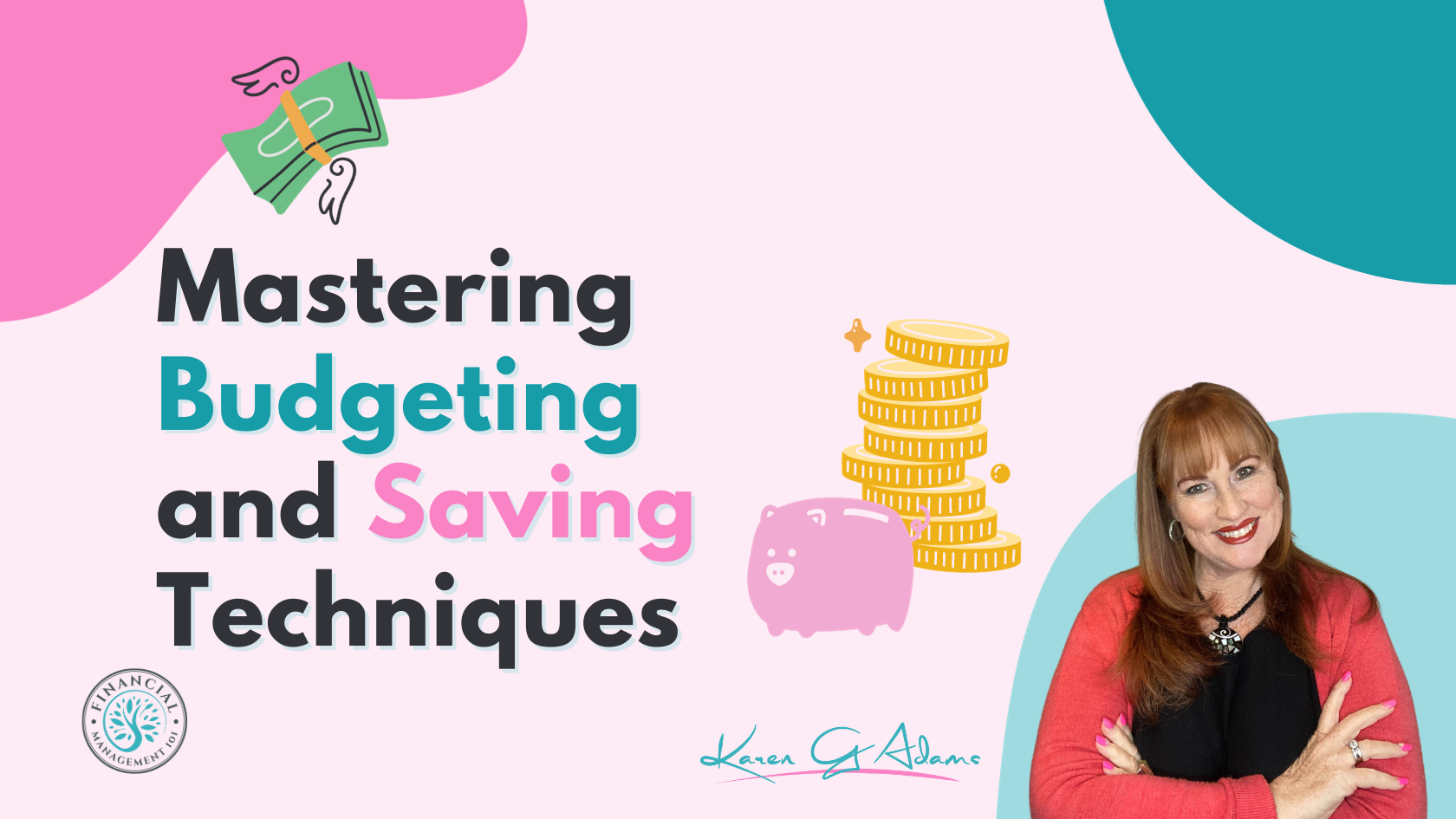
    Learn the fundamental concepts of how budgeting and saving are important to your financial well-being. Registration is now open for the course: Mastering Budget and Saving Techniques. This is a hands-on course with me guiding you on how to budget, track and look at managing your money like a pro.

    Mastering Budget and Saving Techniques
    Free Budgeting Spreadsheet

    MONTHLY COACHING PROGRAM

    With years of experience in financial management, Karen offers insightful guidance and coaching on budgeting, saving, debt reduction, and other financial know-how to help you live a life without financial stress.

    Regular monthly check-ins ensure you stay on track and motivated. Karen provides the encouragement and support you need to stick to your financial goals and plan.