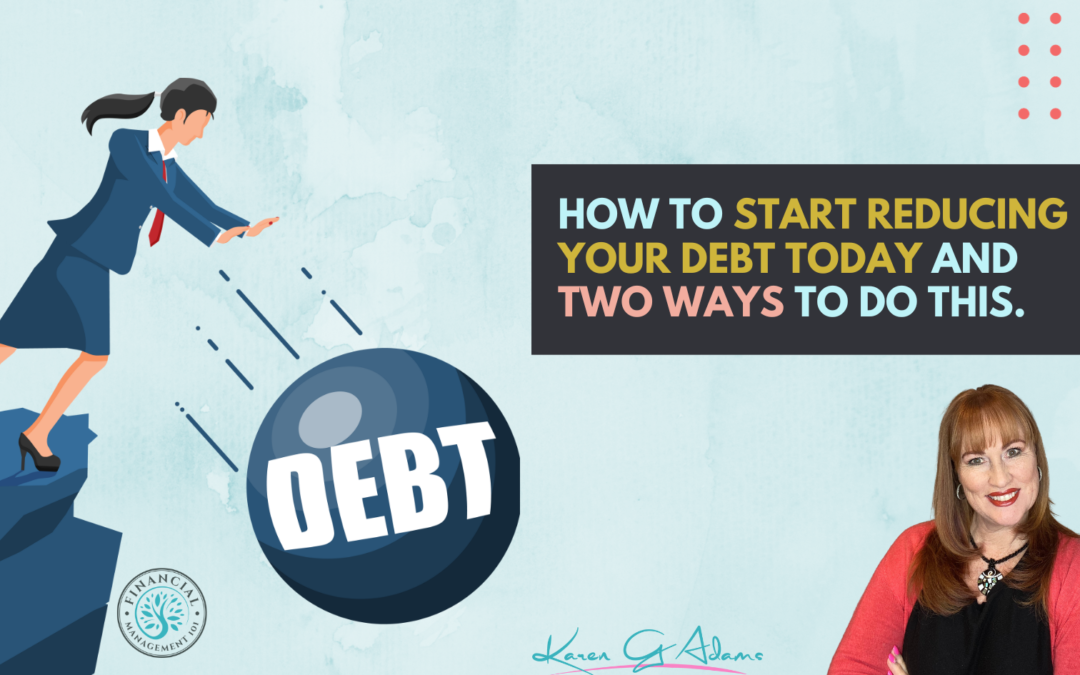
You can immediately begin decreasing what you owe and increasing what you own by following the information below.
There a several commonly recommended strategies for paying off debt efficiently, including the “Debt Snowball” or the “Debt Avalanche” method.
Here’s an explanation of both strategies:
DEBT SNOWBALL METHOD
How It Works: This method involves paying off debts from the smallest to the largest balance, regardless of interest rates. The idea is to gain momentum and motivation by quickly eliminating smaller debts.
Steps for the Debt Snowball Method:
List all debts, starting with the smallest balance and ending with the largest.
Pay the minimum on all debts except the smallest one.
Allocate any extra money in your budget toward paying off the smallest debt as quickly as possible.
Once the smallest debt is paid off, roll the money you were using for that debt into paying off the next smallest debt.
Repeat this process until all debts are paid off.
Advantages: This method can provide a psychological boost as you see smaller debts disappear quickly, which can motivate you to keep going.
DEBT AVALANCHE METHOD
How It Works: This method involves paying off debts in order of highest to lowest interest rates. You focus on paying off the debt with the highest interest rate first to save the most on interest charges over time.
Steps for the Debt Avalanche Method:
List all debts, starting with the one carrying the highest interest rate and ending with the lowest.
Pay the minimum on all debts except the one with the highest interest rate.
Allocate any extra money in your budget toward paying off the debt with the highest interest rate as quickly as possible.
Once the highest-interest debt is paid off, roll the money you were using for that debt into paying off the debt with the next highest interest rate.
Continue this process until all debts are paid off.
Advantages: This method saves you the most money on interest charges over time, as you tackle high-interest debts first.
The Debt Avalanche Method is my preferred method and the one that I teach in my programs, as I want to save you as much money, as you can.
Choosing between the Debt Snowball and Debt Avalanche methods depends on your personal preference and financial situation.
The Debt Snowball may provide quicker wins and motivate you, while the Debt Avalanche can save you more money in the long run. Whichever method you choose, it’s essential to stick to a budget, avoid taking on new debt, and consider increasing your income, if possible, to accelerate your debt payoff efforts.
Additionally, seeking guidance from a financial advisor can provide valuable insights and personalised strategies to help you get out of debt faster.
At Financial Management 101 – we are committed to providing YOU with excellent financial education, training and support so that you can live the life you truly desire. Join ourLEARNING HUB today!
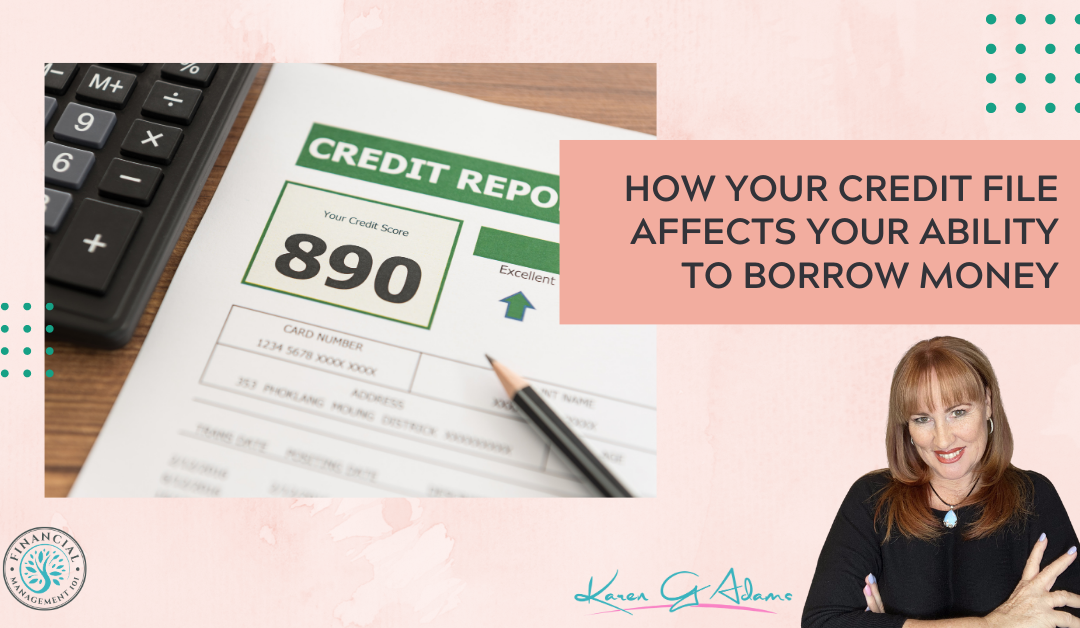
Your credit report is a big part of whether or not you can borrow money from lenders. It gives lenders an idea of how creditworthy you are and helps them figure out how much of a risk it is to lend you money.
Here are some of the most important ways that your credit report affects your ability to borrow money:
1. CREDIT SCORE
Your credit score is based on the information in your credit file. This number shows how good of a credit risk you are. It depends on things like how well you have paid your bills in the past, how much credit you use, how long you have had credit, what kinds of credit you have, and how many new credit accounts you have. If your credit score is higher, it means that you are less likely to have problems with your credit and this makes it easier for you to borrow money on good terms.
2. LOAN APPROVAL
Before deciding whether or not to give you a loan, lenders look at your credit report. They look at your credit history, which includes any missed or late payments, defaults, bankruptcies, or accounts in collections. Lenders are more likely to give you a loan if your credit file shows a history of responsible borrowing and on-time payments.
3. RATES OF INTEREST
Your credit history also affects the rates of interest that lenders may offer you on loans. Lenders look at your credit score to figure out how risky it is to give you money. Most of the time, if you have a good credit score, your interest rates will be lower because you are seen as a more reliable borrower. On the other hand, if you have a low credit score or a history of credit problems, lenders may charge you higher interest rates to make up for the risk they see in you.
4. TERMS
The terms of a loan depend on more than just the interest rate. It can also change how the loan is set up. If your credit report shows that you are a higher risk, the lender may ask for a co-signer, a bigger deposit, or a shorter amount of time to pay back the loan. On the other hand, if you have a good credit history, you might get better terms, like more time to pay back the loan or fewer requirements for security.
5. BORROWING LIMITS
Lenders may also look at your credit report when deciding how much you can borrow. If you have a good credit history and a high credit score, you may be able to borrow more money. But if your credit file shows that you are more of a risk, lenders may limit how much they will lend you or ask for more security.
It is important to keep an eye on your credit file, look over your credit reports from the three major credit bureaus, and fix any mistakes or problems you find. By making payments on time, keeping your credit usage low, and taking care of your debts, you can build and keep a good credit history. This will make it easier for you to borrow money on good terms.
At Financial Management 101 – we are committed to providing YOU with excellent financial education, training and support so that you can live the life you truly desire. Join our LEARNING HUB today!
Oh my gosh, can you believe it we’re now halfway through the year?
HELLO JULY! I feel like I only just came back from the January holidays.
Before we know it Christmas will be here and the stresses of having to make our money stretch that little bit further will be upon us.
So today, I feel it’s time to share some tips on preparing yourself before the year is out and having your money work a little smarter for you by looking at ways you can spend less and save more.
In this blog post, I’m going to share with you my top 10 tips on how you can spend less without feeling like you’re missing out.
So let’s dive into it.
No 1. Check Your Bank Accounts Regularly
First thing you need to do is check your bank accounts regularly. This first tip will save you a lot of money from extra charges and online fraud that seems to be happening more and more today because we’re buying more online.
Go online to your banking app or if you receive bank statements via post then check them. Look down at the debit column and make sure what’s coming out is what you’ve authorised.
Check to see if there’s been no internet fraud on your account, any subscriptions that you thought were cancelled that haven’t been and make sure there are no unauthorised amounts. If something doesn’t look right or you don’t recognise that transaction on your statement then call your bank immediately to get more information on what that debt is for.
Today with the click of a button via our fingerprint on our smartphones we approve new apps and before we know it we’ve subscribed to something that we hadn’t intended on having long term but have forgotten to cancel the subscription.
So make sure you go through regularly your bank account statements. This is the first step to keeping more money in your pocket.
No 2. List Your Debts Down
Listing your debts down will give you an idea how much you’re throwing away on interest payments that could be better used for growing your nest egg.
Look at your current debts, whether they be personal loans, credit cards, store cards or interest-free loans. Grab a piece of paper and at the top label it “Debts”. Then make 4 columns.
The first column you’re going to call it “name of debt” this is where the debt came from ie; the bank, company or person you took the loan out with
Next column you’re going to call “amount owed”
Then column 3 will be named “minimum monthly repayments” and
The last column you will label “interest rate”.
I’ve already prepared a worksheet that’s available in the resource area which you’re more than welcome to download to make it simpler and easier for you to get your debts down on paper.
Next, I want you to take a good look at what’s going out every month from the “minimum monthly payment section”. Add that column up to see how much you are giving away to the banking institution every month on your debts.
Ok so you may be going into heart failure right now and need resuscitating or you might be feeling ok realising that you don’t have as much debt as you had thought.
So what I want you to look at is whether there are any debts you can quickly pay off.
When it comes to your credit card call your bank or credit provider and negotiate with them for a reduced interest rate. If they’re not willing to look after you, research other providers who are more than happy to offer you a 0% interest rate on balance transfers for a specified period of time.
Banks are more than happy to talk to you about transferring your credit as they know secretly that you’ll never pay the card off before the free interest expires. But because you’re super smart – you will be paying down as much as you can on your credit card debt before the time comes due, so you’ll end up with a zero credit card balance in the end thus saving you hundreds and I mean hundreds of dollars in interest payments!
This is definitely one way of putting more money back into your pocket and seeing you spend less on monthly bad debt interest payments.
No 3. Start Using Cash
While you’re enjoying your interest-free credit card for the next 6 or so months make sure you leave your credit card at home and take cash with you. This will stop you from spending on purchases that you can’t afford and will also give you the chance to clear the current debt away.
Using good old fashion cash instead of using credit as this will see you spending less money because you’ll become more aware of what you’re spending your hard earned money on.
No 4. Your Small Change Adding Up Big
Save your coins!
How many times do you pay for things with cash and end up with small change and coins in your wallet or purse?
Go back to what your grandparents did and keep a jar in the kitchen cupboard and every time you get coins, add them into the jar. You’ll be surprised at how quickly it adds up to some decent dollars, which you can then use to pay off your credit card debt faster, or put towards your savings account.
No 5. Zero Monthly Bank Account Fees
Next, look for a bank account that has zero bank account fees.
Did you know you could save in excess of $500 per year just by banking with a bank that doesn’t charge monthly account keeping fees? There are plenty so shop around.
I recently did this with my personal banking accounts and I now have no monthly account keeping fees which add up to more savings and less spending.
No 6. Lookout For Foreign Transaction Fees
When shopping for a bank with zero monthly account keeping fees I want you to keep in mind whether they offer a visa debit or credit card with no foreign transaction fees.
Why is this important? Well, every time you use your credit card to buy things online whether it be via PayPal or using your credit card, you sometimes are buying in a different currency and when it converts back you may be paying a foreign transaction fee.
These are hidden fees that most consumers aren’t aware of.
In my business I use a range of apps and services that are generally from the US. When I had my previous visa debit card/credit card to pay for them – I was often slogged a foreign transaction fee and because I checked my accounts regularly started seeing this increase.
So I rang around to find out which bank or financial institution offered a card with no foreign transaction fees and luckily when I moved my personal and business banking halfway through last year I was able to take advantage of a card that offered “no foreign transaction fees”. This has seen me save hundreds of dollars a month.
I honestly hated seeing money disappear on fees, especially given I’m a money person who loathes having money come out of my account that I didn’t use or intentionally spend on. This has given me more back into my pocket, which I love.
No 7. Preloved Items
An area often overlooked is buying items second hand.
Don’t be too proud to buy something second hand online from companies like Gumtree or eBay – as you can pick up some awesome bargains. I also encourage you to go for a clean out around your home and look to earn some extra cash with items you can move on through the use of these free online selling sites.
For anyone struggling to get an emergency fund up to $2000, this is a great way to de-clutter while earning money on stuff around your house that is just gathering dust.
No 8. Bargain Shop & Shopping Online
Look for specials. Again don’t be too proud to get a bargain or special when you can.
Here in Australia, there is an app called “Fuel Watch” that lets you know the cheapest fuel for the day.
Filling up your car on the day that fuel is between 10- 15 cents cheaper will save you loads at the bowser.
There are other ways you can spend less and that’s by doing your shopping online.
We save hundreds of dollars by doing our shopping online and retailers encourage you by offering specials throughout your online shopping experience.
No 9. Discounts & Special Offers
Number 9 on my list is using Entertainment Cards & Discounts.
I wanted to share this one with you especially, as the other day my parents were buying their great nephew a 21st birthday present at BCF which is a camping and fishing store.
When they went to purchase his $300 gift card – they presented a card called The Entertainment Card.
This card offers many discounts and specials on things like dining out, shopping, travel & leisure to name a few.
So when they got to the checkout they received a 10% discount which meant our nephew is going to receive a $300 gift card that only cost my parents $270.
Bargain! Not just for my retiree parents but for anyone who loves to grab a bargain and save money.
When you start adding up the savings and discounts you can receive, it adds up to the hundreds sometimes thousands of dollars depending on what you’re buying.
So don’t be too proud to check out where you may be able to get a discount – as essentially you’re leaving good money on the table.
And lastly, another way for you to look at spending less and having more money is to…
No 10. Make Your Own Coffee
Yep, I know you love to go out and have someone make your coffee on a daily basis – I get it – coz I do too.
Why not look to invest in a coffee machine where you can buy good quality coffee beans or pods and then treat yourself once or twice a week to a takeaway coffee.
Today it appears that everyone I visit has their very own coffee machine at home.
Australians love entertaining and part of this is serving good coffee to our guests.
We are no longer happy with just servicing up our guest Moccona – we want to impress them with a good cup of coffee.
When you do the numbers – coffee machines depending on the type will pay for itself in no time.
An example of this is if you were to look at the upper end of a pod machine by DeLonghi – that’s fully automated you can pick them up new for under $350 – $400.
I’ve seen this fully automated pod machine come down to as low as $250 during sale times.
Now if you’re really clever like my husband he used points that accumulated on his credit card linking his spending to a points system and got our machine for zero dollars yep zero!
Now there are of course cheaper machines but for this example, I’m using the one we got for our camping travels as we have another bigger machine on the kitchen bench.
If you are purchasing 1, 2 or 3 coffees a day which I know a lot of people do it could be costing you around $10 – $15 + a day per person depending on what type of coffee you order and what size AND don’t forget to add in the sweet treat that normally goes with it!
We save hundreds of dollars when we travel around Western Australia because we take our little portable fully automated DeLonghi pod machine and we use the money we save paying for sightseeing instead.
So how long do you think it would take for your $200 – $300 coffee machine to earn its keep?
Well, it would take just on a month before it would have paid for itself and even less if you look at cheaper one.
Don’t believe me then do the numbers yourself – as you may be surprised at how much you are spending daily if not weekly on coffee.
Today there are so many ways to put more money back into your pocket while spending less and without having to cut costs or stick to a budget that most of us struggle to work with.
I trust this has given you some inspiration on how you can look at ways you could spend less, put more money back into your pocket and start feeling good about the way you can manage money better.
Where are the ways you could spend less while enjoying more money in your pocket?
Leave me a comment below as I’d love to hear from you.
Until next time here’s to your financial health, wealth & happiness.