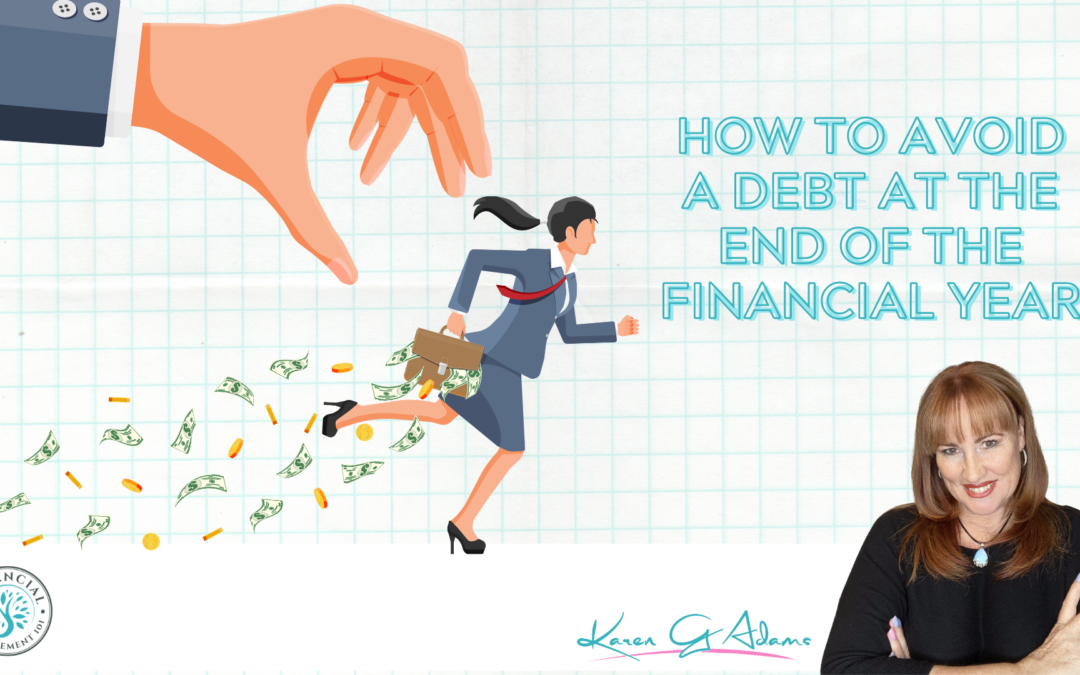
What business owners must do to ensure they don’t have a tax debt at the end of the financial year.
As a business owner, there are several steps you can take to manage your money effectively and minimise the risk of having a tax debt at the end of the financial year.
Here are some tips on how to do this:
1. MAINTAIN ACCURATE FINANCIAL RECORDS
Keep detailed records of all your business transactions, including sales, expenses, invoices, receipts, and bank statements. Accurate record-keeping is crucial for preparing your tax returns correctly and minimising errors.
2. SEPARATE PERSONAL AND BUSINESS FINANCES
Establish separate bank accounts for your personal and business finances. This separation will help you track your business income and expenses more effectively, making it easier to calculate your tax obligations accurately.
3. TRACK AND CATEGORISE EXPENSES
Categorise your business expenses properly to ensure you claim all eligible deductions. Common expense categories include office supplies, rent, utilities, travel, marketing, and employee salaries. Consider using accounting software or tools to streamline expense tracking and categorisation.
4. PLAN FOR ESTIMATED TAX PAYMENTS
Depending on your jurisdiction, you may be required to make estimated tax payments throughout the year. Estimate your tax liability and make timely payments to avoid penalties and interest charges. Consult with a tax professional or accountant to determine the appropriate amount to set aside for estimated taxes.
5. UNDERSTAND DEDUCTIBLE EXPENSES
Familiarise yourself with the tax deductions and credits available to your business. Deductible expenses can include equipment purchases, professional services fees, training costs, and business-related travel expenses. Keep receipts and documentation to support your deductions.
6. SEEK PROFESSIONAL ADVICE
Consult with a tax professional or accountant who specialises in small business taxation. They can help you understand the tax laws specific to your industry and provide guidance on maximising deductions while staying compliant.
7. USE TAX PLANNING STRATEGIES
Explore tax planning strategies that can help you minimise your tax liability. For example, you may consider deferring income or accelerating expenses into the current financial year, where appropriate. Again, it’s essential to work with a tax professional to ensure you’re utilising these strategies correctly and legally.
8. BUDGET AND SAVE FOR TAXES
Create a budget that includes setting aside funds specifically for taxes. By saving for taxes throughout the year, you’ll have the necessary funds available when it’s time to make payments, reducing the risk of a tax debt.
Remember, while these steps can help you manage your money and minimise tax debt, it’s crucial to consult with a qualified tax professional who can provide personalised advice based on your specific circumstances and the tax laws applicable to your jurisdiction.
At Financial Management 101 – we are committed to providing YOU with excellent financial education, training and support so that you can live the life you truly desire. Join our LEARNING HUB today!
1. Firstly, look at the reason why you want to switch your home loan
2. Lower interest rate
3. What is the new lender offering that is worth switching
4. Consider the features you’re looking for in your new home loan
5. Weigh up the pros versus cons of switching
6. Look at the costs of switching home loans
Deciding whether to switch your home loan to another lender is an important financial decision.
Here are some factors to consider when making that decision:
1. INTEREST RATES
Compare the interest rates offered by your current lender with those offered by other lenders. If you find significantly lower rates elsewhere, switching may be beneficial. However, consider any additional costs associated with the switch, such as application fees, exit fees, or ongoing charges.
2. LOAN FEATURES
Assess the features and benefits of your current loan and compare them to what other lenders are offering. Look for features like flexible repayment options, offset accounts, redraw facilities, or the ability to make additional repayments. Switching to a loan with better features could save money or provide more financial flexibility.
3. LOAN TERM
Consider the remaining term of your current loan. If you’re already several years into your mortgage, switching to a new lender could potentially reset the loan term, resulting in a longer repayment period. This may not be ideal if your goal is to pay off your mortgage faster.
4. COSTS AND FEES
Determine the costs associated with switching lenders. These may include discharge fees from your current lender, application fees for the new loan, valuation fees, and legal costs. Calculate whether the potential savings from switching outweigh the expenses involved.
5. CUSTOMER SERVICE
Assess the level of customer service offered by your current lender and potential new lenders. Read reviews and talk to others who have experience with the lenders you’re considering. Good customer service can make a significant difference in your overall experience.
6. OVERALL SAVINGS
Calculate the potential savings over the life of the loan by switching to a new lender. Consider factors such as interest rate differentials, ongoing fees, and loan term changes. If the savings are substantial, it may be worth considering the switch.
Remember, before making any decisions, it’s essential to seek advice from a qualified mortgage broker or financial advisor who can provide personalised guidance based on your specific circumstances. They can help you analyse the costs and benefits and determine whether switching lenders is the right choice for you.
At Financial Management 101 – we are committed to providing YOU with excellent financial education, training and support so that you can live the life you truly desire. Join our LEARNING HUB today!
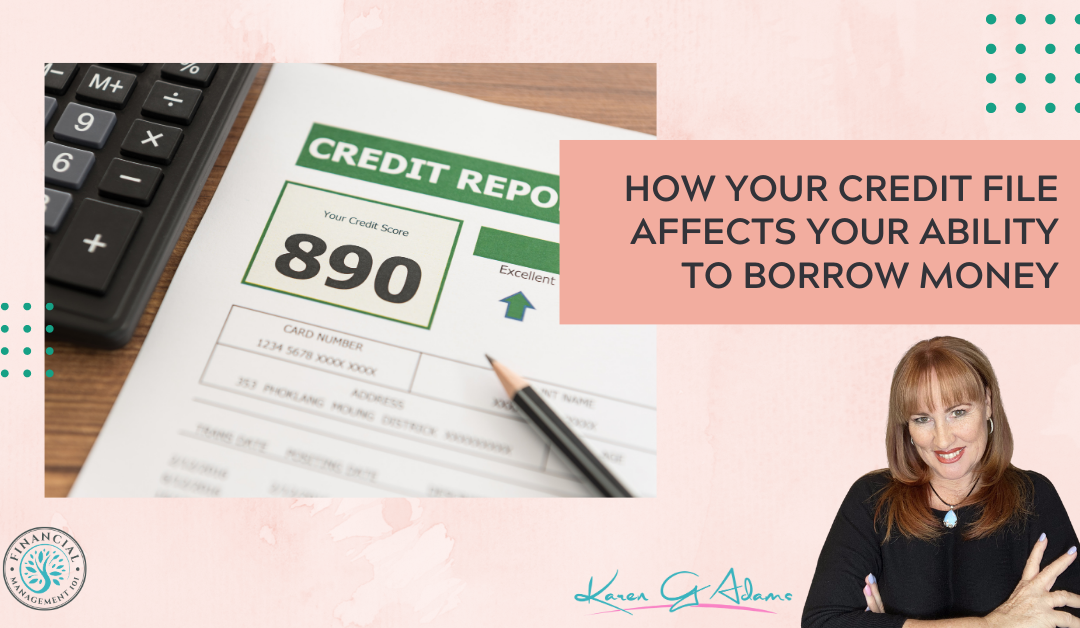
Your credit report is a big part of whether or not you can borrow money from lenders. It gives lenders an idea of how creditworthy you are and helps them figure out how much of a risk it is to lend you money.
Here are some of the most important ways that your credit report affects your ability to borrow money:
1. CREDIT SCORE
Your credit score is based on the information in your credit file. This number shows how good of a credit risk you are. It depends on things like how well you have paid your bills in the past, how much credit you use, how long you have had credit, what kinds of credit you have, and how many new credit accounts you have. If your credit score is higher, it means that you are less likely to have problems with your credit and this makes it easier for you to borrow money on good terms.
2. LOAN APPROVAL
Before deciding whether or not to give you a loan, lenders look at your credit report. They look at your credit history, which includes any missed or late payments, defaults, bankruptcies, or accounts in collections. Lenders are more likely to give you a loan if your credit file shows a history of responsible borrowing and on-time payments.
3. RATES OF INTEREST
Your credit history also affects the rates of interest that lenders may offer you on loans. Lenders look at your credit score to figure out how risky it is to give you money. Most of the time, if you have a good credit score, your interest rates will be lower because you are seen as a more reliable borrower. On the other hand, if you have a low credit score or a history of credit problems, lenders may charge you higher interest rates to make up for the risk they see in you.
4. TERMS
The terms of a loan depend on more than just the interest rate. It can also change how the loan is set up. If your credit report shows that you are a higher risk, the lender may ask for a co-signer, a bigger deposit, or a shorter amount of time to pay back the loan. On the other hand, if you have a good credit history, you might get better terms, like more time to pay back the loan or fewer requirements for security.
5. BORROWING LIMITS
Lenders may also look at your credit report when deciding how much you can borrow. If you have a good credit history and a high credit score, you may be able to borrow more money. But if your credit file shows that you are more of a risk, lenders may limit how much they will lend you or ask for more security.
It is important to keep an eye on your credit file, look over your credit reports from the three major credit bureaus, and fix any mistakes or problems you find. By making payments on time, keeping your credit usage low, and taking care of your debts, you can build and keep a good credit history. This will make it easier for you to borrow money on good terms.
At Financial Management 101 – we are committed to providing YOU with excellent financial education, training and support so that you can live the life you truly desire. Join our LEARNING HUB today!
Having a mortgage is one of the biggest debts most people embark on when owning a home.
It can be one of the most stressful and worrying times in their life, often concerned how they’ll make the monthly mortgage repayments when unexpected events come up.
What a lot of people aren’t aware of when borrowing the money to buy their home, is the overall cost for paying down this debt if they don’t pay it down as quickly as possible.
Because the first 10 years of the term of the loan whether it be a 25 or 30 year loan, is paid in interest payments to their banking institution. During this time there isn’t a lot of principal paid off (the original amount borrowed) as most of it goes to paying interest payments, unless the new home owner is consciously paying extra into their home loan.
Listen to find out how you can smash this debt down in half the time and save yourself $000’s of hard earn dollars.
For more support and understanding of how you can pay your mortgage down join my private FB GROUP for financial and mindset education.
This blog is dedicated to my mentor and serial entrepreneur Mr Harry Bozin, who has taught me everything I know about paying down the biggest debt one will ever have THE MORTGAGE and in the quickest way possible.
Whenever I share anything about how to pay your mortgage down as quickly as possible, take note and put into action the strategies and tips I share that truly work.
So, one of the major purchases individuals and couples in their lifetime take on, is when they decide to put a deposit down to buy their very own piece of paradise.
Having a mortgage is one of the biggest debts most people embark on when owning a home.
It can be one of the most stressful and worrying times in their life, often concerned how they’ll make the monthly mortgage repayments when unexpected events come up.
What a lot of people aren’t aware of when borrowing the money to buy their home, is the overall cost for paying down this debt if they don’t pay it down as quickly as possible.
Because the first 10 years of the term of the loan whether it be a 25 or 30 year loan, is paid in interest payments to their banking institution. During this time there isn’t a lot of principal paid off (the original amount borrowed) as most of it goes to paying interest payments, unless the new home owner is consciously paying extra into their home loan.
Do you know what the total cost of your mortgage is if you do not pay it down well before the end of the term of the loan?
Well, I do and it may shock you to know that on a 25 year home loan borrowing an amount of say $350,000 not paid before the 25 year mark, will end up seeing you pay an additional $236,624 for the privilege of having a home loan.
Now that’s $236,624 better in your pocket earning you money, not the banks.
Let’s look at some rough numbers on how you could grow this money of $236,624 where it would compound over the next 15 years (because that’s the time period you saved on your mortgage by paying it down in 10 years).
You could put an additional $263,529 into your pocket seeing you at the end of 15 years your initial $236,624 growing to an enormous amount of $500,153.
Now that’s how having your money work for you and not your banking institutions benefit!
So what are some of the ways you can pay this debt down as quickly as possible and be mortgage free in 10 year or less?
There are 5 steps to becoming mortgage free faster and they are:
1 SET YOUR GOAL
It’s sounds crazy for some people to set a goal for this given they generally feel overwhelmed at the amount of money to be paid back, but it can be done.
This goal is just like any other you would set.
Let’s say for example that you have a $350,000 mortgage and would like to pay this off around the 10 year mark not 25 years as per the term of your loan agreement.
Then what you would do is look at ways you could do this by looking at your spending habits and talking to your mortgage specialist to find out whether your home loan is one that will enable you to pay it down without any penalties.
2 GET A COACH
There are two coaches you will need to ensure you stay on track and on target of paying your mortgage down within 10 years and the first is a financial coach like me.
A FINANCIAL COACH is critical to keeping you focussed on your goal and guide you in making sure you’re staying on track to paying your home loan goal down in the 10 year time frame you’ve set.
The goal of the financial coach is to ensure that every bit of extra money you have, goes towards paying this debt down as fast as possible.
A financial coach is not only there for financial encouragement, but is also there for your emotional wellbeing, when at times you may feel overwhelmed and stray off course thinking you’re never going to pay this down.
The second coach is A MORTGAGE COACH. Now the major benefit of a mortgage coach is to ensure that you have the most effective home loan for you that’s working in meeting your goal of becoming debt-free in 10 years or less.
A good mortgage coach would meet with you once or twice a year to ensure that your loan meets your current life circumstances, because as we know home loans change.
A mortgage coach will be able to advise whether you are best taking advantages of lower interest rates and whether you could fix that interest rate to maximise your debt reduction strategy.
3 LEARN HOW AND WHAT YOU CAN DO TO ACHIEVE YOUR GOAL OF BECOMING DEBT-FREE SOONER.
There are many strategies about how to pay your home loan down faster and I’m afraid to say that it’s not in the banking institutions’ best interests to share with you how to pay your debt down faster.
Why, because they have forecasted what they are going to do with your extra repayments right up to the 25-year mark. So you see they want you to keep paying so they can use your hard-earned money on other investment opportunities to help grow shareholder dividend returns.
This is why working with both your financial coach and mortgage coach will see you taking advantage of strategies that you may not be aware of yet.
4 CREATE A PLAN AND STICK TO IT!
With anything in life, when you have a plan and stick to it, you have a better chance of achieving what you’ve set out.
This is where your financial coach can help create a plan that meets your requirements and lifestyle. You see we all have different priorities in life so the plan needs to be tailored to suit our own circumstances.
5 TAKE ACTION. DO WHAT OTHERS WON’T DO AND YOU WILL SEE THE BENEFITS OF BECOMING DEBT FREE SOONER.
One of the best ways to become mortgage free is do what others aren’t prepared to do.
So often we follow the herd mentality and that sees us continuing to be poor and broke.
It’s about stepping out of our comfort zone for a short period of time while the adjustments are being made and then reaping the benefits long term.
When someone has the courage to step out and become their own person and do the things others aren’t prepared to do, then they soon become the ones who are debt free, happier and living life the way they’ve always dreamed.
So let’s recap what it may costing you by not getting a coach.
Firstly, you’ve seen that you are paying out good money that you’ve worked long and hard to the banking institutions for longer than you need to.
And secondly, your hard-earned money could be working for you and not your banks, as you’ve seen in the illustration above on the benefits of compound interest, making you richer not them.
Also, you’ve read about the benefits of getting yourself both a financial and mortgage coach and this enables you to become mortgage-free sooner
** As your financial coach, I’m one that works with you regularly to help you stay focussed and on track to achieving your financial goals. As your coach, I am also here to ensure that when life suddenly throws you a curveball as it often does – you have the tools and resources necessary to stay motivated and on track.
** The mortgage coach is the one that ensures your home loan is structured and set up correctly. Utilising the latest strategies available to maximise the full debt reduction potential. The mortgage coach’s responsibility is to ensure they are working with you to understand your home loan so you can work towards paying it down as quickly as possible.
NEXT STEPS:
Financial Coach – get in touch with me today to see how I can show you how to pay your mortgage down in half the time while supporting you in achieving your financial goals sooner.