Your First Quarter Report Card

Your First Quarter Report Card

July, August, September – done and dusted, more or less. So how’s the new financial year actually going? Not “how busy have you been.” How’s it going?

Most business owners can rattle off exactly how flat out they’ve been since July; the jobs, the clients, the late nights. Fewer can tell you how profitable they’ve been over the same stretch. And that gap between “flat out” and “actually ahead”, is exactly where a quick quarter check-in earns its keep. It’s the difference between a business that feels busy and a business you can actually prove is moving forward.

Nobody waits for the end-of-year school report to find out how a kid’s tracking. You check in along the way – a note home, a parent-teacher chat, a quiet word, and adjust before it becomes a bigger conversation. Your business deserves the same courtesy. Not a full audit, not a forensic dive into every transaction, just an honest look at the first three months of the new financial year, before you’re four quarters deep wondering where it all went and why the number at tax time doesn’t match the effort you know you put in.

Why most business owners skip this

It’s not laziness. It’s usually one of two things, either it feels like it’ll take hours you don’t have, or there’s a quiet fear of what it might show. Both of those assumptions tend to be wrong. This exercise takes less time than a coffee catch-up, and more often than not, the number is somewhere between “not as bad as I feared” and “better than I gave myself credit for.” The dread is almost always worse than the discovery.
Three questions, one cup of tea

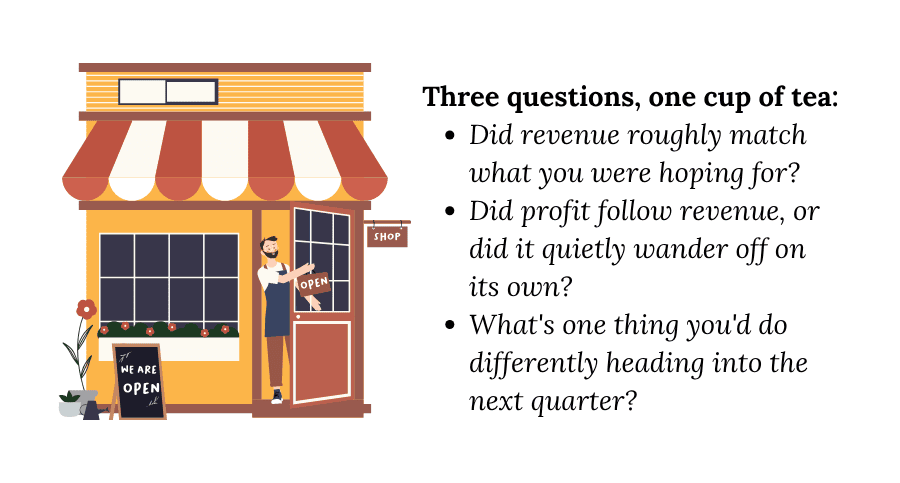
Three questions, one cup of tea

Did revenue roughly match what you were hoping for? Doesn’t need to be precise; ahead, on track, or behind is enough of an answer for now. And if you realise you never actually set a target for the quarter, that’s not a failure, it’s just a perfectly good place to start next time. You can’t be ahead or behind a target that doesn’t exist.

Did profit follow revenue, or did it quietly wander off on its own? This is the one that catches people out most often, and it’s the one I see most in this line of work. Revenue climbs, everyone’s thrilled, the calendar’s fuller than ever and then the bank balance doesn’t quite reflect it, because costs crept up right alongside the growth without anyone clocking it. Materials went up. A subcontractor’s rate went up. You took on a bit more admin help. None of it felt like a big decision at the time, but added together it’s eaten the extra revenue and then some. If you’ve felt busier than ever this quarter but the numbers don’t quite match the feeling, this is usually why.

What’s one thing you’d do differently heading into the next quarter? Not five things, just one! Trying to fix everything at once is how good intentions turn into nothing changing at all. Maybe it’s pricing, which almost every business owner I meet is quietly undercharging on. Maybe it’s chasing invoices a little sooner instead of letting them drift. Maybe it’s finally looking at where the money’s actually going instead of guessing based on vibes and a general sense of dread. Pick the lever that would move things most, and leave the rest for next quarter’s version of this exercise.

What to do with what you find

If the quarter came in ahead, resist the urge to immediately spend the difference on something exciting. Sit with it for a bit. Ask whether it’s a genuine trend or a one-off good stretch before you build plans around it. If it came in behind, resist the opposite urge, the spiral into “the whole business is failing.” One quarter is one quarter. It’s a data point, not a verdict. The value isn’t in the number itself, it’s in what the number tells you to look at next.

Why quarterly, specifically

A quarter is a genuinely good length of time to check in on; long enough to see a real pattern rather than a one-off blip, short enough to actually change course while it still matters. Check monthly and you risk reacting to noise, a slow week that means nothing, a good week that means nothing either. Check yearly and you find out too late to do much about it. Quarterly sits right in the sweet spot, giving you enough information to trust it, and enough time left in the year to actually act on it.

The business owners I see making calmer, more confident decisions are almost always the ones checking in quarterly, not just at tax time when the accountant delivers the number and there’s nothing left to do but accept it. Checking quarterly puts you back in the driver’s seat of your own financial year, rather than a passenger finding out where you ended up after the fact.

If you’d like a proper look under the bonnet, the CEO Dashboard gives you full visibility on exactly how the quarter really went not the guessed version, the real one.

Turning it into a rhythm

The businesses that get the most out of this aren’t doing anything clever, they’ve just made it a rhythm rather than a rescue mission. Same week each quarter. Same three questions. Same short list of actions afterwards. It stops being a big, dreaded event and becomes something closer to a habit, the business equivalent of a regular check-up rather than an emergency room visit.

If this is the first time you’ve done a proper quarter check-in, don’t worry about making it perfect. The value isn’t in precision, it’s in the act of actually stopping to look, on a schedule, instead of only looking when something’s gone wrong enough to force your hand.

Setting yourself up for next quarter

Before you close the laptop on this exercise, write down one number you’ll check again in three months. Just one. Revenue, profit margin, average invoice value, whatever feels most relevant to where you are right now. Having that one number in mind gives the next quarter’s check-in a head start, because you’ll already know what you’re comparing against instead of starting from scratch each time.

Small, consistent check-ins beat big, occasional audits every time. That’s true of your car, your health, and it’s absolutely true of your business.
The CEO Dashboard

#HowToResetMyMoneyMindset #NewYearFinancialMindset #HowToStartFreshWithMoney  emergency fund australia, money management, family savings #SmallBusinessOwner #BusinessGrowth #CashflowManagement #BusinessSuccess
#EntrepreneurMindset

 

R U OK? (The Question You Never Ask Yourself)

R U OK? (The Question You Never Ask Yourself)

On September 10, most of Australia will be asking each other “R U OK?” Workplaces will run morning teas. There’ll be yellow everywhere. It’s a genuinely good day, and I’m glad it exists – it’s done a lot for getting these conversations out into the open where they belong, after years of them staying firmly behind closed doors.

But here’s the question I actually want to ask you, business owner to business owner… when’s the last time you asked yourself that?

We’re brilliant at checking in on everyone else. Staff, clients, family, that one supplier who always sounds a bit frazzled on the phone. But most business owners I talk to haven’t had an honest conversation with themselves in months. We’re too busy holding everything together to notice we might not be, ourselves. We’re the ones people come to when something’s gone wrong, which means we’ve quietly trained everyone around us, including ourselves to believe we don’t need checking on.

Running a business is one of the loneliest jobs going, if I’m honest. You’re the one everyone brings their problems to. There’s rarely anyone bringing you theirs, asking how you’re actually tracking underneath it all. Even the people who love you tend to ask “how’s the business going?” rather than “how are you going?” and those are very different questions with very different answers.

The performance of “fine”

There’s a particular skill business owners develop without meaning to, the ability to say “yeah, good, flat out” in a completely convincing tone while privately feeling anything but. It becomes automatic. Someone asks how you’re going at the school pickup, at the football, at a client meeting, and out it comes before you’ve even thought about it. Over time, that automatic answer starts to replace the honest one, even in your own head. You stop checking because you’ve gotten so good at performing that you don’t seem to need it.

So today, let’s flip it. Three questions, and actual permission to answer them properly, without the reflexive “yeah, good, flat out” that we all give without thinking.

Am I okay, or am I just coping?

There’s a real difference. Coping looks like getting through the week in one piece, ticking things off, keeping the wheels on. Okay looks like genuinely enjoying the thing you built, feeling proud of it, curious about where it’s going, energised rather than depleted by it. If you’ve been in coping mode for a while now, that’s worth noticing, not brushing off with “it’s just a busy season,” because busy seasons have a habit of becoming permanent if nobody names them.

There’s no shame in “coping” as an honest answer. It’s often the truest thing a business owner has said about themselves in months, once they finally stop and let themselves say it. The shame only comes from pretending otherwise for too long.

What am I carrying that I haven't said out loud?
For a lot of business owners, it's the money. The gap between what the business brings in and what it feels like it should be bringing in by now, given how hard you're working.

What am I carrying that I haven’t said out loud?

For a lot of business owners, it’s the money. The gap between what the business brings in and what it feels like it should be bringing in by now, given how hard you’re working. That gap is heavy to carry on your own, and you really don’t have to. I’ve had conversations with business owners who’ve been sitting on that particular worry for years, silently, because it felt embarrassing to say out loud, like admitting it meant admitting they’d failed at something. It’s not embarrassing. It’s incredibly common, and it’s fixable once it’s actually spoken about, usually far more fixable than the years of silent worry suggested.

Sometimes what people are carrying isn’t even the money itself, it’s the fear of what the money says about them. That’s a heavier load than the actual numbers ever are.

Who’s actually in my corner?

Not staff. Not clients. I mean the people who ask how you’re going, not just how the business is going. If that list is short, that’s your sign; a mentor, a community, or even just a standing coffee with someone who genuinely gets what this life is like. Business ownership can be surprisingly isolating even when you’re surrounded by people all day, because being surrounded by people isn’t the same as being known by them.

The physical signs worth noticing

Sometimes the “am I okay” question is easier to answer by looking at the body rather than the mind. Are you sleeping properly, or lying awake running through tomorrow’s problems? Are you short-tempered with people who don’t deserve it? Have you stopped doing the small things that used to recharge you – the walk, the round of golf, the Sunday paper, because there’s “no time”? These aren’t small details. They’re often the clearest signal available that the tank’s getting low, well before the mind is ready to admit it in so many words.

It’s okay to not have the answer yet

If you sat with those three questions and didn’t love your answers, that’s not a failure, that’s information. The whole point of asking is so you can actually do something with what you find, rather than carrying it around unexamined for another six months. Awareness on its own doesn’t fix anything, but it’s the step that has to come first, and it’s the step most business owners skip entirely because it’s uncomfortable.

You can’t run a healthy business from an empty tank. Checking in on yourself isn’t soft, whatever the old-school hustle crowd would have you believe, it’s strategy, plain and simple. A business owner who’s running on empty makes worse decisions, snaps more easily, and enjoys less of what they’ve built. None of that helps the business either – it’s not a trade-off between looking after yourself and looking after the business. They’re the same job.

And if part of what’s weighing on you is the money side of things, that’s exactly what The Edge exists for. A place where you’re not carrying it solo, surrounded by other business owners asking each other the real questions instead of the polite ones.

Join The Edge: https://financialmanagement101.com.au/work-with-karen/the-edge/

And if today’s the day you actually need to talk to someone, Lifeline is on 13 11 14, any hour, no appointment needed.

What to do once you’ve asked yourself

Asking the question is the easy part, once you’ve actually made yourself do it. The harder part is what comes next, because most business owners are excellent at identifying a problem and then filing it away under “deal with that eventually.” So if any of the three questions above landed a bit close to home, don’t let it end there.

Pick one small thing. Not a complete overhaul of your life, not a dramatic announcement to everyone that you’re “making changes.” One small thing; a call to a friend you’ve been meaning to make, an actual look at the money situation you’ve been avoiding, a boundary around one evening a week that’s just yours. Small, specific, doable this week, not “someday.”

Business owners checking in on business owners

Business owners checking in on business owners

There’s a particular kind of relief that comes from talking to someone else who genuinely understands what this life involves – the highs that nobody else quite gets excited about the way you do, and the lows that nobody else quite understands the weight of either. Friends and family love you, but unless they’ve run a business themselves, there’s a layer of it they simply can’t relate to, however much they try.

That’s part of why community matters so much here. Not a support group in the clinical sense, just other people in the same boat, who ask “how are you really going” and actually mean it, who’ve had the sleepless nights over cash flow and the quiet pride over a client win, and who get it without you having to explain the whole backstory first.

THE EDGE Membership

#HowToResetMyMoneyMindset #NewYearFinancialMindset #HowToStartFreshWithMoney  emergency fund australia, money management, family savings #SmallBusinessOwner #BusinessGrowth #CashflowManagement #BusinessSuccess
#EntrepreneurMindset

 

How Do I Build a Business That Runs Without Me?

How Do I Build a Business That Runs Without Me?

The biggest obstacle to growing your business might not be your team, your systems, or your customers. It might be you.

When I ask business owners why they started their business, the answers are usually very similar.

“I wanted more freedom.”

“I wanted to spend more time with my family.”

“I wanted to be my own boss.”

“I wanted to build something for myself.”

“I wanted more flexibility.”

It’s a dream shared by almost every entrepreneur.

The irony is that somewhere along the journey, many business owners created exactly the opposite.

Instead of building freedom, they build dependence.

Not dependence on customers.

Not dependence on suppliers.

Dependence on themselves.

Without even realising it, they become the person every decision revolves around.

  • Every quote has to be approved by them.
  • Every customer problem lands on their desk.
  • Every invoice needs their attention.
  • Every staff member waits for direction.
  • Every decision, big or small, pauses until the owner says yes.

Then one day they say something I’ve heard hundreds of times.

“I can’t even take a week off.”

If you’ve ever felt like that, I want you to know something.

It doesn’t mean you’ve built a bad business.

It means you’ve built a business that’s become too dependent on one person.

And that person is you.

The Business You Built Has Started Owning You

There’s a moment in almost every business owner’s journey when the excitement of starting a business begins to fade.

The adrenaline has gone.

The novelty has worn off.

Instead of feeling like the owner, you feel like the busiest employee.

Your day becomes a constant stream of interruptions.

Emails.

Phone calls.

Staff questions.

Customer issues.

Approvals.

Problems.

By the time you sit down to work on something important, another interruption arrives.  

At the end of the day, you’re exhausted, but you struggle to explain what you actually achieved.

Sound familiar?

Here’s the truth. You’re probably not disorganised.You’re overloaded.

More importantly, you’ve become the centre of every decision in your business.

That’s not leadership.

That’s dependency.

And dependency is expensive.

The Business You Built Has Started Owning You

Every Time Your Business Stops When You Stop… You’ve Found a Bottleneck

Imagine walking through a factory.

Every machine is operating beautifully until suddenly everything comes to a halt.

You look around and discover one conveyor belt has stopped.

Every machine behind it is waiting.

Nothing can move until that one bottleneck starts again.

Businesses work exactly the same way.

Sometimes the bottleneck isn’t a machine.

It’s the owner.

If every quote waits for you…

You’re the bottleneck.

If every customer issue comes back to you…

You’re the bottleneck.

If every team member needs your approval…

You’re the bottleneck.

If nobody can make a decision unless you’re in the office…

You’re the bottleneck.

The difficult part is that most owners become the bottleneck because they care.

They want things done properly.

They’ve worked hard to build their reputation.

They believe no one will care as much as they do.

And they’re probably right.

Nobody will.

But that doesn’t mean nobody else can do an excellent job.

Why Smart Business Owners Accidentally Limit Their Own Growth

This is one of the biggest mindset shifts I teach.

Your value to the business changes as the business grows.

When you first start, your value comes from doing the work:

  • You’re wearing every hat.
  • You’re selling.
  • Delivering.
  • Quoting.
  • Marketing.
  • Bookkeeping.
  • Cleaning the office.
  • Making the coffee.

That’s perfectly normal.

But if you’re still doing all of those things five or ten years later, the business hasn’t evolved.

You’ve simply become busier.

Growth requires a different version of you.

Instead of doing everything… You start designing everything.

Instead of solving every problem… You build systems that prevent problems.

Instead of answering every question… You teach your team how to find the answer.

Instead of making every decision…You create clear guidelines that empower others to decide confidently.

That’s the transition from technician to CEO.

It’s one of the hardest transitions in business.

It’s also one of the most rewarding.

Control Feels Safe… Until It Doesn’t

Many owners tell me they struggle to let go because they’re afraid standards will drop.

I understand that.

You’ve spent years building your reputation.

But here’s the question I often ask.

What’s costing your business more?

The occasional mistake someone else might make, or the hundreds of decisions waiting for you every single week?

Perfection often becomes the enemy of growth. Healthy businesses don’t expect perfection. They build consistency. Consistency comes from systems.

Not superheroes.

Systems Create Freedom

People often hear the word “systems” and imagine thick manuals gathering dust on a shelf.

That’s not what I mean.

A system is simply the best way of doing something.

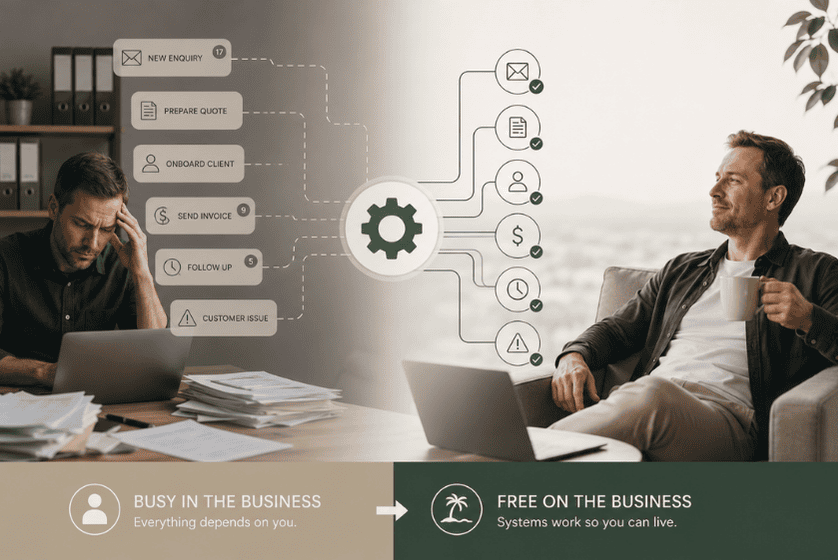
  • How do you answer enquiries?
  • How do you prepare quotes?
  • How do you onboard new clients?
  • How do you invoice?
  • How do you follow up overdue accounts?
  • How do you manage customer complaints?

Every time you repeat something, you have an opportunity to build a system.

Every system removes another decision from your day.

Over time those small improvements compound.

Eventually your business begins solving problems without needing you in the middle of every conversation.

That’s where freedom begins.

The True Test of a Healthy Business

One of my favourite questions to ask business owners is this:

“What would happen if you disappeared for four weeks?”

Most laugh.

Then they answer honestly.

“It would fall apart.”

Imagine if the opposite were true. Imagine taking a holiday knowing your team understood their roles. Customers were looked after. Invoices still went out. Cashflow continued. Problems were solved. Business continued.

Not because you weren’t important. But because you’d built something bigger than yourself.

That’s the difference between owning a job and owning an asset.

Building a Business That Someone Would Actually Buy

Many owners tell me they’ll sell their business one day.

Then I ask another question.

“What exactly would someone be buying?”

Silence.

Because if the owner is doing everything…

The buyer isn’t purchasing a business.

They’re purchasing a job.

Businesses become valuable when they can operate consistently without relying on one individual.

That’s why scalability and saleability go hand in hand.

The less dependent your business is on you, the more valuable it becomes.

Not only to a future buyer.

But to you.

Because suddenly you have choices.

  • You can step back.
  • You can grow.
  • You can take a holiday.
  • You can spend more time with family.
  • You can focus on strategy instead of survival.

That’s what business ownership was supposed to feel like.

The EDGE Philosophy

Everything I teach comes back to one simple belief.

Businesses shouldn’t just survive. They should create freedom.

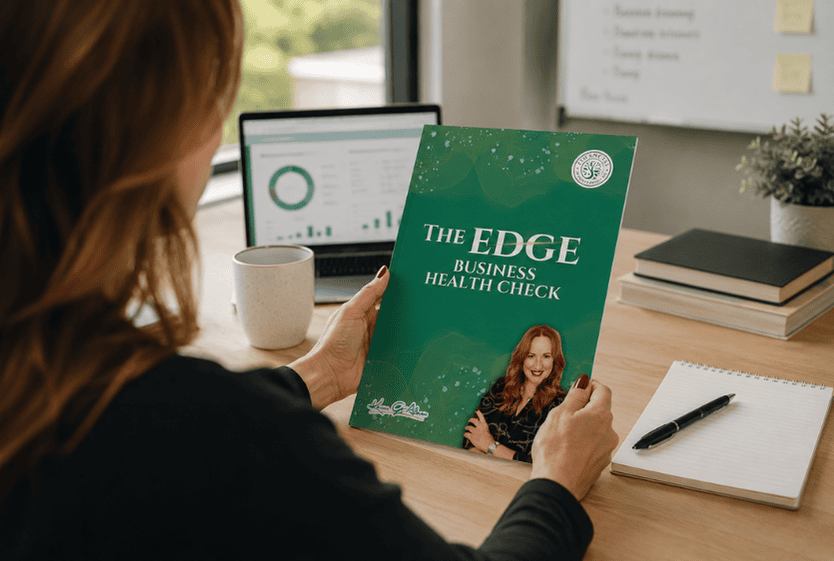
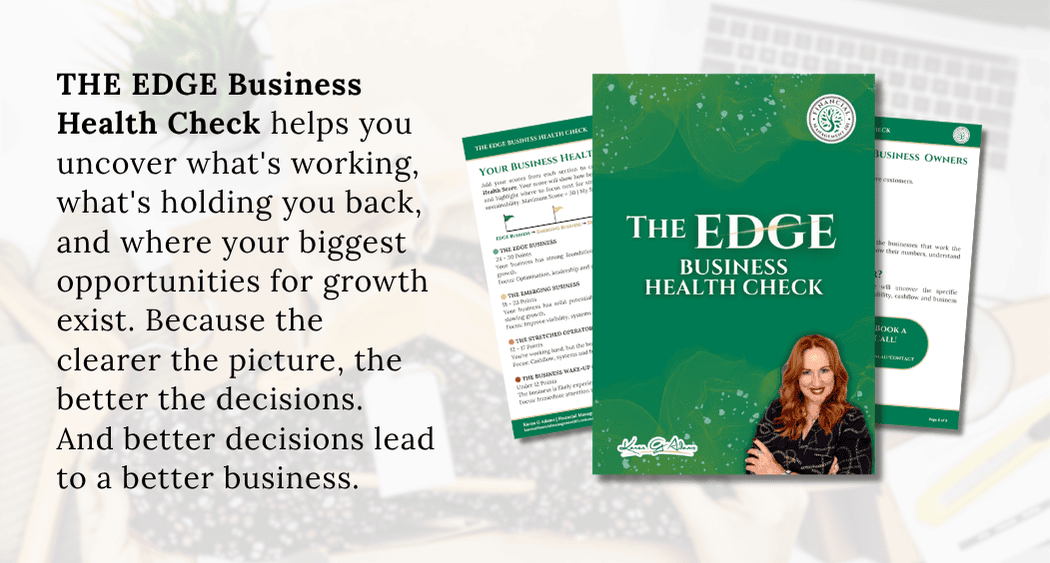
That’s why The EDGE Business Health Check exists.

It’s not simply measuring financial performance. It’s measuring the health of the business.

Healthy businesses don’t rely on luck. They don’t rely on heroic owners working eighty-hour weeks.

They rely on visibility.

Strong systems.

Clear leadership.

Healthy cash flow.

Profitable decisions.

And owners who understand that their role is no longer to be involved in everything.

Their role is to build a business that can thrive because of the foundations they’ve created.

Your Greatest Opportunity

If you’ve recognised yourself somewhere in this article, I hope you don’t feel discouraged.

I hope you feel encouraged.

Because the fact that you’ve become the bottleneck doesn’t mean you’ve failed. It means your business has reached a point where it needs a different version of you.

The next stage of growth isn’t about working harder. It’s about leading differently. It’s about trusting your team. Building systems. Understanding your numbers. Making decisions based on evidence, and gradually removing yourself from the centre of every process.

That’s not stepping away from your business.

That’s stepping into your true role as its leader.

One day, I hope you look back and realise that the greatest investment you ever made wasn’t another marketing campaign or another piece of equipment.

It was learning how to build a business that didn’t need you every minute of every day.

Because that’s when something remarkable happens.

You stop owning a job.

You start owning an asset.

And that’s the moment your business begins giving you what you wanted all along.

Freedom.

Ready to discover whether you’re the biggest bottleneck in your business?

The EDGE Business Health Check helps you identify the areas that are limiting growth – from leadership and systems to cashflow, profitability and visibility. In less than 20 minutes, you’ll receive your Business Health Score and discover practical opportunities to build a business that’s more profitable, more scalable, more sustainable. and ultimately, more saleable.

Because healthy businesses don’t just happen.

They are built – one better decision at a time.

Systems Create Freedom
The EDGE Business Health Check helps you identify the areas that are limiting growth - from leadership and systems to cashflow, profitability and visibility.

#HowToResetMyMoneyMindset #NewYearFinancialMindset #HowToStartFreshWithMoney  emergency fund australia, money management, family savings #SmallBusinessOwner #BusinessGrowth #CashflowManagement #BusinessSuccess
#EntrepreneurMindset
 

Why Is Cashflow Always Tight?

Why Is Cashflow Always Tight?

The biggest reason small business owners struggle with money has nothing to do with how much they’re earning.

Have you ever looked at your bank account on a Friday afternoon and thought…

“Where has all the money gone?”

It’s one of the most common questions I hear from business owners.

You’ve been flat out.

The phone hasn’t stopped ringing.

The invoices are going out.

Customers are saying yes.

Your accountant tells you revenue has increased.

Yet somehow, you’re still wondering whether there’s enough money to pay wages next week, cover your BAS, replace a piece of equipment or simply pay yourself.

If that sounds familiar, I want you to know something.

You’re not alone.

And more importantly…

You’re probably asking the wrong question.

Most business owners ask:

“Why don’t I have enough money?”

The better question is:

“Where is my cash flowing?”

That one small change in thinking can completely transform the way you run your business. Because cash flow isn’t just about money. It’s about movement. It’s about timing. It’s about decisions.

And ultimately, it’s about the health of your business.

Cash Flow Is the Lifeblood of Every Business

We’ve all heard the saying that cash flow is the lifeblood of a business.

But have you ever stopped to think about why?

Imagine the human body.

Your heart beats around 100,000 times every single day, pumping blood through your arteries and veins.

That blood carries oxygen and nutrients to every organ, every muscle and every cell.

Without healthy blood flow, your body begins to struggle. Your organs don’t receive what they need. Your muscles weaken. Your energy drops.

Eventually, if blood flow stops completely, life stops with it.

Cash Flow Is the Lifeblood of Every Business

Business works exactly the same way:

  • Money is constantly moving.
  • Customers pay invoices.
  • Suppliers need paying.
  • Employees expect wages.
  • The ATO wants its share.
  • Software subscriptions are deducted.
  • Insurance renewals arrive.
  • Equipment breaks down.
  • Vehicles need servicing.
  • Marketing costs money.
  • Rent leaves your account every month whether you’ve had a good month or not.

Your business survives because money is continually flowing through it.

That’s why I prefer to think of cashflow as the circulation system of a business.

Profit is incredibly important.

But profit alone doesn’t keep a business alive.

Cash does.

I’ve seen businesses making healthy profits on paper that still couldn’t pay their bills.

I’ve also seen businesses with modest profits thrive because they managed their cashflow brilliantly.

The difference wasn’t how much they earned. It was how well they managed the movement of money.

The Bucket That Never Fills

One of the easiest ways to understand cashflow is to imagine trying to fill a bucket with water.

Revenue is the hose filling the bucket.

Expenses are the holes in the bottom.

Most business owners focus almost entirely on getting a bigger hose.

They chase more customers.

More advertising.

More sales.

More jobs.

More turnover.

Very few stop to ask:

“How many holes are already in my bucket?”

You can double the size of the hose.

But if the holes are getting bigger too, the bucket never fills.

That’s why so many businesses become busier without becoming wealthier.

The extra revenue simply leaks back out through rising wages, higher overheads, poor pricing, discounts, inefficient systems, rework, overdue invoices and unnecessary expenses.

The answer isn’t always earning more.

Sometimes it’s plugging the leaks.

Your Bank Balance Is Lying to You

This might surprise you.

Your bank account is one of the worst places to judge the health of your business.

I know that’s how many owners make decisions.

“We’ve got money in the bank.” “We’ll be okay.”

But the bank account only tells you one thing. How much money happens to be sitting there today.

It doesn’t tell you:

  • How much GST belongs to the ATO.
  • How much PAYG you’ve collected.
  • Whether your BAS is due next month.
  • How many supplier invoices are waiting to be paid.
  • Whether a major insurance renewal is coming.
  • Whether a customer still hasn’t paid a $20,000 invoice or
  • Whether next month’s payroll has already been committed.

In other words…

Your bank balance is a snapshot.

Cashflow is the movie.

One moment in time can never tell the whole story.

Healthy business owners learn to look ahead instead of only looking at today.

The Feast and Famine Cycle

If you’ve been in business for any length of time, you’ve probably experienced it.

  • One month feels incredible.
  • Money is flowing in.
  • You’re relaxed.
  • Confident.
  • Optimistic.

Then suddenly…

Everything slows down.

  • Invoices aren’t being paid.
  • Quoting becomes quiet.
  • Expenses keep arriving.
  • Stress starts creeping back in.

Welcome to the feast and famine cycle.

The problem isn’t always inconsistent income.

It’s inconsistent planning.

Healthy businesses understand what’s coming before it arrives.

They forecast. They build buffers. They prepare for quieter months. They know seasonal trends. They don’t wait until the bank account is screaming for help. They act before the pressure arrives.

That’s one of the biggest mindset shifts I teach business owners.

Stop reacting.

Start anticipating.

Because anticipation creates confidence.

The Real Job of a CEO

Many business owners believe their primary job is generating revenue.

I disagree.

Your first responsibility as a CEO is protecting cashflow.

Because cashflow gives you options:

  • It allows you to hire.
  • To invest.
  • To upgrade equipment.
  • To market confidently.
  • To survive economic uncertainty.
  • To pay yourself consistently.
  • To sleep at night.

Your first responsibility as a CEO is protecting cashflow.

Every decision you make either strengthens or weakens the circulation system of your business.

And when you begin seeing cashflow this way, something remarkable happens.

You stop chasing money.

You start managing it with intention.

That’s when business becomes less stressful, more predictable and infinitely more enjoyable.

Because healthy cashflow isn’t luck.

It’s a habit.

And like every healthy habit, it begins with awareness.

Want more awareness in your business then take a 20 minute “The EDGE Business Health Check” and see what’s happening with your cashflow.

Want more awareness in your business then take a 20 minute “The EDGE Business Health Check” and see what’s happening with your cashflow.

#HowToResetMyMoneyMindset #NewYearFinancialMindset #HowToStartFreshWithMoney  emergency fund australia, money management, family savings #SmallBusinessOwner #BusinessGrowth #CashflowManagement #BusinessSuccess
#EntrepreneurMindset
 

The Business Health Check I Wish Every Business Owner Would Take

The Business Health Check I Wish Every Business Owner Would Take

Imagine this.

You’ve been feeling tired for months. Not terrible. Not enough to end up in hospital. Just not quite right. Your energy isn’t what it used to be. You’re not sleeping as well. Something feels off.

So you book an appointment with your doctor. They run a few tests. Check your blood pressure. Review your cholesterol. Look at a few key indicators. And before long, they can tell you exactly what’s going on.

  • What’s working.
  • What isn’t.
  • What needs attention.
  • What should be monitored.
  • What changes might improve your overall health.

Now imagine if your doctor said this:

“Let’s skip the tests. Just keep going and hope for the best.”

Sounds ridiculous, doesn’t it?

Yet that’s exactly how many business owners run their business.

Every day.

Every week.

Every month.

Every year.

Without ever stopping to check what’s really happening beneath the surface.

Your Business Has a Pulse Too

Every business leaves clues.

Little signs. Signals. Indicators. Messages.

The challenge is that most business owners are too busy running the business to notice them.

  • A tightening cash flow position.
  • Shrinking margins.
  • Increasing workloads.
  • Staff frustration.
  • Customer complaints.
  • Longer working hours.
  • Declining energy, and
  • Growing stress.

None of these things happen overnight.

Just like health problems, they often develop slowly.

Quietly.

Gradually.

Until eventually they become impossible to ignore.

The problem isn’t that the warning signs aren’t there.

The problem is that most business owners never stop long enough to look for them.

The “I’m Too Busy” Trap

One of the most common things I hear from business owners is:

“I know I should spend more time looking at the business, but I’m too busy.”

And I get it.

You’re serving customers. Managing staff. Putting out fires. Quoting work. Following up invoices. Trying to keep everything moving.

The irony is that the busier a business owner becomes, the more important it is to pause and assess what’s really happening.

Because being busy doesn’t automatically mean things are working.

  • You can be incredibly busy while profitability declines.
  • You can be incredibly busy while cash flow tightens.
  • You can be incredibly busy while opportunities slip through the cracks.

Activity and progress are not the same thing.

And that’s a lesson many business owners learn the hard way.

The irony is that the busier a business owner becomes, the more important it is to pause and assess what's really happening.

What If Your Business Could Talk?

Let’s have a little fun.

Imagine your business could sit across the table from you over a coffee.

What might it say?

Would it tell you it’s thriving?

Would it tell you it’s exhausted?

Would it tell you it needs better systems?

Would it tell you your pricing needs attention?

Would it tell you you’re spending time in the wrong areas?

Would it tell you you’re carrying too much yourself?

Would it tell you that you’re closer to success than you realise?

Most business owners assume they know the answers.

But assumptions can be dangerous.

Because assumptions often hide blind spots.

And blind spots can become expensive.

The Questions Every Business Owner Should Be Asking

If you haven’t checked the health of your business recently, here are a few questions worth considering.

Is My Business Actually Profitable?

  • Not busy.
  • Not growing.
  • Not generating revenue.
  • Profitable.

Those are very different things.

Many businesses create impressive turnover while producing disappointing profits.

Without visibility, it’s difficult to know the difference.

Is My Cash Flow Supporting Growth?

Growth requires resources.

Resources require cash.

Many businesses don’t fail because they aren’t making sales.

They struggle because cash flow can’t keep pace with growth.

Understanding your cash position creates confidence.

And confidence allows better decisions.

Am I Building a Business or Creating a Job?

This is one of the most important questions of all.

Can your business operate without your constant involvement?

Or does everything depend on you?

The answer often reveals whether you’ve built a business or simply created a demanding job for yourself.

Do I Know Where My Biggest Opportunity Exists?

Most business owners focus on fixing problems.

Few spend enough time identifying opportunities.

Yet opportunities often create far greater results than problem-solving alone.

The challenge is knowing where to look.

Am I Thinking Like a CEO?

This isn’t about titles.

It’s about perspective.

Are you spending your time reacting?

Or leading?

Are you making decisions based on evidence?

Or assumptions?

Are you focusing on the future?

Or simply surviving the present?

These questions matter because they influence every decision you make.

The Businesses That Thrive Aren’t Perfect

Here’s something worth remembering.

The strongest businesses aren’t perfect.

They don’t have perfect systems.

Perfect teams.

Perfect profitability.

Perfect leadership.

What they do have is awareness.

They know what’s working.

They know what isn’t.

They know where they’re improving.

They know where they need help.

And they know where opportunities exist.

That awareness gives them an advantage.

Because you can’t improve what you can’t see.

Why Most Business Owners Wait Too Long

Unfortunately, many business owners don’t seek clarity until something goes wrong.

Cash flow becomes tight.

Profit drops.

Stress increases.

Staff leave.

Customers complain.

Growth stalls.

Only then do they start asking questions.

But imagine how different things would look if those questions were asked earlier.

  • Imagine identifying a problem before it became expensive.
  • Imagine spotting an opportunity before your competitors did.
  • Imagine making decisions based on facts rather than assumptions.

That’s the power of regularly checking the health of your business.

It’s proactive rather than reactive.

Strategic rather than emotional.

Intentional rather than accidental.

Clarity Changes Everything

One of the greatest gifts a business owner can give themselves is clarity.

  • Clarity reduces stress.
  • Clarity improves confidence.
  • Clarity supports better decisions.
  • Clarity helps you focus on what matters, and
  • Clarity often reveals opportunities that have been hiding in plain sight.

Many business owners don’t need more information.

They need better visibility.

They need a clearer understanding of where they are today and where they should focus next.

That’s often the difference between feeling overwhelmed and feeling in control.

One of the greatest gifts a business owner can give themselves is clarity.

The Best CEOs Ask Better Questions

Great business leaders aren’t successful because they know everything.

They’re successful because they ask better questions.

  • What’s working?
  • What’s not?
  • What’s changing?
  • What’s improving?
  • What’s slowing us down?
  • What’s our next opportunity?

Those questions create awareness.

Awareness creates insight.

Insight creates action.

And action creates results.

The businesses that continue to improve are usually the businesses willing to stop, assess and adjust.

Again and again.

The Small Investment That Could Change Everything

Many business owners will happily spend thousands of dollars on equipment.

  • Advertising.
  • Software.
  • Vehicles.
  • Technology.

Yet they’ll spend very little time assessing the overall health of the business itself.

That’s a bit like buying a new treadmill while ignoring your annual health check.

The tools matter.

But understanding what’s happening underneath matters even more.

Because once you know where the opportunities are, everything becomes easier.

You know where to focus.

You know where to invest.

You know what deserves attention.

And you stop wasting energy on things that don’t move the needle.

Final Thoughts

Your doctor doesn’t perform a health check because they expect something to be wrong.

They perform a health check because they want to understand what’s happening.

Your business deserves the same level of attention. Not because it’s broken. Not because it’s failing.

But because understanding where you stand today helps you make better decisions tomorrow.

The most successful business owners aren’t necessarily the hardest working.

  • They’re often the most aware.
  • They know what matters.
  • They know where to focus.
  • They know where opportunities exist, and
  • They regularly check the health of their business to ensure they’re heading in the right direction.

So let me ask you one final question.

When was the last time you gave your business a proper health check?

If the answer is “I can’t remember,” now might be the perfect time.

Ready to Check the Health of Your Business?

The EDGE Business Health Check has been designed specifically for small business owners who want greater clarity, stronger decision-making and better business performance.

In less than 20 minutes you’ll uncover valuable insights across:

✔ Profitability & Cash Flow

✔ CEO Visibility

✔ Business vs Job

✔ Growth & Scaling

✔ Systems, AI & Automation

✔ Leadership & Decision Making

You’ll gain a clearer picture of where your business stands today and where your greatest opportunities may be hiding.

Because the first step to improving anything is understanding it.

Take The EDGE Business Health Check today and discover where your next opportunity is hiding.

Make More. Keep More. Enjoy The Ride.

Take The EDGE Business Health Check today and discover where your next opportunity is hiding.

#HowToResetMyMoneyMindset #NewYearFinancialMindset #HowToStartFreshWithMoney  emergency fund australia, money management, family savings #SmallBusinessOwner #BusinessGrowth #CashflowManagement #BusinessSuccess
#EntrepreneurMindset