
Why Every Small Business Owner Needs a Financial Coach in Their Corner

Why Every Small Business Owner Needs a Financial Coach in Their Corner

Running a small business is no joke. You wear all the hats – CEO, marketer, customer service rep, bookkeeper, and sometimes even janitor. The freedom and flexibility of entrepreneurship are amazing, but let’s be real: it can also feel like you’re juggling flaming swords while riding a unicycle on a tightrope. And when it comes to managing money? That tightrope can feel extra wobbly.


Enter the financial coach.


While accountants and bookkeepers keep track of the numbers, a financial coach helps you understand what those numbers mean for your goals, mindset, and long-term business strategy. They’re not just here to look at your past, they’re here to help you shape your future.
Let’s break down exactly why working with a financial coach can be a total game-changer for small business owners.

1. Clarity is Power

So many business owners hustle day in and day out without a clear picture of where their money is going or how much they’re really making. A financial coach helps you:

  • Understand your cash flow
  • Track your expenses
  • Price your products/services strategically
  • Set income goals that align with your vision

When you know your numbers, you can make smarter decisions with more confidence. No more crossing your fingers and hoping there’s enough to cover next month.
Understand your cash flow

2. Mindset Matters More Than You Think

Money mindset is one of the most overlooked aspects of running a business. If you’ve got a hidden belief that you’re not “good with money” or that it’s wrong to want to be profitable, it will impact your business.

A financial coach helps you identify and rewrite those limiting beliefs so you can:

  • Raise your prices without guilt
  • Pay yourself consistently
  • Invest in growth with confidence
  • Stop playing small with your money goals

You don’t just need spreadsheets – you need support for the emotional and psychological side of money, too.

3. From Reactive to Proactive

Too many small business owners operate in reaction mode: paying bills as they come, scrambling during tax season, and constantly putting out financial fires. A financial coach helps you shift from reactive to proactive.

That means:

  • Planning for taxes year-round
  • Setting aside money for slow seasons
  • Creating a strategy to build consistent income
  • Mapping out your financial goals and the steps to get there

This isn’t just about staying afloat. It’s about building a solid, scalable foundation that supports long-term success.

4. Ditch the DIY Trap

There’s a lot of pressure on small business owners to figure everything out themselves. Google, YouTube, and online courses can only take you so far. But just like you wouldn’t expect your clients to solve all their problems without your help, you shouldn’t expect yourself to master business finances without support.

A financial coach gives you:

  • Accountability
  • Expert insights tailored to your business
  • A safe space to ask the “dumb” questions (spoiler alert: they’re never dumb)
  • A partner who’s as invested in your success as you are

5. You Deserve to be Paid Well for Your Work

Too many small business owners put themselves last on the payroll. They reinvest everything back into the business, believing that one day, it will all pay off. But guess what? You don’t have to wait to be profitable.

A financial coach helps you:

  • Create a plan to pay yourself regularly
  • Separate personal and business finances
  • Build profitability into your pricing and systems
  • Stop undercharging and undervaluing your genius

Because you didn’t start your business to just survive. You started it to thrive.

Create a plan to pay yourself regularly

6. Create a Business That Supports Your Life

Your business is a part of your life – not the other way around. A great financial coach will always bring the focus back to what you want:

  • More time with your family?
  • Travel?
  • Buying a home?
  • Debt freedom?

Whatever your version of success looks like, your financial plan should support it. A coach helps you design a business model and money strategy that aligns with your lifestyle goals.

Final Thoughts: Your Business Deserves a Financial Wingwoman (or Wingman)

You don’t have to have it all figured out. You just need the right support.

A financial coach isn’t just for people who are struggling. It’s for anyone who wants to grow with intention, take control of their finances, and build a business that actually feels good to run.

At Financial Management 101, that’s exactly what we’re here for. Whether you join our Monthly Coaching program and unlock The Vault, or dive deep into transformation through The EDGE, you’ll get the tools, clarity, and mindset shifts you need to run your business with confidence.

The Edge - 2 Hour Workshop

Let’s build your business into the financial success story it’s meant to be – one intentional step at a time.

Introducing THE EDGE. This 2-Hour Power Session is a fast-paced, simplified version of my full 6-week coaching program for self employed business owners. Click the image below to know more about what you’ll be learning in this power session.


The Vault
THE EDGE
The Big Picture: Why Net Position Matters More Than Budgeting

The Big Picture: Why Net Position Matters More Than Budgeting

When people think about managing their finances, budgeting is often the first thing that comes to mind. While budgeting is an essential tool, it’s only one piece of the puzzle. To truly take control of your financial life, you need to understand your net position. This bigger-picture view is the cornerstone of long-term financial success. In this blog, we’ll dive into what net position is, why it matters, and how it can transform your approach to money management.

What is Net Position?

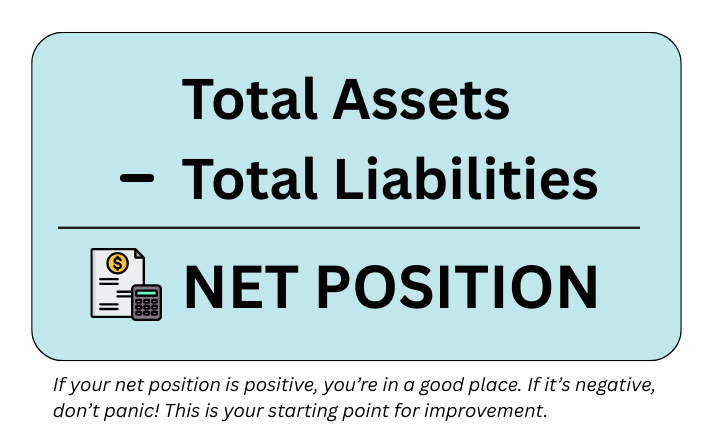
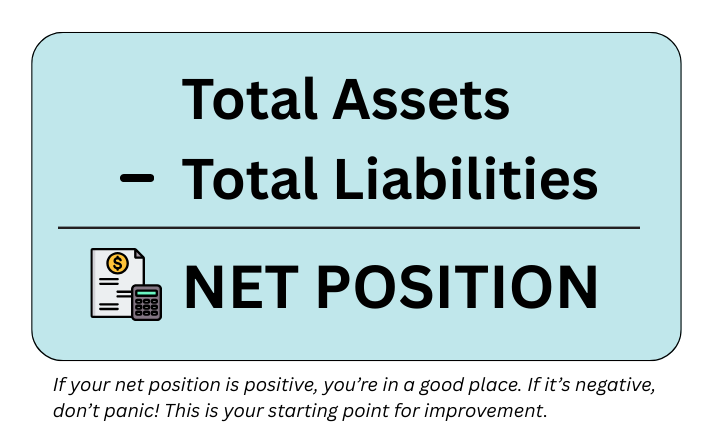
Your net position is the difference between what you own (your assets) and what you owe (your liabilities). It’s essentially your financial scorecard, giving you a snapshot of your overall financial health. Here’s a simple formula:

Net Position

Assets include things like your home, car, savings, and investments. Liabilities include mortgages, credit card debt, personal loans, and other financial obligations. Knowing your net position helps you understand whether you’re building wealth or accumulating debt.

Why Net Position Matters More Than Budgeting

Budgeting is about managing your monthly cash flow, how much money comes in and goes out. While this is important, it doesn’t give you a complete picture of your financial health. Here’s why focusing on your net position is a game-changer:

1. PROVIDES A HOLISTIC VIEW

      • Budgeting focuses on short-term goals, like paying bills or saving for a vacation. Net position shows your long-term financial standing, including the value of your assets and the weight of your debts.

2. HELPS SET REALISTIC GOALS

      • Understanding your net position allows you to set achievable financial goals, whether it’s buying a home, retiring early, or becoming debt-free.

3. REVEALS FINANCIAL TRENDS

      • Tracking your net position over time helps you see whether your financial health is improving or deteriorating.

4. GUIDES BETTER DECISION-MAKING

      • Knowing your net position helps you make informed decisions about spending, saving, and investing.

Common Misconceptions About Net Position

Budgeting is about managing your monthly cash flow, how much money comes in and goes out. While this is important, it doesn’t give you a complete picture of your financial health. Here’s why focusing on your net position is a game-changer:

1. “Only Wealthy People Need to Track Their Net Position”

      • False! Everyone, regardless of income level, can benefit from understanding their net position. It’s about knowing where you stand and where you’re headed.

2. “Budgeting Alone is Enough”

      • While budgeting is crucial for managing day-to-day expenses, it doesn’t address your overall financial health.

3. “It’s Too Complicated”

      • Tracking your net position can be as simple as listing your assets and liabilities in a spreadsheet or using a financial app.

Steps to Improve Your Net Position

1. ELIMINATE HIGH-INTEREST DEBT

      • Focus on paying off credit cards and personal loans first. These often carry the highest interest rates and can significantly impact your financial health.

2. INCREASE YOUR SAVINGS

      • Build an emergency fund with at least three to six months’ worth of living expenses. This provides a financial safety net and reduces the need for high-interest debt during emergencies.

3. INVEST WISELY

      • Grow your assets by investing in a diversified portfolio. Consider long-term investments like retirement accounts or real estate.

4. REDUCE LIABILITIES

      • Pay down loans and avoid taking on new debt unless it’s for a strategic purpose, like buying a home.

5. TRACK YOUR PROGRESS

      • Revisit your net position quarterly or annually to measure your progress and adjust your financial plan as needed.

How Our “Know Your Numbers” Course Can Help

Our “Know Your Numbers” course is designed to take the guesswork out of understanding your net position. Here’s what you’ll learn:

1. HOW TO CALCULATE YOUR NET POSITION 

      • Step-by-step guidance on listing your assets and liabilities.

2. TOOLS AND TEMPLATES

      • Access user-friendly calculators and spreadsheets to track your progress.

3. STRATEGIES FOR IMPROVEMENT

      • Learn actionable steps to grow your assets, reduce your liabilities, and increase your net worth.

4. REAL-LIFE EXAMPLES 

      • See how others have transformed their financial health by focusing on their net position.

Success Stories

1. JOAN’S TRANSFORMATION

Joan discovered her net position was negative due to high credit card debt. Using strategies from the course, she paid off her debt in two years and now has a positive net worth of $20,000.

2. PETER’S JOURNEY

Peter thought he was doing well because he had a high income. After calculating his net position, he realised his debt outweighed his assets. He’s since restructured his finances and is on track to achieve financial independence.

Know Your Numbers

Conclusion

Understanding your net position is the key to unlocking financial freedom. It’s not just about how much you earn or spend; it’s about the bigger picture of what you own versus what you owe. By focusing on your net position, you can make smarter financial decisions, set realistic goals, and build a secure future. Ready to take control? Join our “Know Your Numbers” course today and start your journey toward financial clarity and success.

The Vault