The Foundations First: Why Small Business Owners Can’t Afford to Wing It Anymore
If you’re a small business owner, tradie, franchisee, coach, or self-employed professional, chances are you didn’t start your business because you love spreadsheets, cashflow forecasts, or sorting out your accounts.
You started because you’re good at what you do.
You solve problems. You build things. You coach people. You create results. But somewhere along the way, many business owners find themselves working harder than ever and still feeling like they’re falling behind.
Money comes in.
Then it disappears.
Tax time rolls around and suddenly it feels personal.
You’re busy every day, yet you’re not fully sure whether your business is actually performing well.
Sound familiar?
Here’s the truth: being busy is not the same as being profitable.
And in today’s business world, “winging it” is no longer a strategy.
Why foundations matter more than ever
Strong businesses are not built on hustle alone. They are built on foundations.
That means knowing:
- what money is coming in
- what money is going out
- what your pricing needs to be
- whether your profit is real or just temporary relief
- how much you can actually afford to pay yourself
- what your numbers are telling you before problems get bigger
Without those foundations, growth gets messy fast.
More sales can actually create more pressure.
More clients can create more chaos.
More team members can expose weak systems.
And more revenue can still leave you with less cash than expected.
This is the trap so many business owners fall into. From the outside, things can look successful. Inside, it feels like stress, uncertainty, and constant financial firefighting.

The Hidden Cost of Weak Foundations
When your financial systems are weak, everything takes more energy.
You make decisions based on gut feel instead of facts.
You underprice because you’re scared of losing work.
You mix personal and business spending and hope it all works out.
You avoid looking at reports because they feel overwhelming.
You stay in operator mode instead of stepping into your role as CEO.
The result?
You work harder, worry more, and enjoy your business less.
And let’s be honest, that is not why you started.
A business should support your life, not swallow it whole.
What Solid Business Foundations Actually Look Like
Getting your foundations right does not mean making things more complicated.
It means making things clearer.
It looks like:
- a simple cashflow structure you actually understand
- separate systems for business and personal money
- confidence around pricing, profit, wages, and expenses
- a weekly and monthly rhythm for checking the right numbers
- stronger boundaries around spending and decision-making
- knowing where your money is leaking and how to plug it
When these basics are in place, something powerful happens.
You stop guessing.
You start leading.
You stop reacting.
You start planning.
You stop feeling behind.
You start building momentum.
You do not need more motivation. You need structure.
Many business owners think they need to feel more disciplined, more focused, or more inspired.
But often, that’s not the real issue.
The issue is that the business has grown beyond the systems holding it up.
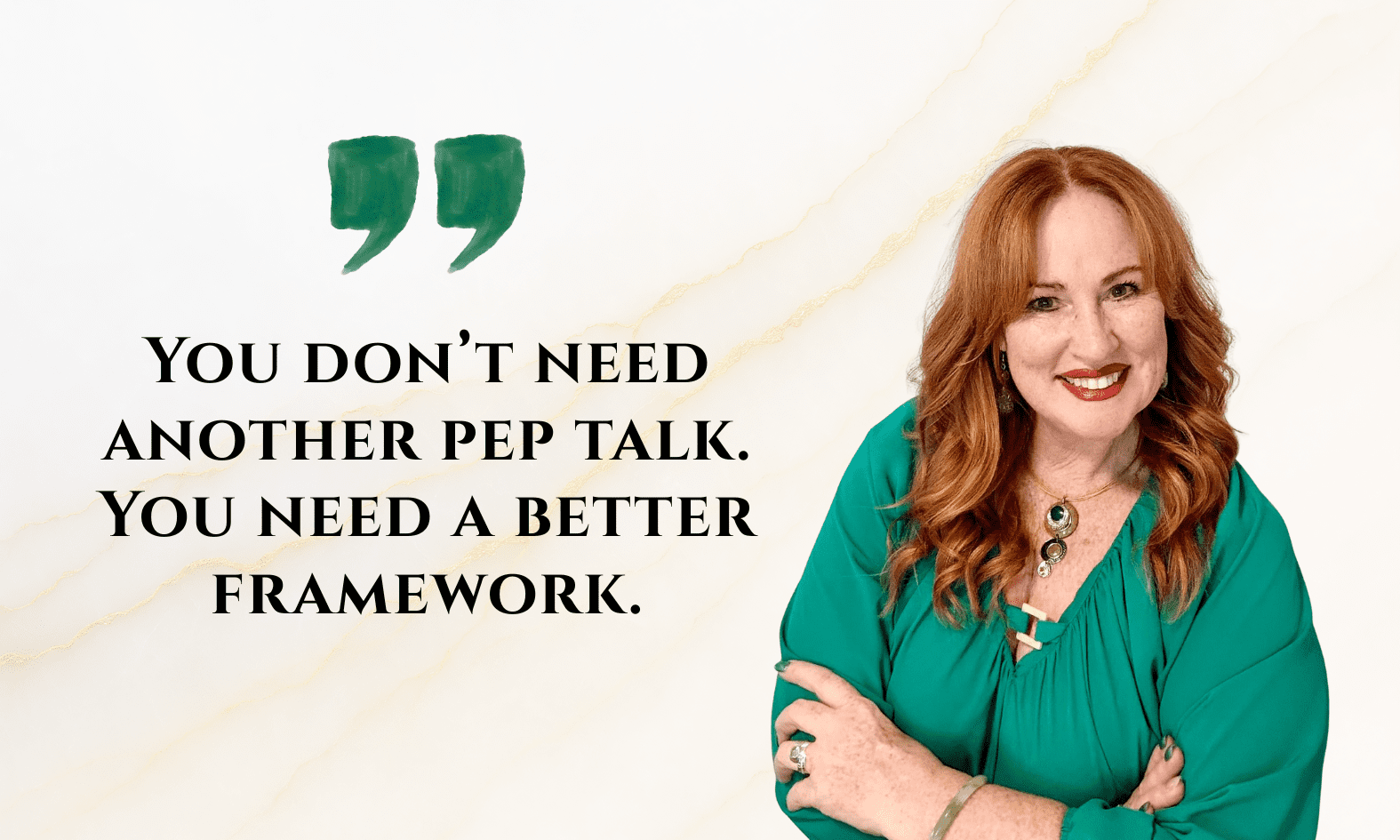
You don’t need another pep talk.
You need a better framework.
You need simple tools that help you:
- understand your cashflow
- pay yourself consistently
- price with confidence
- stop tax shock before it happens
- make decisions from a place of control
That is where real confidence comes from.
Not from hoping, but from knowing.
The Difference Between Surviving and Scaling
If your foundations are shaky, growth can break you.
That might sound dramatic, but it’s true.
A bigger business with poor systems often creates:
- higher stress
- tighter cashflow
- more team issues
- greater tax pressure
- slower decision-making
- more burnout
On the other hand, when your business foundations are strong, growth becomes more sustainable.
You can see what is working.
You can fix what is not.
You can make better decisions faster.
You can lead with more confidence and less panic.
That is the difference between surviving the month and building a business that genuinely funds your life.
A Quick Self-Check for Business Owners
Ask yourself:
- Do I know exactly where my money is going each month?
- Am I paying myself properly and consistently?
- Do I understand the difference between revenue and profit in my business?
- Do I have simple systems for cashflow, tax, and expenses?
- Do I look at my numbers regularly, or only when I’m forced to?
- Am I leading my business like a CEO, or just trying to keep up?

If those questions feel a little uncomfortable, that’s okay.
That discomfort is not failure.
It is feedback.
And it might be the exact sign that now is the time to strengthen your foundations.
Your next step
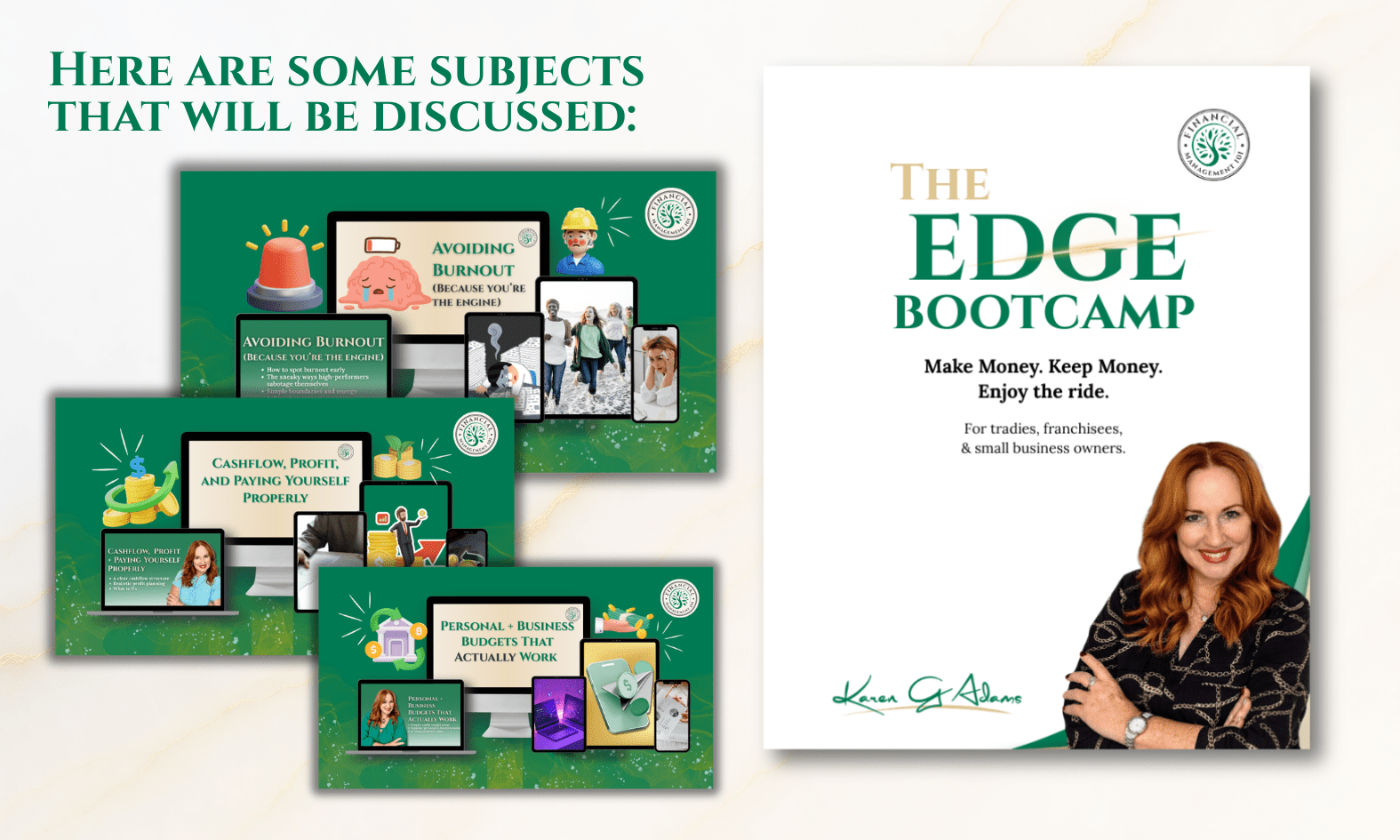
If you’re done with money disappearing, messy systems, and feeling like you’re working too hard for too little clarity, this is exactly why I created The Edge Bootcamp.
This is not fluff, theory, or feel-good motivation.
It is practical training for tradies, franchisees, coaches, small business owners, and self-employed professionals who want to stop winging it and start running their business like a CEO.
Inside the Bootcamp, we cover the foundations that matter most – cashflow, profit, pricing, paying yourself properly, budgets that actually work, business setup, reading your numbers with confidence, and building stronger systems for sustainable growth.
Join me at The Edge Bootcamp in May and build the financial and business foundations your growth actually needs.
Because the goal is not to be busier.
The goal is to be stronger, smarter, and more profitable.
Note: This event provides education and general information, not personalised financial, accounting, legal, tax, investment, or health advice. Seek advice specific to your circumstances from qualified professionals.
#HowToResetMyMoneyMindset #WhyDoIFeelOutOfControlWithMoney #HowToFeelInControlOfFinances #ResetMoneyMindset2025 #NewYearFinancialMindset #HowToStartFreshWithMoney emergency fund australia, money management, family savings