Why Savings is Important – And No, It’s Not Just for Squirrels

Why Savings is Important – And No, It’s Not Just for Squirrels

Ever seen a squirrel in a panic? Me neither. That’s because they save their acorns for winter. Now, unless you’re planning on a diet of nuts, let’s talk about why saving money is your ticket to a stress-free life.

Why Savings is Important

Saving money might not seem like the most exciting thing, but it’s one of the smartest moves you can make. Here’s why:

1. EMERGENCIES HAPPEN

Life has a funny way of throwing curveballs. Whether it’s a medical emergency, car trouble, or an unexpected job loss, having a savings cushion can turn a potential crisis into a manageable inconvenience. Think of it as your personal financial airbag.

2. OPPORTUNITIES KNOCK

Ever dreamt of starting your own business, going back to school, or taking a sabbatical to travel the world? Savings make these dreams achievable. When opportunities arise, you want to be ready to seize them without financial hesitation.

Starting your own business or going back to school is possible if you have enough savings!

3. PEACE OF MIND

Knowing you have money set aside reduces stress and helps you sleep better at night. It’s about having control over your future and being prepared for whatever comes your way.

4. AVOID DEBT

When you have savings, you’re less likely to rely on credit cards or loans for unexpected expenses. This means you avoid the interest and fees that come with borrowing money, keeping more of your hard-earned cash in your pocket.

5. FINANCIAL FREEDOM

Saving money is the foundation of financial independence. It’s the stepping stone to investing, growing your wealth, and eventually having the freedom to live life on your own terms.

The Psychology of Saving

Saving money isn’t just a financial act; it’s a psychological one. Here’s how to make it work for you:

1. VISUALISE YOUR GOALS

Imagine what your life would look like with a solid savings account. What dreams can you achieve? What stressors disappear? Visualisation can be a powerful motivator.

2. CREATE A SAVINGS RITUAL

Make saving a regular habit. Whether it’s every payday or every week, set a specific time to transfer money into your savings account. Treat it as non-negotiable as paying your rent or mortgage.

3. TRACK YOUR PROGRESS

Use a spreadsheet, an app, or a good old-fashioned journal to track your savings growth. Seeing your progress can be incredibly motivating and reinforce your commitment to saving.

Create a Savings Ritual

4. REWARD YOURSELF

Give yourself small rewards when you hit savings milestones. This doesn’t mean spending a fortune – even a small treat can reinforce positive behavior.

Practical Steps to Start Saving

Now that you understand the importance and psychology of saving, let’s dive into some practical steps to help you get started:

1. START SMALL, DREAM BIG

Begin by saving just $1 a day. It might not seem like much, but over time, it adds up. By the end of the year, you’ll have $365. This can cover a small emergency or give you a sense of accomplishment that motivates you to save even more.

  • Action Step: Set a daily reminder on your phone to transfer $1 to your savings account. Make it a game to see how many days in a row you can keep the streak going.

2. AUTOMATE YOUR SAVINGS

Automation is your best friend when it comes to saving money. Set up automatic transfers from your checking account to your savings account. This way, you’re saving without even thinking about it.

  • Action Step: Log into your online banking and set up a recurring transfer. Start with a small amount that won’t disrupt your budget and gradually increase it as you get more comfortable.

3. NAME YOUR GOALS

Give your savings accounts specific names based on your goals. Whether it’s “Vacation Fund,” “Emergency Cushion,” or “New Car Fund,” naming your accounts makes your goals tangible and exciting.

  • Action Step: Rename your savings accounts in your online banking or create new ones with your chosen names. Visualise each deposit bringing you closer to your goal.

4. CUT UNNECESSARY EXPENSES

Review your monthly expenses and identify areas where you can cut back. Do you really need that premium cable package or daily coffee shop latte? Redirect those funds to your savings instead.

  • Action Step: Take a month to track all your spending. Highlight non-essential expenses and challenge yourself to eliminate or reduce them. Channel the saved money into your savings account.

5. MAKE SAVING FUN

Turn saving into a game. Challenge yourself to save a specific amount each week or month and track your progress. Reward yourself for hitting your targets.

  • Action Step: Create a savings challenge with a friend or family member. Set a goal and see who can save the most by a certain date. The winner gets a small, fun prize.

Overcoming Common Savings Obstacles

Saving money can be challenging, especially when life gets in the way. Here’s how to overcome common obstacles:

1. LIVING PAYCHECK TO PAYCHECK

If you’re barely making ends meet, saving can feel impossible. Start with small amounts and gradually increase them as you find ways to cut costs or increase your income.

  • Action Step: Commit to saving even a small amount each month. Look for ways to boost your income, such as a side gig or selling unused items.

2. DEBT

If you have high-interest debt, focus on paying it off first. However, still set aside a small amount for savings to build the habit and provide a buffer for emergencies.

  • Action Step: Allocate a portion of your budget to debt repayment and a smaller portion to savings. As your debt decreases, increase your savings contributions.

Commit to saving even a small amount each month.

Teaching kids about saving money with a piggy bank can be a fun and educational experience. Teach them how to create a simple budget, allocating money for saving, spending, and giving. When they’re ready, help them open a savings account at a bank to teach them about banking and earning interest.

3. INCONSISTENT INCOME

If your income varies month to month, saving can be tricky. Create a budget based on your lowest monthly income and save more during high-income months.

  • Action Step: Calculate your average monthly income and expenses. Save any surplus during high-income months to cover shortfalls during leaner times.

4. LACK OF MOTIVATION

If saving feels like a chore, find ways to make it more engaging. Set short-term goals and celebrate your progress along the way. 

  • Action Step: Create a vision board with images and quotes that represent your savings goals. Place it somewhere you’ll see it daily to stay motivated.

The Long-Term Benefits of Saving

Saving money isn’t just about covering emergencies or achieving short-term goals. It’s about creating a foundation for long-term financial stability and freedom. Here’s what you can look forward to:

1. RETIREMENT SECURITY

The earlier you start saving for retirement, the more time your money has to grow. Compound interest works its magic over the years, helping you build a substantial nest egg.

2. FINANCIAL INDEPENDENCE

Saving and investing wisely can lead to financial independence, where you have enough assets to cover your living expenses without relying on a traditional job. This opens up opportunities to pursue passions, travel, or even retire early.

3. GENERATIONAL WEALTH

Building savings and wealth allows you to support your family and create a legacy for future generations. You can provide for your children’s education, help them buy their first home, or leave an inheritance.

4. FREEDOM TO TAKE RISKS

With a healthy savings cushion, you have the freedom to take calculated risks, such as starting a business, switching careers, or pursuing further education. You’re not tied down by financial constraints. 

Generational Wealth

Generational Wealth

Building savings and wealth allows you to support your family and create a legacy for future generations.

Conclusion

Saving money isn’t just about covering emergencies or achieving short-term goals. It’s about creating a foundation for long-term financial stability and freedom. Here

Learn the fundamental concepts of how budgeting and saving are important to your financial well-being. Registration is now open for the course: Mastering Budget and Saving Techniques. This is a hands-on course with me guiding you on how to budget, track and look at managing your money like a pro.
Mastering Budget and Saving Techniques
How Do I Prioritise My Expenses and Manage My Spending?

How Do I Prioritise My Expenses and Manage My Spending?

Prioritising expenses and effectively managing your spending is critical for your mental health, financial stability, and future growth.

Here’s a step-by-step guide to assist you with this:

TRACK YOUR SPENDING

Before you can prioritise, you need to know where your money is going. Keep a record of all your expenses for a month or two. This can be done using budgeting apps, spreadsheets, or simply a notebook.

CREATE A BUDGET

Based on your tracking, categorise your expenses (like rent, groceries, entertainment, etc.) and allocate a specific amount to each category. Be realistic in your allocations.

Categorise your expenses

IDENTIFY NEEDS VS. WANTS

Separate essential expenses (needs) like rent, utilities, and groceries from non-essential (wants) like dining out, entertainment, etc. Prioritise your needs.

SET FINANCIAL GOALS

Define your short-term (like saving for a holiday) and long-term (like saving for retirement) financial goals. This will help you stay focused and motivated.

SAVE FIRST

Adopt a “pay yourself first” approach. Allocate a portion of your income to savings or investments before you start spending on non-essentials.

REDUCE UNNECESSARY EXPENSES

Look for areas where you can cut back. This might include dining out less, cancelling unused subscriptions, or opting for more affordable entertainment options.

EMERGENCY FUND

Build an emergency fund that can cover at least 3-6 months of living expenses. This should be a priority as it provides a financial cushion.

USE TOOLS AND RESOURCES

Utilise budgeting tools, financial planning apps, or consult with a financial advisor for personalised advice.

REVIEW AND ADJUST REGULARLY

Your budget is not set in stone. Review it regularly and make adjustments as your income, expenses, and financial goals evolve.

AVOID HIGH-INTEREST DEBTS

Try to minimise reliance on credit cards or high-interest loans. If you have existing debt, prioritise paying it off.

EDUCATE YOURSELF

Continuously learn about personal finance. Understanding concepts like compound interest, investment, and credit scores can significantly improve your financial decision-making.

MINDSET AND DISCIPLINE

Cultivating a mindset of financial discipline and delayed gratification is key. This includes resisting impulse purchases and making informed spending decisions.

Continuously learn about personal finance.

Remember, personal finance is personal. Your priorities and goals will dictate how you manage your spending, so tailor these steps to fit your unique situation.

Learn the fundamental concepts of how budgeting and saving are important to your financial well-being. Registration is now open for the course: Mastering Budget and Saving Techniques. This is a hands-on course with me guiding you on how to budget, track and look at managing your money like a pro.

ENTER THE CODE WORD: BUDGETING2024 to get $100 off this course.

Mastering Budget and Saving Techniques
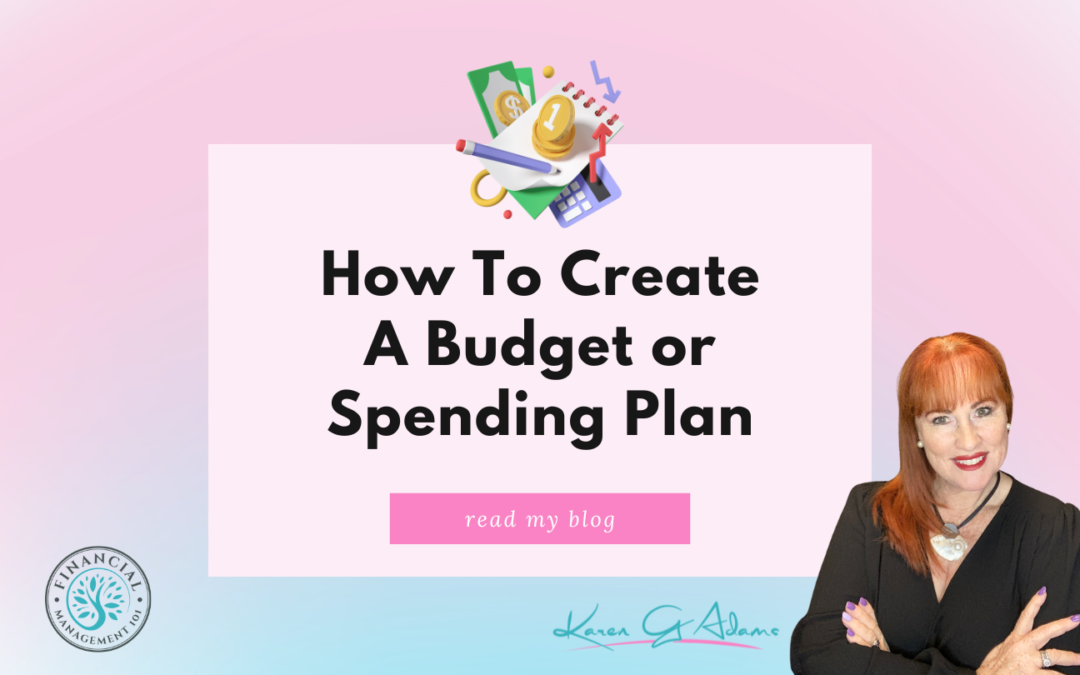
How To Create A Budget or Spending Plan

How To Create A Budget or Spending Plan

For many people, this is where they get stuck with the first step in managing their money.  When they hear the word budget they think it means cutting back or going without and they could not be further from the truth.

A budget doesn’t have to be a cumbersome task and it’s something I like to call a spending plan instead of a budget.  By calling it a spending plan, it means you manage your money so that you have money for the fun stuff, as well as the ongoing regular stuff that comes out every month.

Creating your own spending plan involves several steps that help you manage your finances and money more effectively. Here’s a guideline to get you started:

ASSESS YOUR FINANCIAL SITUATION

  • Income: Calculate your total monthly income, including salaries, bonuses, and any other sources.
  • Expenses: List all your monthly expenses. This includes rent/mortgage, utilities, groceries, transportation, insurance, debts, and entertainment.

CATEGORISE YOUR EXPENSES

  • Fixed Expenses: These are regular, predictable costs like rent, loan payments, or insurance.
  • Variable Expenses: These costs can vary, such as groceries, dining out, and entertainment.

Assess Your Financial Situation

TRACK YOUR SPENDING

  • Use a spreadsheet, a budgeting app, or a simple notebook to track where your money goes. This will help you identify areas where you might be overspending.

SET FINANCIAL GOALS

  • Short-term goals might include saving for a vacation or paying off a small debt.
  • Long-term goals could be saving for retirement, a home down payment, or paying off a significant debt.

CREATE THE SPENDING PLAN

  • Allocate specific amounts to each expense category based on your income and financial goals.
  • Ensure your expenses do not exceed your income.

PLAN FOR SAVINGS AND EMERGENCIES

  • Aim to set aside a portion of your income for savings and an emergency fund.

REVIEW AND ADJUST REGULARLY

  • Regularly review your budget, preferably monthly, to adjust for any changes in income or expenses.
  • Be flexible and realistic with your spending plan to make it sustainable.

UTILISE TOOLS AND RESOUCES

  • Consider using budgeting tools or apps to make the process easier and more efficient.

REDUCE UNNECESSARY EXPENSES

  • Look for ways to cut back, such as reducing dining out, unsubscribing from unused services, or shopping for better deals on recurring expenses.

Consider using budgeting tools or apps to make the process easier and more efficient.

Using budgeting tools or apps is helpful if you want to make your spending plan easier and more efficient.

STAY COMMITTED

  • Stick to your spending plan as closely as possible, but allow for occasional indulgences to keep it realistic and manageable.

Remember, the key to a successful spending plan is consistency and willingness to adapt as your financial situation changes.

The LEARNING HUB helps you gain more financial knowledge, while providing you with the support and help you and others need. Join now for only $79 USD per month.

Join the Learning Hub - Financial Management 101 by Karen G Adams
Fixed vs. Variable: Navigating Mortgage Interest Types for Homebuyers

Fixed vs. Variable: Navigating Mortgage Interest Types for Homebuyers

Hello, aspiring homeowners and financial adventurers! As your trusty financial coach and savvy mortgage broker, I’m here to guide you through the thrilling yet often perplexing world of mortgage interest types. 

Picture this: you’re embarking on a quest to find the perfect home, but there’s a fork in the road. Do you take the path of fixed interest rates or venture down the trail of variable rates? Let’s unpack these options together, with a sprinkle of fun and a dash of wisdom, to ensure you make the best decision for your financial future.

The Tale of Two Rates: Setting the Scene

Imagine two characters in our story: Fiona Fixed and Victor Variable. Fiona enjoys predictability in her life. She loves knowing exactly how much her payments will be each month, providing her with a sense of security and peace of mind. Victor, on the other hand, is a bit more daring. He’s willing to ride the waves of the market, betting that interest rates will go in his favour, potentially saving him money in the long run. 

Steady Ship vs. Sailboat

The Fixed Rate: A Steady Ship in Stormy Seas

Fixed-rate mortgages are like a sturdy ship that can weather any storm. They offer the same interest rate for the entire term of the loan, whether it’s 15, 20, or 30 years. This means your monthly mortgage payments remain unchanged, making budgeting as easy as pie. It’s perfect for those who, like Fiona, prefer stability over surprises.

Pros:

    • Predictability: You’ll sleep soundly knowing your payments won’t change.
    • Simplicity: Easy to understand, especially for first-time homebuyers.
    • Protection: You’re shielded from sudden spikes in interest rates.

Cons:

    • Higher Initial Rates: Fixed rates are usually higher than the initial variable rates.
    • Less Flexibility: If interest rates fall, you’re stuck with your rate unless you refinance.

The Variable Rate: Sailing the Winds of Chance

On the flip side, variable-rate mortgages are like a nimble sailboat that adjusts its sails with the winds of the market. The interest rate can fluctuate based on market conditions, meaning your monthly payments could increase or decrease. This is where Victor finds his thrill, in the potential for lower overall costs when rates favour the borrower.

Pros:

    • Lower Initial Rates: Start with a lower rate compared to fixed-rate mortgages.
    • Potential Savings: Benefit from paying less interest when rates decrease.
    • Flexibility: Often includes options to lock in a fixed rate if the winds change.

Cons:

    • Uncertainty: Your monthly payment could change, making budgeting a challenge.
    • Risk: If interest rates soar, so do your payments.

Navigating Through the Fog: How to Choose

Now, how do you choose between these two? Consider your financial situation, lifestyle, and risk tolerance. Here are a few lanterns to help illuminate your path:

Financial Stability: If you’re in a stable financial position and can handle potential increases in your payments, Victor’s variable rate might be your calling. However, if you prefer the safety of a predictable budget, follow Fiona’s lead with a fixed rate.

Market Trends: Keep an ear to the ground on market trends. If rates are historically low, locking in a fixed rate might be wise. But if you’re feeling optimistic about where rates are headed, the variable rate could be your treasure.

Term Length: Consider how long you plan to stay in your home. If it’s a short-term stay, a variable rate might offer lower initial payments. For a long haul, a fixed rate could offer long-term stability.

Ask the Experts: Consult with me, your financial coach and mortgage broker. I love helping heroes of homeownership chart their course to the perfect mortgage.

The Adventure Awaits

Remember, choosing between fixed and variable interest rates isn’t just about crunching numbers; it’s about aligning your mortgage with your life’s voyage. Whether you’re a Fiona Fixed, preferring the calm seas of predictability, or a Victor Variable, ready to sail the fluctuating financial tides, the right choice is out there.

As your financial navigator, I’m here to help you explore the possibilities and make an informed decision. So, gather your maps and set your sights on the horizon; your dream home awaits, and the perfect mortgage is your key to unlocking the door. Happy house hunting, brave explorers.

Whether you’re dipping your toes into the home-buying waters for the first time, eyeing a smarter refinancing strategy, coming off a fixed interest rate, or expanding your portfolio with another investment property, Karen’s 20-minute discovery call, is your first step towards mortgage mastery! Let’s dive into your financing needs, explore your options, and perform a FREE mortgage health check to ensure your plans aren’t just dreams but achievable realities.  

Karen Adams of Financial Management 101
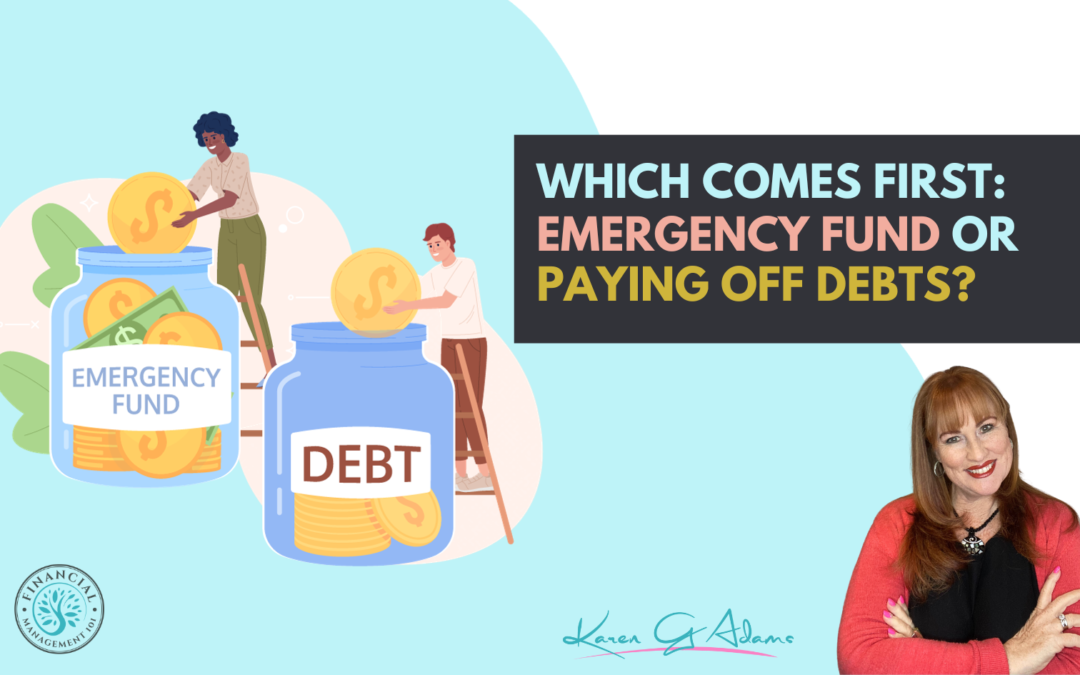
Which Comes First: Emergency Fund or Paying Off Debts?

Which Comes First: Emergency Fund or Paying Off Debts?

When money is tight, it can be hard to pay down debt and build up an emergency savings fund at the same time. But it is still possible with careful budgeting and good money management. 

Here’s a step-by-step plan on how to do this:

1. ASSESS YOUR FINANCIAL SITUATION

Start by looking carefully at your money. Write down everything you earn and everything you owe, including the balances, interest rates, and minimum monthly payments.

2. MAKE A BARE-BONES BUDGET

Make a simple budget that covers only the most important costs, such as housing, utilities, groceries, transportation, and insurance. Cut back as much as you can on spending you do not have to.

3. PAY OFF HIGH-INTEREST DEBTS

Pay off your debts with the highest interest rates first, as this will save you money in the long run. All debts should have the minimum payment made, but any extra money should be put toward the debt with the highest interest rate.

4. SET REALISTIC GOALS

Find out how much you can afford to put toward debt repayment and savings each month. Be careful and make paying off debt your first priority.

5. BUILD A SMALL EMERGENCY FUND

Even though it is important to pay down debt, having a small emergency fund can help you avoid going deeper into debt if you have to pay for something unexpected. Start with a small goal, like $500 or $1,000, and slowly raise it as time goes on.

Having a small emergency fund can help you avoid going deeper into debt if you have to pay for something unexpected.

6. USE WINDFALLS/UNEXPECTED MONEY WISELY

If you get money you did not expect, like a tax refund or a bonus, put some of it toward paying off debt and some into an emergency fund. This helps you move forward in both areas.

7. SAVE AND PAY OFF DEBTS AUTOMATICALLY

Set up automatic transfers to your emergency fund and to your debt payments whenever you can. This makes sure that you always move closer to both goals.

8. LOOK FOR WAYS TO MAKE MORE MONEY

Look for ways to make more money, like part-time work, freelance gigs, or selling things you do not use. The extra money can be used to pay off debts and save money.

Talk with your creditors about your money situation. In some cases, you may be able to negotiate lower interest rates, lower minimum payments, or a delay in payments to make it easier to handle your debt.<br />

    9. TALK WITH YOUR CREDITORS

    Talk with your creditors about your money situation. In some cases, you may be able to negotiate lower interest rates, lower minimum payments, or a delay in payments to make it easier to handle your debt.

    10. REVIEW AND ADJUST REGULARLY

    Check in on your budget and financial goals every so often. Change how you pay off debt and save money when your income and expenses change.

    11. CELEBRATE MILESTONES

    Celebrate your successes, no matter how small they are. Every dollar you save in an emergency fund or pay off of a debt is a step toward financial stability.

    Remember that building an emergency fund and paying off debt are long-term goals. It’s okay to progress slowly if your income is limited.

     The important thing is to keep working toward both goals, even if progress is slow. Your money situation will get better over time, and you will have a stronger financial base.

    At Financial Management 101 – we are committed to providing YOU with excellent financial education, training and support so that you can live the life you truly desire.  Join our LEARNING HUB today!

    Join the Learning Hub - Financial Management 101 by Karen G Adams