Is Money Stress the Missing Piece in Your Wellbeing Strategy?

Is Money Stress the Missing Piece in Your Wellbeing Strategy?

You provide mental health support, but money is often part of the stress employees are carrying. Here’s how practical financial wellbeing education complements your EAP, without straying into personal advice.

We know how much thought goes into a wellbeing strategy. The EAP is in place. The mental health training has been rolled out. Leaders have been coached to check in on their people.

And still, something doesn’t quite add up. Engagement scores plateau. Absenteeism doesn’t shift the way you’d expect. People say they’re “fine” and clearly aren’t.

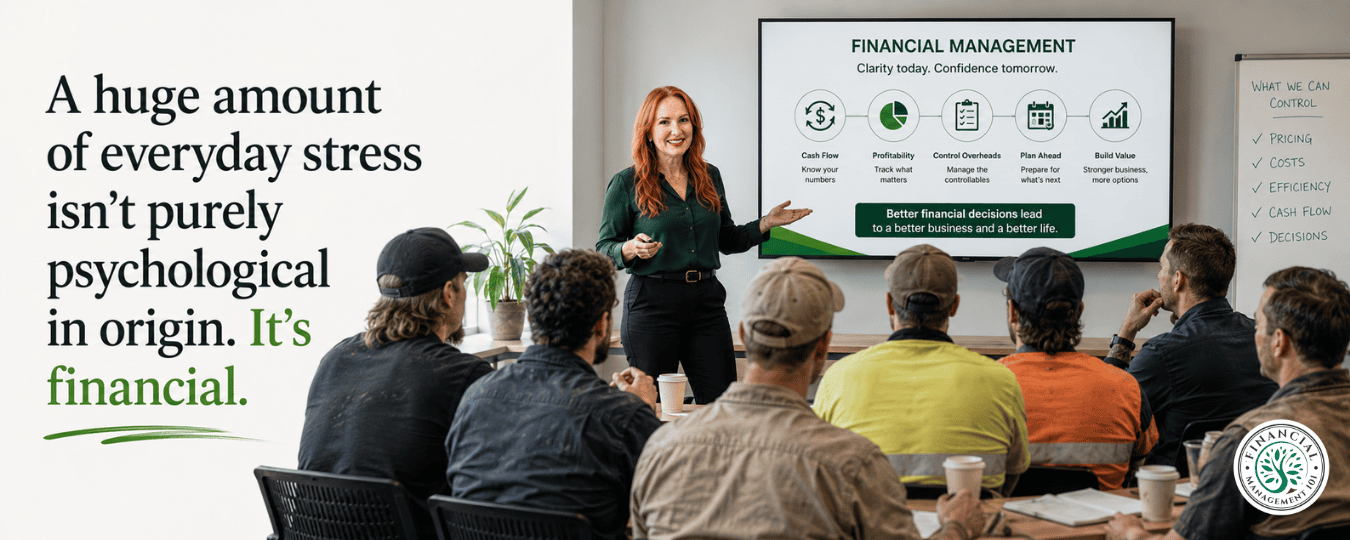
Here’s what often gets missed: a huge amount of everyday stress isn’t purely psychological in origin. It’s financial. And most wellbeing strategies aren’t built to touch it.

By the end of this, you’ll know why financial stress behaves differently to other workplace stressors, and how practical financial education sits alongside your EAP rather than competing with it.
Your employees don’t need another financial webinar.
They need personal, practical support that actually changes how they feel and what they do with their money.

Money stress doesn’t look like a “money” problem at work

Financial stress rarely walks into HR and announces itself. It shows up as distraction, short tempers, disengagement, or someone quietly declining opportunities that would help their career because the timing feels too risky.

It’s also one of the few stressors that follows people to work every single day, rather than arriving as a one-off event. A restructure or a difficult client eventually resolves. A mortgage rate rise, or not knowing where next month’s numbers land, doesn’t switch off at 9am.

Why your EAP alone doesn’t close this gap

Your EAP is doing exactly what it’s designed to do; professional, confidential support for people in genuine distress. That matters, and it isn’t in question here.

What an EAP isn’t built for is teaching everyday financial capability. Counselling can help someone process the anxiety money is causing them. It generally isn’t set up to help them understand their pay structure, build a spending plan, or feel confident having a money conversation with a partner.

That’s a different kind of support, practical, skill-based, and preventative rather than crisis-response.

Where financial wellbeing education fits

This is where financial wellbeing education does its work: building everyday money confidence and capability, in plain English, before things reach crisis point.

It’s general education, not personal advice. Nobody’s reviewing an individual’s mortgage or telling them what to do with their super. It’s giving people the foundations; how budgeting actually works, how debt behaves, how to read their own numbers, so they can make their own informed decisions.

Layered with an EAP, you get both ends covered: support for people who are already struggling, and education that helps prevent financial stress building into something bigger in the first place.

What this can look like in practice

Financial wellbeing education for workplaces can sit alongside existing programmes in a few different ways:

  • A standalone session or short series, run like any other professional development topic.
  • Content woven into an existing wellbeing calendar, alongside mental health and physical health initiatives.
  • A resource employees can return to in their own time, for privacy around a genuinely personal topic.

Done well, it’s positioned the same way physical or mental health education is a normal, non-judgemental part of supporting people, not a red flag that something’s wrong.

The Takeaway

A strong wellbeing strategy supports the whole person, and for most people, money is part of that picture whether it’s named or not. An EAP handles the crisis. Financial wellbeing education handles the everyday end, building the confidence and capability that helps prevent the crisis in the first place.

Together, they give your people a genuinely complete safety net, not just a mental health one.

If you’d like to explore what financial wellbeing education could look like for your team, we’d love to talk it through with you.
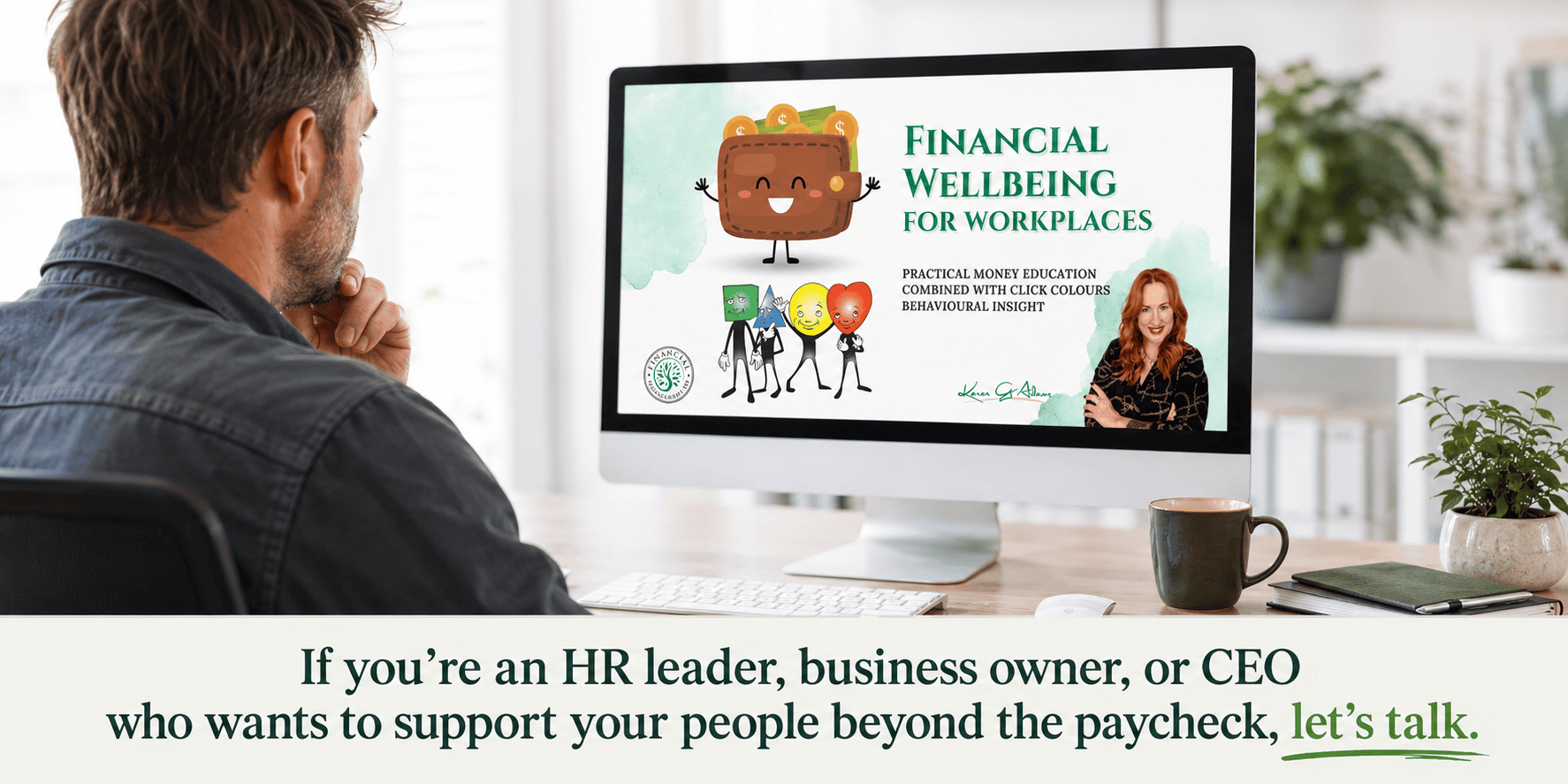
The Financial Wellbeing Solution Your People Deserve — and Your Workplace Needs

#HowToResetMyMoneyMindset #NewYearFinancialMindset #HowToStartFreshWithMoney  emergency fund australia, money management, family savings #SmallBusinessOwner #BusinessGrowth #CashflowManagement #BusinessSuccess #EAP #EmployeeAssistanceProgram
#EntrepreneurMindset

 

The Cheapest Mistake in Business Is Learning Too Late

The Cheapest Mistake in Business Is Learning Too Late

There comes a point in business where working harder stops being the answer.

You can hustle longer. Quote faster. Take on more jobs. Reply to emails at ridiculous hours. Tell yourself you’ll sort the numbers out next month.

But eventually, every business owner faces the same challenge:

You cannot scale chaos.

And you definitely cannot build a profitable, sustainable business on crossed fingers, late nights, and a banking app you check with one eye closed.

That is why the smartest investment in business is rarely another shiny object. It is about getting the right foundations and the right guidance before the cracks become expensive.

Because in business, the most affordable lesson is the one you learn early. The expensive ones? They usually show up as tax shock, cashflow pressure, pricing mistakes, profit leaks, team issues, burnout, and growth that looks good from the outside but feels awful on the inside.

Most business owners do not need more information. They need better integration.

Let’s be honest. Business owners are not short on information.

There are podcasts. Books. Webinars. Advice from Facebook groups. Random tips from successful people with very different businesses. A dozen tabs open about pricing, cashflow, GST, systems, leadership, and AI.

The problem is not a lack of content. The problem is that most people are trying to patch together big-business wisdom, internet noise, and half-finished good intentions into something that works in real life.

That is exhausting.

Real progress happens when the moving parts of your business start making sense together. When money systems connect to pricing. When pricing connects to profit. When profit connects to paying yourself properly. When structure supports growth. When leadership supports team stability. When better decisions reduce burnout.

That is where real return shows up. Not just in revenue. In clarity. In confidence. In cleaner decisions. In a business that stops eating you alive.

Most business owners do not need more information. They need better integration.

The real ROI is not just dollars. It is what dollars start doing.

When people hear “return on investment”, they often think of one thing: more money.

And yes, that matters. Of course it does.

But the ROI of getting the right business foundations goes deeper than a single sales figure.

It looks like:

  • plugging money leaks you did not realise were there
  • building a cashflow plan that works in real life, not just in theory
  • understanding your pricing well enough to stop undercharging
  • paying yourself more consistently
  • making faster decisions because your numbers are clearer
  • reducing the stress tax of uncertainty
  • avoiding costly mistakes before they become “lessons”
  • leading your team with more confidence and less frustration
  • creating systems that support growth instead of collapsing under it

That is real ROI.

Because a better business is not just one that earns more. It is one that keeps more, wastes less, and gives you more control over what happens next.

What the right room can accelerate

Sometimes one of the biggest shortcuts in business is proximity.

Being in the right room with the right people can collapse months, even years, of confusion.

Why? Because instead of trying to solve everything alone, you get access to practical guidance, real-world strategies, better questions, and perspectives that challenge the habits keeping you stuck.

That is especially powerful when the room is built for business owners who are already in it. Not dreamers. Not dabblers. People in the messy middle of building something real.

Tradies. Franchisees. Coaches. Self-employed professionals. Small business owners are wearing too many hats and carrying too much in their head.

The value of that environment is hard to measure on a spreadsheet, but you feel it quickly.

You stop normalising chaos. You start seeing what needs to change. You recognise where you are leaking money, energy, and decision-making power. And suddenly the next step becomes a whole lot clearer.

What business owners actually buy when they invest in growth

Let’s call this out.

People think they are paying for an event. But that is rarely what they are actually buying.

They are buying:

  • less stress
  • more profitable thinking
  • faster learning
  • stronger systems
  • better conversations
  • more confidence with numbers
  • clearer leadership
  • a roadmap for growth that does not break the business

They are buying time back. They are buying perspective. They are buying fewer expensive mistakes.

And that matters because one pricing correction, one cashflow fix, one better system, one improved boundary around profit, or one smarter decision around growth can pay for itself many times over.

Not hypothetically. Practically.

Why foundations create scale

Here is the trap many owners fall into: They think scale comes from doing more.

More marketing. More staff. More clients. More hours.

Sometimes scale actually begins with doing the basics better.

Knowing your numbers. Structuring your accounts properly. Setting up cleaner money systems. Understanding what to focus on in Xero and what to ignore. Creating budgets that actually work. Paying yourself properly. Pricing with boundaries. Improving credit readiness. Building leadership rhythms that reduce team friction. Avoiding burnout before your body forces the issue.

That is not boring admin. That is the engine room of a scalable business.

And once that engine room is stronger, growth stops feeling like a threat and starts feeling like a strategy.

    The smartest investment is the one that changes how you operate

    The best learning experiences do not just give you inspiration for a weekend. They change how you operate on Monday.

    That is the difference.

    A strong business event should not leave you with a notebook full of quotes and no idea what to do next. It should leave you with practical tools, sharper thinking, and actions you can apply straight away.

    You Can’t Pay Yourself Properly Without Pricing for Profit

    It should help you:

    • know exactly where your money is leaking
    • build a simple cashflow plan
    • understand pricing, profit, wages, and expenses without overwhelm
    • strengthen your business foundations so growth does not break you
    • lead with more confidence across people, teams, communication, and culture
    • stop guessing and start making decisions with control

    When that happens, the investment is no longer about the two days. It is about the next 12 months of better business.

    This is how smart business owners think about value

    Smart business owners do not only ask, “What does it cost?”

    They ask:

    • What problem does this solve?
    • What mistake could this help me avoid?
    • What capability will this build?
    • What would one better decision be worth?
    • What could happen if I keep delaying this?

    That is a much more powerful lens.

    Because staying stuck has a cost too. So does confusion. So does underpricing. So does weak cashflow. So does blurry leadership. So does waiting until the pressure becomes urgent.

    Often, the highest price in business is not the investment you make. It is the cost of delaying the fix.

    The bottom line

    A two-day event does not magically transform a business. People do the work. People implement. People make the changes.

    But the right event can compress the learning curve, sharpen the strategy, build momentum, and give business owners the tools, confidence, and direction they need to move differently.

    And when that event includes practical training, multiple expert perspectives, tools and templates, live Q&A, action planning, networking, and a recording to rewatch and implement, the value extends well beyond the room.

    This is not about hype. It is about business owners finally getting access to the kind of guidance that helps them make money, keep money, and enjoy the ride.

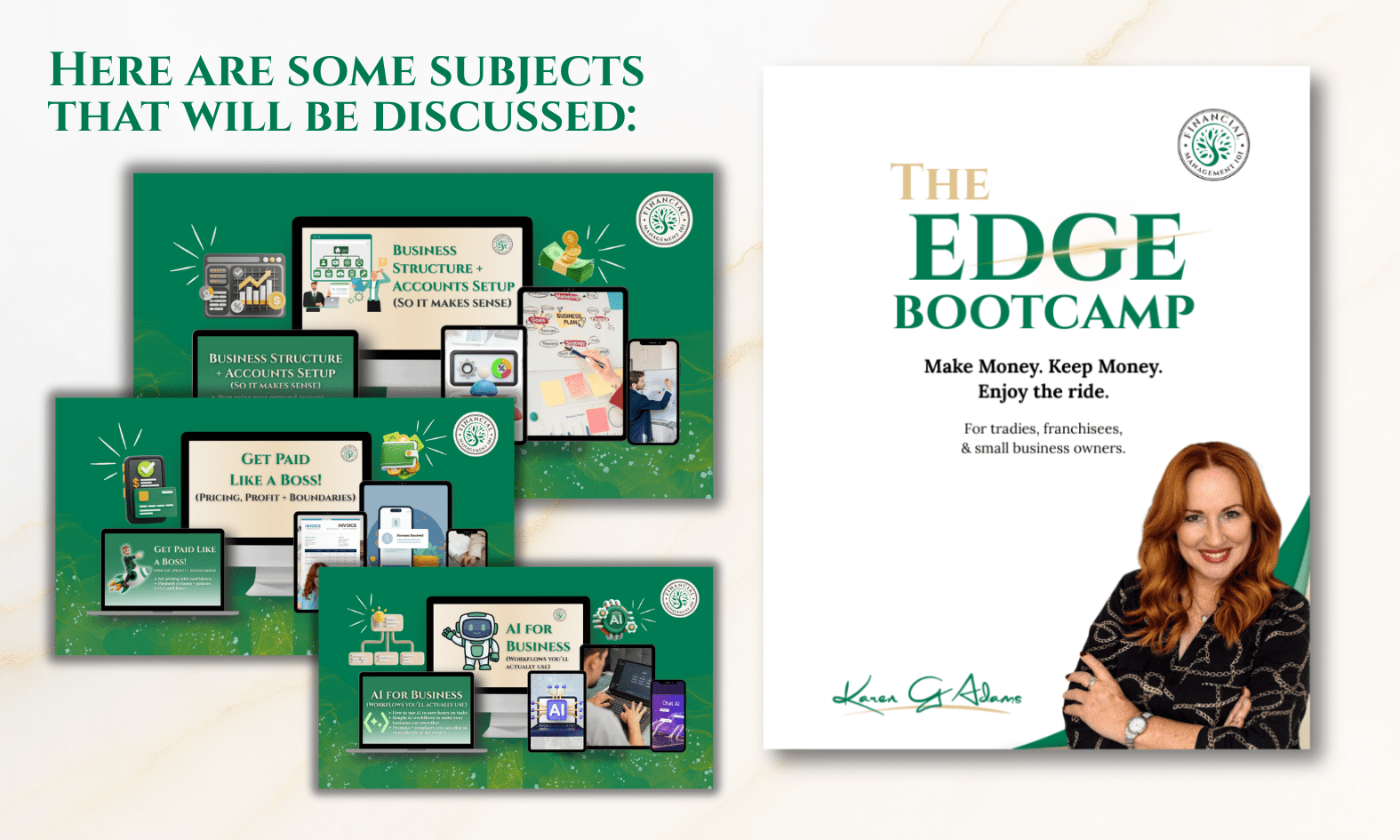
    If you are ready to stop paying for confusion, stress, and avoidable mistakes, The Edge Bootcamp is an investment that can transform how you run your business.

    Not because it sells you a dream. Because it helps you build a stronger business reality.

    I look forward to seeing at The EDGE Bootcamp either in person or in the livestream.

    Click here and get your early bird ticket now before it runs out!

    Financial Wellbeing Program

    #HowToResetMyMoneyMindset #WhyDoIFeelOutOfControlWithMoney #HowToFeelInControlOfFinances #ResetMoneyMindset2025 #NewYearFinancialMindset #HowToStartFreshWithMoney  emergency fund australia, money management, family savings