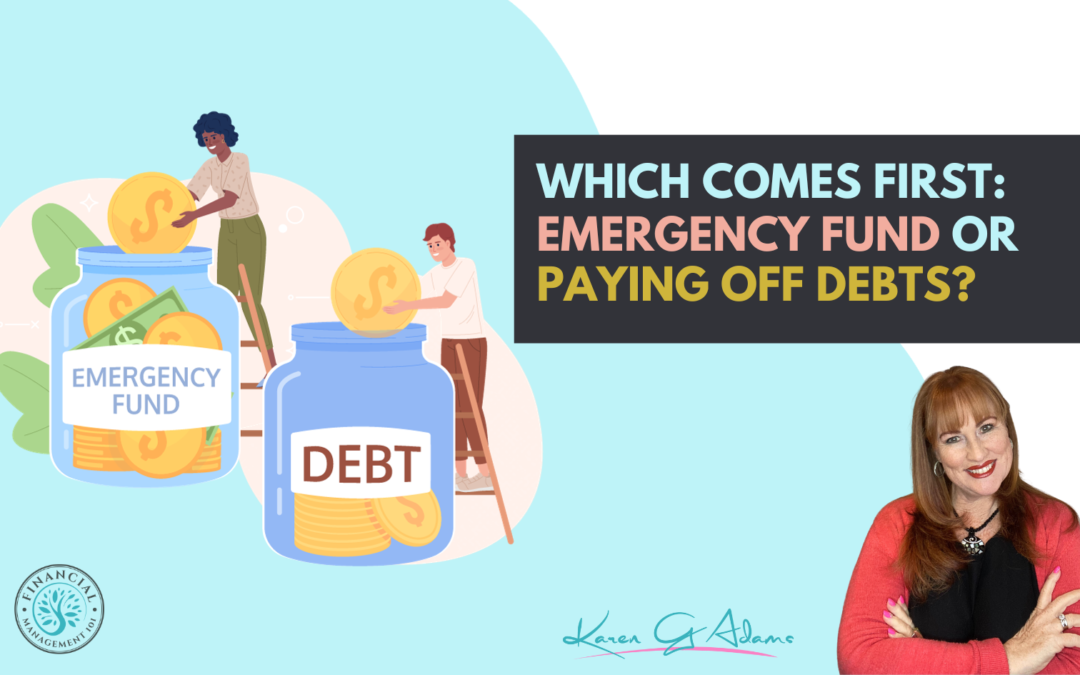
Which Comes First: Emergency Fund or Paying Off Debts?

Which Comes First: Emergency Fund or Paying Off Debts?

When money is tight, it can be hard to pay down debt and build up an emergency savings fund at the same time. But it is still possible with careful budgeting and good money management. 

Here’s a step-by-step plan on how to do this:

1. ASSESS YOUR FINANCIAL SITUATION

Start by looking carefully at your money. Write down everything you earn and everything you owe, including the balances, interest rates, and minimum monthly payments.

2. MAKE A BARE-BONES BUDGET

Make a simple budget that covers only the most important costs, such as housing, utilities, groceries, transportation, and insurance. Cut back as much as you can on spending you do not have to.

3. PAY OFF HIGH-INTEREST DEBTS

Pay off your debts with the highest interest rates first, as this will save you money in the long run. All debts should have the minimum payment made, but any extra money should be put toward the debt with the highest interest rate.

4. SET REALISTIC GOALS

Find out how much you can afford to put toward debt repayment and savings each month. Be careful and make paying off debt your first priority.

5. BUILD A SMALL EMERGENCY FUND

Even though it is important to pay down debt, having a small emergency fund can help you avoid going deeper into debt if you have to pay for something unexpected. Start with a small goal, like $500 or $1,000, and slowly raise it as time goes on.
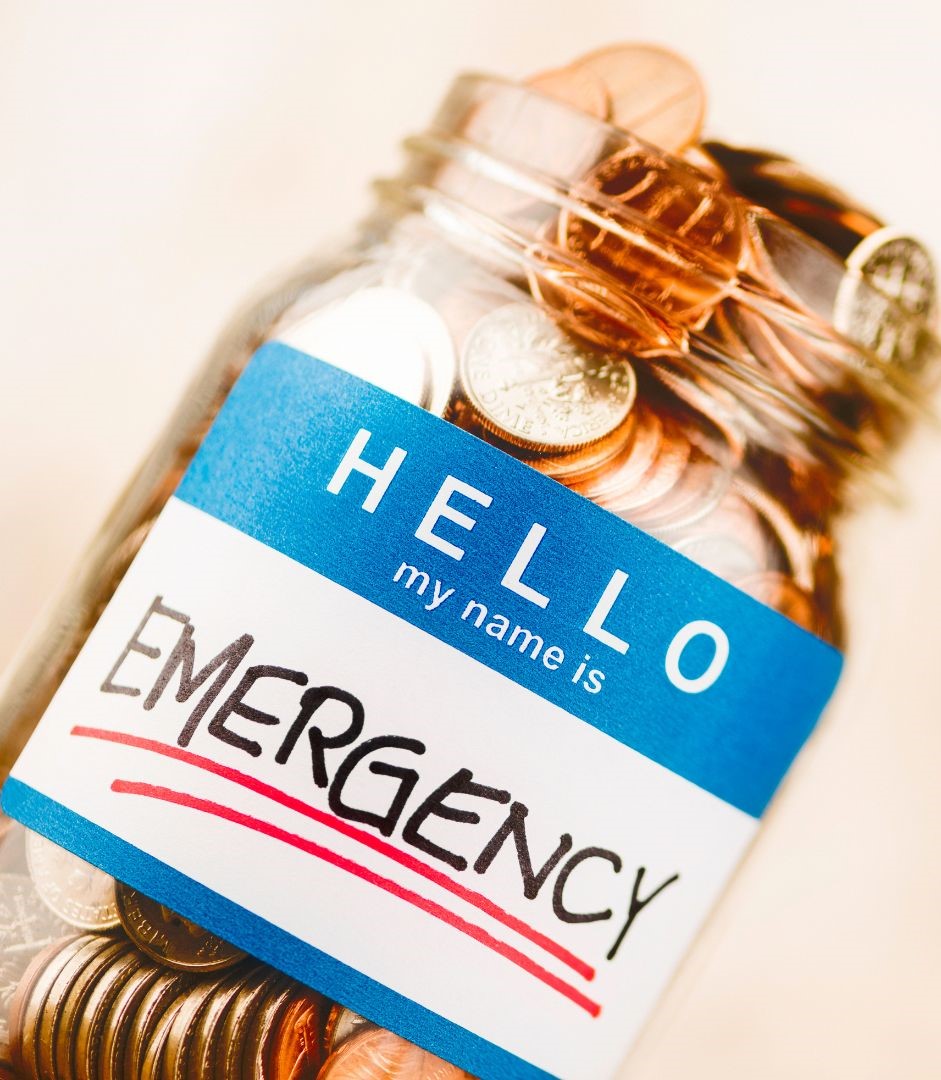
Having a small emergency fund can help you avoid going deeper into debt if you have to pay for something unexpected.

6. USE WINDFALLS/UNEXPECTED MONEY WISELY

If you get money you did not expect, like a tax refund or a bonus, put some of it toward paying off debt and some into an emergency fund. This helps you move forward in both areas.

7. SAVE AND PAY OFF DEBTS AUTOMATICALLY

Set up automatic transfers to your emergency fund and to your debt payments whenever you can. This makes sure that you always move closer to both goals.

8. LOOK FOR WAYS TO MAKE MORE MONEY

Look for ways to make more money, like part-time work, freelance gigs, or selling things you do not use. The extra money can be used to pay off debts and save money.

Talk with your creditors about your money situation. In some cases, you may be able to negotiate lower interest rates, lower minimum payments, or a delay in payments to make it easier to handle your debt.<br />

    9. TALK WITH YOUR CREDITORS

    Talk with your creditors about your money situation. In some cases, you may be able to negotiate lower interest rates, lower minimum payments, or a delay in payments to make it easier to handle your debt.

    10. REVIEW AND ADJUST REGULARLY

    Check in on your budget and financial goals every so often. Change how you pay off debt and save money when your income and expenses change.

    11. CELEBRATE MILESTONES

    Celebrate your successes, no matter how small they are. Every dollar you save in an emergency fund or pay off of a debt is a step toward financial stability.

    Remember that building an emergency fund and paying off debt are long-term goals. It’s okay to progress slowly if your income is limited.

     The important thing is to keep working toward both goals, even if progress is slow. Your money situation will get better over time, and you will have a stronger financial base.

    At Financial Management 101 – we are committed to providing YOU with excellent financial education, training and support so that you can live the life you truly desire.  Join our LEARNING HUB today!

    Join the Learning Hub - Financial Management 101 by Karen G Adams

    What are 5 ways to Deal with the Top 5 Money Stresses?

    What are 5 ways to Deal with the Top 5 Money Stresses?

    To deal with the top five money worries, you need to learn about money, plan ahead, and use practical solutions.

    Here are five ways to help yourself or someone you know who is under a lot of financial stress:

    1. DEBT MANAGEMENT

       ◼️   Debt Consolidation: Look into your options for turning high-interest debts into loans or credit cards with lower rates.

       ◼️   Budgeting: If you know how to budget well, you can put money toward paying off debt in a planned way. If you do not know how to budget well, you can get help from experts who can teach you how to do it.

       ◼️   Financial Counseling: Talk to a financial counselor or advisor who can help you come up with a plan to deal with your debts.

    2. EMERGENCY FUND BUILDING

       ◼️  Automated Savings: Set up automatic transfers to a separate savings account where you can build up an emergency fund.

       ◼️  Changes to your Budget: Look for places in your budget where you can cut back on spending you do not have in order to save money.

       ◼️  Side Income: Look into part-time jobs, freelancing, and the “gig economy” as ways to earn extra money to add to your emergency fund.

    3. SAVING FOR FUTURE GOALS

       ◼️  Goal Setting: Set specific financial goals, like saving for retirement, buying a home, or paying for your child’s education.

       ◼️  Financial Literacy: Learning about the various investment vehicles available and the advantages of investing over the long term to build wealth.

       ◼️  Automated Savings: Consider setting up recurring payments to your retirement account or other investment fund to ensure regular savings.

    Saving Money for Future Goals<br />
Set specific financial goals, like saving for retirement, buying a home, or paying for your child's education.

    4. JOB SECURITY AND INCOME STABILITY

       ◼️  Skills Development: Look for ways to improve your skills and keep learning to make yourself more employable.

       ◼️  Networking: Build and keep up a professional network, which can be helpful for getting job referrals and opportunities.

       ◼️  Backup Plan: Have a backup way to make additional income, like freelance work or a side business, as a way to supplement your current income, or, just in case you lose your job.

    5. MANAGING LIVING EXPENSES

       ◼️  Expense Tracking: There are budgeting apps and tools that can assist with tracking your daily expenses and help identify areas where you may need to look at cutting costs.

        ◼️  Shop Around: Look around for the best deals on things you need, like groceries, insurance, and utilities.

       ◼️  Housing Options: Consider downsizing, renting a room, or getting a lower interest rate on your home loan, are all viable options for lowering monthly housing costs.

    There are budgeting apps and tools that can assist with tracking your daily expenses and help identify areas where you may need to look at cutting costs.

    Remember that financial stress relief often requires time and persistence.

    Seek professional financial advice as needed, and look for ongoing support and accountability to assist you in effectively implementing these strategies.

    Also, learning about money can give you the power to make smart financial decisions and reduce money-related stress over time, that’s where the LEARNING HUB helps you gain more financial knowledge, while providing you with the support and help you need.

    Join the Learning Hub - Financial Management 101 by Karen G Adams

    What are the Top 5 Money Stresses?

    What are the Top 5 Money Stresses?

    Money stress is a common problem for many people, and it can come from a variety of sources.

    Here are five of the most common money worries that people face:

    1. DEBT

    Having a lot of debt, like from credit cards, student loans, mortgages, or personal loans, can put a lot of financial stress on you. Keeping up with monthly payments and interest on debt can be hard for many people and families.

    2. EMERGENCY EXPENSES

    Worrying about medical bills, car repairs, or home repairs that come up out of the blue can cause a lot of stress. Many people worry about how they would pay for these costs if they came up suddenly.

    3. INSUFFICIENT SAVINGS

    Not having enough savings for emergencies, retirement, or future goals can be a major source of stress. People may be concerned about their financial security and whether they will be able to meet their long-term financial goals.

    4. JOB SECURITY

    Concerns about job security and the fear of losing a job can cause financial stress. People may worry about how they will pay their bills if they lose their job or have their income go down.

    It is important to prepare for retirement.

    5. LIVING EXPENSES

    The rising cost of living, including housing, healthcare, education, and utilities, can put pressure on people’s finances. Meeting everyday expenses can be challenging, and this can lead to financial stress.

    People often have to deal with more than one of these money worries at the same time.

    Creating a budget, paying down debt, building an emergency fund, and getting financial advice when needed are common ways to deal with stress related to money.

    It is important to deal with these worries ahead of time to improve your financial health and reduce stress.

    At Financial Management 101 – we are committed to providing YOU with excellent financial education, training and support so that you can live the life you truly desire.  Join our LEARNING HUB today!

    Building Financial Muscle - This book is a must-have for anyone who wants to live without financial stress forever!

    How Your Credit File Affects Your Ability To Borrow Money

    How Your Credit File Affects Your Ability To Borrow Money

    Your credit report is a big part of whether or not you can borrow money from lenders. It gives lenders an idea of how creditworthy you are and helps them figure out how much of a risk it is to lend you money. 

     Here are some of the most important ways that your credit report affects your ability to borrow money:

    1. CREDIT SCORE

    Your credit score is based on the information in your credit file. This number shows how good of a credit risk you are. It depends on things like how well you have paid your bills in the past, how much credit you use, how long you have had credit, what kinds of credit you have, and how many new credit accounts you have. If your credit score is higher, it means that you are less likely to have problems with your credit and this makes it easier for you to borrow money on good terms.

    2. LOAN APPROVAL

    Before deciding whether or not to give you a loan, lenders look at your credit report. They look at your credit history, which includes any missed or late payments, defaults, bankruptcies, or accounts in collections. Lenders are more likely to give you a loan if your credit file shows a history of responsible borrowing and on-time payments.

    3. RATES OF INTEREST

    Your credit history also affects the rates of interest that lenders may offer you on loans. Lenders look at your credit score to figure out how risky it is to give you money. Most of the time, if you have a good credit score, your interest rates will be lower because you are seen as a more reliable borrower. On the other hand, if you have a low credit score or a history of credit problems, lenders may charge you higher interest rates to make up for the risk they see in you.

    4. TERMS

    The terms of a loan depend on more than just the interest rate. It can also change how the loan is set up. If your credit report shows that you are a higher risk, the lender may ask for a co-signer, a bigger deposit, or a shorter amount of time to pay back the loan. On the other hand, if you have a good credit history, you might get better terms, like more time to pay back the loan or fewer requirements for security.

    5. BORROWING LIMITS

    Lenders may also look at your credit report when deciding how much you can borrow. If you have a good credit history and a high credit score, you may be able to borrow more money. But if your credit file shows that you are more of a risk, lenders may limit how much they will lend you or ask for more security. 

    It is important to keep an eye on your credit file, look over your credit reports from the three major credit bureaus, and fix any mistakes or problems you find. By making payments on time, keeping your credit usage low, and taking care of your debts, you can build and keep a good credit history. This will make it easier for you to borrow money on good terms.

    At Financial Management 101 – we are committed to providing YOU with excellent financial education, training and support so that you can live the life you truly desire.  Join our LEARNING HUB today!

    3 Ways to Change Your Money Habits

    3 Ways to Change Your Money Habits

    What are 3 ways to change your poor money habits into good money habits?

    Changing poor money habits into good money habits is essential for financial stability and success. Here are three effective ways to achieve this transformation:

    1. Create a Budget and Stick to It

    Developing a budget is the foundation for managing your money effectively. Start by tracking your income and expenses to get a clear picture of your financial situation. Categorise your spending and identify areas where you can cut back or make adjustments. Set realistic financial goals and allocate a portion of your income towards savings and investments. Regularly review your budget and make necessary adjustments. By sticking to your budget, you’ll develop discipline and make conscious spending decisions, which will help you break poor money habits.

    2. Set Up an Emergency Fund

    One of the reasons people fall into poor money habits is the lack of an emergency fund. Unexpected expenses or emergencies can derail your financial progress and lead to debt or poor financial choices. Establishing an emergency fund acts as a safety net, providing financial security and reducing the need to rely on credit or loans. Aim to save three to six months’ worth of living expenses in an easily accessible account. Start small, automate regular contributions, and gradually increase the amount over time. An emergency fund will help you break the cycle of poor money habits by providing a financial buffer.

    3. Educate Yourself About Personal Finance

    Improving your financial literacy is crucial for developing good money habits. Invest time in learning about personal finance concepts such as budgeting, saving, investing, and debt management. Read books, follow reputable financial websites, and listen to podcasts or watch videos that provide valuable insights into money management. Understand the principles of compounding, diversification, and risk management to make informed decisions. By educating yourself, you’ll gain the knowledge and confidence necessary to change poor money habits into good ones.

    Unexpected expenses or emergencies can derail your financial progress and lead to debt or poor financial choices.

    Remember, changing money habits takes time and consistent effort. Stay committed, seek support from friends or family members, and celebrate small wins along the way.

    At Financial Management 101 – we are committed to providing YOU with excellent financial education, training and support so that you can live the life you truly desire.  Join our LEARNING HUB today!

    Building Financial Muscle: For anyone who wants to live without financial stress forever!