If you have multiple high-interest debts, such as credit card balances or payday loans, you may choose to get a personal loan to consolidate them. By doing so, you can simplify your finances and potentially secure a lower interest rate, reducing your overall debt burden.
2. FINANCING A LARGE PURCHASE
A personal loan can provide the funds you need to make a large purchase, such as buying a car, renovating your home, or paying for a wedding. Rather than depleting your savings or relying on high-interest credit cards, a personal loan provides a structured repayment plan and a potentially lower interest rate.
3. COVERING UNEXPECTED EXPENSES
Life is unpredictable, and unexpected expenses can arise, such as medical bills, home repairs, or emergency travel. In such situations, a personal loan can provide immediate funds to cover these unexpected costs without disrupting your financial stability.
4. FUNDING EDUCATIONAL EXPENSES
If you’re considering furthering your education or pursuing a degree, a personal loan can be a viable option for covering tuition fees, purchasing textbooks, or paying for other education-related expenses. Personal loans can offer more favourable terms compared to student loans, especially for non-traditional students or those attending part-time.
5. IMPROVING CREDIT SCORE
If you have a limited credit history or a low credit score, managing a personal loan responsibly can help you improve your credit profile. Making consistent, on-time payments demonstrates creditworthiness, which may improve your credit score over time. A higher credit score can help you get better interest rates on future loans.
Remember that the decision to take out a personal loan should be based on careful consideration of your financial situation, repayment ability, and the terms offered by lenders. It’s important to compare loan options, understand the associated costs and fees, and ensure that borrowing fits within your overall financial plan.
At Financial Management 101 – we are committed to providing YOU with excellent financial education, training and support so that you can live the life you truly desire. Join our LEARNING HUB today!
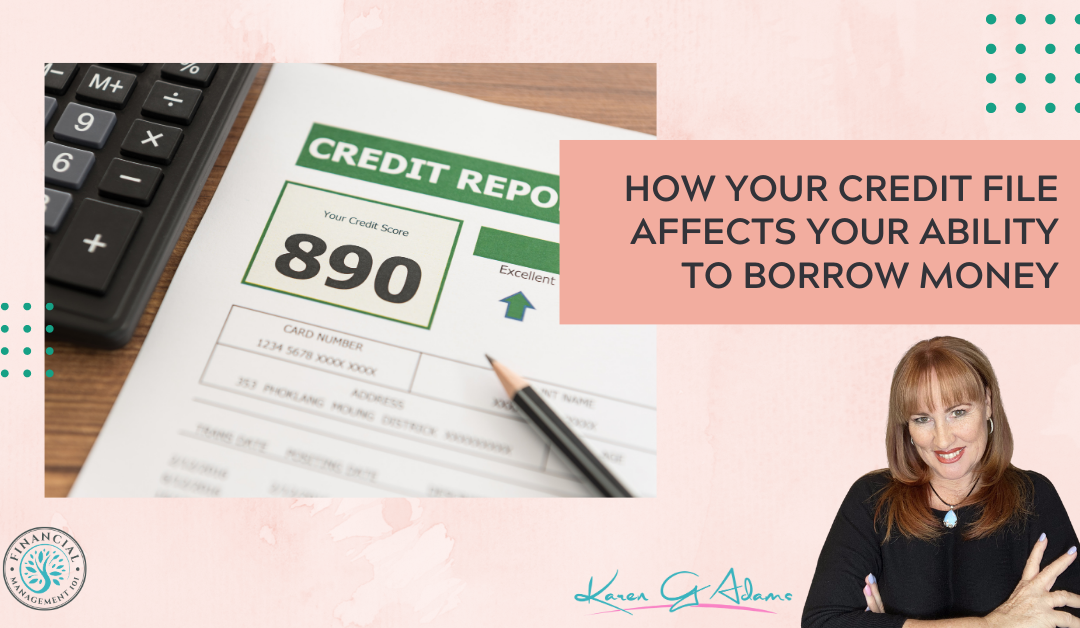
Your credit report is a big part of whether or not you can borrow money from lenders. It gives lenders an idea of how creditworthy you are and helps them figure out how much of a risk it is to lend you money.
Here are some of the most important ways that your credit report affects your ability to borrow money:
1. CREDIT SCORE
Your credit score is based on the information in your credit file. This number shows how good of a credit risk you are. It depends on things like how well you have paid your bills in the past, how much credit you use, how long you have had credit, what kinds of credit you have, and how many new credit accounts you have. If your credit score is higher, it means that you are less likely to have problems with your credit and this makes it easier for you to borrow money on good terms.
2. LOAN APPROVAL
Before deciding whether or not to give you a loan, lenders look at your credit report. They look at your credit history, which includes any missed or late payments, defaults, bankruptcies, or accounts in collections. Lenders are more likely to give you a loan if your credit file shows a history of responsible borrowing and on-time payments.
3. RATES OF INTEREST
Your credit history also affects the rates of interest that lenders may offer you on loans. Lenders look at your credit score to figure out how risky it is to give you money. Most of the time, if you have a good credit score, your interest rates will be lower because you are seen as a more reliable borrower. On the other hand, if you have a low credit score or a history of credit problems, lenders may charge you higher interest rates to make up for the risk they see in you.
4. TERMS
The terms of a loan depend on more than just the interest rate. It can also change how the loan is set up. If your credit report shows that you are a higher risk, the lender may ask for a co-signer, a bigger deposit, or a shorter amount of time to pay back the loan. On the other hand, if you have a good credit history, you might get better terms, like more time to pay back the loan or fewer requirements for security.
5. BORROWING LIMITS
Lenders may also look at your credit report when deciding how much you can borrow. If you have a good credit history and a high credit score, you may be able to borrow more money. But if your credit file shows that you are more of a risk, lenders may limit how much they will lend you or ask for more security.
It is important to keep an eye on your credit file, look over your credit reports from the three major credit bureaus, and fix any mistakes or problems you find. By making payments on time, keeping your credit usage low, and taking care of your debts, you can build and keep a good credit history. This will make it easier for you to borrow money on good terms.
At Financial Management 101 – we are committed to providing YOU with excellent financial education, training and support so that you can live the life you truly desire. Join our LEARNING HUB today!
What are 3 ways to change your poor money habits into good money habits?
Changing poor money habits into good money habits is essential for financial stability and success. Here are three effective ways to achieve this transformation:
1. Create a Budget and Stick to It
Developing a budget is the foundation for managing your money effectively. Start by tracking your income and expenses to get a clear picture of your financial situation. Categorise your spending and identify areas where you can cut back or make adjustments. Set realistic financial goals and allocate a portion of your income towards savings and investments. Regularly review your budget and make necessary adjustments. By sticking to your budget, you’ll develop discipline and make conscious spending decisions, which will help you break poor money habits.
2. Set Up an Emergency Fund
One of the reasons people fall into poor money habits is the lack of an emergency fund. Unexpected expenses or emergencies can derail your financial progress and lead to debt or poor financial choices. Establishing an emergency fund acts as a safety net, providing financial security and reducing the need to rely on credit or loans. Aim to save three to six months’ worth of living expenses in an easily accessible account. Start small, automate regular contributions, and gradually increase the amount over time. An emergency fund will help you break the cycle of poor money habits by providing a financial buffer.
3. Educate Yourself About Personal Finance
Improving your financial literacy is crucial for developing good money habits. Invest time in learning about personal finance concepts such as budgeting, saving, investing, and debt management. Read books, follow reputable financial websites, and listen to podcasts or watch videos that provide valuable insights into money management. Understand the principles of compounding, diversification, and risk management to make informed decisions. By educating yourself, you’ll gain the knowledge and confidence necessary to change poor money habits into good ones.
Remember, changing money habits takes time and consistent effort. Stay committed, seek support from friends or family members, and celebrate small wins along the way.
At Financial Management 101 – we are committed to providing YOU with excellent financial education, training and support so that you can live the life you truly desire. Join our LEARNING HUB today!
Being a student of learning means that you’re constantly growing as a person.
I believe that it shouldn’t matter what stage of life you’re in, whether in work or personal – you should never stop learning, as this enables you to stay open to new opportunities and experiences that life has to offer.
If you want any part of your life whether it be in your relationships, financial, physical or emotional to be changed or improved then you must be a student of learning.
Whatever area within your life is causing you pain or unhappiness, then go and research how you can go about changing it.
Read books, listen to podcasts, study those you admire and look at the straits that you want to be more like.
When it comes to financial matters and ways to improve the health of your money, look for coaches and people who understand money and how they can teach you to become better money managers.
Recently I undertook an exam, the Diploma in Finance and Mortgage Broking Management. The reason I did this was that I’m already talking to people about ways they can reduce their mortgage (a major debt in their life) so I decided to educate myself further on how I can truly make a difference and advise people with more knowledge about how to become mortgage-free sooner.
So whatever you’re looking to improve: research, study and look into ways on how to make those changes.
The way to a better future is to work on you.
Look at the areas that aren’t working and ask yourself where can I learn more about this so I can change the outcome.
And finally, GET YOURSELF A COACH. Look at our athletes and our favourite sporting teams and how they employ coaches to help them be on top of their game.
A financial coach, as in myself, is someone who’s trained to guide, motivate and teach you how to make sure you’re managing your money wisely.
Regular coaching will ensure you are working towards your goals of becoming debt-free, financially happy and making healthy choices with your money.
Financial education is one of the best gifts you can give yourself.
Check out mymonthly coaching program to ensure you get on top of your money game and for a limited time, you can join my program for a little as $1. Go on do yourself and your money a favour and join my monthly coaching program today.
See you on the inside.
In the meantime, here’s to your financial health wealth and happiness.
Yes, I believe there is, otherwise everybody would be living without financial stress and having no money problems at all.
But that’s not the case, so there must be a secret?
What is the secret to financial health?
Well, let me explain more what the term financial health means.
Having financial health is about having the money to enjoy things you love.
It means having money work to your advantage and not just to your bank or financial institutions benefit!
AND…… it certainly means not having any financial worries or stress relating to money.
What you were taught or brought up to believe about money, has shaped you today.
This means the difference between having awesome financial health where you’re able to pay your bills, have money in the bank and live without financial stress.
Or, living from pay check to pay check stressed out and worried that if something happens like loosing your income, you could be in some financial strife.
Here are seven ways to know if you are in good financial shape and have awesome financial health.
1 Firstly, you don’t spend every dollar you earn, but have money left at the end of pay day
2 Secondly, you have a savings account with money it and ready for “just in case” emergencies like loosing your job.
3 Thirdly you’re able to pay more than your minimum mortgage repayments and you are well on your well to paying this sucker down before the end of your loan term.
4 Fourthly, you are paying your bills on time and before the due date
5 Fifth, at the end of each month you have a zero balance on any credit cards
6 Sixth, have money regularly put into an investment portfolio, whether it be for shares, managed funds or for property investment for example, and
7 Lastly, annual holidays are saved up and paid in full before heading away.
Making sure you work towards good financial health will mean the difference between living a very comfortable and happy life during your retirement years OR relying on government support living in poverty.
So do you feel you have awesome Financial Health? No, then time to do something about it don’t you think?
What I offer is a full coaching service that’s super affordable while you get the support, knowledge and help you require to make better financial decisions.
If money stress is causing you problems then check out how you can work with me below.