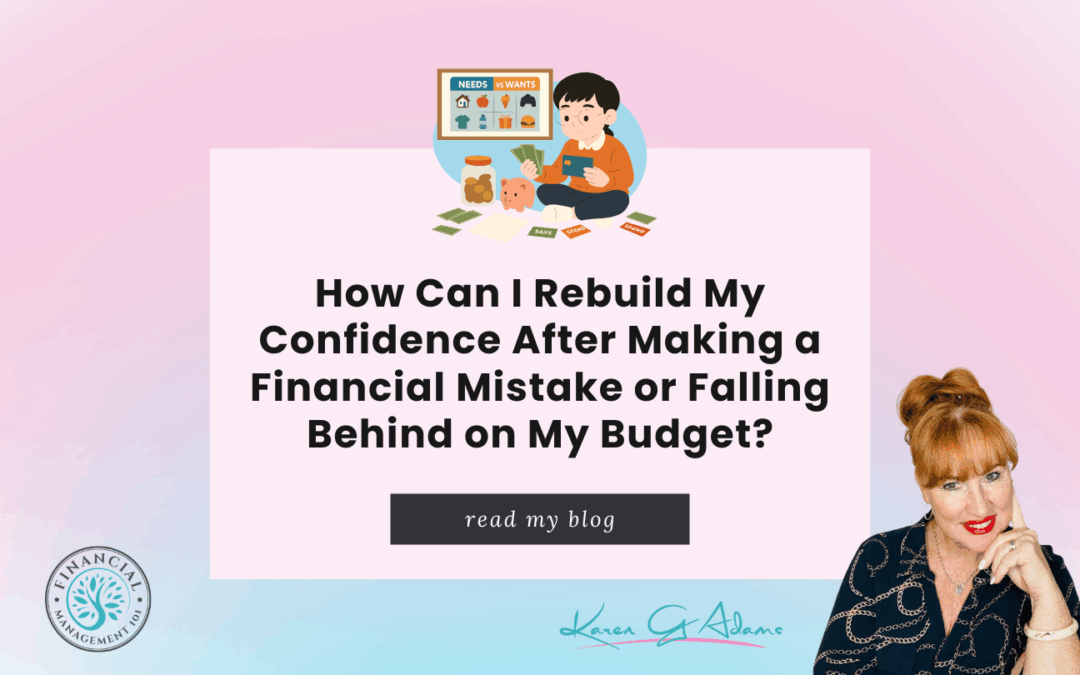
How Can I Rebuild My Confidence After Making a Financial Mistake or Falling Behind on My Budget?

How Can I Rebuild My Confidence After Making a Financial Mistake or Falling Behind on My Budget?

We’ve all had that moment.

You check your bank account… and it’s lower than you thought.
You open your credit card bill… and it’s higher than you expected.
You look at your budget… and realse you haven’t followed it for two weeks.

Cue the shame spiral.

If you’ve recently made a money mistake – or you just feel behind – I want you to know this:

You are not alone.
You are not a failure.
And you are absolutely capable of bouncing back stronger.

This blog will walk you through how to move from guilt to growth, and rebuild your confidence one step at a time.

1. Separate Your Self-Worth from Your Net Worth

First and foremost: you are not your bank balance.

Your financial missteps don’t make you “bad with money.” They make you human.

Whether you overspent, ignored your budget, or slipped back into old habits, it doesn’t define who you are. It’s a moment – not a life sentence.

Start here:

  • Remind yourself: “I am capable of change.”
  • Reflect on a past financial win, no matter how small

Say out loud: “I forgive myself. I’m ready to move forward.”

2. Get Honest (Without the Shame)

Let’s name what happened – not to beat yourself up, but to take your power back.

Ask yourself:

  • What did I spend that I hadn’t planned for?
  • Did I avoid tracking or checking in with my money?
  • Did I say “yes” to things I couldn’t afford?

Write it all down. You’re not here to judge yourself – just to gain clarity so you can move forward with purpose.

3. Understand What Triggered the Slip-Up

There’s always a “why” behind every money misstep mand understanding it is key to change.

Common triggers:

  • Emotional spending (boredom, stress, celebration)
  • People-pleasing (saying yes to things out of guilt)
  • Lack of planning (unexpected expenses you didn’t prep for)
  • Old money stories (like “I’ll never get ahead anyway”)

Identifying the trigger gives you a new layer of awareness and that’s when real change begins.

4. Reset with a Micro-Goal

When your confidence is shaken, the best thing you can do is create a tiny win that rebuilds momentum.

Here are some examples:

  • Track your spending for the next 3 days
  • Create a mini budget just for this week
  • Make one extra payment toward your credit card
  • Pause one subscription and save the money instead

Success is a series of small, intentional steps. Start with one.

Create a mini budget for this week

5. Watch Your Words (They Matter More Than You Think)

Your internal dialogue becomes your financial reality.

Let’s flip the script:

❌ “I’m terrible with money.”
✅ “I’m learning how to manage my money better every day.”
❌ “I’ll never get out of debt.”
✅ “Every payment I make moves me closer to freedom.”
❌ “I can’t stick to a budget.”
✅ “I’m figuring out a system that works for me.”

Language matters. Speak like someone who’s growing because you are.

6. Track Progress, Not Perfection

You don’t have to get everything right to be making progress. Celebrate the fact that:

  • You noticed the slip-up
  • You chose to stop and reflect
  • You’re taking action now

That’s what winning with money actually looks like.

Make a habit of reflecting each month:

  • What went well?
  • Where did I struggle?

  • What can I adjust?

And remember: even showing up for your finances when it’s hard is worth celebrating.

7. Lean Into Support – Don’t Do This Alone

Shame thrives in isolation. Confidence grows in community.

Find a space where:

  • You can ask questions without feeling judged
  • You can share your wins and struggles
  • You can be held accountable to your goals

That’s exactly what Financial Muscle Coaching is a coaching and accountability space, where we normalise setbacks and celebrate bounce-backs.

Inside the membership, you’ll find structure, strategy, and support – all in one place.

8. Build Your Financial Muscle, One Rep at a Time

Rebuilding financial confidence is like building physical strength – it happens one rep at a time.

One decision to check your balance.
One habit of tracking your spending.
One conversation where you ask for help instead of hiding.
One payment that moves you forward.

You don’t need to leap – you just need to lift. And every lift makes you stronger.

Final Thoughts

Mistakes are part of the journey – not the end of it.

You are not behind. You are not bad with money. And you don’t have to do this perfectly to make progress.

Every time you choose to come back – to review, reflect, and reset – you’re rebuilding your confidence.

You’re showing yourself what you’re made of.
And you’re writing a new money story that’s rooted in self-trust, resilience, and growth.

You’ve got this. And I’m right here cheering you on.

? Join Financial Muscle Coaching

If you’re tired of navigating your money alone – or beating yourself up every time you slip – Financial Muscle Coaching is the place for you.

In this weekly coaching space, you’ll get:
✅ Encouragement instead of criticism
✅ Clear, doable action plans that meet you where you are
✅ Real accountability to build habits and confidence that last

No more shame. No more silence. Just strength, strategy, and steady growth.
Join Financial Muscle Coaching Now

#HowToChangeMoneyMindset #ResetMyMoneyBeliefs #BuildFinancialConfidence #MoneyMindsetHelp #FinancialMindsetCoaching #HowToFeelBetterAboutMoney #WhyDoIFeelStressedAboutMoney #NewYearMoneyMindset #MoneyMindsetReset2025 #PositiveMoneyBeliefs #MoneyMindset #FinancialFreedomJourney #MoneyCoach #BudgetMindset #AbundanceMindset

Why Do Most People Fail at Their New Year’s Resolutions and How Can I Actually Stick to My Financial Goals This Year?

Why Do Most People Fail at Their New Year’s Resolutions and How Can I Actually Stick to My Financial Goals This Year?

New Year, Same Resolutions? Let’s Talk About It.

Ahhh January the month of green smoothies, gym selfies, and freshly purchased planners that are definitely going to change your life this time, right?

If you’re like most people, you’ve probably made a few New Year’s resolutions that sounded amazing on January 1st… but by February? They’re long forgotten, buried under Uber Eats receipts and good intentions.

And when it comes to money goals? Ohhh, this is where the guilt hits hard.

So let’s break it down: Why do New Year’s resolutions fail and what can you do instead to actually stick to your financial goals this year?

Spoiler: It’s not about willpower. It’s about building financial muscle and that’s what I help people do every day.

The Stats Don’t Lie – Most Resolutions Don’t Last

According to research:

  • 43% of people expect to fail their resolutions by February
  • Only 9% actually feel successful by the end of the year
  • The most common failed resolutions? Diet, fitness… and yes — money

Why? Because most resolutions are made in the heat of a moment – not rooted in a system, a strategy, or support.

We say things like:

  • “I’m going to save $5,000 this year!”
  • “I’m cutting up ALL my credit cards!”
  • “I’ll never spend money on takeout again!”

…but we don’t have a real plan behind it. Just hope, hype, and maybe a pretty notebook.

New Year’s Resolutions

Why Financial Resolutions Fail: The Real Talk

Here’s what I’ve seen in my coaching practice over and over:

  1. The goal is too vague.
    “Get better with money” isn’t a goal – it’s a wish. Your brain doesn’t know what to do with that.
  2. There’s no timeline.
    Saving “someday” or “this year” doesn’t create urgency or clarity.
  3. You try to do too much, too fast.
    Going from zero to “never spending a dollar unless it’s pre-budgeted” is like deciding to run a marathon when you haven’t walked around the block in months.
  4. No accountability.
    When you’re the only one who knows your goals… it’s easy to quit. Life gets busy, bills pile up, and suddenly, your “big resolution” is a tab you closed weeks ago.
  5. Shame gets in the way.
    One slip-up, and your inner critic screams, “See?! You always mess this up!” And so you give up again.

Sound familiar?

So What Actually Works? (This Is Where It Gets Fun)

Instead of setting rigid resolutions, try this instead:

✅ Set Clear Financial Intentions – Not Punishments

Financial intentions focus on who you want to become and how you want to feel – not just what you want to do.

For example:

  • “I want to feel peaceful when I check my bank account.”
  • “I want to be someone who saves consistently.”
  • “I want to feel proud of my money decisions.”

From there, we build small, tangible goals that align with that intention. That’s the sweet spot.

✅ Build Micro Goals That Stack Into Momentum

Instead of “Save $5,000 this year,” try:

  • “Transfer $100 every payday to my savings account.”
  • “Do 1 no-spend weekend per month.”
  • “Track my spending daily for 30 days.”

These small actions feel doable and when done consistently, they change everything.

✅ Have a System – Not Just a Goal

Anyone can write a goal. But what’s your system to get there?

Here’s a basic system I teach inside my Financial Muscle Coaching:

  1. Weekly money check-ins (10 minutes)
  2. Monthly budget reviews
  3. Track 1 habit at a time (like spending or debt payments)
  4. Celebrate progress every month.

Have a Money Budgeting System

Systems create structure and structure creates success. Don’t wait – join the membership now and start living your best life from today.

Join Financial Muscle Coaching Now

#WhyDoResolutionsFail #HowToStickToFinancialGoals #WhyCantIKeepNewYearGoals #NewYearMoneyResolutionHelp #HowToMakeMoneyGoalsThatLast #MoneyGoalsNotResolutions #HowToStayMotivatedWithMoney #BreakTheCycleWithMoney #SmartFinancialGoals2025 #BuildBetterMoneyHabits #NewYearsResolutionFail #MoneyGoals2025 #FinancialGoalsThatStick #BudgetGoals #MoneyHabits #ResolutionReset #MoneyCoaching #FinancialMuscle #GoalSettingTips #SmartMoneyMoves 

The Magic of 30 Days: Transform Your Money, Transform Your Life (Why One Month of Mindset Work Can Change Everything)

The Magic of 30 Days: Transform Your Money, Transform Your Life (Why One Month of Mindset Work Can Change Everything)

“Can 30 days really make a difference with money?”

Let’s be honest. You’ve probably tried budgeting apps. You’ve read the books. Maybe even taken a course or two.

And yet… money still feels stressful, complicated, or just plain overwhelming.

So when someone says, “Join a 30-day program that changes your financial life,” it’s normal to feel a little skeptical.

But what if the reason things haven’t clicked yet isn’t because you’re doing it wrong…

It’s because you’ve been starting in the wrong place.

Getting Out of Debt Starts in Your Mind

Most People Start With the Numbers. I Start With the Mindset.

Think about it.

  • Spreadsheets don’t fix self-doubt.
  • Budgeting tools don’t heal money shame.
  • Financial podcasts don’t shift limiting beliefs.

You can have all the best strategies in the world… But if your brain is still running on fear, scarcity, or old stories like “I’m bad with money,” you’ll sabotage every effort without meaning to.

That’s why the Master Your Money program is different. It doesn’t start with dollars. It starts with beliefs.

What 30 Days of Mindset Work Can Do

This isn’t just a course – it’s a reset.

In 30 days, you’ll go from:

❌ Avoiding your finances to ✅ Taking confident, calm action
❌ Feeling stuck or ashamed to ✅ Feeling empowered and aligned
❌ Reacting emotionally to ✅ Responding intentionally

It’s about building new mental pathways so that good money habits become natural – not forced.

 “Your brain is your most powerful financial tool. Train it, and everything changes.”

Why 30 Days?

Because science says it takes about a month to rewire neural pathways and form new habits.

And because 30 days is long enough to create real change, but short enough to actually finish.

It’s a momentum-builder. A mindset shifter. A confidence catalyst.

30 days of doing the inner work can unlock the financial freedom you’ve been chasing for years.

✨ What’s Inside the Program?

The Master Your Money program isn’t about tracking every cent. It’s about transforming the way you think and feel about money so that clarity, confidence, and abundance become your new normal.

Here’s what you’ll experience:

Week 1: Rewiring Your Financial Mindset

  • Understand the power of your subconscious in money decisions
  • Identify and replace limiting beliefs
  • Start using daily affirmations that actually work

Week 2: Money + Mindfulness

  • Create a daily 5-minute ritual to check in with your money
  • Learn how to stop emotional spending
  • Build self-trust around your decisions

Week 3: Habits + Intentional Action

  • Learn how to stick to habits without burning out
  • Create financial rituals that align with your lifestyle
  • Start making empowered choices that feel good

Week 4: Abundance + Long-Term Freedom

  • Shift from scarcity to sustainable abundance
  • Use visualization and gratitude to attract new possibilities
  • Walk away with a personalized plan for the next 90 days

Plus:

  • 2 x 1:1 coaching sessions with me
  • Daily support in a safe, private community with like-minded individuals

Bonuses like The Financial Confidence Framework + The Abundance Manifestation Method

Why This Works When Nothing Else Has

Because Master Your Money isn’t about “doing more” – it’s about thinking differently.

It’s for you if you’ve ever said:

  • “I make good money but still feel behind.”
  • “I know what to do, I just don’t do it.”
  • “Money feels heavy, confusing, or emotional.”
  • “I want peace, not just numbers on a spreadsheet.”

This program is your permission slip to ditch the shame, drop the stress, and finally feel free with your finances.

From Clients Who’ve Done the Work:

 “In 30 days, I went from avoiding my bank account to checking it daily with confidence. This wasn’t just about money, it was about reclaiming my power.” – Lisa, 39

 “I’ve done money courses before, but this one hit different. Karen helped me realise that I wasn’t broken, I just needed a mindset shift. It changed my life.” – Tom, 45

What Could Shift for You in the Next 30 Days?

Imagine this:

  • You wake up without money anxiety.
  • You feel calm when you check your balance.
  • You trust yourself to make the right decisions.
  • You’re building savings, reducing debt, and creating real financial momentum.
  • You feel proud of how far you’ve come.

That’s what’s possible when you do the inner work first.

And it all starts with a yes.

Your Invitation: Join Me Inside Master Your Money

If you’re ready to:

  • Stop spinning your wheels
  • Break the fear-shame-stress cycle
  • Create a healthy, peaceful relationship with money
  • And feel aligned, abundant, and in control…

Then let’s do this together.


Click the image below or message me if you’ve got questions.
Let’s make the next 30 days the most powerful ones yet.

Final Thoughts

You don’t need another spreadsheet. You need a mindset shift.

You don’t need to hustle harder. You need a plan that aligns with your values.

You don’t need to wait for “the right time.” Because this is the time.

“You’re only 30 days away from a completely different money story.”

Let’s write the next chapter together.

Click here to join the Master Your Money program now.
Ready. Aligned. Abundant. Let’s go.

Your Financial Freedom Breakthrough™<br />

From Fear to Freedom: Rewiring Your Money Beliefs for Good (How to Break Free from Financial Anxiety and Finally Take Control)

From Fear to Freedom: Rewiring Your Money Beliefs for Good (How to Break Free from Financial Anxiety and Finally Take Control)

Let’s Talk About Fear…

We don’t like to admit it… But fear is driving way more of our financial decisions than we realise.

  • Fear of not having enough


  • Fear of messing it up


  • Fear of making the wrong choice


  • Fear of looking stupid, selfish, or irresponsible


  • Fear of repeating past mistakes


Fear whispers, “You’ll never get ahead.”
Fear says, “Better play it safe.”
Fear convinces us that we’re not smart enough, disciplined enough, or lucky enough to get it right.

But here’s the truth: Fear doesn’t protect your finances – it paralyses them.

Where Fear-Based Money Beliefs Come From

You weren’t born afraid of money. You learned fear – often without even knowing it.

Maybe you grew up watching your parents fight about bills. Or maybe money was tight, and you internalised the message: “There’s never enough.” Maybe a big mistake left you feeling ashamed, and now you avoid money altogether.

Whatever the story, the result is the same: You’re stuck making decisions from a place of fear, not freedom.

The Cost of Financial Fear

Fear shows up in sneaky ways:

  • You avoid opening bills
  • You put off financial planning
  • You overspend to feel better (hello, retail therapy)
  • You say yes when you mean no – because you’re afraid to “miss out”
  • You hoard money and still feel unsafe
  • You stay small, stuck, and stressed

It’s not because you’re lazy or irresponsible. It’s because fear is running the show.

 And here’s the breakthrough: You can reprogram your fear-based beliefs  and unlock a completely new financial reality.

Beliefs = Behaviors = Bank Balance

In Master Your Money, I teach that your beliefs create your results. Full stop! Let’s look at a few common fear-based beliefs and what they lead to:

Fear-Based Belief Behavior Result
“I’m not good with money.” Avoid finances altogether Confusion & anxiety
“Money is never enough.” Scarcity mindset, hoarding Constant stress
“I always mess it up.” Self-sabotage Lack of progress
“People like me don’t build wealth.” Low risk tolerance Missed opportunities

If you want to change your behaviour, you have to start with the belief that’s fueling it.

How to Rewire Fear Into Empowerment

Here’s the 3-step belief flip framework we use in the program and you can try it right now.

✍️ Step 1: Name the Fear

What’s the thought that’s been keeping you stuck?

“I’ll never be financially secure.”

Step 2: Flip the Belief

Ask yourself, What’s a more empowering version of this belief?

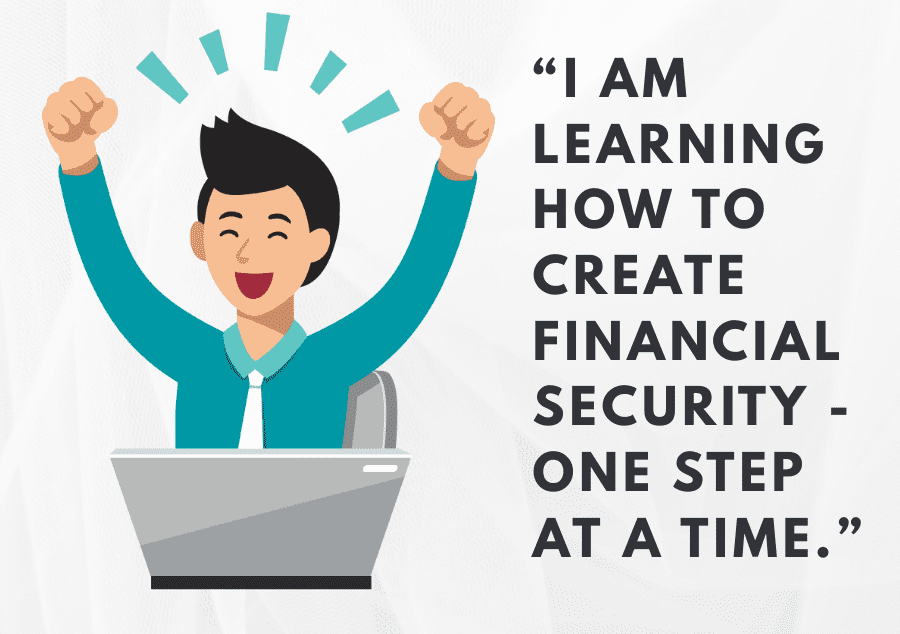
“I am learning how to create financial security – one step at a time.”

Step 3: Speak It Daily

Say your new belief out loud every day. Especially when fear creeps in.

“I am creating safety and stability through intentional choices.”

“I am learning how to create financial security - one step at a time.”<br />

Powerful Affirmations to Rewire Fear-Based Thinking

Start repeating these daily and feel the shift begin:

  1. “I trust myself to make wise financial decisions.”


  2. “It is safe for me to grow, earn, and invest.”


  3. “I am not my past – I create my financial future.”


  4. “I welcome abundance into my life with confidence.”


  5. “Every decision I make brings me closer to financial peace.”

These aren’t fluffy phrases, they are neural rewiring tools backed by the science of neuroplasticity.

How to Handle Fear in Real Time

Here’s what to do when fear pops up (because it will):

  1. Pause – Don’t make the decision immediately. 
  2. Name the fear – “I’m afraid I’ll mess this up.” 
  3. Breathe and ground – Get back to the present. 
  4. Ask – “What would future-me, who trusts herself, do right now?”
  5. Act with intention – Even a small move toward courage shifts everything.

Client Story: From “I Can’t” to “I’m In Control”

When Mel joined the Master Your Money program, she was terrified of looking at her finances. She hadn’t opened a credit card bill in 6 months.

“I just kept telling myself I was bad with money,” she said. “I felt frozen.”

Together, we rewrote that belief. Her new mantra? “I’m learning to lead my finances with courage.”

She committed to one 10-minute financial action a day. Within 30 days, she’d:
✅ Paid off two lingering bills
✅ Set up automated savings
✅ Felt confident opening her banking app

Her financial situation didn’t change overnight – but her mindset did. And that changed everything.

The Transformation: From Fear to Freedom

When you start making money decisions from a place of empowerment, you begin to:

  • Trust yourself
  • Take consistent action
  • Let go of shame
  • Step into the driver’s seat of your financial future

This is the shift we make in the Master Your Money program. Because real transformation doesn’t happen through guilt or hustle. It happens through mindset + habits + belief.

Ready to Ditch Financial Fear for Good?

Inside the 30-Day Master Your Money program, we walk step-by-step through:
✅ Identifying and rewiring limiting beliefs
✅ Shifting from scarcity to abundance
✅ Creating emotional safety around money
✅ Replacing fear with confidence, clarity, and calm

Whether you’re paying off debt, growing your income, or just trying to feel good about your bank account again, this program gives you the tools to stop reacting and start rising.

“Freedom begins the moment you stop letting fear make your decisions.”

Final Thoughts

You are not broken.
You are not bad with money.
You are not behind.

You’ve just been living with fear-based programing that no longer serves you.
And today – you get to choose something better.

You get to choose freedom.

Click here to join Master Your Money and start rewriting your money story.

Your Financial Freedom Breakthrough™<br />

Money Mindfulness: 5 Minutes a Day to Financial Clarity (How to Stop Emotional Spending and Start Feeling Good About Your Finances)

Money Mindfulness: 5 Minutes a Day to Financial Clarity (How to Stop Emotional Spending and Start Feeling Good About Your Finances)

? “I don’t even know where it all went…”

Sound familiar?

You check your bank account and – bam – another $200 gone. You didn’t buy anything major, and yet somehow… the money disappeared.

Chances are, it wasn’t the big purchases that threw you off. It was the mindless spending the “I’ve had a hard day” scroll-n-shop or the “I deserve this” lunch splurge.

We’ve all been there.

But what if you could create a sense of clarity, calm, and control around your finances… in just five minutes a day?

Welcome to the power of money mindfulness.

? What Is Money Mindfulness?

Mindfulness is simply the practice of being present. When applied to money, it means becoming aware of:

  • Why you spend
  • How you feel before and after
  • Whether your actions align with your goals

Mindfulness isn’t about restriction or guilt. It’s about observation and intention.

When you’re financially mindful, you don’t stop spending – you stop spending on autopilot.

? “Mindfulness is the key to making better choices that align with your goals – not your mood.”

? Why We Spend Emotionally (And Don’t Even Know It)

Let’s be honest: Most financial decisions are not logical they’re emotional.

Here’s what emotional spending often looks like:

  • Stress shopping after a long day
  • Treating yourself out of boredom or frustration
  • Buying something just because it was on sale
  • Avoiding looking at your accounts because it “feels bad”


These moments aren’t about the money.
They’re about soothing an emotion.

But here’s the problem: The relief is temporary. The guilt lingers. And your financial goals get buried under impulse buys.

?️ How Mindfulness Helps You Take Control

Mindfulness breaks the cycle. When you pause and observe before spending, you give yourself the chance to:

  • Choose consciously instead of reacting emotionally
  • Align your decisions with your long-term goals 
  • Reduce shame and increase self-trust

And guess what? You don’t need an hour of meditation or a financial planner on speed dial.

All it takes is five intentional minutes a day.

Create a monthly payment plan that includes money for fun and savings.

?‍♀️ The 5-Minute Daily Money Ritual (Your Calm in the Chaos)

Here’s a simple yet powerful practice that clients in my Master Your Money program love. You can do this in the morning, at lunch, or before bed. Set a timer if needed.

?️ Step 1: Check In With Yourself

Ask:

  • How do I feel about money today?

  • What emotions am I carrying – stress, avoidance, pride, guilt?

No judgment. Just notice.

? Step 2: Review Yesterday’s Spending

Look at:

  • Where your money went

  • Whether the spending was intentional

  • What felt good vs. what felt regretful

Even if it’s uncomfortable, face it with compassion.

✍️ Step 3: Name a Money Win

Celebrate something:

  • Packed lunch instead of takeaway?

  • Cancelled a subscription?

  • Said “no” to impulse buying?

Big or small – wins compound.

? Step 4: Reconnect to Your Financial Goal

Write down one short-term goal:

  • “Save $100 this month”

  • “Check my account balance daily”

  • “Stick to my grocery budget this week”

This builds consistency and clarity.

? Step 5: Affirm Your Financial Identity

Say your affirmations out loud (just one is fine):

“I am mindful with money.”
“I trust myself to make wise financial choices.”
“I am calm, confident, and in control.”

? What Clients Say About This Practice:

? “That 5 minutes changed everything. I used to avoid my finances, now I check in like I would with a friend.” – Nadia, 36

? “I didn’t realise how emotionally charged money was for me. Mindfulness helped me break the shame loop.” – Josh, 41

? Mindfulness = Better Habits That Stick

When you’re financially mindful, you naturally:

  • Spend less impulsively
  • Save more consistently
  • Make decisions from calm, not chaos
  • Feel good about your money – even before you hit your goals

And here’s the thing: The results aren’t just emotional, they’re practical.

Mindfulness helps you:
✅ Stick to a budget
✅ Pay off debt faster
✅ Avoid financial burnout
✅ Stay on track even when life gets messy

? What Money Mindfulness Is Not

Just to be clear, money mindfulness is not:

  • Never spending on yourself
  • Obsessively checking your bank account
  • Denying your cravings or fun
  • A one-time fix

It’s a daily habit of checking in, aligning your choices, and leading with intention.

✨ Want to Try It? Here’s Your 7-Day Money Mindfulness Challenge

Take five minutes a day and follow this plan:

Day

Focus

Prompt

1

Awareness

How do I feel about money today?

2

Review

What did I spend on yesterday, and how did it feel?

3

Win

What money decision am I proud of this week?

4

Trigger Check

When do I usually overspend? (Time of day, emotion?)

5

Intentionality

What can I do today to align with my goals?

6

Gratitude

What am I grateful for in my financial life right now?

7

Celebration

How have I grown this week in money awareness?

By Day 7, you’ll feel clearer, calmer, and more in control.

? Ready to Build a Money Mindset That Lasts?

If you’ve tried budgeting apps and spreadsheets and still feel stuck, it’s time to try a new approach.

Inside the Master Your Money program, we help you:

  • Practice daily money mindfulness (without the overwhelm) 
  • Create habits that align with your values
  • Rewire emotional triggers around money
  • Feel confident and calm – even when money is tight

This isn’t about obsessing over every dollar.
It’s about building a peaceful, powerful relationship with your money, on your terms.

?‍♀️ “Clarity creates confidence. Confidence creates momentum.”

? Final Thought: It Was Never About the Money

You don’t need to overhaul your entire financial life overnight.
You just need to pause, reflect, and pay attention – for five minutes a day.

Because once you become mindful with money, you stop feeling out of control…
And start building a financial life that feels calm, clear, and totally aligned.

Your Financial Freedom Breakthrough™