How to Start Reducing Your Debt Today and Two Ways to Do This

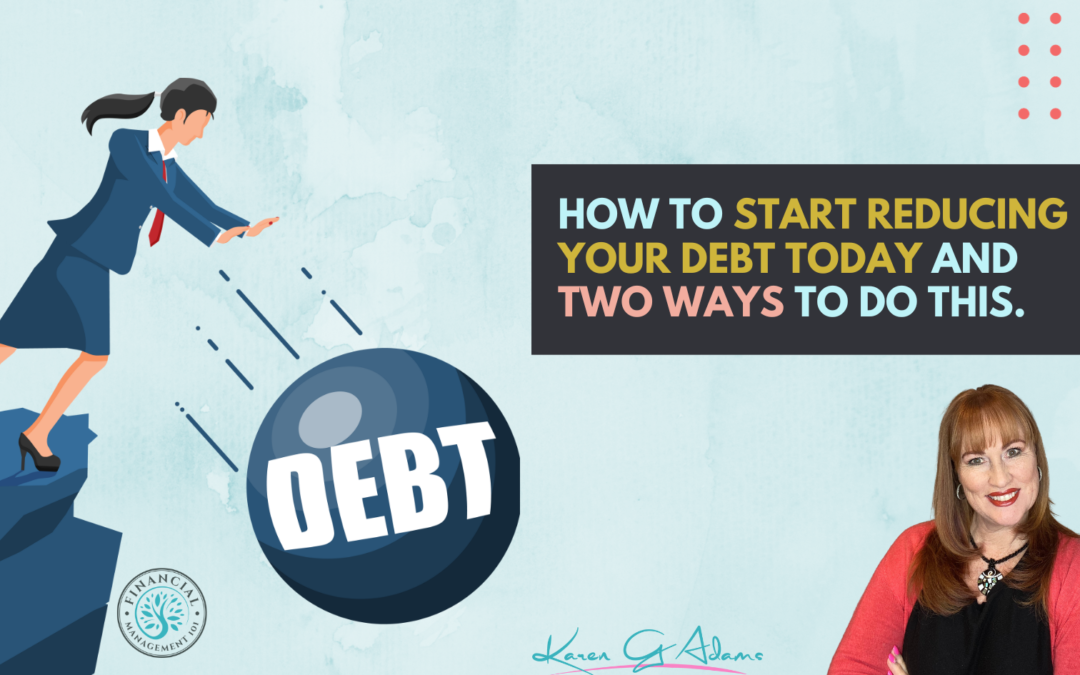
How to Start Reducing Your Debt Today and Two Ways to Do This

You can immediately begin decreasing what you owe and increasing what you own by following the information below.

There a several commonly recommended strategies for paying off debt efficiently, including the “Debt Snowball” or the “Debt Avalanche” method.

Here’s an explanation of both strategies:

DEBT SNOWBALL METHOD

How It Works: This method involves paying off debts from the smallest to the largest balance, regardless of interest rates. The idea is to gain momentum and motivation by quickly eliminating smaller debts.

Steps for the Debt Snowball Method:

        • List all debts, starting with the smallest balance and ending with the largest.
        • Pay the minimum on all debts except the smallest one.
        • Allocate any extra money in your budget toward paying off the smallest debt as quickly as possible.
        • Once the smallest debt is paid off, roll the money you were using for that debt into paying off the next smallest debt.
        • Repeat this process until all debts are paid off.

Advantages: This method can provide a psychological boost as you see smaller debts disappear quickly, which can motivate you to keep going.

DEBT AVALANCHE METHOD

How It Works: This method involves paying off debts in order of highest to lowest interest rates. You focus on paying off the debt with the highest interest rate first to save the most on interest charges over time.

Steps for the Debt Avalanche Method:

        • List all debts, starting with the one carrying the highest interest rate and ending with the lowest.
        • Pay the minimum on all debts except the one with the highest interest rate.
        • Allocate any extra money in your budget toward paying off the debt with the highest interest rate as quickly as possible.
        • Once the highest-interest debt is paid off, roll the money you were using for that debt into paying off the debt with the next highest interest rate.
        • Continue this process until all debts are paid off.

Advantages: This method saves you the most money on interest charges over time, as you tackle high-interest debts first.

The Debt Avalanche Method is my preferred method and the one that I teach in my programs, as I want to save you as much money, as you can.
Seeking guidance from a financial advisor can provide valuable insights and personalised strategies to help you get out of debt faster

Choosing between the Debt Snowball and Debt Avalanche methods depends on your personal preference and financial situation.

The Debt Snowball may provide quicker wins and motivate you, while the Debt Avalanche can save you more money in the long run. Whichever method you choose, it’s essential to stick to a budget, avoid taking on new debt, and consider increasing your income, if possible, to accelerate your debt payoff efforts.

Additionally, seeking guidance from a financial advisor can provide valuable insights and personalised strategies to help you get out of debt faster.


At Financial Management 101 – we are committed to providing YOU with excellent financial education, training and support so that you can live the life you truly desire.  Join our LEARNING HUB today!
Join the Learning Hub - Financial Management 101 by Karen G Adams

How to Avoid a Tax Debt at the End of the Financial Year

How to Avoid a Tax Debt at the End of the Financial Year

What business owners must do to ensure they don’t have a tax debt at the end of the financial year.

As a business owner, there are several steps you can take to manage your money effectively and minimise the risk of having a tax debt at the end of the financial year. 

Here are some tips on how to do this:

1. MAINTAIN ACCURATE FINANCIAL RECORDS

Keep detailed records of all your business transactions, including sales, expenses, invoices, receipts, and bank statements. Accurate record-keeping is crucial for preparing your tax returns correctly and minimising errors.

2. SEPARATE PERSONAL AND BUSINESS FINANCES

Establish separate bank accounts for your personal and business finances. This separation will help you track your business income and expenses more effectively, making it easier to calculate your tax obligations accurately.

3. TRACK AND CATEGORISE EXPENSES

Categorise your business expenses properly to ensure you claim all eligible deductions. Common expense categories include office supplies, rent, utilities, travel, marketing, and employee salaries. Consider using accounting software or tools to streamline expense tracking and categorisation.

4. PLAN FOR ESTIMATED TAX PAYMENTS

Depending on your jurisdiction, you may be required to make estimated tax payments throughout the year. Estimate your tax liability and make timely payments to avoid penalties and interest charges. Consult with a tax professional or accountant to determine the appropriate amount to set aside for estimated taxes.

5. UNDERSTAND DEDUCTIBLE EXPENSES

Familiarise yourself with the tax deductions and credits available to your business. Deductible expenses can include equipment purchases, professional services fees, training costs, and business-related travel expenses. Keep receipts and documentation to support your deductions.

avoid a tax debt

6. SEEK PROFESSIONAL ADVICE

Consult with a tax professional or accountant who specialises in small business taxation. They can help you understand the tax laws specific to your industry and provide guidance on maximising deductions while staying compliant.

7. USE TAX PLANNING STRATEGIES

Explore tax planning strategies that can help you minimise your tax liability. For example, you may consider deferring income or accelerating expenses into the current financial year, where appropriate. Again, it’s essential to work with a tax professional to ensure you’re utilising these strategies correctly and legally.

8. BUDGET AND SAVE FOR TAXES

Create a budget that includes setting aside funds specifically for taxes. By saving for taxes throughout the year, you’ll have the necessary funds available when it’s time to make payments, reducing the risk of a tax debt.

Business Woman

Remember, while these steps can help you manage your money and minimise tax debt, it’s crucial to consult with a qualified tax professional who can provide personalised advice based on your specific circumstances and the tax laws applicable to your jurisdiction.

At Financial Management 101 – we are committed to providing YOU with excellent financial education, training and support so that you can live the life you truly desire.  Join our LEARNING HUB today!
How Your Credit File Affects Your Ability To Borrow Money

How Your Credit File Affects Your Ability To Borrow Money

Your credit report is a big part of whether or not you can borrow money from lenders. It gives lenders an idea of how creditworthy you are and helps them figure out how much of a risk it is to lend you money. 

 Here are some of the most important ways that your credit report affects your ability to borrow money:

1. CREDIT SCORE

Your credit score is based on the information in your credit file. This number shows how good of a credit risk you are. It depends on things like how well you have paid your bills in the past, how much credit you use, how long you have had credit, what kinds of credit you have, and how many new credit accounts you have. If your credit score is higher, it means that you are less likely to have problems with your credit and this makes it easier for you to borrow money on good terms.

2. LOAN APPROVAL

Before deciding whether or not to give you a loan, lenders look at your credit report. They look at your credit history, which includes any missed or late payments, defaults, bankruptcies, or accounts in collections. Lenders are more likely to give you a loan if your credit file shows a history of responsible borrowing and on-time payments.

3. RATES OF INTEREST

Your credit history also affects the rates of interest that lenders may offer you on loans. Lenders look at your credit score to figure out how risky it is to give you money. Most of the time, if you have a good credit score, your interest rates will be lower because you are seen as a more reliable borrower. On the other hand, if you have a low credit score or a history of credit problems, lenders may charge you higher interest rates to make up for the risk they see in you.

4. TERMS

The terms of a loan depend on more than just the interest rate. It can also change how the loan is set up. If your credit report shows that you are a higher risk, the lender may ask for a co-signer, a bigger deposit, or a shorter amount of time to pay back the loan. On the other hand, if you have a good credit history, you might get better terms, like more time to pay back the loan or fewer requirements for security.

5. BORROWING LIMITS

Lenders may also look at your credit report when deciding how much you can borrow. If you have a good credit history and a high credit score, you may be able to borrow more money. But if your credit file shows that you are more of a risk, lenders may limit how much they will lend you or ask for more security. 

It is important to keep an eye on your credit file, look over your credit reports from the three major credit bureaus, and fix any mistakes or problems you find. By making payments on time, keeping your credit usage low, and taking care of your debts, you can build and keep a good credit history. This will make it easier for you to borrow money on good terms.

At Financial Management 101 – we are committed to providing YOU with excellent financial education, training and support so that you can live the life you truly desire.  Join our LEARNING HUB today!
3 Ways to Change Your Money Habits

3 Ways to Change Your Money Habits

What are 3 ways to change your poor money habits into good money habits?

Changing poor money habits into good money habits is essential for financial stability and success. Here are three effective ways to achieve this transformation:

1. Create a Budget and Stick to It

Developing a budget is the foundation for managing your money effectively. Start by tracking your income and expenses to get a clear picture of your financial situation. Categorise your spending and identify areas where you can cut back or make adjustments. Set realistic financial goals and allocate a portion of your income towards savings and investments. Regularly review your budget and make necessary adjustments. By sticking to your budget, you’ll develop discipline and make conscious spending decisions, which will help you break poor money habits.

2. Set Up an Emergency Fund

One of the reasons people fall into poor money habits is the lack of an emergency fund. Unexpected expenses or emergencies can derail your financial progress and lead to debt or poor financial choices. Establishing an emergency fund acts as a safety net, providing financial security and reducing the need to rely on credit or loans. Aim to save three to six months’ worth of living expenses in an easily accessible account. Start small, automate regular contributions, and gradually increase the amount over time. An emergency fund will help you break the cycle of poor money habits by providing a financial buffer.

3. Educate Yourself About Personal Finance

Improving your financial literacy is crucial for developing good money habits. Invest time in learning about personal finance concepts such as budgeting, saving, investing, and debt management. Read books, follow reputable financial websites, and listen to podcasts or watch videos that provide valuable insights into money management. Understand the principles of compounding, diversification, and risk management to make informed decisions. By educating yourself, you’ll gain the knowledge and confidence necessary to change poor money habits into good ones.

Unexpected expenses or emergencies can derail your financial progress and lead to debt or poor financial choices.

Remember, changing money habits takes time and consistent effort. Stay committed, seek support from friends or family members, and celebrate small wins along the way.

At Financial Management 101 – we are committed to providing YOU with excellent financial education, training and support so that you can live the life you truly desire.  Join our LEARNING HUB today!

Building Financial Muscle: For anyone who wants to live without financial stress forever!

Financial Survival Guide During COVID-19_010

If you’ve recently lost your job or you feel you’re about to, here are some things you can do right now to make sure you survive during the uncertain weeks or months ahead.

Okay so you need cash and you need to earn it fast.

There are 3 basic things you need to make sure you have secured during this rough uncertain and unpredictable time and that is:

  1. Make sure you have food on the table for you and your family.
  2. You have shelter.  A roof over your head to weather out this nasty health disaster.
  3. Protect your mental health and wellbeing.

Listen to this podcast as I share with you 5 ways to make sure you’re going to survive;

For more support and help in during this uncertain time join my private FB GROUP where you will be supported and receive more financial and mindset education to help get you through this.

Other resources available to you is to join the:

The Learning Hub

Right-click here and save as to download this episode to your computer.