
Mastering Your Money Mindset: How the Powerful Connection Between Managing Your Money and Unshakable Confidence Go Hand in Hand

Mastering Your Money Mindset: How the Powerful Connection Between Managing Your Money and Unshakable Confidence Go Hand in Hand

How we handle money can have a big effect on how confident we feel, and the same is true in reverse.

Here are some ways that taking care of your money and having confidence are linked:

Financial success can boost confidence: Being able to manage our money and make money can make us feel good about ourselves and provide us with a sense of accomplishment. But having money problems can make us feel unsafe and lower our self-esteem.

Confidence can impact financial decisions: How confident we are can affect the choices we make about money. For example, if we are confident in our ability to make money, we may be willing to take more risks or start our own business. On the other hand, if we don’t feel confident, we might be more careful with our money and avoid taking risks.

Mastering Your Money Mindset: How the Powerful Connection Between Managing Your Money and Unshakeable Confidence Go Hand in Hand

How we think can have a huge effect on how well we do financially: With a growth mindset, we can learn and get better. This can help us solve problems with money and reach our goals. On the other hand, a fixed mindset can hold us back. This is when we think that our skills are fixed and can’t be improved.

Money can change how we feel about ourselves: How we deal with money can change how we feel about ourselves. If we judge ourselves by how much money we have, we might feel bad about ourselves if we don’t have as much as we think we should. If, on the other hand, we have a healthy relationship with money and see it as a tool to help us reach our goals, we can feel good about ourselves no matter what our financial situation is.

Managing your money, time, and confidence are all linked in the following ways:

Focus on what’s important:  When it comes to handling your money, you should pay attention to what’s most important to you. Figure out what you value and what’s most important to you, and make sure your financial choices reflect that.

Use technology to your advantage:  Technology is a strong tool that can help you keep track of your money and save time. Use apps and online tools to automate your finances, keep track of how much you spend, and make smart decisions about your money.

Money and building confidence: Taking care of your money well can help you feel better about yourself and what you can do. 

Here are some practical ways to build trust by taking care of your money:

Learn about personal finance and investing: This will give you more faith in your ability to handle your money well. You can learn more about money by reading books, taking classes, and talking to financial experts like myself.

Take action: Taking action is one of the most important ways to build confidence. Start small by making financial goals that you can reach, like paying off debt or saving money for an emergency fund. As you reach each goal, you’ll feel better about yourself.

Learn about personal finance and investing

Keep track of your progress: Keeping track of your progress can help you feel more confident in your ability to manage your money. Join programs like my “know your money” program which starts with understanding where you are financially so you can build on from there.

Celebrate your financial wins: No matter how small, celebrating your financial wins can help you build confidence and energy. Give yourself a small reward for reaching your financial goals, and use that good feeling to keep going.

By implementing these practical tips, you can improve your ability to manage your money and build confidence. Remember that building these skills takes time and effort, but the payoff can be significant in terms of your financial and personal well-being.

The LEARNING HUB helps you gain more financial knowledge, while providing you with the support and help you and others need. Join now for only $79 USD per month.

Join the Learning Hub - Financial Management 101 by Karen G Adams

How to know if you are home loan ready?

How to know if you are home loan ready?

So you want to buy your first or even second home…but not sure if you are Home Loan ready?

Here are 8 “Must HAVES” in place to ensure you are home loan ready before applying for a home loan.

STEP 1: Your Income

  • If you’re looking at changing your job, DON’T until you have been approved for the loan and setted on your new home.
  • If you are on probation, you will need to wait until you’re off probation before a lender will consider you for a home loan.  There are exceptions to this and will depend on your current employment and work history.
  • Ensure your payslip represents the income you are earning, including the year to date figure, as lenders will look at this figure to calculate your annual income.
  • If you are self-employed or looking at setting up a business, lenders will require 2 x years financial history plus 2 x years tax returns to verify your income.  There are exceptions to this, if you have started a busines and going doing the same work as when you were a PAYG employee, reach out and I can explore lending options.

STEP 2: Your Deposit

  • Have you saved up a minimum 10% deposit, or have you saved up more?
  • Or are you looking to use the equity in another property to fund the next purchase?
    ➤ This can be done if your property is worth more than the outstanding debt owing.
    ➤  A quick and easy way to check this is to obtain a valuation on your home.
    ➤  As a mortgage broker, I have access to free valuations, so I am able to assist you with this.

  • You will require generally a minimum 10% – 20% to be able to afford getting into your own home as there are costs associated with purchasing your home for eg; govt costs as stamp duty, property registration costs, possible lenders application fees and settlement costs.  However, there are exceptions to getting into your own home with as little as a 5% deposit, reach out so I can expand and explore you own personal circumstances.
  • Does your bank account statement demonstrate to the lender that you have savings?  As they check over a minimum 3 x months bank statements to show genuine savings? 
    ➤ One option a lender will look at if you haven’t been able to save the full deposit is paying rent and having a lease agreement in place. Some lenders consider this, as it can show you are able to meet your regular liabilities on time, which is what they are looking at when looking to loan you money.
    ➤ Another option is that if you haven’t been able to save up the minimum deposit required, gifting is acceptable with the majority of lenders. Gifting is where a family member provides a cash amount to assist with obtaining a home loan and does not expect this to be paid back. Lenders will require a stat dec (statutory declaration) signed by the person giving the amount to verify this is a gift and not a loan.

STEP 3: Check Your Credit Report

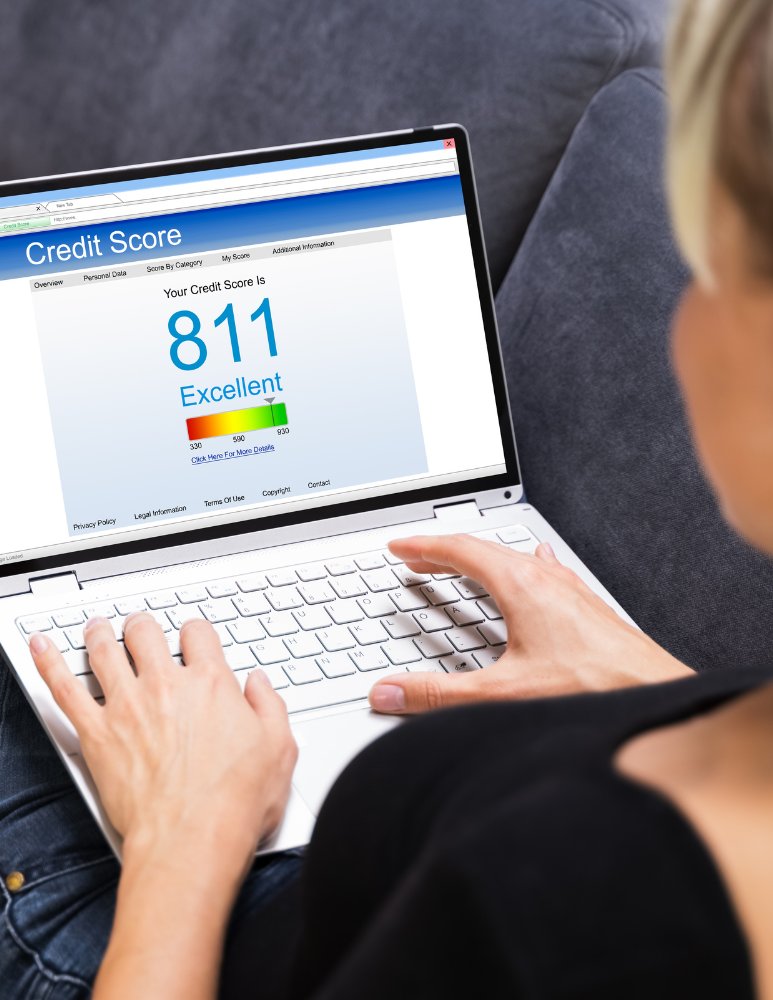
  • You will want to look over your credit file to ensure there are no nasty surprises, and when it comes time to assesing your loan, if your score is low or there have been any missed payments on any bills or liabilities, they will pick up on this and may stop your chances of obtaining the loan.
  • Checking your credit report is easy and free to download from one of the credit check companies online.
  • Or alternatively, you can request a copy of your credit report from me and I will look over it for you to ensure your chances of getting your loan are not decreased.
  • At the end of the day, lenders are looking for good credit conduct and seeing before they decide to loan you the money that you are able to pay your bills and other commitments on time.
Checking your credit report is easy and free to download from one of the credit check companies online.

A low credit score or any missed payments on any bills or liabilities may stop your chances of obtaining the loan.

STEP 4: Bank Statements

  • The majority of lenders will look through your bank statements line by line to see how you manage your money.
  • They are looking to see your spending habits as to whether there is money left at the end of your pay period and verifying whether there is more going out than staying in your bank account.
  • They will require the last 3 months of statements, so make sure they look clean and have no surprises for a lender who will question why something doesn’t appear to look like a normal transaction on the statement.

STEP 5: Identification Verification (ID)

  • Lenders will require a minimum 2 x pieces of identification to verify who you are, and the ID will be in the form of:
    ➤  A current Drivers License
    ➤  A Current Passport and/or
    ➤  Birth Certificate, and
          i. Any visas, if not an Australian Citizen or Resident

STEP 6: Your Borrowing Potential

  • Your borrowing potential looks at whether you can actually afford to purchase the new property and this is where your deposit comes into the equation.;
  • It looks at the purchase price of what you are looking to buy, plus the costs to purchase and get into the property, less your deposit, which equals the actual percentage of how much you’re looking to borrow.
    ➤  Where you are borrowing less than <80% from a lender, you will not incur lender mortgage insurance, or LMI, as it’s known.
          i. 
    LMI is the lender’s insurance policy in case something occurs during the term of the loan and protects the lender’s investment in loaning you the money.
         ii.  There is an additional cost added to the loan when in LMI territory, ie; borrowing more than 80%
    ➤   If your borrowing potential is higher than 90% and even up to 95% then this may limit the lender’s choices available to you, as some lenders do not loan above 90% – 95% (including LMI), while others put a premium on their interest rate for loaning above 95%

    ➤   So if you are considering a loan, it is best to save as much as you can to access a lower interest rate and lower costs of getting your loan.

STEP 7: Your Affordability

  • At the end of the day, are you applying for a home loan that you can really afford?
  • Lenders take careful consideration when you apply for a home loan to ensure you are not going to go into mortgage stress
  • When a lender considers you for a home loan, they factor in higher interest rates and higher monthly ongoing living expenses, as during the loan term interest rates may rise and the  ongoing costs to live increase throughout the years.

STEP 8: Consult With a Specialist Mortgage Broker

  • As a Mortgage Broker, it’s my job to assist you in successfully being eligible for a home loan.
  • I have the tools and resources to work out  if you are home loan ready, and;
  • It’s my job to ensure it goes as smoothly as possible so that, at the end of the day, you get your home loan.

Are you home loan ready?

Buying your first home is a BIG and important step in your life. Learn 8 essential must-haves in this guide that will help you in becoming home loan-ready before applying for a home loan. Get your free copy today!

Disclaimer: The content of this article is general in nature and is presented for informative purposes. It is not intended to constitute tax or financial advice, whether general or personal nor is it intended to imply any recommendation or opinion about a financial product. It does not take into consideration your personal situation and may not be relevant to circumstances. Before taking any action, consider your own particular circumstances and seek professional advice. This content is protected by copyright laws and various other intellectual property laws. It is not to be modified, reproduced or republished without prior written consent

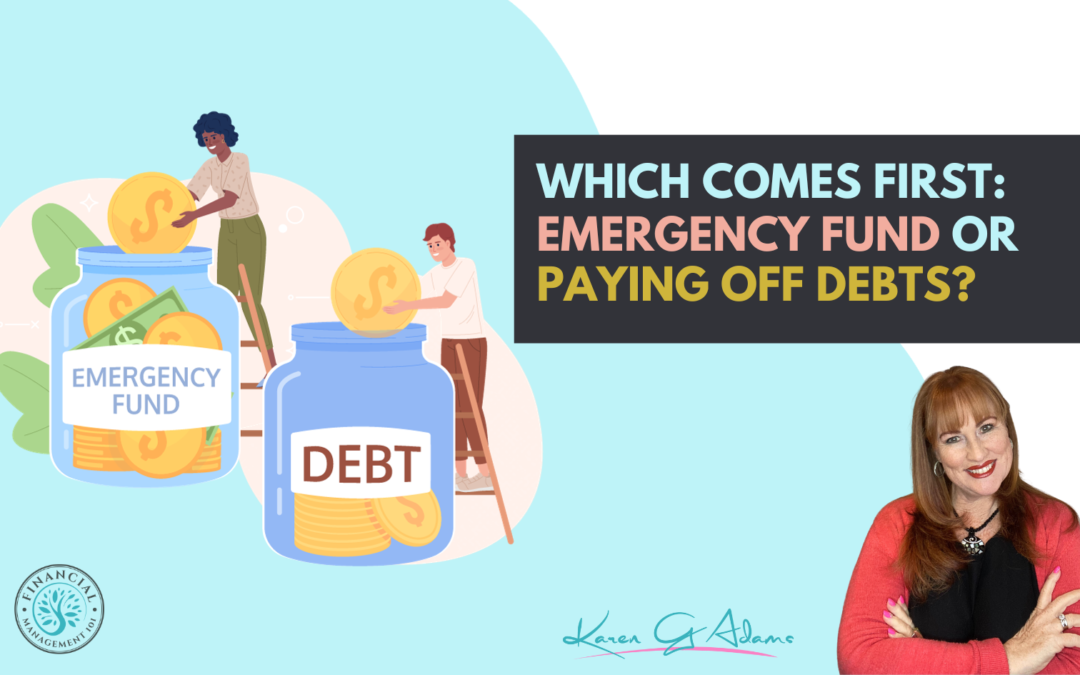
Which Comes First: Emergency Fund or Paying Off Debts?

Which Comes First: Emergency Fund or Paying Off Debts?

When money is tight, it can be hard to pay down debt and build up an emergency savings fund at the same time. But it is still possible with careful budgeting and good money management. 

Here’s a step-by-step plan on how to do this:

1. ASSESS YOUR FINANCIAL SITUATION

Start by looking carefully at your money. Write down everything you earn and everything you owe, including the balances, interest rates, and minimum monthly payments.

2. MAKE A BARE-BONES BUDGET

Make a simple budget that covers only the most important costs, such as housing, utilities, groceries, transportation, and insurance. Cut back as much as you can on spending you do not have to.

3. PAY OFF HIGH-INTEREST DEBTS

Pay off your debts with the highest interest rates first, as this will save you money in the long run. All debts should have the minimum payment made, but any extra money should be put toward the debt with the highest interest rate.

4. SET REALISTIC GOALS

Find out how much you can afford to put toward debt repayment and savings each month. Be careful and make paying off debt your first priority.

5. BUILD A SMALL EMERGENCY FUND

Even though it is important to pay down debt, having a small emergency fund can help you avoid going deeper into debt if you have to pay for something unexpected. Start with a small goal, like $500 or $1,000, and slowly raise it as time goes on.

Having a small emergency fund can help you avoid going deeper into debt if you have to pay for something unexpected.

6. USE WINDFALLS/UNEXPECTED MONEY WISELY

If you get money you did not expect, like a tax refund or a bonus, put some of it toward paying off debt and some into an emergency fund. This helps you move forward in both areas.

7. SAVE AND PAY OFF DEBTS AUTOMATICALLY

Set up automatic transfers to your emergency fund and to your debt payments whenever you can. This makes sure that you always move closer to both goals.

8. LOOK FOR WAYS TO MAKE MORE MONEY

Look for ways to make more money, like part-time work, freelance gigs, or selling things you do not use. The extra money can be used to pay off debts and save money.

Talk with your creditors about your money situation. In some cases, you may be able to negotiate lower interest rates, lower minimum payments, or a delay in payments to make it easier to handle your debt.<br />

    9. TALK WITH YOUR CREDITORS

    Talk with your creditors about your money situation. In some cases, you may be able to negotiate lower interest rates, lower minimum payments, or a delay in payments to make it easier to handle your debt.

    10. REVIEW AND ADJUST REGULARLY

    Check in on your budget and financial goals every so often. Change how you pay off debt and save money when your income and expenses change.

    11. CELEBRATE MILESTONES

    Celebrate your successes, no matter how small they are. Every dollar you save in an emergency fund or pay off of a debt is a step toward financial stability.

    Remember that building an emergency fund and paying off debt are long-term goals. It’s okay to progress slowly if your income is limited.

     The important thing is to keep working toward both goals, even if progress is slow. Your money situation will get better over time, and you will have a stronger financial base.

    At Financial Management 101 – we are committed to providing YOU with excellent financial education, training and support so that you can live the life you truly desire.  Join our LEARNING HUB today!

    Join the Learning Hub - Financial Management 101 by Karen G Adams

    How To Build An Emergency Savings Fund

    How To Build An Emergency Savings Fund

    Building an emergency savings fund is a crucial step in achieving financial security and peace of mind. 

    Here are some strategies to assist with building an emergency savings fund:

    1. SET CLEAR GOALS

    Determine how much you want to save in your emergency fund. It is often recommended to have at least three to six months’ worth of living expenses, but you can start with a smaller goal and work your way up.

    2. CREATE A BUDGET

    Develop a detailed monthly budget to track your income and expenses. This will help you identify areas where you can cut back and allocate more money to savings.

    3. PAY YOURSELF FIRST

    Think of the money you save for an emergency fund as a must-have expense. Set up transfers from your regular account, where your pay goes, to your savings account when you get paid. This makes sure that you always save.

    4. REDUCE UNNECESSARY COSTS

    Review how you spend your money and see if there are any expenses you can temporarily cut back on or stop. Put the money you save into your emergency fund.

    Reviewing your monthly subscriptions is a wise financial habit that can help you save money over time.

    5. INCREASE YOUR INCOME

    Look for opportunities to boost your income, such as taking on a part-time job, freelancing, or selling items you no longer need around your home. All and any extra income can then be put into your emergency fund.

    6. USE BONUSES AND UNEXPECTED MONEY/WINDFALLS

    Any unexpected windfalls, such as tax refunds, work bonuses, or cash gifts, can be a great way to jumpstart your emergency fund. Instead of spending this money, save it.

    Remember that building an emergency savings fund takes time, and it is fine to start small. The key is to develop a consistent savings habit and stick to your plan over time.<br />

    7. OPEN A SEPARATE SAVINGS ACCOUNT

    Consider opening a separate savings account specifically for your emergency fund. Look for a savings account that offers a better interest rate than a regular savings account, allowing your money to grow faster.

    8. BUILD GRADUALLY

    Do not feel like you have to hit your savings goal right away. It takes time to build up an emergency fund. Celebrate small steps along the way to stay motivated.

    9. AVOID USING THE FUND FOR NON-EMERGENCIES

    Define what you think of as an emergency and promise to only use your emergency fund for real emergencies, like medical bills, car repairs you did not plan for, or losing your job.

    10. REVIEW AND ADJUST

    Check in on your budget and savings progress. Change your savings goals and how much you put in as your finances change.

    11. CONSIDER THE WINDFALL STRATEGY

    If you get a big bonus, like an inheritance or money from a legal settlement, you might want to put some of it in your emergency fund to save money faster.

    12. SEEK PROFESSIONAL ADVICE AND HELP

    If you’re struggling to save or need some help, consider consulting a financial advisor or financial educator who can help you create a savings plan tailored to your specific situation.

    Check in on your budget and savings progress. Change your savings goals and how much you put in as your finances change.

    Remember that building an emergency savings fund takes time, and it is fine to start small. The key is to develop a consistent savings habit and stick to your plan over time. 

    Having an emergency fund can give you peace of mind and financial security when unplanned expenses come up.

    Interested to learn more?  Then head over to the LEARNING HUB and take the 5 Day Challenge or the 21 Day Kick Start program to help you get on your way. 

    Join the Learning Hub - Financial Management 101 by Karen G Adams

    What are the Top 5 Money Stresses?

    What are the Top 5 Money Stresses?

    Money stress is a common problem for many people, and it can come from a variety of sources.

    Here are five of the most common money worries that people face:

    1. DEBT

    Having a lot of debt, like from credit cards, student loans, mortgages, or personal loans, can put a lot of financial stress on you. Keeping up with monthly payments and interest on debt can be hard for many people and families.

    2. EMERGENCY EXPENSES

    Worrying about medical bills, car repairs, or home repairs that come up out of the blue can cause a lot of stress. Many people worry about how they would pay for these costs if they came up suddenly.

    3. INSUFFICIENT SAVINGS

    Not having enough savings for emergencies, retirement, or future goals can be a major source of stress. People may be concerned about their financial security and whether they will be able to meet their long-term financial goals.

    4. JOB SECURITY

    Concerns about job security and the fear of losing a job can cause financial stress. People may worry about how they will pay their bills if they lose their job or have their income go down.

    It is important to prepare for retirement.

    5. LIVING EXPENSES

    The rising cost of living, including housing, healthcare, education, and utilities, can put pressure on people’s finances. Meeting everyday expenses can be challenging, and this can lead to financial stress.

    People often have to deal with more than one of these money worries at the same time.

    Creating a budget, paying down debt, building an emergency fund, and getting financial advice when needed are common ways to deal with stress related to money.

    It is important to deal with these worries ahead of time to improve your financial health and reduce stress.

    At Financial Management 101 – we are committed to providing YOU with excellent financial education, training and support so that you can live the life you truly desire.  Join our LEARNING HUB today!

    Building Financial Muscle - This book is a must-have for anyone who wants to live without financial stress forever!