How Do I Build a Business That Runs Without Me?

How Do I Build a Business That Runs Without Me?

The biggest obstacle to growing your business might not be your team, your systems, or your customers. It might be you.

When I ask business owners why they started their business, the answers are usually very similar.

“I wanted more freedom.”

“I wanted to spend more time with my family.”

“I wanted to be my own boss.”

“I wanted to build something for myself.”

“I wanted more flexibility.”

It’s a dream shared by almost every entrepreneur.

The irony is that somewhere along the journey, many business owners created exactly the opposite.

Instead of building freedom, they build dependence.

Not dependence on customers.

Not dependence on suppliers.

Dependence on themselves.

Without even realising it, they become the person every decision revolves around.

  • Every quote has to be approved by them.
  • Every customer problem lands on their desk.
  • Every invoice needs their attention.
  • Every staff member waits for direction.
  • Every decision, big or small, pauses until the owner says yes.

Then one day they say something I’ve heard hundreds of times.

“I can’t even take a week off.”

If you’ve ever felt like that, I want you to know something.

It doesn’t mean you’ve built a bad business.

It means you’ve built a business that’s become too dependent on one person.

And that person is you.

The Business You Built Has Started Owning You

There’s a moment in almost every business owner’s journey when the excitement of starting a business begins to fade.

The adrenaline has gone.

The novelty has worn off.

Instead of feeling like the owner, you feel like the busiest employee.

Your day becomes a constant stream of interruptions.

Emails.

Phone calls.

Staff questions.

Customer issues.

Approvals.

Problems.

By the time you sit down to work on something important, another interruption arrives.  

At the end of the day, you’re exhausted, but you struggle to explain what you actually achieved.

Sound familiar?

Here’s the truth. You’re probably not disorganised.You’re overloaded.

More importantly, you’ve become the centre of every decision in your business.

That’s not leadership.

That’s dependency.

And dependency is expensive.

The Business You Built Has Started Owning You

Every Time Your Business Stops When You Stop… You’ve Found a Bottleneck

Imagine walking through a factory.

Every machine is operating beautifully until suddenly everything comes to a halt.

You look around and discover one conveyor belt has stopped.

Every machine behind it is waiting.

Nothing can move until that one bottleneck starts again.

Businesses work exactly the same way.

Sometimes the bottleneck isn’t a machine.

It’s the owner.

If every quote waits for you…

You’re the bottleneck.

If every customer issue comes back to you…

You’re the bottleneck.

If every team member needs your approval…

You’re the bottleneck.

If nobody can make a decision unless you’re in the office…

You’re the bottleneck.

The difficult part is that most owners become the bottleneck because they care.

They want things done properly.

They’ve worked hard to build their reputation.

They believe no one will care as much as they do.

And they’re probably right.

Nobody will.

But that doesn’t mean nobody else can do an excellent job.

Why Smart Business Owners Accidentally Limit Their Own Growth

This is one of the biggest mindset shifts I teach.

Your value to the business changes as the business grows.

When you first start, your value comes from doing the work:

  • You’re wearing every hat.
  • You’re selling.
  • Delivering.
  • Quoting.
  • Marketing.
  • Bookkeeping.
  • Cleaning the office.
  • Making the coffee.

That’s perfectly normal.

But if you’re still doing all of those things five or ten years later, the business hasn’t evolved.

You’ve simply become busier.

Growth requires a different version of you.

Instead of doing everything… You start designing everything.

Instead of solving every problem… You build systems that prevent problems.

Instead of answering every question… You teach your team how to find the answer.

Instead of making every decision…You create clear guidelines that empower others to decide confidently.

That’s the transition from technician to CEO.

It’s one of the hardest transitions in business.

It’s also one of the most rewarding.

Control Feels Safe… Until It Doesn’t

Many owners tell me they struggle to let go because they’re afraid standards will drop.

I understand that.

You’ve spent years building your reputation.

But here’s the question I often ask.

What’s costing your business more?

The occasional mistake someone else might make, or the hundreds of decisions waiting for you every single week?

Perfection often becomes the enemy of growth. Healthy businesses don’t expect perfection. They build consistency. Consistency comes from systems.

Not superheroes.

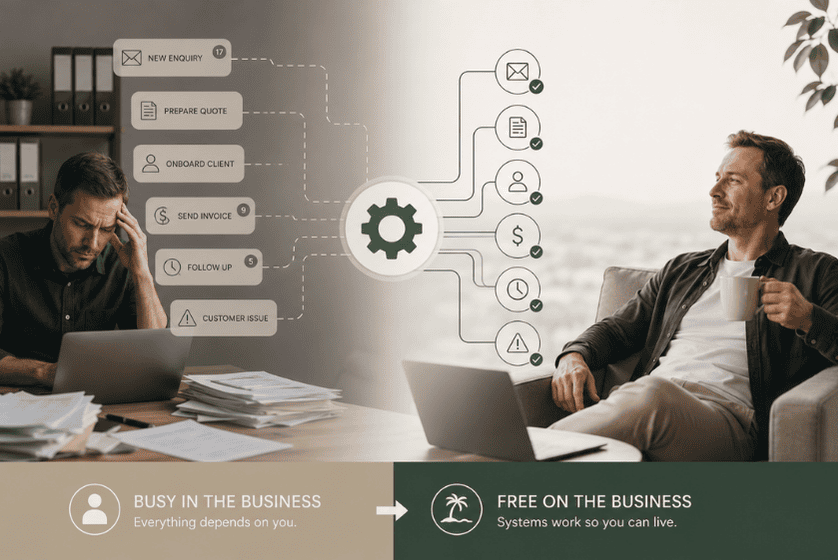
Systems Create Freedom

People often hear the word “systems” and imagine thick manuals gathering dust on a shelf.

That’s not what I mean.

A system is simply the best way of doing something.

  • How do you answer enquiries?
  • How do you prepare quotes?
  • How do you onboard new clients?
  • How do you invoice?
  • How do you follow up overdue accounts?
  • How do you manage customer complaints?

Every time you repeat something, you have an opportunity to build a system.

Every system removes another decision from your day.

Over time those small improvements compound.

Eventually your business begins solving problems without needing you in the middle of every conversation.

That’s where freedom begins.

The True Test of a Healthy Business

One of my favourite questions to ask business owners is this:

“What would happen if you disappeared for four weeks?”

Most laugh.

Then they answer honestly.

“It would fall apart.”

Imagine if the opposite were true. Imagine taking a holiday knowing your team understood their roles. Customers were looked after. Invoices still went out. Cashflow continued. Problems were solved. Business continued.

Not because you weren’t important. But because you’d built something bigger than yourself.

That’s the difference between owning a job and owning an asset.

Building a Business That Someone Would Actually Buy

Many owners tell me they’ll sell their business one day.

Then I ask another question.

“What exactly would someone be buying?”

Silence.

Because if the owner is doing everything…

The buyer isn’t purchasing a business.

They’re purchasing a job.

Businesses become valuable when they can operate consistently without relying on one individual.

That’s why scalability and saleability go hand in hand.

The less dependent your business is on you, the more valuable it becomes.

Not only to a future buyer.

But to you.

Because suddenly you have choices.

  • You can step back.
  • You can grow.
  • You can take a holiday.
  • You can spend more time with family.
  • You can focus on strategy instead of survival.

That’s what business ownership was supposed to feel like.

The EDGE Philosophy

Everything I teach comes back to one simple belief.

Businesses shouldn’t just survive. They should create freedom.

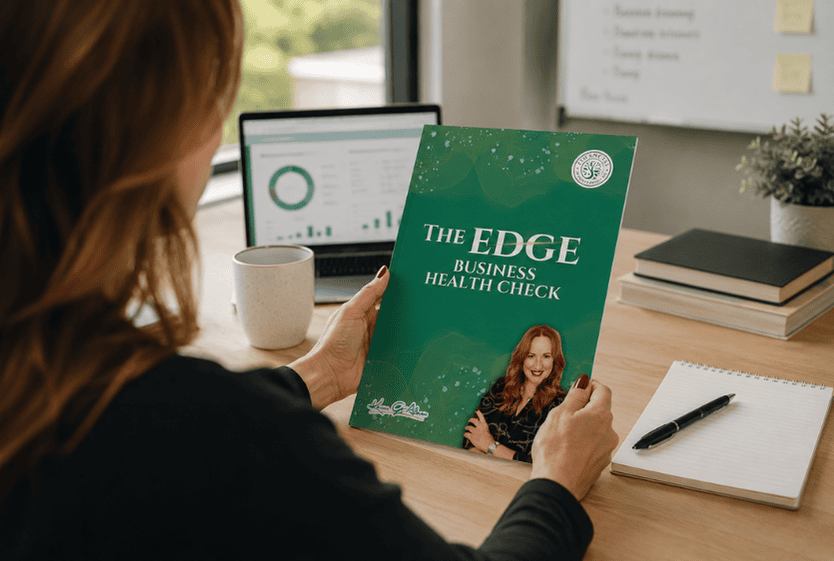
That’s why The EDGE Business Health Check exists.

It’s not simply measuring financial performance. It’s measuring the health of the business.

Healthy businesses don’t rely on luck. They don’t rely on heroic owners working eighty-hour weeks.

They rely on visibility.

Strong systems.

Clear leadership.

Healthy cash flow.

Profitable decisions.

And owners who understand that their role is no longer to be involved in everything.

Their role is to build a business that can thrive because of the foundations they’ve created.

Your Greatest Opportunity

If you’ve recognised yourself somewhere in this article, I hope you don’t feel discouraged.

I hope you feel encouraged.

Because the fact that you’ve become the bottleneck doesn’t mean you’ve failed. It means your business has reached a point where it needs a different version of you.

The next stage of growth isn’t about working harder. It’s about leading differently. It’s about trusting your team. Building systems. Understanding your numbers. Making decisions based on evidence, and gradually removing yourself from the centre of every process.

That’s not stepping away from your business.

That’s stepping into your true role as its leader.

One day, I hope you look back and realise that the greatest investment you ever made wasn’t another marketing campaign or another piece of equipment.

It was learning how to build a business that didn’t need you every minute of every day.

Because that’s when something remarkable happens.

You stop owning a job.

You start owning an asset.

And that’s the moment your business begins giving you what you wanted all along.

Freedom.

Ready to discover whether you’re the biggest bottleneck in your business?

The EDGE Business Health Check helps you identify the areas that are limiting growth – from leadership and systems to cashflow, profitability and visibility. In less than 20 minutes, you’ll receive your Business Health Score and discover practical opportunities to build a business that’s more profitable, more scalable, more sustainable. and ultimately, more saleable.

Because healthy businesses don’t just happen.

They are built – one better decision at a time.
Systems Create Freedom
The EDGE Business Health Check helps you identify the areas that are limiting growth - from leadership and systems to cashflow, profitability and visibility.

#HowToResetMyMoneyMindset #NewYearFinancialMindset #HowToStartFreshWithMoney  emergency fund australia, money management, family savings #SmallBusinessOwner #BusinessGrowth #CashflowManagement #BusinessSuccess
#EntrepreneurMindset


 

Why Is Cashflow Always Tight?

Why Is Cashflow Always Tight?

The biggest reason small business owners struggle with money has nothing to do with how much they’re earning.

Have you ever looked at your bank account on a Friday afternoon and thought…

“Where has all the money gone?”

It’s one of the most common questions I hear from business owners.

You’ve been flat out.

The phone hasn’t stopped ringing.

The invoices are going out.

Customers are saying yes.

Your accountant tells you revenue has increased.

Yet somehow, you’re still wondering whether there’s enough money to pay wages next week, cover your BAS, replace a piece of equipment or simply pay yourself.

If that sounds familiar, I want you to know something.

You’re not alone.

And more importantly…

You’re probably asking the wrong question.

Most business owners ask:

“Why don’t I have enough money?”

The better question is:

“Where is my cash flowing?”

That one small change in thinking can completely transform the way you run your business. Because cash flow isn’t just about money. It’s about movement. It’s about timing. It’s about decisions.

And ultimately, it’s about the health of your business.

Cash Flow Is the Lifeblood of Every Business

We’ve all heard the saying that cash flow is the lifeblood of a business.

But have you ever stopped to think about why?

Imagine the human body.

Your heart beats around 100,000 times every single day, pumping blood through your arteries and veins.

That blood carries oxygen and nutrients to every organ, every muscle and every cell.

Without healthy blood flow, your body begins to struggle. Your organs don’t receive what they need. Your muscles weaken. Your energy drops.

Eventually, if blood flow stops completely, life stops with it.

Cash Flow Is the Lifeblood of Every Business

Business works exactly the same way:

  • Money is constantly moving.
  • Customers pay invoices.
  • Suppliers need paying.
  • Employees expect wages.
  • The ATO wants its share.
  • Software subscriptions are deducted.
  • Insurance renewals arrive.
  • Equipment breaks down.
  • Vehicles need servicing.
  • Marketing costs money.
  • Rent leaves your account every month whether you’ve had a good month or not.

Your business survives because money is continually flowing through it.

That’s why I prefer to think of cashflow as the circulation system of a business.

Profit is incredibly important.

But profit alone doesn’t keep a business alive.

Cash does.

I’ve seen businesses making healthy profits on paper that still couldn’t pay their bills.

I’ve also seen businesses with modest profits thrive because they managed their cashflow brilliantly.

The difference wasn’t how much they earned. It was how well they managed the movement of money.

The Bucket That Never Fills

One of the easiest ways to understand cashflow is to imagine trying to fill a bucket with water.

Revenue is the hose filling the bucket.

Expenses are the holes in the bottom.

Most business owners focus almost entirely on getting a bigger hose.

They chase more customers.

More advertising.

More sales.

More jobs.

More turnover.

Very few stop to ask:

“How many holes are already in my bucket?”

You can double the size of the hose.

But if the holes are getting bigger too, the bucket never fills.

That’s why so many businesses become busier without becoming wealthier.

The extra revenue simply leaks back out through rising wages, higher overheads, poor pricing, discounts, inefficient systems, rework, overdue invoices and unnecessary expenses.

The answer isn’t always earning more.

Sometimes it’s plugging the leaks.

Your Bank Balance Is Lying to You

This might surprise you.

Your bank account is one of the worst places to judge the health of your business.

I know that’s how many owners make decisions.

“We’ve got money in the bank.” “We’ll be okay.”

But the bank account only tells you one thing. How much money happens to be sitting there today.

It doesn’t tell you:

  • How much GST belongs to the ATO.
  • How much PAYG you’ve collected.
  • Whether your BAS is due next month.
  • How many supplier invoices are waiting to be paid.
  • Whether a major insurance renewal is coming.
  • Whether a customer still hasn’t paid a $20,000 invoice or
  • Whether next month’s payroll has already been committed.

In other words…

Your bank balance is a snapshot.

Cashflow is the movie.

One moment in time can never tell the whole story.

Healthy business owners learn to look ahead instead of only looking at today.

The Feast and Famine Cycle

If you’ve been in business for any length of time, you’ve probably experienced it.

  • One month feels incredible.
  • Money is flowing in.
  • You’re relaxed.
  • Confident.
  • Optimistic.

Then suddenly…

Everything slows down.

  • Invoices aren’t being paid.
  • Quoting becomes quiet.
  • Expenses keep arriving.
  • Stress starts creeping back in.

Welcome to the feast and famine cycle.

The problem isn’t always inconsistent income.

It’s inconsistent planning.

Healthy businesses understand what’s coming before it arrives.

They forecast. They build buffers. They prepare for quieter months. They know seasonal trends. They don’t wait until the bank account is screaming for help. They act before the pressure arrives.

That’s one of the biggest mindset shifts I teach business owners.

Stop reacting.

Start anticipating.

Because anticipation creates confidence.

The Real Job of a CEO

Many business owners believe their primary job is generating revenue.

I disagree.

Your first responsibility as a CEO is protecting cashflow.

Because cashflow gives you options:

  • It allows you to hire.
  • To invest.
  • To upgrade equipment.
  • To market confidently.
  • To survive economic uncertainty.
  • To pay yourself consistently.
  • To sleep at night.

Your first responsibility as a CEO is protecting cashflow.

Every decision you make either strengthens or weakens the circulation system of your business.

And when you begin seeing cashflow this way, something remarkable happens.

You stop chasing money.

You start managing it with intention.

That’s when business becomes less stressful, more predictable and infinitely more enjoyable.

Because healthy cashflow isn’t luck.

It’s a habit.

And like every healthy habit, it begins with awareness.

Want more awareness in your business then take a 20 minute “The EDGE Business Health Check” and see what’s happening with your cashflow.

Want more awareness in your business then take a 20 minute “The EDGE Business Health Check” and see what’s happening with your cashflow.

#HowToResetMyMoneyMindset #NewYearFinancialMindset #HowToStartFreshWithMoney  emergency fund australia, money management, family savings #SmallBusinessOwner #BusinessGrowth #CashflowManagement #BusinessSuccess
#EntrepreneurMindset

 

The Dashboard Test: Could You Answer These 7 Questions Right Now?

The Dashboard Test: Could You Answer These 7 Questions Right Now?

Let me ask you a question…..

Without opening Xero.

Without asking your bookkeeper.

Without digging through spreadsheets.

Without checking your bank account.

Could you answer these 7 questions coming up about your business right now?

Not later. Not after you’ve looked it up. Right now?

If you can, fantastic. If you can’t, don’t panic.

So let’s put your business to the test.

Question 1: What Was Your Most Profitable Service Last Month?

Not your busiest service.

Not your most popular service.

Not the service that generated the most revenue.

Your most profitable service.

There’s a big difference.

Many business owners assume their biggest seller must also be their best performer.

Yet when they dig deeper, they often discover something surprising.

  • The service generating the most revenue may also be consuming the most resources.
  • The most staff time.
  • The most administration.
  • The most rework, or
  • The most headaches.

Meanwhile, another service quietly delivers stronger margins with less effort.

Without visibility, it’s almost impossible to know.

And if you don’t know, you may be focusing your energy on the wrong part of your business.

Question 2: Which Customer Type Makes You the Most Money?

This one catches people out all the time.

Many businesses have different customer groups.

  • Some are easy to work with.
  • Some are demanding.
  • Some buy once.
  • Some buy repeatedly.
  • Some refer to others, and
  • Some consume huge amounts of time.

The interesting question isn’t who spends the most.

The interesting question is who creates the most value.

Because not all customers are equal.

Some customers create profit.

Others create workload.

The businesses that grow sustainably understand the difference.

    If Revenue Stopped Tomorrow, How Long Could Your Business Operate?

    Question 3: If Revenue Stopped Tomorrow, How Long Could Your Business Operate?

    This isn’t designed to scare you.

    It’s designed to create awareness.

    Many businesses operate without knowing how resilient they actually are.

    If sales slowed for a month, what would happen?

    • Would you be comfortable?
    • Would you feel pressure?
    • Would you be forced into reactive decisions?

    Cash flow isn’t exciting.

    But confidence is.

    And confidence comes from knowing where you stand.

    Not guessing.

    Question 4: What Is Costing You the Most Time Right Now?

    Most business owners immediately think about money.

    Yet time is often the more valuable resource.

    Money can be replaced.

    Time cannot.

    Think about your average week.

    What’s consuming your attention?

    Where are you getting stuck?

    What repeatedly pulls you away from higher-value activities?

    • Is it administration?
    • Manual processes?
    • Following up invoices?
    • Quoting?
    • Managing staff? or
    • Constant interruptions?

    The answer may reveal one of your biggest opportunities.

    Because every hour spent doing low-value work is an hour not spent growing the business.

    Question 5: What Decision Have You Been Avoiding?

    This one has nothing to do with numbers.

    And everything to do with leadership.

    Most businesses have one.

    • A pricing decision.
    • A staffing decision.
    • A process issue.
    • A difficult conversation, and/or
    • A change that’s overdue.

    Deep down, most business owners already know what needs to happen.

    They’re simply delaying it.

    Sometimes because they’re busy.

    Sometimes because they’re uncertain.

    Sometimes because they’re hoping the problem will solve itself.

    Unfortunately, it rarely does.

    Avoided decisions often become expensive decisions.

    Question 6: Where Is Your Biggest Opportunity Hiding?

    Most business owners spend a lot of time focusing on problems.

    And that’s understandable.

    Problems demand attention.

    But opportunities deserve attention too.

    The challenge is that opportunities aren’t always obvious.

    • Sometimes they’re hiding inside your pricing.
    • Sometimes they’re hiding inside your systems.
    • Sometimes they’re hiding inside your team.
    • Sometimes they’re hiding inside your customer experience., or
    • Sometimes they’re hiding in plain sight.

    The businesses that grow fastest aren’t always solving bigger problems.

    They’re often identifying bigger opportunities.

    Question 7: If You Could Improve One Thing in the Next 90 Days, What Would It Be?

    Not ten things.

    Not twenty things.

    One thing.

    What’s the one area that would make the biggest difference?

    • More cash flow?
    • Better systems?
    • Stronger profitability?
    • More confidence?
    • More time?
    • Improved leadership? or
    • A better customer experience?

    Growth doesn’t usually come from fixing everything.

    It often comes from focusing on the right thing.

    And that’s where clarity becomes incredibly powerful.

    Why Most Business Owners Struggle With These Questions

    If you found some of these questions difficult, you’re not alone.

    The reality is that most small business owners are incredibly busy.

    They’re wearing multiple hats.

    • Managing customers.
    • Managing staff.
    • Managing suppliers.
    • Managing operations, and
    • Managing growth

    Why Most Business Owners Struggle

    They’re spending so much time keeping the business moving that they rarely have the opportunity to step back and look at the bigger picture.

    The challenge isn’t capability.

    The challenge is visibility.

    It’s difficult to make confident decisions when you’re constantly operating in reaction mode.

    And that’s exactly why many business owners feel stuck.

    Not because they lack ambition.

    But because they’re trying to navigate without a clear map.

    What Great CEOs Do Differently

    Great CEOs aren’t necessarily better decision-makers.

    They simply have better information.

    They know what matters.

    They know where to focus.

    They know what deserves attention.

    They know where opportunities exist.

    And perhaps most importantly, they know what to ignore.

    Because clarity eliminates noise.

    When you can clearly see what’s happening inside your business, everything becomes easier.

    Planning becomes easier.

    Decision-making becomes easier.

    Growth becomes easier.

    Leadership becomes easier.

    Business becomes more enjoyable.

    Imagine Knowing the Answers

    Imagine sitting down tomorrow morning and confidently answering all 7 questions.

    Imagine understanding exactly where your opportunities are.

    Imagine knowing where your time is being lost.

    Imagine knowing what deserves your attention.

    Imagine making decisions with confidence instead of guesswork.

    How different would that feel? How much stress would disappear? How much faster could you move forward?

    That’s the power of visibility.

    Not visibility on social media. Not visibility in the marketplace.

    Visibility inside your business.

    The kind that helps you make smarter decisions and build a stronger future.

    Final Thoughts

    Running a business shouldn’t feel like driving through thick fog.

    Yet that’s exactly how many business owners operate.

    • They’re working hard.
    • They’re doing their best.
    • They’re moving forward.

    But they’re doing it with limited visibility.

    The businesses that thrive aren’t always working harder.

    They’re often seeing more clearly.

    They know where to focus.

    They know where to improve.

    They know where opportunities exist.

    And that clarity creates confidence.

    The good news?

    You don’t need an MBA.

    You don’t need a finance degree.

    You don’t need to become a spreadsheet expert.

    You simply need the right insights.

    Because better decisions start with better information.

    And better information starts with knowing where your business stands today.

    Ready to Discover What Your Business Is Trying to Tell You?

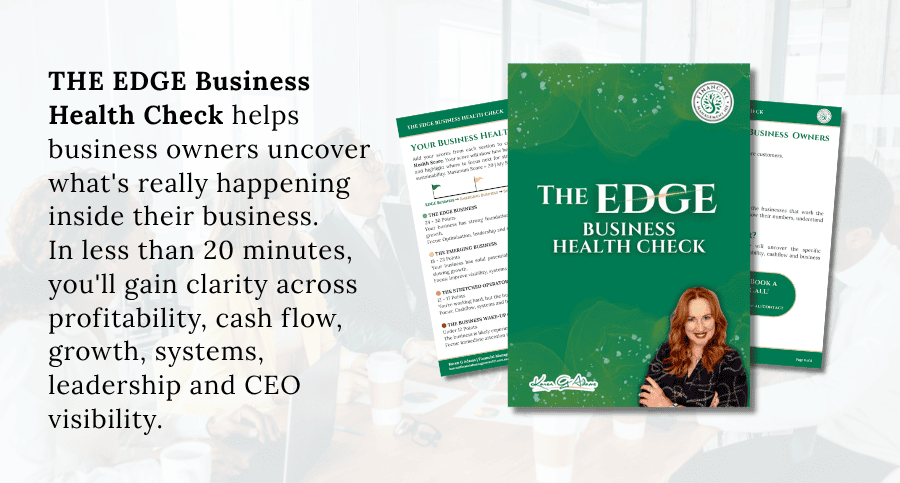
    The EDGE Business Health Check is designed to help business owners uncover strengths, identify blind spots and discover hidden opportunities.

    In less than 20 minutes, you’ll gain valuable insights across profitability, cash flow, growth, systems, leadership and CEO visibility.

    You’ll walk away with greater clarity, stronger awareness and practical next steps to improve your business.

    Because the more clearly you can see your business, the better decisions you’ll make.

    Take The EDGE Business Health Check today and discover where your next opportunity is hiding.

    The EDGE Business Health Check is designed to help business owners uncover strengths, identify blind spots and discover hidden opportunities.

    #HowToResetMyMoneyMindset #NewYearFinancialMindset #HowToStartFreshWithMoney  emergency fund australia, money management, family savings #SmallBusinessOwner #BusinessGrowth #CashflowManagement #BusinessSuccess
    #EntrepreneurMindset
     

    Nobody Warns You About This Part of Business Ownership (And It’s Not Cash Flow)

    Nobody Warns You About This Part of Business Ownership (And It’s Not Cash Flow)

    When people talk about running a business, they usually talk about the exciting stuff:

    • The freedom.
    • The flexibility.
    • The ability to be your own boss, and
    • The opportunity to build wealth and create a life on your terms.

    Scroll through social media and you’ll see plenty of business owners talking about growth, success, scaling, marketing, and revenue.

    You’ll see photos of awards, new clients, packed events, business milestones and smiling faces.

    What you don’t often see is what happens behind the scenes;

    • The pressure.
    • The responsibility.
    • The sleepless nights.
    • The moments of doubt, and
    • The weight that comes with being the person everyone depends on.

    Because nobody really warns you about this part of business ownership.

    And yet, for many small business owners, it’s the hardest part.

    The Weight Nobody Sees

    When you start a business, you’re usually driven by a dream…..

    • Maybe you wanted more freedom.
    • Maybe you wanted to escape the corporate world.
    • Maybe you wanted to create something meaningful, or
    • Maybe you simply wanted to provide a better future for your family.

    What many people don’t realise is that owning a business isn’t just a job.

    It’s a responsibility.

    A responsibility that often follows you home.

    You don’t simply clock off at 5pm.

    You don’t leave your worries at the office.

    You don’t hand difficult decisions to someone else.

    You carry them. Every single day.

    • You carry the responsibility of paying wages.
    • You carry the responsibility of keeping customers happy.
    • You carry the responsibility of generating income.
    • You carry the responsibility of solving problems, and 
    • You carry the responsibility of making decisions that impact your team, your family and your future.

    And while many people see the business owner as the person with freedom, the reality is that many business owners quietly carry a burden that few people truly understand.

    The Lonely Side of Leadership

    One of the things I hear most often from business owners is this:

    “I feel like I’m carrying everything.”

    Not because they aren’t capable.

    Not because they’re failing.

    But because leadership can be lonely.

    • Your staff come to you with problems. 
    • Your customers come to you with questions.
    • Your suppliers come to you with issues.
    • Your accountant wants information.
    • The tax office wants payments.
    • Your family wants your time, and
    • Somewhere in the middle of all that, you’re expected to keep moving the business forward.

    Many business owners become the problem solver for everyone else while having very few people they can lean on themselves.

    That’s not a weakness. That’s reality.

    The challenge is that over time, carrying everything can become exhausting.

    Not physically.

    Mentally.

    Emotionally.

    And that’s where many business owners begin to lose the spark they once had.

    The Pressure to Have All the Answers

    There seems to be an unspoken belief that business owners should always know what they’re doing.

    Always have a plan.

    Always have the answer.

    Always appear confident.

    The truth?

    Most business owners are figuring things out as they go.

    They are making decisions based on the information they have at the time.

    • They are adapting.
    • Learning.
    • Adjusting, and
    • Growing.

    Just like everyone else.

    The difference is that they often feel they can’t admit uncertainty because everyone is looking to them for direction.

    This creates enormous pressure.

    • Pressure to appear confident.
    • Pressure to stay positive.
    • Pressure to keep going even when they’re tired, and
    • Pressure to make the right decision every single time.

    But here’s something important to remember:

    • You do not need to have all the answers.
    • You simply need to keep asking better questions.

    Many business owners become the problem solver for everyone else while having very few people they can lean on themselves.

    Success Doesn’t Eliminate Pressure

    Many people assume that once a business reaches a certain level, things become easier.

    That once revenue grows, the pressure disappears.

    That once the business is successful, the worries vanish.

    Unfortunately, that’s rarely how it works.

    Growth often creates new challenges.

    • More customers.
    • More staff.
    • More systems.
    • More decisions.
    • More complexity, and
    • More responsibility.

    The business may become larger, but the need for leadership grows right alongside it.

    This is why some business owners reach revenue goals they once dreamed about and still feel stressed.

    Still feel overwhelmed.

    Still wonder if they’re doing enough.

    Success does not automatically create peace of mind.

    Clarity does.

    The Hidden Cost of Constant Decision Making

    Business owners make hundreds of decisions every week.

    • Some small.
    • Some significant.
    • What should we charge?
    • Should we hire?
    • Can we afford another team member?
    • Should we invest in marketing?
    • Is this client worth keeping?
    • Should we expand?
    • Should we change direction?
    • Should we say yes?
    • Should we say no?

    Every decision consumes energy.

    Every decision requires attention.

    Every decision carries consequences.

    Over time, decision fatigue becomes very real.

    This is often why business owners feel mentally exhausted even when they haven’t done physically demanding work.

    Their brain has been making decisions all day.

    Every day.

    Week after week.

    Month after month.

    Year after year.

    Without realising it, many business owners become mentally overloaded.

    And when that happens, even simple decisions start to feel difficult.

    The Business Starts Running You

    Most people start a business seeking freedom.

    Yet many eventually find themselves trapped by the very thing they created.

    The business becomes dependent on them.

    Every question comes to them.

    Every approval comes to them.

    Every problem comes to them.

    Every decision comes to them.

    The result?

    The business cannot move without them.

    Vacations become difficult.

    Time off feels impossible.

    Weekends become catch-up days.

    And the business owner slowly becomes an employee in their own business.

    Not because they’re doing anything wrong.

    But because systems, visibility and structure haven’t kept pace with growth.

    This happens more often than people realise.

    And it doesn’t happen overnight.

    It happens one small decision at a time.

    Why Business Owners Need More Than Motivation

    The business world loves motivation.

    • Inspirational quotes.
    • Motivational videos.
    • Success stories.

    And while motivation has its place, it isn’t enough.

    Because motivation doesn’t solve uncertainty.

    Motivation doesn’t provide clarity.

    Motivation doesn’t help you make better business decisions.

    Business owners don’t need more hype.

    They need better information.

    They need visibility.

    They need confidence in the decisions they’re making.

    They need to understand what’s really happening inside their business.

    Not what they think is happening.

    Not what they hope is happening.

    What’s actually happening.

    Because when you can see clearly, decision making becomes easier.

    • Confidence increases.
    • Stress decreases.
    • Momentum improves.

    The Businesses That Thrive Aren’t Necessarily the Smartest

    This might surprise you. The businesses that thrive are not always run by the smartest people.

    They’re often run by the people who have the clearest view of what’s going on.

    They know what matters.

    They know where to focus.

    They know what’s working.

    They know what isn’t.

    They know where their biggest opportunities exist.

    And they know where they’re leaking time, money and energy.

    That level of visibility changes everything.

    Because when you know where to look, you stop guessing.

    And when you stop guessing, you start making better decisions.

    The businesses that thrive are not always run by the smartest people.
They're often run by the people who have the clearest view of what's going on.

    You Were Never Meant to Carry It Alone

    One of the biggest myths in business is that successful people do everything themselves.

    They don’t.

    Successful business owners build support around them.

    • They seek advice.
    • They use systems.
    • They use data.
    • They use frameworks, and
    • They surround themselves with people who help them see what they cannot see themselves.

    Business ownership should not feel like a solo sport.

    You shouldn’t have to carry every challenge on your own.

    You shouldn’t have to guess your way through important decisions.

    You shouldn’t have to wonder whether you’re focusing on the right things.

    The right support doesn’t remove responsibility.

    But it can make the journey significantly easier.

    Final Thoughts

    If you’ve ever felt overwhelmed by the responsibility of running a business, you’re not alone.

    If you’ve ever questioned whether you’re doing enough, you’re not alone.

    If you’ve ever felt like you’re carrying the weight of the business on your shoulders, you’re definitely not alone.

    The truth is that many business owners experience these feelings.

    They just don’t often talk about them.

    The good news?

    You don’t need to work harder.

    You don’t need to carry more.

    You don’t need to have all the answers.

    You simply need greater clarity about what’s happening inside your business so you can make better decisions with confidence.

    Because business ownership shouldn’t just be about surviving.

    It should be about building a business that supports your life, not consumes it.

    Ready to See What’s Really Going On Inside Your Business?

    The first step is understanding where your business is today.

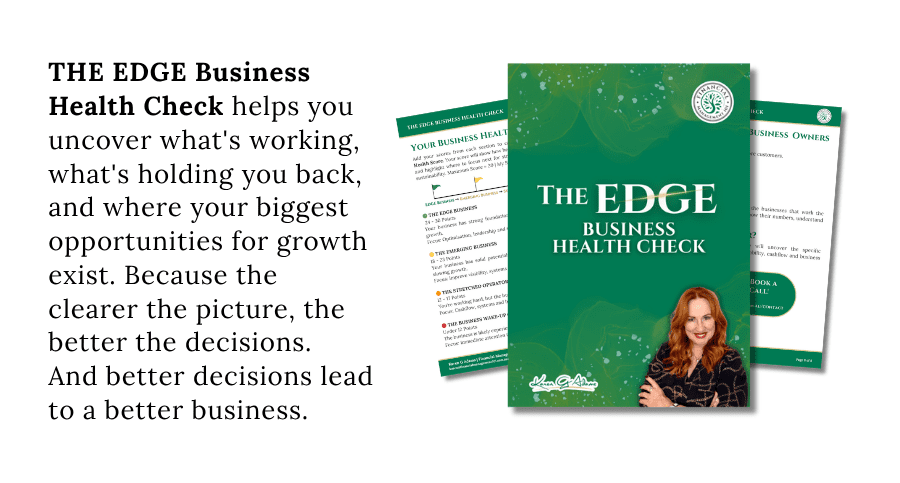
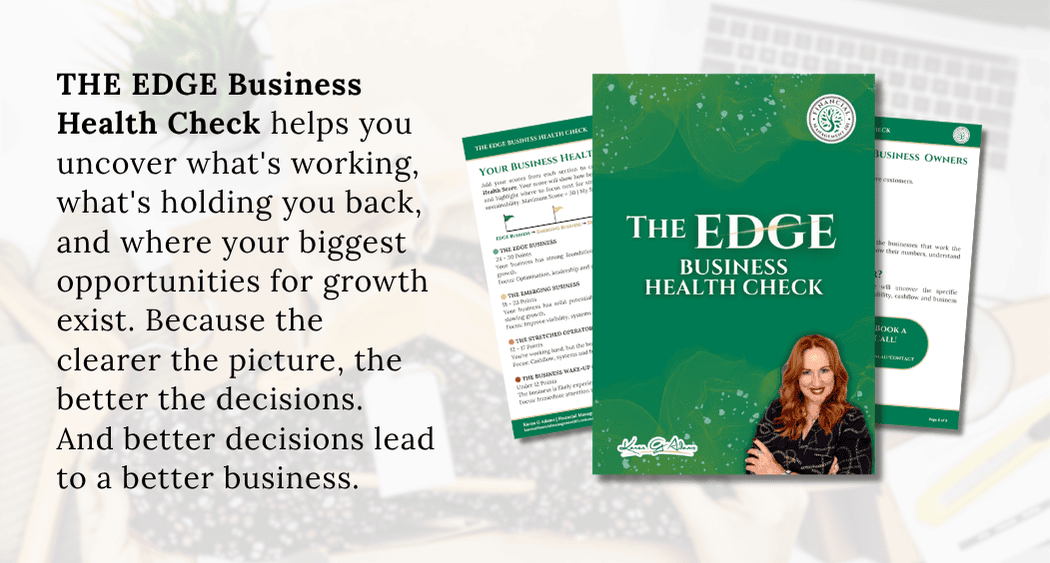
    THE EDGE Business Health Check helps you uncover what’s working, what’s holding you back, and where your biggest opportunities for growth exist.

    In less than 20 minutes, you’ll gain valuable insights into the health of your business across profitability, cash flow, growth, systems, leadership and CEO visibility.

    Because the clearer the picture, the better the decisions.

    And better decisions lead to a better business.

    Take THE EDGE Business Health Check today and discover where your next opportunity is hiding.

    THE EDGE BUSINESS HEALTH CHECK

    #HowToResetMyMoneyMindset #NewYearFinancialMindset #HowToStartFreshWithMoney  emergency fund australia, money management, family savings #SmallBusinessOwner #BusinessGrowth #CashflowManagement #BusinessSuccess
    #EntrepreneurMindset
     

    The Silent Killer of Small Business Growth: What Your Numbers Are Trying to Tell You

    The Silent Killer of Small Business Growth: What Your Numbers Are Trying to Tell You

    Why Business Owners Who Don’t Understand Their Numbers Stay Stuck, Stressed and Financially Reactive

    Most small business owners know their sales.

    Very few truly know their business.

    And that might sound harsh, but it’s one of the biggest reasons so many businesses struggle to grow profitably.

    Because being busy is not the same as being financially healthy.

    And turnover is not the same as business success.

    Right now, thousands of small business owners across Australia are making decisions every single day without fully understanding what their business numbers are actually trying to tell them.

    They’re:

    • pricing based on guesswork
    • hiring too early
    • underpaying themselves
    • overspending in the wrong areas
    • relying on inconsistent cashflow
    • and operating without real financial visibility

    Then they wonder why growth feels hard…. Why stress keeps increasing… Why revenue keeps going up… but there’s still never enough money left over.

    The truth is, many businesses don’t fail because the owner lacks passion or work ethic. They fail because the owner is financially blind.

    Most Business Owners Were Never Taught How to Read a Business Properly

    This is one of the biggest gaps in small business education.

    Most people start businesses because they’re good at something.

    They’re good tradespeople.
    Good creatives.
    Good consultants.
    Good service providers.
    Good operators.

    But nobody teaches them how to actually interpret the financial behaviour of a business.

    So many owners spend years:

    • looking at their bank balance
    • hoping sales improve
    • chasing more customers
    • reacting to bills
    • and trying to “work it out as they go”

    without ever properly understanding:

    • profitability
    • margins
    • cashflow timing
    • operational costs
    • pricing structure
    • forecasting
    • or financial performance indicators

    That creates dangerous blind spots. Because when you don’t understand your numbers, your business starts running you emotionally instead of strategically.

    Your Bank Account Is Lying to You

    This is one of the biggest mistakes small business owners make.

    They judge the health of the business purely by what’s sitting in the bank account.

    But the bank account never tells the full story.

    Money sitting in the account today may already belong to:

    • GST
    • tax
    • suppliers
    • wages
    • superannuation
    • software subscriptions
    • loan repayments
    • or future expenses

    Which means many owners believe they’re doing better financially than they actually are.

    Until suddenly:

    • BAS arrives
    • tax is due
    • equipment breaks
    • a quiet month hits
    • or unexpected expenses appear

    Then panic sets in.

    This is why true business visibility matters so much. Because reactive business owners constantly operate from surprise.

    Strategic business owners operate from preparation.

    important aspects of business finances

    Revenue Can Hide Serious Business Problems

    One of the most dangerous things in business is high revenue with poor visibility. Why?

    Because revenue can disguise:

    • poor profit margins
    • overspending
    • inefficient systems
    • pricing issues
    • operational waste
    • staffing problems
    • and cashflow leaks

    I’ve seen businesses generating impressive turnover while the owner is still financially stressed every single month.

    Why?

    Because more sales do not automatically solve financial problems.

    In fact, sometimes growth magnifies broken systems.

    If pricing is wrong, more sales can actually increase pressure.

    If margins are weak, growth can increase exhaustion without increasing profitability.

    If systems are poor, growth creates chaos.

    This is why understanding the quality of revenue matters just as much as the quantity.

    The Most Dangerous Phrase in Business

      One of the most dangerous phrases a business owner can say is: “I think we’re doing okay.”

      Think? Or know?

      Successful business owners don’t rely purely on assumptions.

      They use visibility.

      Because assumptions create risk.

      Visibility creates control.

      The strongest businesses know:

      • where profit is generated
      • what services perform best
      • where cashflow pressure exists
      • what expenses are excessive
      • how much the business truly costs to operate
      • and what financial patterns are emerging

      That level of clarity changes decision-making completely.

      The 5 Biggest Financial Blind Spots in Small Business

        1. Underpricing

        Many business owners are significantly undercharging without realising it. Why?

        Because they price emotionally instead of strategically.

        They fear losing customers.
        They compare themselves to competitors.
        They undervalue their expertise.

        But when pricing doesn’t properly account for:

        • overheads
        • wages
        • time
        • tax
        • growth
        • and profit

        The business becomes financially fragile.

        Underpricing creates exhaustion because owners must work harder simply to survive.

        2. Poor Cashflow Visibility

        Cashflow problems are one of the biggest causes of stress in small businesses.

        Yet many owners still don’t forecast cashflow properly.

        They react month-to-month instead of planning proactively.

        That creates constant uncertainty.

        And uncertainty destroys confidence.

        3. Not Understanding Margins

        Not all sales are equal.

        Some products, services, or clients may consume enormous amounts of time while generating very little actual profit.

        Without understanding margins, many owners stay busy but financially stuck.

        4. Emotional Spending

        Many business owners spend emotionally during growth periods.

        They upgrade software.
        Hire too quickly.
        Spend heavily on marketing.
        Purchase unnecessary tools.

        Then quieter periods arrive and financial pressure increases.

        Visibility creates discipline.

        5. Lack of Financial Reporting Rhythm

        Many owners only look at numbers when something goes wrong.

        That’s reactive leadership.

        Strong businesses create regular financial visibility rhythms:

        • weekly reviews
        • monthly reporting
        • dashboard tracking
        • forecasting
        • performance analysis

        Because what gets measured gets improved.

        Financial Visibility Reduces Stress

          1. Underpricing

          Many business owners are significantly undercharging without realising it. Why?

          Because they price emotionally instead of strategically.

          They fear losing customers.
          They compare themselves to competitors.
          They undervalue their expertise.

          But when pricing doesn’t properly account for:

          • overheads
          • wages
          • time
          • tax
          • growth
          • and profit

          The business becomes financially fragile.

          Underpricing creates exhaustion because owners must work harder simply to survive.

          2. Poor Cashflow Visibility

          Cashflow problems are one of the biggest causes of stress in small businesses.

          Yet many owners still don’t forecast cashflow properly.

          They react month-to-month instead of planning proactively.

          That creates constant uncertainty.

          And uncertainty destroys confidence.

          3. Not Understanding Margins

          Not all sales are equal.

          Some products, services, or clients may consume enormous amounts of time while generating very little actual profit.

          Without understanding margins, many owners stay busy but financially stuck.

          4. Emotional Spending

          Many business owners spend emotionally during growth periods.

          They upgrade software.
          Hire too quickly.
          Spend heavily on marketing.
          Purchase unnecessary tools.

          Then quieter periods arrive and financial pressure increases.

          Visibility creates discipline.

          5. Lack of Financial Reporting Rhythm

          Many owners only look at numbers when something goes wrong.

          That’s reactive leadership.

          Strong businesses create regular financial visibility rhythms:

          • weekly reviews
          • monthly reporting
          • dashboard tracking
          • forecasting
          • performance analysis

          Because what gets measured gets improved.

          Financial Visibility Reduces Stress

          One of the most powerful transformations I see in business owners is the moment they finally understand their numbers clearly.

          You can literally feel the shift.

          They stop operating from panic.

          They stop catastrophising.

          They stop guessing.

          And instead, they begin making calmer, smarter, more strategic decisions.

          Because clarity creates confidence.

          When you know:

          • your cashflow position
          • your break-even point
          • your profitability
          • your expenses
          • your opportunities

          You stop fearing the unknown.

          And that changes how you lead entirely.

          Modern Businesses Need Modern Visibility

          Business today moves fast.

          Owners can no longer afford to operate blindly.

          The businesses growing successfully today are leveraging:

          • dashboards
          • reporting systems
          • AI tools
          • automation
          • forecasting
          • and real-time visibility

          Not because they’re obsessed with spreadsheets. But because visibility creates agility. And agility matters in uncertain economies.

          Business owners who understand their numbers adapt faster.
          Make decisions faster.
          Solve problems faster.
          And grow with far more confidence.

          Your Numbers Tell the Truth

          At the end of the day, your numbers are always telling a story.

          They reveal:

          • strengths
          • weaknesses
          • opportunities
          • inefficiencies
          • growth patterns
          • and pressure points

          The question is whether business owners are willing to listen.

          Because financial blindness doesn’t just slow business growth. It creates emotional exhaustion. It creates stress. It creates reactive leadership.

          But financial visibility? That creates power.

          Power to make better decisions.
          Power to lead strategically.
          Power to grow sustainably.
          Power to stop surviving and start building intentionally.

          And perhaps that’s the real shift small business owners need right now.

          Not more hustle. Not more guessing. More visibility. More clarity. More financial intelligence.

          Because businesses grow strongest when owners can finally see clearly what’s really happening underneath the surface.

          Gain powerful insight into what may really be slowing down your business growth, profitability, and peace of mind. Because once you can SEE what’s broken… you can finally fix it.

          Get the FREE Business Performance Audit™ and start identifying the hidden gaps holding your business back.

          Membership - FM101

          #HowToResetMyMoneyMindset #WhyDoIFeelOutOfControlWithMoney #HowToFeelInControlOfFinances #ResetMoneyMindset2025 #NewYearFinancialMindset #HowToStartFreshWithMoney  emergency fund australia, money management, family savings