
How to Be Mortgage-Free in 4 Easy Steps

How to Be Mortgage-Free in 4 Easy Steps

Can you imagine seeing your home loan balance diminish every month to the point that you now have no debt and no mortgage? Now enjoy a happier, less stressed lifestyle, knowing the major debt in your life has finally been paid off.

Imagine receiving the deeds to your home with just your name on it and not your bank, as previously they had joint custody of your home.

Just imagine what it would be like to not pay a mortgage, or better yet, to be well on your way to owning your investment property.

Putting you, and not your bank, in the driver’s seat of your financial life.

We give you the tools to own your home faster – the one big debt looming over your head.

I am often asked to examine potential clients’ home loans, as they want to know if they have the right home loan structure to help them reduce it quicker.

There are 4 steps to becoming mortgage free faster, and they are:

1. Set your goal
2. Get a coach – mortgage coach and financial & mindset coach
3. Learn how and what to do to achieve your goal of becoming debt-free sooner.
4. Create a plan and stick to it
5. Take action, do what others won’t do, and you will see the benefits of becoming debt-free sooner.

So I hear you saying, what can a coach do?

Firstly, there are two types of coaches when it comes to reducing your mortgage. The first is a mortgage coach, and the second is a financial and mindset coach.

1. The mortgage coach is the one who ensures your home loan is structured and set up correctly, utilising the latest strategies available to maximise the full debt reduction potential. The mortgage coach’s responsibility is to ensure they are working with you to understand your home loan so you can work towards paying it down as quickly as possible.
2. The financial and mindset coach is the one who works with you regularly to help you stay focused and on track towards achieving your financial goals. The financial and mindset coach ensures that when life suddenly throws you a curveball, as it often does – they are there, ensuring you have the tools and resources necessary to stay motivated and on track.

So let’s take a look at what it may cost you to not get a coach.

If you had a home loan of $400k with a 30-year term, this would cost you at the end of your loan around $733k. That’s an additional $333k of your hard-earned money going to the bank for the privilege of them loaning you the money.

Perth Mortgage  Finance Broker - Karen G Adams

Now let’s take a look at a home loan that’s adopting the mortgage reduction strategy along with getting support from a coach.

When the mortgage coach got to work with this client, they were able to save over $210k in interest payments alone, not to mention over 11 years in the term of their mortgage.

It’s really possible to pay your home loan off faster with the right home loan structure, and the right coach on board can help you achieve this.

This is one of the strategies I teach in my course “How to Keto Your Money – 21 Kick Start Program”. You get coaching from me on how to pay your home loan down fast and get the support you need to stay on track.

This is also what I often talk about in building financial muscle and having money work to YOUR advantage and not to your bank or financial institution’s benefit.

Disclaimer: The content of this article is general in nature and is presented for informative purposes. It is not intended to constitute tax or financial advice, whether general or personal nor is it intended to imply any recommendation or opinion about a financial product. It does not take into consideration your personal situation and may not be relevant to circumstances. Before taking any action, consider your own particular circumstances and seek professional advice. This content is protected by copyright laws and various other intellectual property laws. It is not to be modified, reproduced or republished without prior written consent.

Let me help you!

Get in touch with me today to see firsthand if you have the right loan structure and how my coaching style can support you to achieve your financial goals sooner.


10 Tips on How I Help My Clients Get a Home Loan as a Mortgage Broker

10 Tips on How I Help My Clients Get a Home Loan as a Mortgage Broker

1. Evaluate your financial situation:

Before you start the application process, we need to assess your financial situation to ensure you are eligible for a home loan.

2. Determine your affordability:

What I do next is work out your borrowing potential and calculate how much you can afford to borrow.

3. Find the right lender:

Depending on your own financial situation, credit score, and other factors, I research the extensive list of lenders on my panel to find YOU the right lender.

4. Pre-qualifying you for a home loan:

Pre-qualifying you can help understand how much you can afford and make the process smoother.

5. Explain the different types of loans and features available:

Part of my role is to ensure you know the various types of home loans available and help you decide which one is best based on your individual financial circumstances.

6. Assist with the paperwork:

As a mortgage broker, I work with you to help gather all the necessary paperwork and documents required for your home loan application that a lender requires.

Assisting with the paperwork

7. Guide you through the application process:

Walking you through the application process and explaining the various steps involved are all part of the process.

8. Communicate with the lender:

As the intermediary between you and the lender, I handle all communication with the lender on your behalf to ensure the process moves smoothly and provide any additional information the lender may require.

9. Staying up-to-date on mortgage rules and regulations:

As a mortgage broker, it’s essential that I stay informed about changes to mortgage rules and laws that may affect you.

10. Provide ongoing support:

Even after your home loan is approved and long after your new loan has settled, I will continue to offer support and guidance to help you manage your home loan and navigate any issues that may arise.

Want to have a chat about refinancing or obtaining a new home loan? Reach out to me at karen@harkenfinance.com to see how I may assist you.

Disclaimer: The content of this article is general in nature and is presented for informative purposes. It is not intended to constitute tax or financial advice, whether general or personal nor is it intended to imply any recommendation or opinion about a financial product. It does not take into consideration your personal situation and may not be relevant to circumstances. Before taking any action, consider your own particular circumstances and seek professional advice. This content is protected by copyright laws and various other intellectual property laws. It is not to be modified, reproduced or republished without prior written consent.

Buying your first home is a BIG and important step in your life. This guide is here to help you in becoming home loan-ready before applying for a home loan. Get your free copy today!

Your Step-by-Step Guide to Being Home Loan Ready
Mastering Your Money Mindset: How the Powerful Connection Between Managing Your Money and Unshakable Confidence Go Hand in Hand

Mastering Your Money Mindset: How the Powerful Connection Between Managing Your Money and Unshakable Confidence Go Hand in Hand

How we handle money can have a big effect on how confident we feel, and the same is true in reverse.

Here are some ways that taking care of your money and having confidence are linked:

Financial success can boost confidence: Being able to manage our money and make money can make us feel good about ourselves and provide us with a sense of accomplishment. But having money problems can make us feel unsafe and lower our self-esteem.

Confidence can impact financial decisions: How confident we are can affect the choices we make about money. For example, if we are confident in our ability to make money, we may be willing to take more risks or start our own business. On the other hand, if we don’t feel confident, we might be more careful with our money and avoid taking risks.

Mastering Your Money Mindset: How the Powerful Connection Between Managing Your Money and Unshakeable Confidence Go Hand in Hand

How we think can have a huge effect on how well we do financially: With a growth mindset, we can learn and get better. This can help us solve problems with money and reach our goals. On the other hand, a fixed mindset can hold us back. This is when we think that our skills are fixed and can’t be improved.

Money can change how we feel about ourselves: How we deal with money can change how we feel about ourselves. If we judge ourselves by how much money we have, we might feel bad about ourselves if we don’t have as much as we think we should. If, on the other hand, we have a healthy relationship with money and see it as a tool to help us reach our goals, we can feel good about ourselves no matter what our financial situation is.

Managing your money, time, and confidence are all linked in the following ways:

Focus on what’s important:  When it comes to handling your money, you should pay attention to what’s most important to you. Figure out what you value and what’s most important to you, and make sure your financial choices reflect that.

Use technology to your advantage:  Technology is a strong tool that can help you keep track of your money and save time. Use apps and online tools to automate your finances, keep track of how much you spend, and make smart decisions about your money.

Money and building confidence: Taking care of your money well can help you feel better about yourself and what you can do. 

Here are some practical ways to build trust by taking care of your money:

Learn about personal finance and investing: This will give you more faith in your ability to handle your money well. You can learn more about money by reading books, taking classes, and talking to financial experts like myself.

Take action: Taking action is one of the most important ways to build confidence. Start small by making financial goals that you can reach, like paying off debt or saving money for an emergency fund. As you reach each goal, you’ll feel better about yourself.

Learn about personal finance and investing

Keep track of your progress: Keeping track of your progress can help you feel more confident in your ability to manage your money. Join programs like my “know your money” program which starts with understanding where you are financially so you can build on from there.

Celebrate your financial wins: No matter how small, celebrating your financial wins can help you build confidence and energy. Give yourself a small reward for reaching your financial goals, and use that good feeling to keep going.

By implementing these practical tips, you can improve your ability to manage your money and build confidence. Remember that building these skills takes time and effort, but the payoff can be significant in terms of your financial and personal well-being.

The LEARNING HUB helps you gain more financial knowledge, while providing you with the support and help you and others need. Join now for only $79 USD per month.

Join the Learning Hub - Financial Management 101 by Karen G Adams

How to Help Someone With Financial Stress?

How to Help Someone With Financial Stress?

Supporting someone with money stress can be challenging because they may be resistant to accepting help or discussing their financial difficulties with you. 

Often people don’t want you to know they are struggling because of judgement, but this is the time to be the friend or family member to support them. There is always a way out and often they can’t see that due to the stress they are experiencing.  

Sadly some people feel the only way out is to leave this earth and that only leaves the loved ones behind with sadness and more stress than ever before.

Simply checking in with someone, taking them out for coffee, and listening to how they are doing can go a long way toward helping and being the supportive person they need.

Here are some ways to help them while still giving them space to maintain their dignity:

LISTEN ACTIVELY

Start by being a good listener. Let them talk about their financial concerns and stress without offering advice or judgment. Sometimes, just having someone to vent to can relieve some of the emotional burden.

YOU CAN HELP WITHOUT GIVING MONEY. YOU CAN SHOW YOUR SUPPORT IN OTHER WAYS.

Offer your time, company, or help with things that do not cost money, like doing chores around the house, running errands, or giving emotional support during hard times.

PUT AN UPBEAT SPIN ON ANY DISCUSSION OF MONEY AND ALWAYS ASSUME THE BEST.

You could say, “I have been looking into some great financial resources that I think could help anyone, and I thought you might find them interesting,” instead of “You need help with your finances.”

RESPECT THEIR PRIVACY.

Give them space and privacy when it comes to their finances. Do not ask them too many questions or force them to talk more than they want to.

MAKE MONEY PROBLEMS MORE COMMON BY TELLING STORIES OR GIVING EXAMPLES OF PEOPLE WHO HAVE HAD MONEY PROBLEMS AND GOTTEN THROUGH THEM.

This can show them that many people have trouble with money and that asking for help is not a sign of weakness.

Know that it might take them some time to open up or accept help. Wait your turn and let them lead the conversation and decision-making.

BE PATIENT.

Know that it might take them some time to open up or accept help. Wait your turn and let them lead the conversation and decision-making. 

OFFER HELP WITHOUT BEING OBVIOUS.

If you find articles or financial resources that could help, share them in a quiet way. You can send them an article or a link instead of talking directly about their money.

SUGGEST PROFESSIONAL GUIDANCE.

If you believe they would benefit from professional financial advice, make a non-confrontational suggestion. You might say, “I know someone who is really knowledgeable in this area. Would you be interested in talking to them? It might give you some new insights.”

AVOID OFFERING FINANCIAL ASSITANCE.

Do not give them money directly unless you are sure it will not hurt your relationship or encourage them to act irresponsibly. Instead, focus on helping them feel better and giving them information.

Tell them you care about their well-being and are ready to help them in any way they feel comfortable.

EXPRESS YOUR CONCERN.

Tell them you care about their well-being and are ready to help them in any way they feel comfortable. Make it clear that you are not judging them, but that you care about their happiness and health as a whole.

STAY SUPPORTIVE.

Keep being there for them, even if they do not accept your help or ideas right away. Let them know that you will always be there for them.

It is important to give them their independence and let them decide for themselves what to do with their money. You can give them help and resources, but in the end, they have to be ready to take steps on their own to deal with their money stress. 

 Your patience, understanding, and willingness to not judge them can go a long way toward helping them get through their money problems.

The LEARNING HUB helps you gain more financial knowledge, while providing you with the support and help you and others need. Join now for only $79 USD per month.

Come on and join the challenge. You've got nothing to lose but a whole lot more to gain!

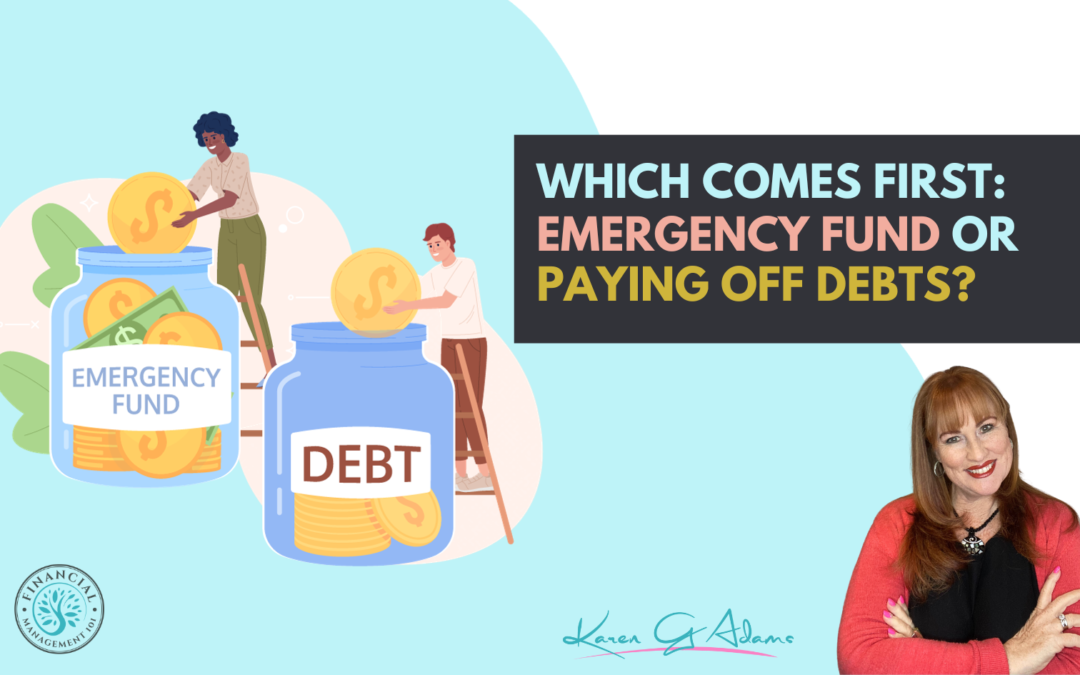
Which Comes First: Emergency Fund or Paying Off Debts?

Which Comes First: Emergency Fund or Paying Off Debts?

When money is tight, it can be hard to pay down debt and build up an emergency savings fund at the same time. But it is still possible with careful budgeting and good money management. 

Here’s a step-by-step plan on how to do this:

1. ASSESS YOUR FINANCIAL SITUATION

Start by looking carefully at your money. Write down everything you earn and everything you owe, including the balances, interest rates, and minimum monthly payments.

2. MAKE A BARE-BONES BUDGET

Make a simple budget that covers only the most important costs, such as housing, utilities, groceries, transportation, and insurance. Cut back as much as you can on spending you do not have to.

3. PAY OFF HIGH-INTEREST DEBTS

Pay off your debts with the highest interest rates first, as this will save you money in the long run. All debts should have the minimum payment made, but any extra money should be put toward the debt with the highest interest rate.

4. SET REALISTIC GOALS

Find out how much you can afford to put toward debt repayment and savings each month. Be careful and make paying off debt your first priority.

5. BUILD A SMALL EMERGENCY FUND

Even though it is important to pay down debt, having a small emergency fund can help you avoid going deeper into debt if you have to pay for something unexpected. Start with a small goal, like $500 or $1,000, and slowly raise it as time goes on.

Having a small emergency fund can help you avoid going deeper into debt if you have to pay for something unexpected.

6. USE WINDFALLS/UNEXPECTED MONEY WISELY

If you get money you did not expect, like a tax refund or a bonus, put some of it toward paying off debt and some into an emergency fund. This helps you move forward in both areas.

7. SAVE AND PAY OFF DEBTS AUTOMATICALLY

Set up automatic transfers to your emergency fund and to your debt payments whenever you can. This makes sure that you always move closer to both goals.

8. LOOK FOR WAYS TO MAKE MORE MONEY

Look for ways to make more money, like part-time work, freelance gigs, or selling things you do not use. The extra money can be used to pay off debts and save money.

Talk with your creditors about your money situation. In some cases, you may be able to negotiate lower interest rates, lower minimum payments, or a delay in payments to make it easier to handle your debt.<br />

    9. TALK WITH YOUR CREDITORS

    Talk with your creditors about your money situation. In some cases, you may be able to negotiate lower interest rates, lower minimum payments, or a delay in payments to make it easier to handle your debt.

    10. REVIEW AND ADJUST REGULARLY

    Check in on your budget and financial goals every so often. Change how you pay off debt and save money when your income and expenses change.

    11. CELEBRATE MILESTONES

    Celebrate your successes, no matter how small they are. Every dollar you save in an emergency fund or pay off of a debt is a step toward financial stability.

    Remember that building an emergency fund and paying off debt are long-term goals. It’s okay to progress slowly if your income is limited.

     The important thing is to keep working toward both goals, even if progress is slow. Your money situation will get better over time, and you will have a stronger financial base.

    At Financial Management 101 – we are committed to providing YOU with excellent financial education, training and support so that you can live the life you truly desire.  Join our LEARNING HUB today!

    Join the Learning Hub - Financial Management 101 by Karen G Adams