
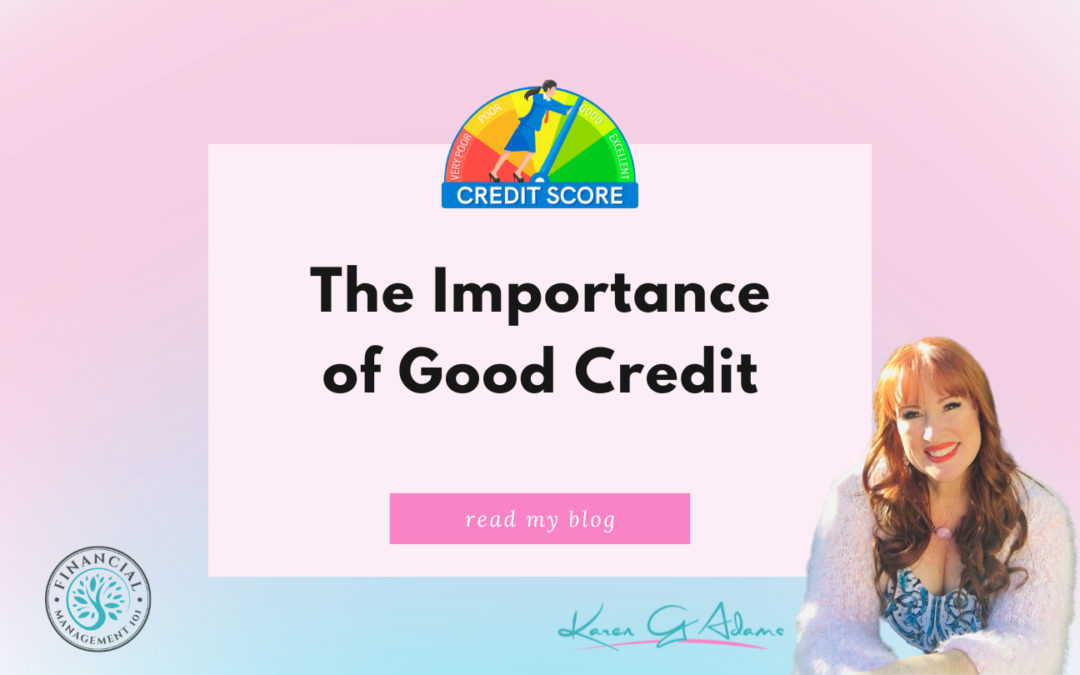
The Importance of Good Credit

The Importance of Good Credit

People often underestimate the importance of having a good credit score and report.
In this article, I am going to walk you through how credit can affect your money management now and in the future.

 If your credit score is high, you have a greater chance of getting approved for loans and credit cards from lenders and credit card companies.

Here are 5 reasons why a good credit score is important:

1. REDUCED INTEREST RATES ON BORROWED MONEY

Over time, you can save money by having lower interest rates on credit cards and loans, thanks to good credit.

2. GREATER CHANCES OF LOAN AND CREDIT CARD APPROVAL 

If your credit score is high, you have a greater chance of getting approved for loans and credit cards from lenders and credit card companies.

3. BETTER LOAN TERMS

Having good credit can result in better loan terms, such as higher borrowing limits, in addition to lower interest rates.

4. LOW OR NO SECURITY DEPOSIT REQUIREMENTS

Having good credit can result in better loan terms, such as higher borrowing limits, in addition to lower interest rates.

5. EMPLOYMENT OPPORTUNITIES

When hiring new employees, especially for jobs requiring financial responsibility, some employers run credit checks.

Building and Maintaining a High Credit Score

Here are some ways to maintain and build on your credit score to keep it healthy and high:

1. PAY YOUR BILLS ON TIME

Your credit score can suffer greatly from late payments. Make sure that all of your bills—including credit card and utility bills—are paid on time.

2. MAINTAIN LOW CREDIT CARD BALANCES 

Using a significant portion of your credit limit, or high credit utilisation, can have a bad effect on your credit score.

3. BUILD A LONG CREDIT HISTORY

Your credit score is influenced by the length of your credit history.

4. KEEP THE NUMBER OF NEW CREDIT INQUIRIES TO A MINIMUM 

If you make too many hard inquiries quickly, your score may suffer.

Understanding Your Credit Report

It’s important that you understand your report and what it contains. You can do free annual checks by many of the online credit reporting agencies, like; Equifax and Experian, to name just two. Order your report and take a look at how yours stacks up.
Your credit report will include your credit history; including account details, payment history, credit inquiries, and public records like bankruptcies.

Make sure to regularly check your credit report for errors, including false payment statuses, accounts that are not yours, and inaccurate personal information.

Building and Maintaining a High Credit Score

Impact of Credit on Loan Eligibility and Interest Rates

Credit scores are used by lenders to evaluate risk. A higher score translates into lower risk, which makes you a more desirable borrower.

Your interest rate is determined, in large part, by your credit score. Better scores usually result in cheaper rates, which means you will pay less money back over the course of the loan.

Certain insurance providers base their auto and home insurance rates on credit scores. 

Conclusion

Having good credit provides many financial opportunities. Understanding and managing your credit puts you in a better position to pursue favourable financial opportunities.

Regularly monitoring your credit report and score, developing responsible credit habits, and understanding how your financial behaviour affects your credit can result in significant savings and opportunities throughout your life.


The LEARNING HUB helps you gain more financial knowledge, while providing you with the support and help you and others need. Join now for only $79 USD per month.

Join the Learning Hub - Financial Management 101 by Karen G Adams
Creating Multiple Income Streams After 35

Creating Multiple Income Streams After 35

In today’s economic climate, relying solely on one source of income can be risky, particularly for people in their mid-30s to 50s. Diversifying income sources not only provides financial security, but also creates opportunities for personal and professional development. Let us look at how you can generate multiple income streams in your prime years.

1. TURN HOBBIES INTO INCOME

Many of us have interests or skills that can be monetized. Consider turning your passions, such as crafting, photography, or writing, into a side business. Online platforms make it easier than ever to sell products or services.

2. INVEST IN REAL ESTATE

Real estate investing can be a profitable way to generate passive income. This could include buying a rental property, investing in a real estate investment trust, or looking into Airbnb hosting if you have extra space.

Turn Hobbies into Income

3. DIVE INTO THE GIG COMMUNITY

The gig economy provides flexible ways to earn extra money. Freelancing, consulting, or part-time work in your area of expertise can supplement your primary income while giving you control over your schedule.

4. CREATE DIGITAL PRODUCTS

If you are an expert in a specific field, consider creating digital products such as eBooks, online courses, or webinars. Once created, these products can generate ongoing passive income with minimal effort.

5. DIVIDEND STOCKS OR MUTUAL FUNDS

Investing in dividend-paying stocks or mutual funds can generate a consistent income stream. While there are risks involved, dividends can be a relatively passive way to earn income.

6. PEER-TO-PEER LENDING

Platforms that allow peer-to-peer lending may be an alternative source of income. You can earn interest on money you lend to individuals or small businesses.

7. RENT OUT ASSETS

Consider renting out assets that you do not use on a regular basis, such as a vehicle, tools, or even a parking space. This can be an easy way to make money without a significant time investment.

8. START A BLOG OR A YOUTUBE CHANNEL

If you’re passionate about a particular subject, starting a blog or YouTube channel can be a way to earn income through advertising, sponsorships, and affiliate marketing.

Keep track of your earnings and expenses, and consider consulting with a financial advisor to make the most of your additional income sources.

9. PLAN AND BE PATIENT

Creating multiple income streams requires time and planning. Be patient, and do not expect immediate results. Concentrate on one or two areas first, then expand as you become more comfortable and successful.

10. KEEP YOUR FINANCES IN CHECK

More income streams require more financial management. Keep track of your earnings and expenses, and consider consulting with a financial advisor to make the most of your additional income sources.

Having multiple income streams after 35 is about more than just financial security; it is about discovering new opportunities and leveraging your skills and passions. With creativity and dedication, you can create a more secure and diverse financial future.

The LEARNING HUB at Financial Management 101 aims to help you gain more financial knowledge, while providing you with the support and help you need. Join the Learning Hub today for only $79 per month.

Join the Learning Hub - Financial Management 101 by Karen G Adams
Protecting Your Wealth: Insurance Essentials at 35-50

Protecting Your Wealth: Insurance Essentials at 35-50

Individuals in their mid-30s to 50s face some of their most financially significant years, so protecting their wealth becomes critical. One critical component of this protection is having adequate insurance coverage.

1. LIFE INSURANCE: SECURING YOUR FAMILY’S FUTURE

Life insurance is essential, particularly if you have dependents. It ensures that your family’s financial needs will be met during your absence. Consider the amount required to cover debts, living expenses, and future plans, such as children’s education.

2. HEALTH INSURANCE: A MUST-HAVE FOR PEACE OF MIND

As people get older, their health risks increase. Having a comprehensive health insurance plan is necessary. It not only covers medical expenses, but it also gives you peace of mind knowing you are covered against unexpected health problems.

3. DISABILITY INSURANCE: PROTECTING YOUR INCOME

Your ability to earn an income is your most valuable asset. Disability insurance offers financial security if you are unable to work due to illness or injury. This coverage is often overlooked but can be a financial lifesaver.

Health Insurance: A Must-Have for Peace of Mind

4. HOMEOWNERS/RENTERS INSURANCE: SAFEGUARDING YOUR HOME

Your home is likely one of your most significant investments. Homeowners or renters insurance protects your investment from damage, theft, and liability claims. Ensure that your policy is up to date and reflects the current value of your home and belongings.

5. AUTO INSURANCE: MORE THAN JUST A LEGAL REQUIREMENT

Adequate auto insurance extends beyond the legal requirements. It protects you financially in the event of an accident, whether the damage is to your vehicle, others’ property, or medical bills as a result of injuries.

6. LONG-TERM CARE INSURANCE: PLANNING FOR THE FUTURE

As people live longer lives, the likelihood of needing long-term care increases. Long-term care insurance can help pay for care that regular health insurance does not cover, such as nursing home or in-home care services.

Regularly review your policies to ensure they are still meeting your needs and make any necessary changes.

7. REVIEW AND UPDATE YOUR POLICIES REGULARLY

Your insurance needs may change over time. Regularly review your policies to ensure they are still meeting your needs and make any necessary changes.

8. UNDERSTANDING POLICY DETAILS

It’s crucial to understand the details of your insurance policies – what’s covered, what’s not, and the terms and conditions. If anything is unclear, contact your insurance provider for clarification.

9. BALANCING COST AND COVERAGE

While it is important to save money on premiums, do not compromise on essential coverage. Balance the cost with the level of protection required. Sometimes paying a little extra for better coverage is worthwhile in the long run.

10. SEEKING PROFESSIONAL ADVICE

Consult an insurance advisor for professional advice tailored to your specific situation. They can guide you through the complex world of insurance and find the best coverage for your needs.

Insurance is more than just an expense; it is an essential part of your financial security strategy. Understanding and having the right insurance coverage protects more than just your assets; it also ensures the financial well-being of you and your loved ones.

The LEARNING HUB at Financial Management 101 aims to help you gain more financial knowledge, while providing you with the support and help you need. Join the Learning Hub today for only $79 per month.

Join the Learning Hub - Financial Management 101 by Karen G Adams
The Joy of Frugal Living: Luxury in Simplicity

The Joy of Frugal Living: Luxury in Simplicity

For those in their mid-30s to 50s, frugal living doesn’t mean cutting back on life’s pleasures. It is about finding the luxury in simplicity and making wise decisions that improve your life without breaking the bank. Let us look at how to live both luxuriously and frugally.

1. REDEFINING LUXURY

Luxury is often associated with high-end brands and lavish spending. However, true luxury is defined by high-quality experiences and moments. It is about appreciating what you have and seeing value in simplicity.

2. TRAVEL SMART

Travel does not have to involve expensive hotels and first-class flights. Consider low-cost options such as off-season travel, home exchanges, or staycations. Plan and book ahead of time to get the best deals and experience luxury for a fraction of the price.

3. GOURMET COOKING AT HOME

Dining at high-end restaurants is enjoyable, but recreating those experiences at home can be equally rewarding. Invest in new cooking skills, experiment with different recipes, and enjoy gourmet meals in the comfort of your own home.

4. SMART SHOPPING

Take a mindful approach to shopping. Put quality ahead of quantity. It’s better to have a few well-made items than a closet full of things you hardly use. Look for sales, discount outlets, and thrift stores to get high-quality items at lower prices.

Teach your children about money management, saving, and investing.

5. DIY HOME DECOR

You can create a luxurious home environment without spending a lot of money on decorations. DIY projects, upcycling, and a little creativity can help you transform your space elegantly and affordably.

6. INVESTING IN EXPERIENCES

Instead of material possessions, invest in experiences that create lasting memories. Concerts, art classes, local festivals, and outdoor adventures often offer more fulfillment than material goods.

7. SELF-CARE ON A BUDGET

Luxury is more than just material possessions; it is also about self-care. Instead of paying for expensive spa treatments, create your own at-home spa experience. Practice yoga, meditation, or have a relaxing bath – affordable yet luxurious ways to care for yourself.

8. SIMPLIFY YOUR LIFE

Remove clutter and simplify your living space. This not only makes your home more comfortable and manageable, but it also allows you to focus on what is truly important.

Gardening can be a relaxing and rewarding way to experience luxury. Plant your own herbs, vegetables, or beautiful flowers. This not only improves the ambience of your home, but it can also provide you with fresh organic produce.

9. GROW YOUR GREEN THUMB

Gardening can be a relaxing and rewarding way to experience luxury. Plant your own herbs, vegetables, or beautiful flowers. This not only improves the ambience of your home, but it can also provide you with fresh organic produce.

10. EMBRACE COMMUNITY RESOURCES

Take advantage of community resources such as libraries, parks, and free local events. These can provide free entertainment, education, and the opportunity to connect with others. 

Frugal living means appreciating and enjoying life’s simple pleasures. It’s a mindset that values experiences and quality over price tags, leading to a more sustainable, fulfilling lifestyle. Take this approach to uncovering the hidden luxuries in everyday life.

Learning about money can give you the power to make smart financial decisions and reduce money-related stress over time. That’s where the LEARNING HUB helps you gain more financial knowledge, while providing you with the support and help you need.

Join the Learning Hub - Financial Management 101 by Karen G Adams
How to Be Mortgage-Free in 4 Easy Steps

How to Be Mortgage-Free in 4 Easy Steps

Can you imagine seeing your home loan balance diminish every month to the point that you now have no debt and no mortgage? Now enjoy a happier, less stressed lifestyle, knowing the major debt in your life has finally been paid off.

Imagine receiving the deeds to your home with just your name on it and not your bank, as previously they had joint custody of your home.

Just imagine what it would be like to not pay a mortgage, or better yet, to be well on your way to owning your investment property.

Putting you, and not your bank, in the driver’s seat of your financial life.

We give you the tools to own your home faster – the one big debt looming over your head.

I am often asked to examine potential clients’ home loans, as they want to know if they have the right home loan structure to help them reduce it quicker.

There are 4 steps to becoming mortgage free faster, and they are:

1. Set your goal
2. Get a coach – mortgage coach and financial & mindset coach
3. Learn how and what to do to achieve your goal of becoming debt-free sooner.
4. Create a plan and stick to it
5. Take action, do what others won’t do, and you will see the benefits of becoming debt-free sooner.

So I hear you saying, what can a coach do?

Firstly, there are two types of coaches when it comes to reducing your mortgage. The first is a mortgage coach, and the second is a financial and mindset coach.

1. The mortgage coach is the one who ensures your home loan is structured and set up correctly, utilising the latest strategies available to maximise the full debt reduction potential. The mortgage coach’s responsibility is to ensure they are working with you to understand your home loan so you can work towards paying it down as quickly as possible.
2. The financial and mindset coach is the one who works with you regularly to help you stay focused and on track towards achieving your financial goals. The financial and mindset coach ensures that when life suddenly throws you a curveball, as it often does – they are there, ensuring you have the tools and resources necessary to stay motivated and on track.

So let’s take a look at what it may cost you to not get a coach.

If you had a home loan of $400k with a 30-year term, this would cost you at the end of your loan around $733k. That’s an additional $333k of your hard-earned money going to the bank for the privilege of them loaning you the money.

Perth Mortgage  Finance Broker - Karen G Adams

Now let’s take a look at a home loan that’s adopting the mortgage reduction strategy along with getting support from a coach.

When the mortgage coach got to work with this client, they were able to save over $210k in interest payments alone, not to mention over 11 years in the term of their mortgage.

It’s really possible to pay your home loan off faster with the right home loan structure, and the right coach on board can help you achieve this.

This is one of the strategies I teach in my course “How to Keto Your Money – 21 Kick Start Program”. You get coaching from me on how to pay your home loan down fast and get the support you need to stay on track.

This is also what I often talk about in building financial muscle and having money work to YOUR advantage and not to your bank or financial institution’s benefit.

Disclaimer: The content of this article is general in nature and is presented for informative purposes. It is not intended to constitute tax or financial advice, whether general or personal nor is it intended to imply any recommendation or opinion about a financial product. It does not take into consideration your personal situation and may not be relevant to circumstances. Before taking any action, consider your own particular circumstances and seek professional advice. This content is protected by copyright laws and various other intellectual property laws. It is not to be modified, reproduced or republished without prior written consent.

Let me help you!

Get in touch with me today to see firsthand if you have the right loan structure and how my coaching style can support you to achieve your financial goals sooner.