
Your Team Might Look Fine – But Financial Stress Could Be Costing More Than You Think

Your Team Might Look Fine – But Financial Stress Could Be Costing More Than You Think

“They seem fine.”

It is one of the most common assumptions leaders make.
And to be fair, it is an easy one to make.

Most employees are not walking into work announcing that they are worried about bills, debt, interest rates, or the rising cost of everyday life.

They keep going.
They keep performing.
They keep pushing through.

But financial stress has a way of showing up quietly.

It can look like a distraction.
Low energy.
Mood changes.
Reduced confidence.
Increased absenteeism.
Burnout.
Or eventually, a resignation that seems to come out of nowhere.

The employee looked fine.
But they were not fine.

The silent pressure many employees are carrying

The current financial climate is affecting people in deeply personal ways.
Even capable, high-performing employees can be under enormous pressure.

When money stress builds, people can feel:

  • mentally overloaded
  • emotionally flat
  • ashamed to ask for help
  • trapped in a cycle of stress and avoidance
  • worried about keeping up with household costs
  • fearful about debt, repayments, or unexpected expenses

And because money is still a sensitive topic, many employees suffer in silence.

That silence can be expensive.

The current financial climate is affecting people in deeply personal ways.
Even capable, high-performing employees can be under enormous pressure.

Why this is bigger than employee perks

Free lunches, social events, and workplace rewards all have their place.
But they do not solve financial anxiety.

When someone is lying awake worrying about bills, a pizza party is not going to restore their peace of mind.

This is why financial wellbeing deserves more attention inside workplaces.
It addresses a real problem that affects people’s everyday lives and their capacity to function well at work.

It is practical. It is human. And right now, it is incredibly relevant.

What financial wellbeing support actually does

A strong financial wellbeing approach helps employees move from stress and confusion to clarity and confidence.

That might involve helping them:

  • understand where their money is going
  • create simple systems that reduce overwhelm
  • identify savings opportunities they have missed
  • tackle debt with a clearer plan
  • improve money habits and mindset
  • feel more hopeful and less stuck

Notice that this is not about judgement. It is about support.

Financial pressure can affect anyone. The goal is not to shame people for needing help. The goal is to give them tools that genuinely make life feel more manageable.

What employers gain when they take this seriously

When businesses support staff with financial wellbeing, the impact can ripple through the whole workplace.

You may see:

  • better focus and engagement
  • increased productivity
  • lower staff turnover
  • stronger trust and loyalty
  • reduced burnout risk
  • a more supportive workplace culture

People remember employers who support them through hard seasons.
Not just with words, but with meaningful action.

Reassurance is part of support

Let’s pause here for something important.

If you are an employee feeling the pressure right now, please hear this:

You are not weak.
You are not bad with money just because things feel hard.
You are not the only one feeling stretched.

This season may be challenging, but it does not define you.
With the right support, practical tools, and small consistent changes, things can improve.

And if you are an employer reading this, never underestimate how powerful it is to create a workplace where people feel safe to get support before they hit breaking point.

    Reassurance is part of support

    Support before crisis is the smarter move

    Too often, workplaces respond after the damage is done.
    After the burnout.
    After the resignation.
    After the drop in performance.
    After the personal crisis spills into professional life.

    But early support changes that.

    When businesses proactively offer financial wellbeing resources, they help staff build resilience before the pressure becomes overwhelming.
    That is better for the employee and better for the organisation.

    A more compassionate and practical workplace benefit

    There is a reason financial wellbeing is becoming such an important conversation.
    It sits at the intersection of performance, retention, mental wellbeing, and culture.

    It is not about fixing everything overnight.
    It is about giving people a starting point.
    A plan.
    A sense that they are not alone.
    A pathway back to confidence.

    And in uncertain times, that kind of support matters more than ever.

    My Financial Wellbeing Program helps workplaces support staff with practical money tools, confidence-building education, and real guidance that reduces stress and strengthens wellbeing.

    Because when your people feel better about money, they often feel better at work too.

    And that is good for everyone.

    Financial Wellbeing Program

    #HowToResetMyMoneyMindset #WhyDoIFeelOutOfControlWithMoney #HowToFeelInControlOfFinances #ResetMoneyMindset2025 #NewYearFinancialMindset #HowToStartFreshWithMoney  emergency fund australia, money management, family savings 

     

    Year-End Financial Check-Up: 7 Key Steps to Close 2024 with Confidence

    Year-End Financial Check-Up: 7 Key Steps to Close 2024 with Confidence

    As the year wraps up, it’s time to give your finances a little TLC and prepare to start the new year strong! Think of this as your yearly financial check-up, a simple routine that sets you up for a financially fit future. Here are seven straightforward steps to help you close out 2024 with confidence.

    1. Review Your Budget with Fresh Eyes

    December is perfect for giving your budget a quick health check. Ask yourself:

      • Did you stick to your budget most months?
      • Are there categories where you regularly overspent?

    If you find that certain areas of your budget were tough to stick to, don’t worry; you’re not alone! Make notes on what worked and what didn’t, and consider if those categories need adjusting. Next year’s budget will feel easier to manage if it aligns more closely with your actual spending patterns.

    2. Evaluate Your Financial Goals for 2024

    Reflect on the goals you set at the beginning of 2024. Did you aim to build an emergency fund, pay off a certain amount of debt, or save for a big purchase? Take a moment to celebrate any wins, big or small, you’ve earned it! If there were goals you couldn’t reach, try to pinpoint what might have held you back. Life happens, and sometimes, adjustments are necessary. Use these reflections to set realistic goals for 2025 that build on the progress you’ve made.

    Audit Your Subscriptions and Recurring Expenses

    3. Audit Your Subscriptions and Recurring Expenses

    Subscriptions can sneak up on you! Take a look at all the services you’re subscribed to, streaming platforms, gym memberships, software, meal kits and decide if they’re still worth the monthly or annual fee. Ask yourself:

      • Do you use each service enough to justify the cost?
      • Are there better deals or bundles that could help you save?

    Canceling or downgrading services you no longer use can free up cash you can redirect toward your savings or debt goals.

    4. Set a Holiday Spending Plan

    The holiday season can be a big budget-buster if you’re not careful. This December, approach holiday spending with a clear plan:

      • Set a total holiday budget and stick to it.
      • Focus on meaningful gifts within your budget and avoid last-minute splurges.
      • Consider experiences instead of material items, they often make more memorable gifts and can be cost-effective.

    You’ll thank yourself in January when your credit card bills aren’t sky-high!

    5. Check-in On Your Emergency Fund


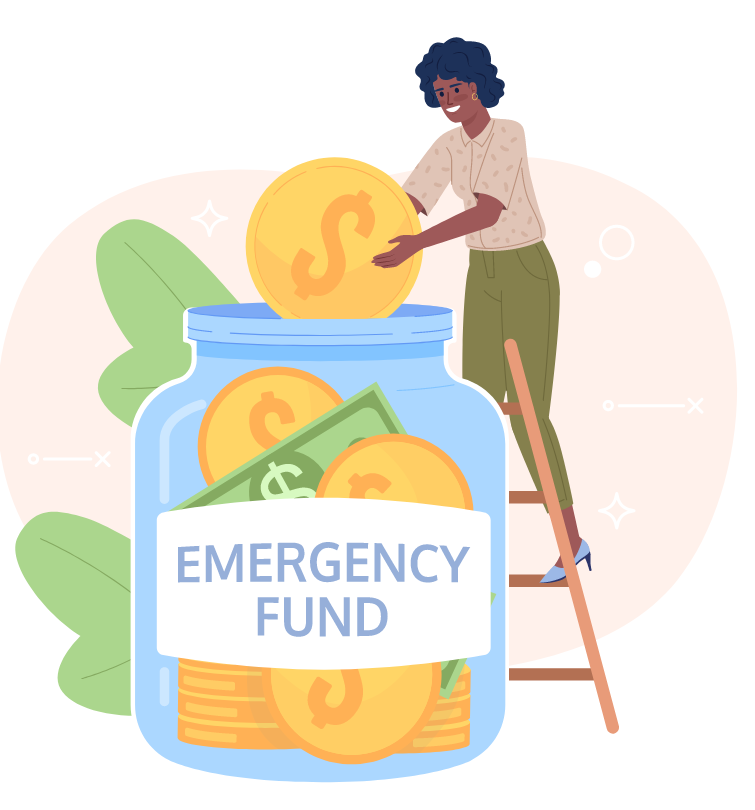
    Your emergency fund is your financial safety net, and December is a great time to assess its status. Ideally, you want enough to cover three to six months’ worth of essential expenses.

    If your fund has been depleted due to unexpected expenses this year, make a plan to rebuild it. If it’s in good shape, well done!

    Consider adding a little extra, even if it’s just a small amount each month, it’s always better to be prepared.

    You want enough to cover three to six months’ worth of essential expenses on your emergency fund

    5. Update Your Financial Goals for 2025

    End the year by setting some intentional goals for 2025. These don’t have to be massive changes; small, achievable goals can have a big impact on your financial future. A few ideas:

      • Set a target for increasing your savings rate, even if it’s by a modest amount.
      • Commit to paying down a certain percentage of your debt.
      • Plan to invest in education or skills that could lead to higher income opportunities.

    Whatever your financial goals, write them down and keep them visible. By starting now, you’ll be well-prepared to tackle them come January.

    End the year by setting some intentional goals for 2025.

    Final Thoughts

    Closing out the year with a financial check-up is a powerful way to put yourself in the driver’s seat for 2025. These six steps are simple but effective and give you a clear view of your financial health. Here’s to closing out 2024 strong and stepping into 2025 with confidence!

    Are you ready to make 2025 your breakthrough year?

    MASTER YOUR MONEY is for YOU if you are tired of financial stress and ready to transform your relationship with money. Whether you’re managing a family, building your career, or chasing your dreams, this is your chance to gain the clarity, confidence, and habits you need to thrive.

    This is more than a mindset shift—it’s a transformational program that puts you on the path to lasting financial success! ? Click the button below to book a call with Karen to see if this program is right for you!

    Mastering Budget and Saving Techniques
    Breaking Free: Your Journey to Financial Freedom

    Breaking Free: Your Journey to Financial Freedom

    Hello, finance enthusiasts! Are you ready to turn the page and start a new chapter called “Financial Freedom”? If you’re between the ages of 30 and 55, you’re at a prime time in your life to make some transformative moves. Whether you’re climbing the career ladder, juggling family responsibilities, or planning for retirement, financial freedom is a goal we all share. Today, I’m here to walk you through some fun and engaging steps to achieve that sweet state of economic bliss!

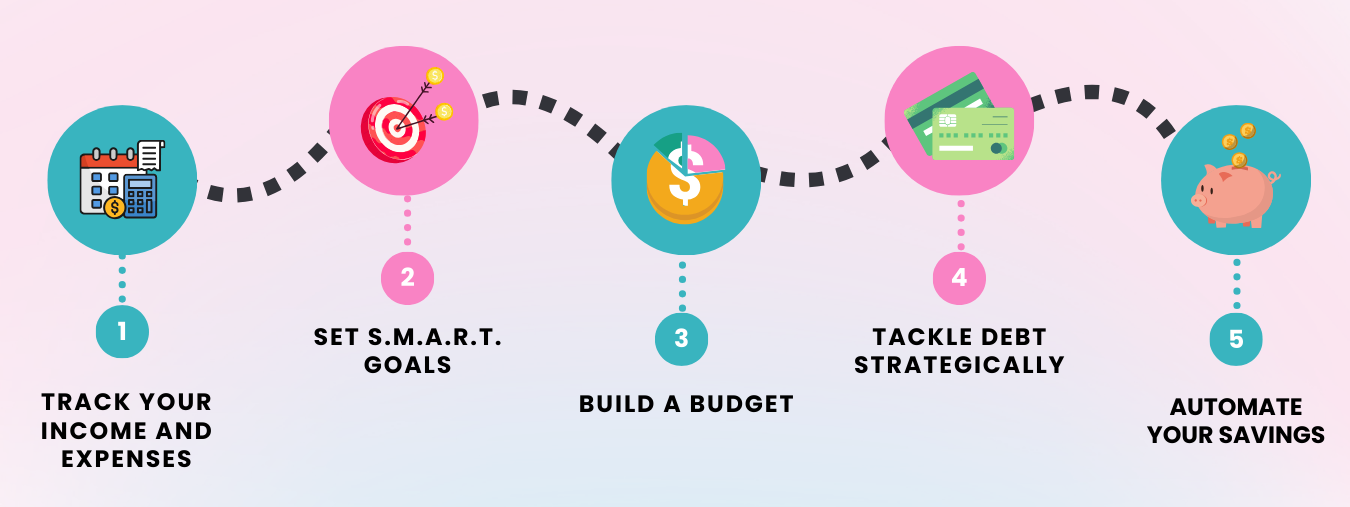
    STEP 1: DEFINE WHAT FINANCIAL FREEDOM MEANS TO YOU

    Before we dive into the how, let’s talk about the what. Financial freedom looks different for everyone. For some, it’s about being debt-free; for others, it’s accumulating enough savings to travel the world or retire comfortably. Take a moment to really picture what financial freedom looks like for you. Is it quitting your 9 to 5 job? Is it having the resources to pursue your passions? Define it, so you can own it!

    STEP 2: ASSESS YOUR CURRENT FINANCIAL SITUATION

    It’s time for a little reality check (but make it fun!). Grab your favourite drink, sit down, and crunch some numbers. Look at your income, debts, savings, and expenses. Understanding where you stand financially is crucial to setting realistic goals. Use apps or spreadsheets to track your finances—seeing everything on one screen can make managing money more engaging and less daunting. I have a FREE budgeting spreadsheet that you can download, which makes it easy and quick to get a snapshot of your financial position.  Download the spreadsheet HERE. 

    STEP 3: SET SMART FINANCIAL GOALS

    Specific, Measurable, Achievable, Relevant, and Time-bound – these are the golden rules for goal-setting. Break your financial freedom dream into smaller, achievable milestones. Maybe you want to pay off your credit card debt in two years or save for a deposit and down payment on a home in five years. Whatever those goals may be, write them down and commit to them.

    STEP 4. CREATE A BULLETPROOF BUDGET

    Now, let’s craft a budget that’s as vibrant and dynamic as you are. Your budget is your blueprint to financial freedom. It should allocate funds for your necessities, savings, debts, and a little fun money too—because what’s life without a little spice? Use budgeting tools or apps to keep you on track and make adjustments as your financial situation evolves.  As mentioned earlier in this blog, you can download the spreadsheet HERE.

    STEP 5: BUILD AN EMERGENCY FUND

    Life loves to throw curveballs, and sometimes they hit us right in the wallet. An emergency fund acts as a financial safety net. Start by saving enough to cover at least three to six months’ worth of living expenses. This fund will protect you from unforeseen circumstances like medical emergencies, urgent home repairs, or unexpected job loss. 

    STEP 6: ELIMINATE AND MANAGE DEBT

    Debt can be a heavy chain holding you back from your freedom. Focus on paying off high-interest debts first, such as credit card balances or personal loans. Consider strategies like the debt snowball or avalanche methods. Remember, every payment is a step closer to your financial liberation.

    Life’s unexpected financial challenges can catch us off guard. Having an emergency fund can provide a safety net to help cover these unforeseen costs without the need to go into debt or disrupt long-term financial goals.

    STEP 7: INCREASE YOUR INCOME

    Sometimes cutting expenses isn’t enough to achieve your financial goals quickly. Look for ways to boost your income. Could you ask for a raise, change jobs for a higher salary, or start a side hustle? Maybe now’s the time to turn your hobby into a profit-making venture!

    STEP 8: INVEST IN YOUR FUTURE

    Investing can be a game-changer in your journey to financial freedom. Research different investment options like stocks, bonds, mutual funds, or real estate. Consider speaking with a financial advisor first before investing to tailor an investment strategy that suits your risk tolerance and financial goals.

    STEP 9: STAY EDUCATED AND ADAPT

    The financial world is always evolving, and so should your strategies. Keep learning, read books, attend workshops, follow my blogs, and join my community of like-minded individuals via the Learning Hub or Monthly Coaching. The more you know, the better equipped you’ll be to make informed financial decisions.

    STEP 10: CELEBRATE YOUR PROGRESS

    Don’t forget to celebrate your victories, big or small. Achieving financial freedom is a journey, not a sprint. Set up little rewards for yourself as you hit milestones. This not only makes the process enjoyable but also keeps you motivated.

    CONCLUSION

    Remember, financial freedom isn’t about having lots of money; it’s about having choices. It’s about living your life on your terms. So, let’s raise our glasses (of budget-friendly wine, of course!) to a brighter, financially free future. 

    Here’s to making smart choices, being strategic, and having fun along the way. You’ve got this!

    Take Control of Your Finances Today!

    Are you tired of living paycheck to paycheck? Do you want to make smarter financial decisions but don’t know where to start? This monthly financial coaching program is designed to help you take control of your finances and achieve your financial goals.

    Mastering Budget and Saving Techniques
    Mastering Budget and Saving Techniques