
Using Your Talents to Accelerate Debt Repayment

Using Your Talents to Accelerate Debt Repayment

One of the most effective ways to speed up your debt-free journey is to increase your earnings. While cutting expenses is essential, there’s only so much you can save. On the other hand, boosting your income has virtually no upper limit. And the best way to do this? By leveraging your unique skills and talents. In this post, we’ll explore creative ways to monetise what you’re already good at to generate extra income and pay down your debt faster.

1. IDENTIFY YOUR MARKETABLE SKILLS

Everyone has skills that others find valuable. These could be professional skills like writing, graphic design, or coding, or personal talents like cooking, crafting, or fitness coaching. The first step is to identify what skills you have that can be monetised.

Action Step:
Make a list of all your skills—both professional and personal. Next to each skill, brainstorm how you could offer this as a service or product to others.

2. OFFER FREELANCE OR CONSULTING SERVICES

Freelancing is a flexible way to turn your professional skills into an income stream. Whether it’s writing, graphic design, web development, or marketing. There’s a demand for almost every skill set online.

Action Step:
Create profiles on popular freelance platforms like Upwork, Fiverr, or Freelancer. Start with a competitive rate to build your portfolio and reputation. As you gain experience and positive reviews, increase your rates.

Starting a side hustle can be a great way to turn your passions into income. Offer catering services for events or meal prep for busy individuals. Host yogaclasses at local community centres or online. Create custom and commissioned artwork for clients.

3. START A SIDE-HUSTLE BASED ON YOUR PASSION

If you’re passionate about something, chances are you’re good at it—and people are willing to pay for it. This could range from tutoring, personal training, photography, or even starting a blog or YouTube channel about a niche topic you love.

Action Step:
Identify a passion you can turn into a side hustle. Research how others in the field monetize their passion, and develop a simple business plan to start.

4. TEACH WHAT YOU KNOW

If you have expertise in a particular area, consider teaching others. This could be through online courses, workshops, or even one-on-one tutoring sessions. The e-learning market is booming, and platforms like Udemy, Teachable, and Skillshare make it easier than ever to reach a global audience.

Action Step:
Outline a course or workshop you could teach based on your expertise. Create a simple curriculum and start by offering free webinars or low-cost classes to gauge interest.

5. MONETISE YOUR HOBBIES

Hobbies like photography, crafting, baking, or gardening can be turned into profitable side businesses. For instance, if you’re into photography, you could sell prints online or offer portrait sessions. If you love crafting, consider opening an Etsy shop or participating in local craft fairs.

Action Step:
Identify a hobby you could monetise. Research how others have successfully turned similar hobbies into businesses and consider starting small—like selling at a local market or online.

6. WRITE AND SELF-PUBLISH A BOOK OR AN EBOOK

If you have expertise or a story to share, consider writing a book or e-book. Platforms like Amazon Kindle Direct Publishing (KDP) make it easy to self-publish and reach a wide audience. Whether it’s a how-to guide, a cookbook, or a fiction novel, there’s a market for almost every genre.

Action Step:
Outline a book or e-book idea that leverages your knowledge or storytelling ability. Write a few chapters and seek feedback. Once ready, self-publish and promote it through social media and online communities.

7. OFFER VIRTUAL SERVICES OR COACHING

The virtual world offers endless opportunities for monetising your skills. If you’re a great communicator, consider coaching or consulting via Zoom or Skype. This could be life coaching, career coaching, language tutoring, or even virtual fitness training.

Action Step:
Choose a virtual service that aligns with your skills. Set up a simple website or social media page to promote your services. Offer a few free sessions to gather testimonials and refine your approach.

8. CREATE A MEMBERSHIP OR SUBSCRIPTION SERVICE

If you have a skill or knowledge that requires ongoing support or regular updates, consider creating a membership or subscription service. This could be a monthly subscription box for handmade goods, an exclusive online community, or a members-only blog with premium content.

Action Step:
Identify a service or product that could be offered on a subscription basis. Develop a pricing model and launch a beta version to test the market.

9. SELL DIGITAL PRODUCTS

Digital products like printables, e-books, templates, or courses have high-profit margins and low overhead costs. Once created, they can be sold repeatedly, generating passive income over time.

Action Step:
Develop a digital product related to your skill or passion. Use platforms like Etsy, or your own website to sell and promote the product.

10. PARTICIPATE IN THE GIG ECONOMY

Consider participating in the gig economy if you’re looking for flexible, quick income opportunities. Driving for Uber, delivering groceries with Instacart, or doing odd jobs with Airtasker or hipages are all options that allow you to set your schedule.

Action Step:
Sign up for a gig economy platform that aligns with your availability and interests. Use the income from these gigs specifically to pay down debt.

11. LEVERAGE YOUR SOCIAL MEDIA PRESENCE

If you have a strong social media presence or are willing to build one, you can leverage this platform to promote affiliate products, partner with brands, or even sell your products and services. Influencer marketing is a lucrative option for those who can build a dedicated following.

Action Step:
Choose a social media platform that aligns with your target audience. Start creating valuable content consistently and explore monetisation options as your following grows.

12. NETWORK AND COLLABORATE

Networking and collaborations can open up new income opportunities. Reach out to others in your field or related industries to see how you can collaborate on projects, cross-promote each other’s services, or even share clients.

Action Step:
Join professional groups or online communities related to your skill. Engage actively, offer help, and look for collaboration opportunities.

Conclusion: Stay Ahead of the Game

Leveraging your talents to create additional income streams can significantly accelerate your debt payoff journey. The key is to think creatively about how you can monetise what you already know and do well. Remember, there’s no single right way to do this—experiment with different ideas, see what works best, and scale up from there. With consistent effort and a bit of creativity, you’ll be on your way to becoming debt-free in no time.

Learn the fundamental concepts of how budgeting and saving are important to your financial well-being. Registration is now open for the course: Mastering Budget and Saving Techniques. This is a hands-on course with me guiding you on how to budget, track and look at managing your money like a pro.

Take Control of Your Finances Today!

Are you tired of living paycheck to paycheck? Do you want to make smarter financial decisions but don’t know where to start? This monthly financial coaching program is designed to help you take control of your finances and achieve your financial goals.

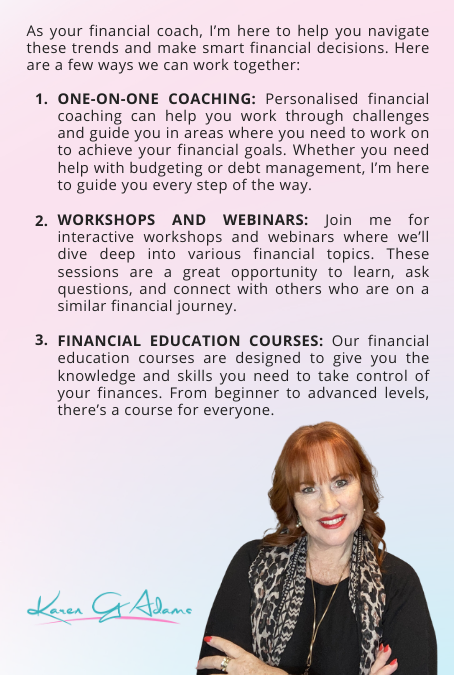
As your financial coach, Karen will teach you how to build financial muscle, so that you have money working to your advantage and not to your bank or financial institution’s benefit. Click here to enrol!
Are you ready to take control of your finances and start your debt-free journey?

In this empowering 30-day course, we’ll guide you through actionable steps to help you break free from debt and achieve financial stability.


The Debt Detox: Eliminating Hidden Costs That Keep You in the Red

The Debt Detox: Eliminating Hidden Costs That Keep You in the Red

When it comes to managing debt, it’s often the unexpected expenses—the hidden costs—that sneak up and keep you from achieving financial freedom. These hidden costs aren’t always big, flashy expenses; instead, they quietly drain your finances month after month. In this post, we’ll uncover these sneaky costs and provide actionable steps to eliminate them from your life.

1. UNMASK THE SUBSCRIPTION TRAP

Subscriptions are one of the sneakiest ways money leaks out of our accounts. Streaming services, gym memberships, meal delivery kits—you name it. The problem is that they often go unnoticed because the individual costs seem minimal. However, they add up significantly over time, especially when we forget to cancel the ones we don’t use.

Action Step:
Go through your phone to review any subscriptions. If you’re with IOS this will be in your settings and you can cancel any of the services that you don’t use. Next review all your bank statements and list every subscription you’re currently paying for. Cancel any that you haven’t used in the last month or that you can live without.

2. EVALUATE YOUR UTILITY BILLS

Utilities are necessary, but are you paying more than you need to? Often, people stick with the same provider for years without realising there are better deals available. Electricity, gas, water, and even internet and mobile plans can usually be renegotiated or switched to a cheaper provider. 

Action Step:
Compare utility providers using online tools or comparison websites. Consider switching providers or negotiating with your current one to get a better rate.

3. INVESTIGATE INSURANCE OVERLAPS

You might be overinsured without even realising it. If you have multiple insurance policies (health, car, home, life), there could be overlaps in coverage. This redundancy leads to unnecessary costs. Additionally, insurance rates often fluctuate, and you could be eligible for better rates.

Action Step:
Review all your insurance policies and speak with your provider to eliminate any overlaps. Shop around for better rates annually.

4. AVOID THE “LATTE EFFECT”

The “Latte Effect” isn’t just about coffee; it’s about those small daily expenses that seem harmless individually but compound significantly over time. This includes buying lunch every day, snacks, or even those extra data charges on your mobile plan.

Action Step:
Track all your small daily expenses for one week. Identify items you can eliminate or reduce. Consider alternatives like making your coffee or preparing meals at home.

5. ANALYSE YOUR CREDIT CARD FEES

Credit cards can come with hidden fees, like annual fees, late payment fees, or foreign transaction fees. These fees can quietly add up and increase your debt if you’re not careful. Understanding your credit card’s terms can help you avoid these fees.

Action Step:
Review the terms and conditions of all your credit cards. Consider switching to a card with no annual fee or lower interest rates. Set up automatic payments to avoid late fees.

6. SPOT THE SNEAKY BANK CHARGES

Banks love to sneak in fees—monthly maintenance fees, overdraft fees, ATM fees, and even paper statement fees. These charges may seem small, but they can accumulate quickly, especially if you’re not vigilant.

Action Step:
Review your bank statements for any recurring fees. Contact your bank to negotiate waiving these fees or consider switching to a bank that offers fee-free accounts.

7. CUT DOWN ON CONVENIENCE COSTS

Convenience comes at a price. Takeout food, delivery services, and buying bottled water are all examples of convenience costs. These might save time but can drain your wallet quickly.

Action Step:
Set a goal to cut down on one convenience cost per week. Prepare meals in bulk, invest in a water filter, or limit your use of delivery services.

Cutting down on food convenience costs, examining car-related expenses,

and understanding health-related costs can help you save more money!

8. UNDERSTAND YOUR HEALTH-RELATED COSTS

Healthcare costs can be complex and deceptive. These include deductibles and out-of-pocket costs. You might be paying more for healthcare than necessary by not understanding your insurance policy or not taking advantage of preventative care options.

Action Step:
Review your health insurance policy to understand what is covered. Schedule preventative care visits, which are often covered at no additional cost, to avoid more significant health issues (and expenses) down the line.

9. KEEP AN EYE ON LOYALTY PROGRAMS AND COSTS

Many loyalty programs and credit card points schemes can lead to unnecessary spending. The promise of rewards often encourages spending more than needed, or you might forget to use the points you’ve accumulated, rendering the spending pointless.

Action Step:
Review your loyalty programs and points. Ensure you’re not overspending just to earn points. Use accumulated points strategically before they expire.

10. BE WARY OF ‘FREE TRIALS’ AND PROMOTIONS

Free trials and promotions are designed to hook you in. They often require credit card details and automatically convert to a paid subscription if not cancelled within a specific period. These can add unexpected costs to your finances if you’re not vigilant.

Action Step:
Keep a log of all free trials you sign up for. Set calendar reminders to cancel them before the trial period ends.

11. EXAMINE YOUR CAR COSTS

Owning a car can come with numerous hidden costs beyond just fuel—think maintenance, insurance, parking, and tolls. Regular servicing and good driving habits can help reduce these costs.

Action Step:
Review your car-related expenses over the last three months. Consider ways to reduce them, such as carpooling, using public transportation, or bundling errands to minimise fuel consumption.

12. AVOID PENALTIES AND FINES

Late fees on bills, parking tickets, and other fines like excessive speeding are avoidable costs that can delay your financial progress. These penalties are often due to forgetfulness, poor planning or as we like to say for speeding fines a “lead foot” :).

Action Step:
Set up automated reminders for bill payments and due dates. Make a habit of reviewing your calendar weekly to anticipate any payments due and ensure you leave enough time in your journey to avoid any speeding tickets.

Conclusion: Stay Ahead of the Game

Eliminating hidden costs is an essential part of becoming debt-free. By scrutinising every expense and making small, manageable changes, you can save hundreds – if not thousands of dollars each year.
Remember, the key is vigilance: regularly review your finances, stay informed, and make adjustments as needed. Your journey to debt freedom is not just about cutting big expenses but also about mindfully managing the small, sneaky ones.

Learn the fundamental concepts of how budgeting and saving are important to your financial well-being. Registration is now open for the course: Mastering Budget and Saving Techniques. This is a hands-on course with me guiding you on how to budget, track and look at managing your money like a pro.

Mastering Budget and Saving Techniques
Free Budgeting Spreadsheet

GRAB YOUR OWN COPY FOR FREE

YOUR MONEY eMagazine

Are you ready to take control of your finances and secure a brighter future?

Dive into “Your Money,” the premier e-magazine by Karen G Adams, the Founder of Financial Management 101.

Subscribe for FREE!

How to Become Debt-Free: A Step-by-Step Guide to Financial Freedom

How to Become Debt-Free: A Step-by-Step Guide to Financial Freedom

Are you tired of feeling trapped by debt? You’re not alone. Debt can feel like a heavy burden, but the good news is that it doesn’t have to be a lifelong sentence. With the right mindset and strategies, you can break free from debt and start building a more secure financial future. Let’s dive into the steps to becoming debt-free and reclaiming control over your finances!

1. UNDERSTAND YOUR DEBT SITUATION

Before you can tackle your debt, you need to have a clear understanding of what you’re dealing with. Start by making a list of all your debts, including:

  • Credit cards
  • Student loans
  • Personal loans
  • Car loans
  • Mortgage

For each debt, write down the total amount owed, the interest rate, and the minimum monthly payment. This will give you a comprehensive view of your debt landscape and help you prioritise which debts to focus on first.  If you need a little hand with getting this down, you can download my FREE debt repayment spreadsheet by clicking HERE.

2. CREATE A BUDGET AND STICK TO IT

Creating a budget is an important step towards debt freedom. A budget helps you track your income and expenses, ensuring you’re not spending more than you earn. Here’s how to create an effective budget:

  • Calculate your monthly income: Include all sources of income, such as your salary, side gigs, and any other earnings.
  • List your monthly expenses: Categorise your expenses into essentials (like rent, utilities, groceries) and non-essentials (like dining out, entertainment).
  • Allocate funds for debt repayment: After covering your essentials, allocate a portion of your income specifically for debt repayment.

Sticking to your budget requires discipline, but it’s essential if you want to make significant progress towards becoming debt-free.

Want some help creating your budget then download my FREE budget spreadsheet where I make it easier to workout what’s happening with your money. Click HERE.

3. CUT UNNECESSARY EXPENSES

One of the quickest ways to free up money for debt repayment is by cutting unnecessary expenses. Review your budget and identify areas where you can reduce spending. Here are some common areas where people tend to overspend:

  • Dining out: Try cooking at home more often.
  • Subscription services: Cancel subscriptions you don’t use regularly.
  • Impulse purchases: Avoid buying items you don’t need by implementing a 24-hour rule before making non-essential purchases.

Remember, every dollar saved is a dollar that can go towards paying off your debt faster!

4. CHOOSE A DEBT REPAYMENT STRATEGY

There are several strategies for repaying debt, but two of the most popular are the Debt Snowball and Debt Avalanche methods:

  • Debt Snowball Method: Focus on paying off your smallest debt first while making minimum payments on all others. Once the smallest debt is paid off, move on to the next smallest. This method gives you quick wins and boosts motivation.
  • Debt Avalanche Method: Focus on paying off the debt with the highest interest rate first while making minimum payments on all others. This method saves you the most money in interest over time.

Choose the method that resonates most with you and start chipping away at your debt!

5. INCREASE YOUR INCOME

If cutting expenses isn’t enough, consider ways to increase your income. This additional income can be used entirely for debt repayment. Here are a few ideas to boost your income:

  • Take on a side hustle: Consider freelancing, tutoring, or driving for a ride-share service.
  • Sell unused items: Declutter your home and sell items you no longer need.
  • Ask for a raise or promotion: If you’ve been excelling at work, now might be the time to ask for a raise.

Every bit of extra income helps in accelerating your journey to becoming debt-free.

6. BUILD AN EMERGENCY FUND 

While it might seem counterintuitive to save money when you’re trying to pay off debt, having an emergency fund is crucial. An emergency fund acts as a financial safety net, preventing you from going deeper into debt when unexpected expenses arise. Aim to save at least $1,000 initially and gradually build it to cover 3-6 months’ worth of expenses.

7. NEGOTIATE LOWER INTEREST RATES

High-interest rates can significantly increase the amount you owe over time. Don’t be afraid to negotiate with your creditors to lower your interest rates. Here’s how:

  • Call your creditors: Explain your financial situation and request a lower interest rate.
  • Consider transferring your balance: Some credit cards offer 0% interest on balance transfers for a limited period. This can help reduce interest costs and pay off debt faster.
  • Refinance loans: Refinancing can lower your interest rate and reduce monthly payments.

Lowering your interest rates means more of your payments go towards reducing the principal amount, helping you get out of debt faster.

8. AVOID NEW DEBT

While you’re working to become debt-free, it’s essential to avoid accumulating new debt. Resist the temptation to use credit cards or take out new loans. If necessary, consider freezing your credit to prevent taking on new debt until you’re back on solid financial footing.

9. TRACK YOUR PROGRESS AND CELEBRATE MILESTONES

Tracking your progress is vital to staying motivated. Use a debt repayment tracker or app to monitor your journey. Celebrate each milestone you reach, whether it’s paying off a specific amount or clearing a particular debt. Celebrating these wins keeps you motivated and committed to your goal.

10. SEEK PROFESSIONAL HELP IF NEEDED

If your debt feels overwhelming, or if you’re struggling to create a repayment plan, consider seeking help from me as your financial coach. As a financial coach, I can provide personalised advice and strategies tailored to your situation, helping you navigate your way out of debt more effectively.

11. STAY COMMITTED TO THE JOURNEY

Becoming debt-free is a marathon, not a sprint. It requires time, effort, and unwavering commitment. There will be challenges along the way, but staying focused on your goal will make the journey worth it. Remember, the freedom and peace of mind that come with being debt-free are invaluable.


CONCLUSION: EMBRACE YOUR FINANCIAL FREEDOM

Becoming debt-free is one of the most empowering steps you can take for your financial future. It opens up a world of possibilities, from building wealth to achieving your financial dreams. By understanding your debt, creating a budget, cutting expenses, increasing your income, and sticking to a debt repayment strategy, you’re well on your way to financial freedom.

Start today—your debt-free future awaits!

By following these steps and staying committed, you’ll not only become debt-free but also build a strong foundation for a financially secure future. Remember, every step you take towards eliminating debt brings you closer to the life you desire.

Are you feeling overwhelmed by debt? Do you want a clear, actionable plan to help you pay off your debts and achieve financial freedom? This Debt Repayment Strategy Worksheet is here to guide you every step of the way.

Mastering Budget and Saving Techniques
Free Budgeting Spreadsheet

GRAB YOUR OWN COPY FOR FREE

YOUR MONEY eMagazine

Are you ready to take control of your finances and secure a brighter future?

Dive into “Your Money,” the premier e-magazine by Karen G Adams, the Founder of Financial Management 101.

Subscribe for FREE!

Understanding How Money Works

Understanding How Money Works

Remember when we thought adults knew everything about money? Joke’s on us! But it’s never too late to learn. Here’s your crash course in Money 101.

Why Understanding Money Matters

Understanding money is essential because it influences every aspect of your life. From buying groceries to planning for retirement, money management skills can mean the difference between financial stability and stress. By learning how money works, you can make informed decisions that lead to a more secure and fulfilling life.

THE BASICS OF BUDGETING

Budgeting is the cornerstone of good money management. It helps you track income and expenses, ensuring you live within your means and save for future goals.

Action Steps:

  1. Track Your Income and Expenses: Write down all sources of income and all your monthly expenses. Use a spreadsheet, a budgeting app, or even a notebook to keep track.
  2. Categorise Your Spending: Divide your expenses into categories like housing, groceries, transportation, entertainment, and savings. This helps you see where your money is going.
  3. Set Budget Limits: Based on your income, set limits for each spending category. Be realistic but disciplined.
  4. Review and Adjust: At the end of each month, review your budget to see if you stayed within your limits. Adjust your budget as needed to better align with your financial goals.

Budgeting helps you control your spending, avoid debt, and save money. It’s the foundation of financial health.

Use Budgeting Apps

Categorise Your Spending

Categorise your expenses to see where your money is going.

THE POWER OF COMPOUND INTEREST

Compound interest is a magical concept that can either work for or against you. Understanding it is crucial for managing both savings and debt.

Action Steps:

  1. Learn the Formula: Compound interest is calculated using the formula A = P(1 + r/n)^(nt), where A is the amount of money accumulated, P is the principal amount, r is the annual interest rate, n is the number of times interest is compounded per year, and t is the time the money is invested for.
  2. Start Early: The earlier you start saving or investing, the more time compound interest has to work its magic. Even small contributions can grow significantly over time.
  3. Pay-off High-Interest Debts: Compound interest can also work against you when it comes to debt. High-interest debt, like credit card debt, can quickly spiral out of control due to compound interest. Focus on paying it off as soon as possible.

By harnessing the power of compound interest, you can grow your savings and investments exponentially over time.

CREDIT SCORES AND THEIR IMPORTANCE

Your credit score is a numerical representation of your creditworthiness. It affects your ability to get loans, credit cards, and even rent an apartment. Maintaining a good credit score is essential for financial stability.

Action Steps:

  1. Understand the Factors: Your credit score is influenced by payment history (35%), amounts owed (30%), length of credit history (15%), new credit (10%), and credit mix (10%).
  2. Pay Bills on Time: Late payments can significantly damage your credit score. Set up automatic payments or reminders to ensure you never miss a due date.
  3. Keep Balances Low: Aim to use less than 30% of your available credit. High credit utilisation can negatively impact your score.
  4. Check Your Credit Report: Regularly review your credit report for errors and discrepancies. You can get a free report annually from each of the three major credit bureaus.

A good credit score opens doors to better loan terms, lower interest rates, and more financial opportunities.

Investing is a powerful way to grow your wealth over time.

The longer your money is invested, the more time it has to grow through compound interest, where your earnings generate additional earnings.

Long-term investments are assets that you plan to hold for an extended period, usually more than three years. They’re meant to grow in value over time and achieve your long-term financial goals, like retirement or for your child’s education. 

THE BASICS OF INVESTING

Investing is a powerful way to grow your wealth over time. By putting your money to work in various assets, you can build a substantial financial cushion for the future.

Action Steps:

  1. Understand Different Types of Investments: Common investment types include stocks, bonds, mutual funds, and real estate. Each has its own risk and return profile.
  2. Start with Retirement Accounts: Take advantage of tax-advantaged retirement accounts like superannuation funds, 401(k)s and IRAs. These accounts allow your investments to grow tax-free or tax-deferred.
  3. Diversify Your Portfolio: Don’t put all your eggs in one basket. Spread your investments across different asset classes to reduce risk.
  4. Learn About Risk and Return: Higher potential returns usually come with higher risk. Understand your risk tolerance and invest accordingly.

Investing wisely can help you build wealth and achieve long-term financial goals, such as retirement or buying a home.

EMERGENCY FUND: YOUR SAFETY FINANCIAL NET

An emergency fund is a crucial component of financial stability. It’s a savings buffer that protects you from unexpected expenses and financial shocks.

Action Steps:

  1. Determine Your Target Amount: Aim to save 3-6 months’ worth of living expenses. This amount provides a cushion for emergencies like job loss, medical bills, or major repairs.
  2. Start Small and Build Up: If saving several months’ worth of expenses seems daunting, start with a smaller goal, like $1,000. Gradually increase your savings over time.
  3. Keep It Accessible: Store your emergency fund in a high-yield savings account where it can earn interest but still be easily accessible in case of emergency.
  4. Use It Wisely: Only dip into your emergency fund for true emergencies. Avoid the temptation to use it for non-essential expenses.

Having an emergency fund gives you peace of mind and financial security, knowing you’re prepared for unexpected situations.

Smart Spending

SMART SPENDING: GETTING MORE BANG FOR YOUR BUCK

Being a smart spender means making informed choices that maximise the value of your money. It’s about prioritising needs over wants and finding ways to save on everyday expenses.

Action Steps:

  1. Differentiate Needs and Wants: Before making a purchase, ask yourself if it’s a necessity or a luxury. Prioritise spending on essentials and limit discretionary spending.
  2. Shop Smart: Look for sales, use coupons, and compare prices before making purchases. Online tools and apps can help you find the best deals.
  3. Plan Your Purchases: Avoid impulse buying by planning your purchases in advance. Make a shopping list and stick to it.
  4. Buy Quality, Not Quantity: Sometimes, spending a bit more on a high-quality item can save you money in the long run, as it lasts longer and performs better.

Smart spending helps you get the most value out of your money and prevents unnecessary debt.

THE IMPORTANCE OF FINANCIAL GOALS

Setting financial goals gives you direction and motivation. It helps you stay focused on what’s important and measure your progress over time.

Action Steps:

  1. Identify Your Goals: Think about what you want to achieve financially. This could include saving for a down payment on a house, paying off debt, or building an emergency fund.
  2. Set Specific and Measurable Goals: Make your goals specific and measurable. For example, “Save $10,000 for a down payment within two years” is more effective than “Save money.”
  3. Create a Plan: Outline the steps you need to take to achieve your goals. Break them down into manageable tasks and set deadlines.
  4. Review and Adjust: Regularly review your progress and adjust your plan as needed. Life changes, and your financial goals might need to change too.

Having clear financial goals keeps you motivated and provides a roadmap for achieving financial success.

Conclusion

Understanding how money works is crucial for achieving financial stability and success. By mastering the basics of budgeting, leveraging compound interest, maintaining a good credit score, investing wisely, building an emergency fund, spending smartly, and setting financial goals, you can take control of your finances and create a secure future. It’s never too late to start learning and making positive changes. So, dive in, educate yourself, and watch as your financial confidence and stability grow. You’ve got this!

Learn the fundamental concepts of how budgeting and saving are important to your financial well-being. Registration is now open for the course: Mastering Budget and Saving Techniques. This is a hands-on course with me guiding you on how to budget, track and look at managing your money like a pro.

Mastering Budget and Saving Techniques
Free Budgeting Spreadsheet

MONTHLY COACHING

Take Control of Your Finances Today!

Are you tired of living paycheck to paycheck? Do you want to make smarter financial decisions but don’t know where to start? This monthly financial coaching program is designed to help you take control of your finances and achieve your financial goals.

How to Stay Motivated When You Feel Trapped in Debt

How to Stay Motivated When You Feel Trapped in Debt

Debt is like a bad haircut – it feels like everyone notices, and it seems to last forever. But fear not, for even bad hair grows out, and so can your debt! When you feel trapped under a mountain of debt, staying motivated can be a challenge. But with the right strategies, you can keep pushing forward and eventually conquer your financial obstacles.

Understanding the Debt Trap

Debt can feel overwhelming, especially when it seems like there’s no end in sight. High interest rates, minimum payments, and everyday expenses can create a cycle that’s hard to break. The key is to remember that every step you take towards paying off debt, no matter how small, brings you closer to financial freedom.

STEP 1. VISUALISE FREEDOM

Visualisation is a powerful tool for staying motivated. By clearly seeing your goal, you can maintain focus and drive, even when the going gets tough.

Action Steps:

  1. Create a Vision Board: Find images and quotes that represent your debt-free future. This could include pictures of a dream vacation, a new home, or simply a big “zero” to represent being debt-free. Place your vision board somewhere you’ll see it daily.
  2. Daily Visualisation: Spend a few minutes each day imagining your life without debt. Visualise the relief, the freedom, and the possibilities that come with being debt-free.

Visualising your goal helps you stay focused on the end result and keeps your motivation high.

By clearly seeing your goal, you can maintain focus and drive, even when the going gets tough.<br />

What are your goals?

By clearly seeing your goal, you can maintain focus and drive, even when the going gets tough.

STEP 2: BREAK DOWN YOUR DEBTS

When you look at your total debt amount, it can seem insurmountable. Breaking it down into smaller, more manageable chunks can make it feel more achievable.

Action Steps:

  1. List Your Debts: Write down all your debts, including the amounts, interest rates, and minimum payments. This gives you a clear picture of what you’re dealing with.
  2. Set Milestones: Break your total debt down into smaller goals. For example, focus on paying off $500 or $1,000 at a time. Each milestone you reach is a victory that keeps you motivated.

By breaking down your debt, you create a series of achievable goals that make the overall task less daunting.

STEP 3: CELEBRATE SMALL WINS

Celebrating your progress is crucial for maintaining motivation. Each small win brings you closer to your ultimate goal and deserves recognition.

Action Steps:

  1. Acknowledge Every Victory: Paid off a credit card? Reduced your total debt by 10%? Celebrate these achievements! Reward yourself with something small and enjoyable, like a favorite meal or a day off to relax.
  2. Create a Rewards System: Set up a system where you reward yourself for reaching specific milestones. For example, treat yourself to a movie night after paying off your smallest debt, or plan a weekend getaway after paying off a larger chunk.

Celebrating small wins keeps you motivated and makes the journey to becoming debt-free more enjoyable.

STEP 4: FIND A DEBT-BUSTING BUDDY

Going through the debt repayment process alone can be isolating. Finding a friend or family member who is also working towards financial freedom can provide support and motivation. Even joining my monthly coaching sessions, can help and provide you the accountability you may need.

Action Steps:

  1. Share Your Goals: Talk to your debt-busting buddy about your goals and progress. Share tips, strategies, and encouragement with each other.
  2. Accountability Check-ins: Schedule regular check-ins with your buddy to discuss your progress and any challenges you’re facing. Knowing that someone else is rooting for you can be incredibly motivating.

Having a support system makes the debt repayment process less lonely and more motivating.

STEP 5: FOCUS ON PROGRESS, NOT PERFECTION

It’s easy to get discouraged by setbacks or slow progress. Instead of aiming for perfection, focus on the progress you’re making.

Action Steps:

  1. Track Your Progress: Use a spreadsheet, app, or journal to track your debt repayment journey. Celebrate the progress you’ve made, no matter how small.
  2. Learn from Setbacks: If you have a setback, don’t beat yourself up. Analyse what went wrong, learn from it, and get back on track. Remember, progress is more important than perfection.

By focusing on progress, you can stay motivated and avoid getting discouraged by minor setbacks.

Reward Your Progress

STEP 6: REWARD YOUR PROGRESS

In addition to celebrating small wins, it’s important to reward your overall progress in non-monetary ways. This keeps you motivated without derailing your financial goals.

Action Steps:

  1. Plan Free or Low-cost Rewards: Treat yourself to activities that don’t cost much, like a hike, a movie night at home, or a day trip to a nearby park.
  2. Non-monetary Rewards: Focus on rewards that don’t involve spending money, such as taking a day off to relax, indulging in a favorite hobby, or spending time with loved ones.

Rewarding your progress helps you stay motivated and reinforces the positive steps you’re taking towards becoming debt-free.

STEP 7: EDUCATE YOURSELF

Knowledge is power, especially when it comes to managing debt. Educating yourself about personal finance can boost your confidence and motivation.

Action Steps:

  1. Read Books and Articles: Find books, blogs, and articles about personal finance and debt repayment. Learning from experts can provide new strategies and inspiration.
  2. Listen to Podcasts: There are many personal finance podcasts that offer tips, success stories, and motivation. Listen to them during your commute or while doing chores to stay inspired.

Educating yourself empowers you to make informed decisions and stay motivated on your debt repayment journey.

STEP 8: CREATE A DEBT REPAYMENT PLAN

Having a clear plan is essential for staying motivated and on track. A detailed plan helps you see the light at the end of the tunnel and keeps you focused on your goals.

Action Steps:

  1. Choose a Repayment Strategy: Decide on a repayment strategy that works for you, such as the debt avalanche or debt snowball method. Stick to it and track your progress.
  2. Set a Timeline: Establish a realistic timeline for paying off your debts. Having a clear end date can provide a sense of urgency and motivation.

A well-structured plan provides direction and keeps you focused on your debt repayment goals.

STEP 9: MAINTAIN A POSITIVE MINDSET

A positive mindset is crucial for staying motivated. Remind yourself that debt repayment is a journey, and every step you take brings you closer to your goal.

Action Steps:

  1. Practice Gratitude: Focus on the positive aspects of your life and your progress. Write down things you’re grateful for and reflect on them regularly.
  2. Stay Positive: Surround yourself with positive influences, whether it’s friends, family, or online communities. Avoid negativity and focus on the progress you’re making.

Maintaining a positive mindset helps you stay motivated and resilient throughout your debt repayment journey.

STEP 10: SEEK PROFESSIONAL HELP

If you’re struggling to stay motivated or manage your debt, consider seeking professional help. Financial advisors or credit counsellors can provide guidance and support.

Action Steps:

  1. Find a Credit Counselor: Look for reputable credit counseling agencies that can help you create a debt repayment plan and provide support.
  2. Consult a Financial Advisor: A financial advisor can offer personalised advice and strategies for managing your debt and building a strong financial future.

Professional help can provide the guidance and support you need to stay motivated and successfully manage your debt.

Conclusion

Staying motivated when you feel trapped in debt can be challenging, but it’s not impossible. By visualizing your goals, breaking down your debt, celebrating small wins, finding a debt-busting buddy, focusing on progress, rewarding yourself, educating yourself, creating a repayment plan, maintaining a positive mindset, and seeking professional help, you can stay motivated and make significant progress towards becoming debt-free. Remember, every small step you take brings you closer to financial freedom. Stay focused, stay positive, and keep pushing forward – you’ve got this!

Learn the fundamental concepts of how budgeting and saving are important to your financial well-being. Registration is now open for the course: Mastering Budget and Saving Techniques. This is a hands-on course with me guiding you on how to budget, track and look at managing your money like a pro.

Mastering Budget and Saving Techniques
Debt Elimination Worksheet

DEBT ELIMINATION WORKSHEET

Are you feeling overwhelmed by debt? Do you want a clear, actionable plan to help you pay off your debts and achieve financial freedom? This Debt Elimination Worksheet is here to guide you every step of the way.