
Nobody Warns You About This Part of Business Ownership (And It’s Not Cash Flow)

Nobody Warns You About This Part of Business Ownership (And It’s Not Cash Flow)

When people talk about running a business, they usually talk about the exciting stuff:

  • The freedom.
  • The flexibility.
  • The ability to be your own boss, and
  • The opportunity to build wealth and create a life on your terms.

Scroll through social media and you’ll see plenty of business owners talking about growth, success, scaling, marketing, and revenue.

You’ll see photos of awards, new clients, packed events, business milestones and smiling faces.

What you don’t often see is what happens behind the scenes;

  • The pressure.
  • The responsibility.
  • The sleepless nights.
  • The moments of doubt, and
  • The weight that comes with being the person everyone depends on.

Because nobody really warns you about this part of business ownership.

And yet, for many small business owners, it’s the hardest part.

The Weight Nobody Sees

When you start a business, you’re usually driven by a dream…..

  • Maybe you wanted more freedom.
  • Maybe you wanted to escape the corporate world.
  • Maybe you wanted to create something meaningful, or
  • Maybe you simply wanted to provide a better future for your family.

What many people don’t realise is that owning a business isn’t just a job.

It’s a responsibility.

A responsibility that often follows you home.

You don’t simply clock off at 5pm.

You don’t leave your worries at the office.

You don’t hand difficult decisions to someone else.

You carry them. Every single day.

  • You carry the responsibility of paying wages.
  • You carry the responsibility of keeping customers happy.
  • You carry the responsibility of generating income.
  • You carry the responsibility of solving problems, and 
  • You carry the responsibility of making decisions that impact your team, your family and your future.

And while many people see the business owner as the person with freedom, the reality is that many business owners quietly carry a burden that few people truly understand.

The Lonely Side of Leadership

One of the things I hear most often from business owners is this:

“I feel like I’m carrying everything.”

Not because they aren’t capable.

Not because they’re failing.

But because leadership can be lonely.

  • Your staff come to you with problems. 
  • Your customers come to you with questions.
  • Your suppliers come to you with issues.
  • Your accountant wants information.
  • The tax office wants payments.
  • Your family wants your time, and
  • Somewhere in the middle of all that, you’re expected to keep moving the business forward.

Many business owners become the problem solver for everyone else while having very few people they can lean on themselves.

That’s not a weakness. That’s reality.

The challenge is that over time, carrying everything can become exhausting.

Not physically.

Mentally.

Emotionally.

And that’s where many business owners begin to lose the spark they once had.

The Pressure to Have All the Answers

There seems to be an unspoken belief that business owners should always know what they’re doing.

Always have a plan.

Always have the answer.

Always appear confident.

The truth?

Most business owners are figuring things out as they go.

They are making decisions based on the information they have at the time.

  • They are adapting.
  • Learning.
  • Adjusting, and
  • Growing.

Just like everyone else.

The difference is that they often feel they can’t admit uncertainty because everyone is looking to them for direction.

This creates enormous pressure.

  • Pressure to appear confident.
  • Pressure to stay positive.
  • Pressure to keep going even when they’re tired, and
  • Pressure to make the right decision every single time.

But here’s something important to remember:

  • You do not need to have all the answers.
  • You simply need to keep asking better questions.

Many business owners become the problem solver for everyone else while having very few people they can lean on themselves.

Success Doesn’t Eliminate Pressure

Many people assume that once a business reaches a certain level, things become easier.

That once revenue grows, the pressure disappears.

That once the business is successful, the worries vanish.

Unfortunately, that’s rarely how it works.

Growth often creates new challenges.

  • More customers.
  • More staff.
  • More systems.
  • More decisions.
  • More complexity, and
  • More responsibility.

The business may become larger, but the need for leadership grows right alongside it.

This is why some business owners reach revenue goals they once dreamed about and still feel stressed.

Still feel overwhelmed.

Still wonder if they’re doing enough.

Success does not automatically create peace of mind.

Clarity does.

The Hidden Cost of Constant Decision Making

Business owners make hundreds of decisions every week.

  • Some small.
  • Some significant.
  • What should we charge?
  • Should we hire?
  • Can we afford another team member?
  • Should we invest in marketing?
  • Is this client worth keeping?
  • Should we expand?
  • Should we change direction?
  • Should we say yes?
  • Should we say no?

Every decision consumes energy.

Every decision requires attention.

Every decision carries consequences.

Over time, decision fatigue becomes very real.

This is often why business owners feel mentally exhausted even when they haven’t done physically demanding work.

Their brain has been making decisions all day.

Every day.

Week after week.

Month after month.

Year after year.

Without realising it, many business owners become mentally overloaded.

And when that happens, even simple decisions start to feel difficult.

The Business Starts Running You

Most people start a business seeking freedom.

Yet many eventually find themselves trapped by the very thing they created.

The business becomes dependent on them.

Every question comes to them.

Every approval comes to them.

Every problem comes to them.

Every decision comes to them.

The result?

The business cannot move without them.

Vacations become difficult.

Time off feels impossible.

Weekends become catch-up days.

And the business owner slowly becomes an employee in their own business.

Not because they’re doing anything wrong.

But because systems, visibility and structure haven’t kept pace with growth.

This happens more often than people realise.

And it doesn’t happen overnight.

It happens one small decision at a time.

Why Business Owners Need More Than Motivation

The business world loves motivation.

  • Inspirational quotes.
  • Motivational videos.
  • Success stories.

And while motivation has its place, it isn’t enough.

Because motivation doesn’t solve uncertainty.

Motivation doesn’t provide clarity.

Motivation doesn’t help you make better business decisions.

Business owners don’t need more hype.

They need better information.

They need visibility.

They need confidence in the decisions they’re making.

They need to understand what’s really happening inside their business.

Not what they think is happening.

Not what they hope is happening.

What’s actually happening.

Because when you can see clearly, decision making becomes easier.

  • Confidence increases.
  • Stress decreases.
  • Momentum improves.

The Businesses That Thrive Aren’t Necessarily the Smartest

This might surprise you. The businesses that thrive are not always run by the smartest people.

They’re often run by the people who have the clearest view of what’s going on.

They know what matters.

They know where to focus.

They know what’s working.

They know what isn’t.

They know where their biggest opportunities exist.

And they know where they’re leaking time, money and energy.

That level of visibility changes everything.

Because when you know where to look, you stop guessing.

And when you stop guessing, you start making better decisions.

The businesses that thrive are not always run by the smartest people.
They're often run by the people who have the clearest view of what's going on.

You Were Never Meant to Carry It Alone

One of the biggest myths in business is that successful people do everything themselves.

They don’t.

Successful business owners build support around them.

  • They seek advice.
  • They use systems.
  • They use data.
  • They use frameworks, and
  • They surround themselves with people who help them see what they cannot see themselves.

Business ownership should not feel like a solo sport.

You shouldn’t have to carry every challenge on your own.

You shouldn’t have to guess your way through important decisions.

You shouldn’t have to wonder whether you’re focusing on the right things.

The right support doesn’t remove responsibility.

But it can make the journey significantly easier.

Final Thoughts

If you’ve ever felt overwhelmed by the responsibility of running a business, you’re not alone.

If you’ve ever questioned whether you’re doing enough, you’re not alone.

If you’ve ever felt like you’re carrying the weight of the business on your shoulders, you’re definitely not alone.

The truth is that many business owners experience these feelings.

They just don’t often talk about them.

The good news?

You don’t need to work harder.

You don’t need to carry more.

You don’t need to have all the answers.

You simply need greater clarity about what’s happening inside your business so you can make better decisions with confidence.

Because business ownership shouldn’t just be about surviving.

It should be about building a business that supports your life, not consumes it.

Ready to See What’s Really Going On Inside Your Business?

The first step is understanding where your business is today.

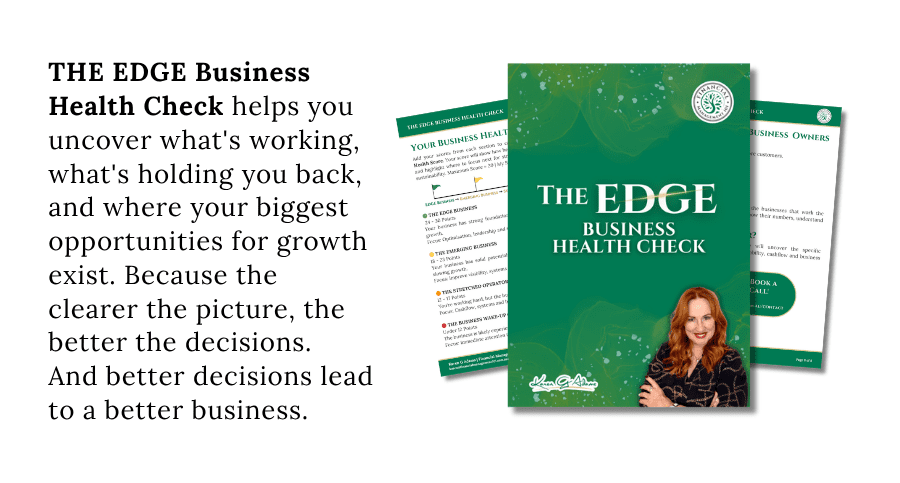
THE EDGE Business Health Check helps you uncover what’s working, what’s holding you back, and where your biggest opportunities for growth exist.

In less than 20 minutes, you’ll gain valuable insights into the health of your business across profitability, cash flow, growth, systems, leadership and CEO visibility.

Because the clearer the picture, the better the decisions.

And better decisions lead to a better business.

Take THE EDGE Business Health Check today and discover where your next opportunity is hiding.
THE EDGE BUSINESS HEALTH CHECK

#HowToResetMyMoneyMindset #NewYearFinancialMindset #HowToStartFreshWithMoney  emergency fund australia, money management, family savings #SmallBusinessOwner #BusinessGrowth #CashflowManagement #BusinessSuccess
#EntrepreneurMindset


 

Tax Time Without the Panic – The Simple Systems That Keep More of Your Hard-Earned Money

Tax Time Without the Panic – The Simple Systems That Keep More of Your Hard-Earned Money

Tax Time Shouldn’t Feel Like a Horror Movie

If “BAS” makes your eye twitch or tax time feels like a jump scare, you’re not alone.

For many business owners, tax time looks like:

  • digging through email for receipts
  • trying to remember what that transaction was
  • realising GST money has been accidentally spent
  • asking your accountant, “Is this bad?” 😅
  • promising yourself (again) that you’ll get organised next year

Whether you’re a tradie, franchisee, coach, consultant, or self-employed professional, it’s easy for tax to become the thing you avoid… until you can’t.

But here’s the thing:
Tax panic isn’t a personality trait. It’s a system issue.

And the solution isn’t “try harder.”
It’s: build foundations that make tax time boring.

Boring is the goal.
Boring means organised.
Boring means you’re in control.

The Real Reason Tax Time Feels So Stressful

Most tax stress comes from one (or more) of these:

1) You’re spending money that isn’t actually yours

If GST/tax isn’t separated, the bank balance lies.

It looks like there’s cash available… but a chunk of that cash belongs to the ATO (or will soon). So when BAS hits, it feels like a crisis.

2) Your numbers aren’t clean

Mixed transactions, personal spending from business accounts, inconsistent invoicing, missing receipts – these all make reporting harder.

And when reporting is hard, you avoid it.

3) You don’t have a simple routine

If you only look at your money when something is due, you’ll always be reacting.

4) You’re not clear on what’s “normal”

Many owners don’t know what to expect from their obligations (GST, PAYG, super, income tax, etc.). That uncertainty turns into anxiety.

The fix is not complicated, but it does require a shift from reactive to proactive.

Owner Pay Is the Cornerstone of a Healthy Business

The “Tax Calm” Blueprint (Simple, Practical, Repeatable)

Let’s build tax calm from the ground up.

Step 1: Separate business and personal (because clarity = calm)

This is the first domino.

When business and personal are mixed:

  • profit looks different than it really is
  • expenses get miscategorised
  •  your accountant has to untangle it (costly + time-consuming)

  •  BAS reporting becomes messy

  • tax estimates become unreliable

When you separate them, your numbers get clearer fast. Even if you’re not ready to overhaul everything, start with this:

  • separate bank accounts (or at least strict allocation “buckets”)
  • a clear rule: business expenses only from business, personal only from personal
  • owner pay transferred as owner pay (not random withdrawals)

This one change reduces stress massively.

Step 2: Quarantine GST/tax weekly (so it never surprises you again)

If you do nothing else after reading this blog, do this one thing.

When GST and tax are quarantined weekly:

  • you stop “accidentally spending” future obligations
  • BAS becomes a planned payment
  • your cash flow becomes more reliable
  • you feel calm because you know the money is there

A simple habit: Each week (or each time income lands), transfer a percentage into a tax/GST bucket

The right percentage depends on your structure and circumstances (and this is where your accountant or qualified adviser can guide you). But the foundation is non-negotiable:

Set aside first. Spend second.

Step 3: Create a weekly money routine (30 minutes that changes everything)

You don’t need a full day of admin.

You need a repeatable routine.

Pick one day per week – your “money check-in.”

On that day, you:

  1. review what came in
  2. allocate GST/tax set-aside
  3. check bills due in the next 7 – 14 days
  4. confirm owner pay
  5. quickly check that transactions are being categorised correctly
  6. look at ONE key number (margin, break-even, or cash runway)

That’s it.

This is how tax time becomes boring, because you’ve been managing it in small pieces all year.

Step 4: Keep records simple (no one’s trying to win an admin award)

Receipts and records are one of the biggest stress points, so let’s make it easy.

Your goal is not “perfect bookkeeping.”
Your goal is “good enough that nothing becomes a disaster.”

Simple record habits that help:

  • snap receipts immediately (or forward them to a dedicated email)
  • keep a consistent filing approach (even if it’s just “by month”)
  • reconcile regularly (weekly or fortnightly)
  • don’t leave it until BAS is due

Future you will thank you.

Step 5: Understand the 3 reports that remove the fear

You don’t need to become an accountant, but you do need to feel confident in the basics.

These three reports reduce stress instantly:

  1. Profit & Loss (P&L): tells you if the business is making money
  2. Balance Sheet (basic understanding): tells you what the business owns/owes
  3. Cash Flow position: tells you what’s actually available and what’s coming

You’ll build confidence understanding key reports, including Xero if you use it (and the principles still apply if you use other systems).

Confidence with these reports is what stops tax time feeling like a mystery.

The Hidden Cost of Tax Panic (It’s Not Just the Bill)

Tax panic doesn’t only cost you money. It costs you:

  • time (scrambling, chasing receipts, fixing mistakes)
  • stress (constant background anxiety)
  •  decision fatigue (avoiding choices because you don’t trust your numbers)

  • opportunity (hesitating to invest, hire, grow, or take time off)


When your numbers are clean and your system is simple:

  • you price more confidently
  • you choose better clients 
  • you stop discounting out of fear
  • you plan ahead instead of catching up 
  • you keep more of what you earn (because you stop leaking money through chaos)

Common “Tax Time Traps” (and how to avoid them)

Here are the patterns I see all the time:

Trap #1: “I’ll sort it out when it’s quieter”

If you’re a tradie or franchisee, it might never get quieter.
If you’re a coach/consultant, the quiet seasons are often when you’re building the next offer.

Solution: a weekly rhythm. It’s small enough to do even when busy.

Trap #2: “My accountant will handle it”

Your accountant is essential, but they shouldn’t be your emergency clean-up crew.

Solution: you handle the foundation; they handle the strategy and compliance.

Trap #3: “I’m scared to look”

Avoidance creates bigger problems.

Solution: start with one number, one routine, one week at a time.

Trap #4: “I don’t use Xero so I can’t get organised”

Tools help, but tools aren’t the solution.

Solution: the system works regardless of platform. (Xero is just a tool; your habits are the strategy.

What “Tax Calm” Looks Like in Real Life

When you’ve built foundations, tax time becomes:

  • “Yep, that’s due – money’s already set aside.”
  • “My reports make sense.”
  • “My accountant has what they need.”
  • “I’m not guessing.”
  • “I’m not panicking.” 

And here’s the best part: When tax becomes calm, you stop running your business from stress. You start running it from strategy.


When tax becomes calm, you stop running your business from stress.
You start running it from strategy.

How The Edge Bootcamp Supports This (and why it’s perfect before EOFY planning)

The Edge Bootcamp is designed for business owners who want more profit, better systems, cleaner numbers, and less overwhelm.

You’ll walk away with:

  • a simple money system
  • clearer separation between business and personal finances
  • confidence understanding Xero and key reports
  • and a clear 90-day implementation plan so you know what to do first, next, and next

Tickets include:

  • the 2-day live bootcamp
  • digital resources
  • templates
  • 90-day action plan tools

And yes, recordings are provided after the event for ticket holders.

If you’re thinking, “I’m behind and embarrassed,” this is a practical and judgement-free event – designed to help you build confidence step-by-step.

You can attend:

So whether you’re based in Perth, Fremantle, East Fremantle, regional WA, interstate, or juggling a packed schedule, you can still get the foundations in place.

Want Tax Time to Be Boring (In the Best Way)?

If you’re ready to stop the stress spiral and build a simple system that makes tax time calm, cash flow predictable, and owner pay consistent…

✅ Join The Edge Bootcamp (2-day live event)
✅ Attend in person at East Fremantle Yacht Club or live online
✅ Get templates + digital resources + your 90-day action plan tools included
✅ Receive recordings after the event so you can rewatch while you implement

CTA: Book your spot for The Edge Bootcamp and walk away with the foundations to manage your business and finances with clarity, confidence, and a plan.

Note: This is general education only, not personalised financial, tax, accounting, legal, health, or investment advice. Please seek advice from qualified professionals for your specific circumstances.

Join The Membership at Financial Management 101

#HowToResetMyMoneyMindset #WhyDoIFeelOutOfControlWithMoney #HowToFeelInControlOfFinances #ResetMoneyMindset2025 #NewYearFinancialMindset #HowToStartFreshWithMoney  emergency fund australia, money management, family savings 


The Financial House Inspection: 10 Sneaky Money Leaks (And How to Plug Them Fast)

The Financial House Inspection: 10 Sneaky Money Leaks (And How to Plug Them Fast)

Let me ask you something… if your financial house was a real house, would you invite guests over right now?

Or would you do that frantic pre-visit panic clean where you shove everything into the laundry or the spare room and pray nobody opens that door?

Because that’s what most people are doing financially.
Not because they’re “bad with money” (you’re not), but because life is busy, expensive, and full of sneaky little costs that quietly set up camp in your bank account like they pay rent.

And the truth is… you don’t always need a bigger income to feel more in control.
Sometimes you just need to find the leaks.

Today, we’re doing a Financial House Inspection – warm cuppa in hand, no shame, no judgement, and definitely no stiff “financial coach voice.”  You’ll walk away with practical fixes, a clearer head, and probably a few “WAIT… WHAT?!” moments.

Let’s inspect your money house.

Why “Money Leaks” Matter (Even If You Earn Good Money)

A money leak is not a big, dramatic purchase you remember forever (like buying a car or going on a holiday).

A money leak is the “small stuff” you don’t notice… until you look at your bank statement and think:

“Excuse me, where did my money go?”

Leaks are dangerous because they:

  • feel harmless in the moment
  • happen repeatedly
  • add up faster than you think
  • make you feel like you’re always behind even when you’re trying

And here’s the kicker: leaks are often emotionally driven, not logically driven. They’re convenience, comfort, habit, exhaustion, reward, stress, or just not having a system in place.

So let’s find them and plug them like the financially strong legend you are.

The Financial House Inspection Checklist: 10 Common Money Leaks

1) The Subscription Graveyard

This one is so common it deserves its own memorial plaque.

Streaming services, apps, software, gym memberships, delivery memberships, random “productivity tools,” audiobooks, meditation apps, cloud storage…

And you know what makes subscriptions sneaky?
They don’t hurt enough to notice. It’s just $9.99 here… $14.99 there… $24.99 for something you “might use.”

Until suddenly you’re donating $300 a month to the Subscription Graveyard.

Quick Fix:

  • Go through your bank statements and highlight every recurring payment.
  • Ask: “Would I buy this again today?”
  • Cancel anything that isn’t a HELL YES.

Pro tip:
If cancelling makes you panic (“but what if I need it one day?”), that’s not logic, that’s fear. And fear is expensive.

2) Lazy Renewals (Insurance, Utilities, Phone Plans)

Lazy renewals are like leaving a tap dripping for years and being shocked your water bill is high.

Insurance companies love loyal customers… because loyal customers often don’t check the price.

Phone plans creep up. Internet deals expire. Electricity rates change. Suddenly you’re paying premium pricing for basic service.

Quick Fix:

  1. Put a recurring reminder in your calendar every 6–12 months:
    • car/home insurance
    • health insurance
    • electricity/gas
    • phone/internet
  2. Compare and renegotiate.

Money mindset note:
Being financially responsible is not being “cheap.” It’s being strategic.

3) Bank Fees and “Oops” Charges

Account keeping fees. International transaction fees. ATM fees. Late payment fees. Overdraft fees.

These aren’t “just the cost of banking.” They’re often the cost of not having the right account setup or system.

Quick Fix:

  • Review your bank accounts and credit cards.
  • Ask your bank: “Is there a fee-free option?”
  • Set up alerts for low balances and bill due dates.
  • Automate minimum payments to avoid late fees.

You don’t need to pay $10 – $30 a month in fees just to have a bank account. Your money deserves better.

4) Convenience Spending (AKA “I’m Too Tired” Tax)

This is the one people don’t want to admit because it’s so relatable.

Convenience spending is:

  • takeaway because you’re exhausted
  • Uber because parking feels like emotional warfare
  • delivery apps because “I’ll just get one thing”
  • pre-made meals because you can’t face thinking

And honestly? Sometimes it’s worth it. Life is busy. You’re human. But if it’s happening on autopilot, it becomes a leak.

Quick Fix:

  • Create a weekly “convenience budget”  –  guilt-free, planned.
  • Have one or two “emergency meals” at home (freezer meals, eggs, wraps, anything easy).
  • Decide your rules before you’re tired.

This isn’t about perfection. It’s about awareness + boundaries.

Convenience Spending includes food delivery services.

5) Supermarket Drift (The “Just One More Thing” Trap)

You go in for milk and bread. You come out with:

  • fancy dips
  • a plant you didn’t need
  • snacks for “school lunches” (even though you don’t have kids)
  • and a candle because self-care.

The supermarket is designed to separate you from your money with maximum efficiency.

Quick Fix:

  • Shop with a list (yes, like a grown-up, annoying but effective).
  • Eat before you shop.
  • Do click-and-collect if you’re an impulse buyer.
  • Track your weekly grocery spend for 4 weeks and be honest about what’s happening.

Groceries are one of the easiest leaks to tighten without feeling deprived.

6) The Servo Snack & Coffee Leak

The little daily habits: coffee, snacks, “just grabbing something,” the quick drink on the way home, the “treat” because the day was hard.

And let me be clear: you’re allowed joy. But when joy is unplanned and daily, it becomes a leak.

Quick Fix:

  • Choose what’s worth it.
  • If café coffee is your thing, keep it, but make it intentional.
  • Set a weekly allowance for treats and stick to it.

The goal isn’t to become a finance robot. The goal is to stop accidentally overspending.

7) Lifestyle Inflation (The “I Deserve It” Spiral)

This one is sneaky because it feels like progress. You earn more… so you spend more. New car. Nicer clothes. More dinners out. Better holidays. Upgraded everything.

And you might still feel broke. Lifestyle inflation isn’t about being irresponsible. It’s about missing the moment where you lock in your future before upgrading your present.

Quick Fix:

  1. When income increases, decide in advance:
    • what percentage goes to lifestyle
    • what percentage goes to savings/investing
    • what percentage goes to debt reduction
  2. Automate “Future You” first.

Future You is not asking for everything.
Future You is asking for something.

8) “Buy Now Pay Later” (BNPL) and Payment Splitting

BNPL is basically like inviting little debts into your house and then being shocked they’re eating all your groceries.

It doesn’t feel like debt because it’s broken up into payments.
But it still reduces your future cash flow and adds mental load.

Quick Fix:

  • List every BNPL account and total outstanding.
  • Pause new purchases until the balances are cleared.
  • Rebuild a sinking fund for things you commonly use BNPL for (clothes, gifts, school costs, etc.

BNPL is not evil. But it is dangerous if it becomes your normal.

9) Unused Memberships and “Aspirational Spending”

This is spending money on the version of you who:

  • goes to the gym 5 days a week
  • does yoga at sunrise
  • reads 2 business books a week
  • meal preps like a wellness influencer
  • uses that online course “soon”

We’re funding our aspirational selves while our current selves are just trying to get through Tuesday.

Quick Fix:

  • Keep one “growth” commitment at a time.
  • If you’re not using it, pause it.
  • Choose what actually fits your life right now.

The goal is to build financial muscle, not financial guilt.

10) The “No System” Leak (The Biggest One)

This is the mother of all leaks. Because even if you fix everything above, if you don’t have a system, the leaks come back.

A system is what creates calm. It tells your money where to go before life grabs it first.

Quick Fix:
Start with these basics:

  • a separate bills account
  • automatic transfers on pay day
  • a weekly money check-in (10 minutes)
  • clear spending categories (not 47 categories… just the ones that matter)

Most people don’t have a money problem. They have a money flow problem.

And that is fixable.

Your Mini Action Plan: Plug Leaks in 30 Minutes This Week

If you want to feel immediate relief, do this:

  1. Print your last 30 days of transactions (or pull them up on your banking app).
  2. Highlight anything that surprised you.
  3. Circle:
    • subscriptions
    • takeaway/coffee
    • shopping
    • fees
  4. Choose 3 leaks to plug this week.
  5. Move the money you save into a separate “Future Me” account.

That last step matters. If you don’t redirect the savings, it disappears into new spending. Money is like that. It loves momentum.

Print your last 30 days of transactions (or pull them up on your banking app). Then, highlight anything that surprised you.

The Real Truth: You Don’t Need More Willpower – You Need Support + Structure

I want to say something kindly but clearly:

If you’ve tried to “get on top of money” before and it didn’t stick, it’s not because you’re hopeless. It’s because you’ve been trying to do it alone, in between work, kids, stress, bills, and exhaustion… with zero structure and a lot of pressure.

And that’s not a character flaw. That’s a strategy gap.

Come Into the Membership (Because This Is What We Do Together)

If reading this has you thinking, “Okay… I can see the leaks, but I need help making this a real system,” then babe – this is exactly why I created my Membership.

Inside the Membership, we don’t just talk about money. We build financial muscle.

✅ We identify your personal leaks (not generic ones).
✅ We set up a simple money system that actually fits your life.
✅ We make progress without shame, overwhelm, or perfection.
✅ You get guidance, structure, education, and support – so you’re not constantly starting over.

Because getting your financial house in order isn’t about a one-time clean-up.
It’s about building habits and systems that keep it running smoothly long-term.

If you’re ready to stop guessing and start feeling in control, join the Membership.
Let’s plug the leaks, create a plan, and turn your financial house into a place you feel proud to live in.

#HowToResetMyMoneyMindset #WhyDoIFeelOutOfControlWithMoney #HowToFeelInControlOfFinances #ResetMoneyMindset2025 #NewYearFinancialMindset #HowToStartFreshWithMoney Discover 10 sneaky money leaks draining your bank account and simple fixes to plug them fast. Get your financial house in order without the guilt. financial house in order, stop overspending, budgeting without stress, cash flow tips reduce financial stress, personal finance Australia spending habits save money fast, subscriptions costing me money, how to manage money better


From Fear to Freedom: Rewiring Your Money Beliefs for Good (How to Break Free from Financial Anxiety and Finally Take Control)

From Fear to Freedom: Rewiring Your Money Beliefs for Good (How to Break Free from Financial Anxiety and Finally Take Control)

Let’s Talk About Fear…

We don’t like to admit it… But fear is driving way more of our financial decisions than we realise.

  • Fear of not having enough


  • Fear of messing it up


  • Fear of making the wrong choice


  • Fear of looking stupid, selfish, or irresponsible


  • Fear of repeating past mistakes


Fear whispers, “You’ll never get ahead.”
Fear says, “Better play it safe.”
Fear convinces us that we’re not smart enough, disciplined enough, or lucky enough to get it right.

But here’s the truth: Fear doesn’t protect your finances – it paralyses them.

Where Fear-Based Money Beliefs Come From

You weren’t born afraid of money. You learned fear – often without even knowing it.

Maybe you grew up watching your parents fight about bills. Or maybe money was tight, and you internalised the message: “There’s never enough.” Maybe a big mistake left you feeling ashamed, and now you avoid money altogether.

Whatever the story, the result is the same: You’re stuck making decisions from a place of fear, not freedom.

The Cost of Financial Fear

Fear shows up in sneaky ways:

  • You avoid opening bills
  • You put off financial planning
  • You overspend to feel better (hello, retail therapy)
  • You say yes when you mean no – because you’re afraid to “miss out”
  • You hoard money and still feel unsafe
  • You stay small, stuck, and stressed

It’s not because you’re lazy or irresponsible. It’s because fear is running the show.

 And here’s the breakthrough: You can reprogram your fear-based beliefs  and unlock a completely new financial reality.

Beliefs = Behaviors = Bank Balance

In Master Your Money, I teach that your beliefs create your results. Full stop! Let’s look at a few common fear-based beliefs and what they lead to:

Fear-Based Belief Behavior Result
“I’m not good with money.” Avoid finances altogether Confusion & anxiety
“Money is never enough.” Scarcity mindset, hoarding Constant stress
“I always mess it up.” Self-sabotage Lack of progress
“People like me don’t build wealth.” Low risk tolerance Missed opportunities

If you want to change your behaviour, you have to start with the belief that’s fueling it.

How to Rewire Fear Into Empowerment

Here’s the 3-step belief flip framework we use in the program and you can try it right now.

✍️ Step 1: Name the Fear

What’s the thought that’s been keeping you stuck?

“I’ll never be financially secure.”

Step 2: Flip the Belief

Ask yourself, What’s a more empowering version of this belief?

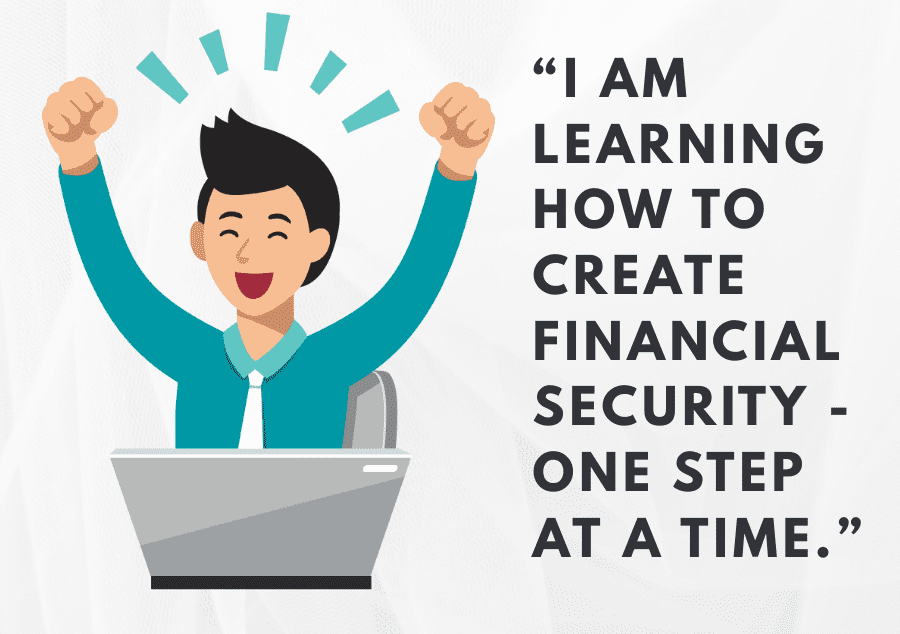
“I am learning how to create financial security – one step at a time.”

Step 3: Speak It Daily

Say your new belief out loud every day. Especially when fear creeps in.

“I am creating safety and stability through intentional choices.”

“I am learning how to create financial security - one step at a time.”<br />

Powerful Affirmations to Rewire Fear-Based Thinking

Start repeating these daily and feel the shift begin:

  1. “I trust myself to make wise financial decisions.”


  2. “It is safe for me to grow, earn, and invest.”


  3. “I am not my past – I create my financial future.”


  4. “I welcome abundance into my life with confidence.”


  5. “Every decision I make brings me closer to financial peace.”

These aren’t fluffy phrases, they are neural rewiring tools backed by the science of neuroplasticity.

How to Handle Fear in Real Time

Here’s what to do when fear pops up (because it will):

  1. Pause – Don’t make the decision immediately. 
  2. Name the fear – “I’m afraid I’ll mess this up.” 
  3. Breathe and ground – Get back to the present. 
  4. Ask – “What would future-me, who trusts herself, do right now?”
  5. Act with intention – Even a small move toward courage shifts everything.

Client Story: From “I Can’t” to “I’m In Control”

When Mel joined the Master Your Money program, she was terrified of looking at her finances. She hadn’t opened a credit card bill in 6 months.

“I just kept telling myself I was bad with money,” she said. “I felt frozen.”

Together, we rewrote that belief. Her new mantra? “I’m learning to lead my finances with courage.”

She committed to one 10-minute financial action a day. Within 30 days, she’d:
✅ Paid off two lingering bills
✅ Set up automated savings
✅ Felt confident opening her banking app

Her financial situation didn’t change overnight – but her mindset did. And that changed everything.

The Transformation: From Fear to Freedom

When you start making money decisions from a place of empowerment, you begin to:

  • Trust yourself
  • Take consistent action
  • Let go of shame
  • Step into the driver’s seat of your financial future

This is the shift we make in the Master Your Money program. Because real transformation doesn’t happen through guilt or hustle. It happens through mindset + habits + belief.

Ready to Ditch Financial Fear for Good?

Inside the 30-Day Master Your Money program, we walk step-by-step through:
✅ Identifying and rewiring limiting beliefs
✅ Shifting from scarcity to abundance
✅ Creating emotional safety around money
✅ Replacing fear with confidence, clarity, and calm

Whether you’re paying off debt, growing your income, or just trying to feel good about your bank account again, this program gives you the tools to stop reacting and start rising.

“Freedom begins the moment you stop letting fear make your decisions.”

Final Thoughts

You are not broken.
You are not bad with money.
You are not behind.

You’ve just been living with fear-based programing that no longer serves you.
And today – you get to choose something better.

You get to choose freedom.

Click here to join Master Your Money and start rewriting your money story.

Your Financial Freedom Breakthrough™<br />