Tax Time Without the Panic – The Simple Systems That Keep More of Your Hard-Earned Money

Tax Time Without the Panic – The Simple Systems That Keep More of Your Hard-Earned Money

Tax Time Shouldn’t Feel Like a Horror Movie

If “BAS” makes your eye twitch or tax time feels like a jump scare, you’re not alone.

For many business owners, tax time looks like:

  • digging through email for receipts
  • trying to remember what that transaction was
  • realising GST money has been accidentally spent
  • asking your accountant, “Is this bad?” 😅
  • promising yourself (again) that you’ll get organised next year

Whether you’re a tradie, franchisee, coach, consultant, or self-employed professional, it’s easy for tax to become the thing you avoid… until you can’t.

But here’s the thing:
Tax panic isn’t a personality trait. It’s a system issue.

And the solution isn’t “try harder.”
It’s: build foundations that make tax time boring.

Boring is the goal.
Boring means organised.
Boring means you’re in control.

The Real Reason Tax Time Feels So Stressful

Most tax stress comes from one (or more) of these:

1) You’re spending money that isn’t actually yours

If GST/tax isn’t separated, the bank balance lies.

It looks like there’s cash available… but a chunk of that cash belongs to the ATO (or will soon). So when BAS hits, it feels like a crisis.

2) Your numbers aren’t clean

Mixed transactions, personal spending from business accounts, inconsistent invoicing, missing receipts – these all make reporting harder.

And when reporting is hard, you avoid it.

3) You don’t have a simple routine

If you only look at your money when something is due, you’ll always be reacting.

4) You’re not clear on what’s “normal”

Many owners don’t know what to expect from their obligations (GST, PAYG, super, income tax, etc.). That uncertainty turns into anxiety.

The fix is not complicated, but it does require a shift from reactive to proactive.

Owner Pay Is the Cornerstone of a Healthy Business

The “Tax Calm” Blueprint (Simple, Practical, Repeatable)

Let’s build tax calm from the ground up.

Step 1: Separate business and personal (because clarity = calm)

This is the first domino.

When business and personal are mixed:

  • profit looks different than it really is
  • expenses get miscategorised
  •  your accountant has to untangle it (costly + time-consuming)

  •  BAS reporting becomes messy

  • tax estimates become unreliable

When you separate them, your numbers get clearer fast. Even if you’re not ready to overhaul everything, start with this:

  • separate bank accounts (or at least strict allocation “buckets”)
  • a clear rule: business expenses only from business, personal only from personal
  • owner pay transferred as owner pay (not random withdrawals)

This one change reduces stress massively.

Step 2: Quarantine GST/tax weekly (so it never surprises you again)

If you do nothing else after reading this blog, do this one thing.

When GST and tax are quarantined weekly:

  • you stop “accidentally spending” future obligations
  • BAS becomes a planned payment
  • your cash flow becomes more reliable
  • you feel calm because you know the money is there

A simple habit: Each week (or each time income lands), transfer a percentage into a tax/GST bucket

The right percentage depends on your structure and circumstances (and this is where your accountant or qualified adviser can guide you). But the foundation is non-negotiable:

Set aside first. Spend second.

Step 3: Create a weekly money routine (30 minutes that changes everything)

You don’t need a full day of admin.

You need a repeatable routine.

Pick one day per week – your “money check-in.”

On that day, you:

  1. review what came in
  2. allocate GST/tax set-aside
  3. check bills due in the next 7 – 14 days
  4. confirm owner pay
  5. quickly check that transactions are being categorised correctly
  6. look at ONE key number (margin, break-even, or cash runway)

That’s it.

This is how tax time becomes boring, because you’ve been managing it in small pieces all year.

Step 4: Keep records simple (no one’s trying to win an admin award)

Receipts and records are one of the biggest stress points, so let’s make it easy.

Your goal is not “perfect bookkeeping.”
Your goal is “good enough that nothing becomes a disaster.”

Simple record habits that help:

  • snap receipts immediately (or forward them to a dedicated email)
  • keep a consistent filing approach (even if it’s just “by month”)
  • reconcile regularly (weekly or fortnightly)
  • don’t leave it until BAS is due

Future you will thank you.

Step 5: Understand the 3 reports that remove the fear

You don’t need to become an accountant, but you do need to feel confident in the basics.

These three reports reduce stress instantly:

  1. Profit & Loss (P&L): tells you if the business is making money
  2. Balance Sheet (basic understanding): tells you what the business owns/owes
  3. Cash Flow position: tells you what’s actually available and what’s coming

You’ll build confidence understanding key reports, including Xero if you use it (and the principles still apply if you use other systems).

Confidence with these reports is what stops tax time feeling like a mystery.

The Hidden Cost of Tax Panic (It’s Not Just the Bill)

Tax panic doesn’t only cost you money. It costs you:

  • time (scrambling, chasing receipts, fixing mistakes)
  • stress (constant background anxiety)
  •  decision fatigue (avoiding choices because you don’t trust your numbers)

  • opportunity (hesitating to invest, hire, grow, or take time off)


When your numbers are clean and your system is simple:

  • you price more confidently
  • you choose better clients 
  • you stop discounting out of fear
  • you plan ahead instead of catching up 
  • you keep more of what you earn (because you stop leaking money through chaos)

Common “Tax Time Traps” (and how to avoid them)

Here are the patterns I see all the time:

Trap #1: “I’ll sort it out when it’s quieter”

If you’re a tradie or franchisee, it might never get quieter.
If you’re a coach/consultant, the quiet seasons are often when you’re building the next offer.

Solution: a weekly rhythm. It’s small enough to do even when busy.

Trap #2: “My accountant will handle it”

Your accountant is essential, but they shouldn’t be your emergency clean-up crew.

Solution: you handle the foundation; they handle the strategy and compliance.

Trap #3: “I’m scared to look”

Avoidance creates bigger problems.

Solution: start with one number, one routine, one week at a time.

Trap #4: “I don’t use Xero so I can’t get organised”

Tools help, but tools aren’t the solution.

Solution: the system works regardless of platform. (Xero is just a tool; your habits are the strategy.

What “Tax Calm” Looks Like in Real Life

When you’ve built foundations, tax time becomes:

  • “Yep, that’s due – money’s already set aside.”
  • “My reports make sense.”
  • “My accountant has what they need.”
  • “I’m not guessing.”
  • “I’m not panicking.” 

And here’s the best part: When tax becomes calm, you stop running your business from stress. You start running it from strategy.

 

When tax becomes calm, you stop running your business from stress.
You start running it from strategy.

How The Edge Bootcamp Supports This (and why it’s perfect before EOFY planning)

The Edge Bootcamp is designed for business owners who want more profit, better systems, cleaner numbers, and less overwhelm.

You’ll walk away with:

  • a simple money system
  • clearer separation between business and personal finances
  • confidence understanding Xero and key reports
  • and a clear 90-day implementation plan so you know what to do first, next, and next

Tickets include:

  • the 2-day live bootcamp
  • digital resources
  • templates
  • 90-day action plan tools

And yes, recordings are provided after the event for ticket holders.

If you’re thinking, “I’m behind and embarrassed,” this is a practical and judgement-free event – designed to help you build confidence step-by-step.

You can attend:

So whether you’re based in Perth, Fremantle, East Fremantle, regional WA, interstate, or juggling a packed schedule, you can still get the foundations in place.

Want Tax Time to Be Boring (In the Best Way)?

If you’re ready to stop the stress spiral and build a simple system that makes tax time calm, cash flow predictable, and owner pay consistent…

✅ Join The Edge Bootcamp (2-day live event)
✅ Attend in person at East Fremantle Yacht Club or live online
✅ Get templates + digital resources + your 90-day action plan tools included
✅ Receive recordings after the event so you can rewatch while you implement

CTA: Book your spot for The Edge Bootcamp and walk away with the foundations to manage your business and finances with clarity, confidence, and a plan.

Note: This is general education only, not personalised financial, tax, accounting, legal, health, or investment advice. Please seek advice from qualified professionals for your specific circumstances.

Join The Membership at Financial Management 101

#HowToResetMyMoneyMindset #WhyDoIFeelOutOfControlWithMoney #HowToFeelInControlOfFinances #ResetMoneyMindset2025 #NewYearFinancialMindset #HowToStartFreshWithMoney  emergency fund australia, money management, family savings 
 

Breaking Free: Your Journey to Financial Freedom

Breaking Free: Your Journey to Financial Freedom

Hello, finance enthusiasts! Are you ready to turn the page and start a new chapter called “Financial Freedom”? If you’re between the ages of 30 and 55, you’re at a prime time in your life to make some transformative moves. Whether you’re climbing the career ladder, juggling family responsibilities, or planning for retirement, financial freedom is a goal we all share. Today, I’m here to walk you through some fun and engaging steps to achieve that sweet state of economic bliss!

STEP 1: DEFINE WHAT FINANCIAL FREEDOM MEANS TO YOU

Before we dive into the how, let’s talk about the what. Financial freedom looks different for everyone. For some, it’s about being debt-free; for others, it’s accumulating enough savings to travel the world or retire comfortably. Take a moment to really picture what financial freedom looks like for you. Is it quitting your 9 to 5 job? Is it having the resources to pursue your passions? Define it, so you can own it!

STEP 2: ASSESS YOUR CURRENT FINANCIAL SITUATION

It’s time for a little reality check (but make it fun!). Grab your favourite drink, sit down, and crunch some numbers. Look at your income, debts, savings, and expenses. Understanding where you stand financially is crucial to setting realistic goals. Use apps or spreadsheets to track your finances—seeing everything on one screen can make managing money more engaging and less daunting. I have a FREE budgeting spreadsheet that you can download, which makes it easy and quick to get a snapshot of your financial position.  Download the spreadsheet HERE. 

STEP 3: SET SMART FINANCIAL GOALS

Specific, Measurable, Achievable, Relevant, and Time-bound – these are the golden rules for goal-setting. Break your financial freedom dream into smaller, achievable milestones. Maybe you want to pay off your credit card debt in two years or save for a deposit and down payment on a home in five years. Whatever those goals may be, write them down and commit to them.

STEP 4. CREATE A BULLETPROOF BUDGET

Now, let’s craft a budget that’s as vibrant and dynamic as you are. Your budget is your blueprint to financial freedom. It should allocate funds for your necessities, savings, debts, and a little fun money too—because what’s life without a little spice? Use budgeting tools or apps to keep you on track and make adjustments as your financial situation evolves.  As mentioned earlier in this blog, you can download the spreadsheet HERE.

STEP 5: BUILD AN EMERGENCY FUND

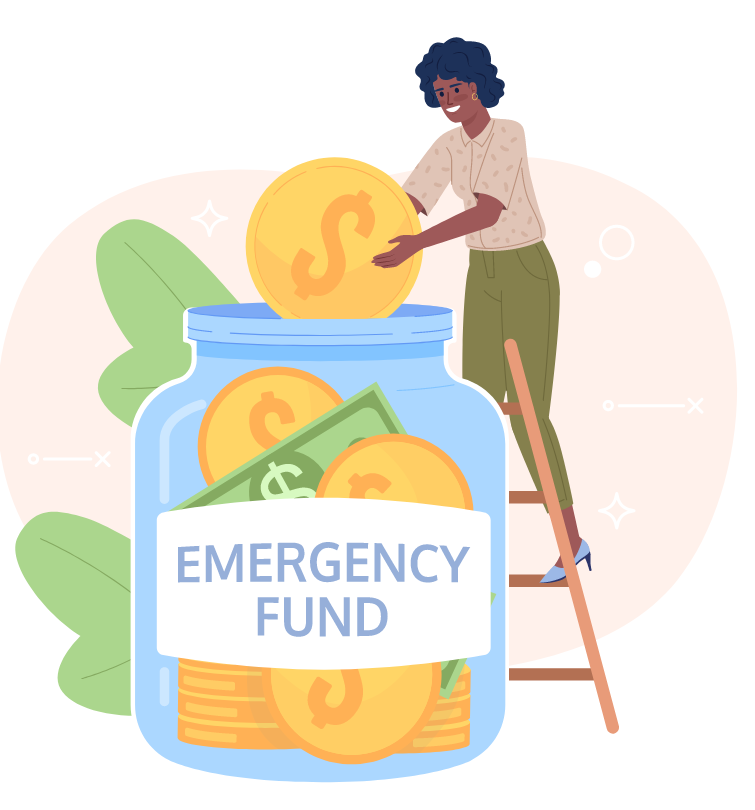
Life loves to throw curveballs, and sometimes they hit us right in the wallet. An emergency fund acts as a financial safety net. Start by saving enough to cover at least three to six months’ worth of living expenses. This fund will protect you from unforeseen circumstances like medical emergencies, urgent home repairs, or unexpected job loss. 

STEP 6: ELIMINATE AND MANAGE DEBT

Debt can be a heavy chain holding you back from your freedom. Focus on paying off high-interest debts first, such as credit card balances or personal loans. Consider strategies like the debt snowball or avalanche methods. Remember, every payment is a step closer to your financial liberation.

Life’s unexpected financial challenges can catch us off guard. Having an emergency fund can provide a safety net to help cover these unforeseen costs without the need to go into debt or disrupt long-term financial goals.

STEP 7: INCREASE YOUR INCOME

Sometimes cutting expenses isn’t enough to achieve your financial goals quickly. Look for ways to boost your income. Could you ask for a raise, change jobs for a higher salary, or start a side hustle? Maybe now’s the time to turn your hobby into a profit-making venture!

STEP 8: INVEST IN YOUR FUTURE

Investing can be a game-changer in your journey to financial freedom. Research different investment options like stocks, bonds, mutual funds, or real estate. Consider speaking with a financial advisor first before investing to tailor an investment strategy that suits your risk tolerance and financial goals.

STEP 9: STAY EDUCATED AND ADAPT

The financial world is always evolving, and so should your strategies. Keep learning, read books, attend workshops, follow my blogs, and join my community of like-minded individuals via the Learning Hub or Monthly Coaching. The more you know, the better equipped you’ll be to make informed financial decisions.

STEP 10: CELEBRATE YOUR PROGRESS

Don’t forget to celebrate your victories, big or small. Achieving financial freedom is a journey, not a sprint. Set up little rewards for yourself as you hit milestones. This not only makes the process enjoyable but also keeps you motivated.

CONCLUSION

Remember, financial freedom isn’t about having lots of money; it’s about having choices. It’s about living your life on your terms. So, let’s raise our glasses (of budget-friendly wine, of course!) to a brighter, financially free future. 

Here’s to making smart choices, being strategic, and having fun along the way. You’ve got this!

Take Control of Your Finances Today!

Are you tired of living paycheck to paycheck? Do you want to make smarter financial decisions but don’t know where to start? This monthly financial coaching program is designed to help you take control of your finances and achieve your financial goals.

Mastering Budget and Saving Techniques
How to Become Debt-Free: A Step-by-Step Guide to Financial Freedom

How to Become Debt-Free: A Step-by-Step Guide to Financial Freedom

Are you tired of feeling trapped by debt? You’re not alone. Debt can feel like a heavy burden, but the good news is that it doesn’t have to be a lifelong sentence. With the right mindset and strategies, you can break free from debt and start building a more secure financial future. Let’s dive into the steps to becoming debt-free and reclaiming control over your finances!

1. UNDERSTAND YOUR DEBT SITUATION

Before you can tackle your debt, you need to have a clear understanding of what you’re dealing with. Start by making a list of all your debts, including:

  • Credit cards
  • Student loans
  • Personal loans
  • Car loans
  • Mortgage

For each debt, write down the total amount owed, the interest rate, and the minimum monthly payment. This will give you a comprehensive view of your debt landscape and help you prioritise which debts to focus on first.  If you need a little hand with getting this down, you can download my FREE debt repayment spreadsheet by clicking HERE.

2. CREATE A BUDGET AND STICK TO IT

Creating a budget is an important step towards debt freedom. A budget helps you track your income and expenses, ensuring you’re not spending more than you earn. Here’s how to create an effective budget:

  • Calculate your monthly income: Include all sources of income, such as your salary, side gigs, and any other earnings.
  • List your monthly expenses: Categorise your expenses into essentials (like rent, utilities, groceries) and non-essentials (like dining out, entertainment).
  • Allocate funds for debt repayment: After covering your essentials, allocate a portion of your income specifically for debt repayment.

Sticking to your budget requires discipline, but it’s essential if you want to make significant progress towards becoming debt-free.

Want some help creating your budget then download my FREE budget spreadsheet where I make it easier to workout what’s happening with your money. Click HERE.

3. CUT UNNECESSARY EXPENSES

One of the quickest ways to free up money for debt repayment is by cutting unnecessary expenses. Review your budget and identify areas where you can reduce spending. Here are some common areas where people tend to overspend:

  • Dining out: Try cooking at home more often.
  • Subscription services: Cancel subscriptions you don’t use regularly.
  • Impulse purchases: Avoid buying items you don’t need by implementing a 24-hour rule before making non-essential purchases.

Remember, every dollar saved is a dollar that can go towards paying off your debt faster!

4. CHOOSE A DEBT REPAYMENT STRATEGY

There are several strategies for repaying debt, but two of the most popular are the Debt Snowball and Debt Avalanche methods:

  • Debt Snowball Method: Focus on paying off your smallest debt first while making minimum payments on all others. Once the smallest debt is paid off, move on to the next smallest. This method gives you quick wins and boosts motivation.
  • Debt Avalanche Method: Focus on paying off the debt with the highest interest rate first while making minimum payments on all others. This method saves you the most money in interest over time.

Choose the method that resonates most with you and start chipping away at your debt!

5. INCREASE YOUR INCOME

If cutting expenses isn’t enough, consider ways to increase your income. This additional income can be used entirely for debt repayment. Here are a few ideas to boost your income:

  • Take on a side hustle: Consider freelancing, tutoring, or driving for a ride-share service.
  • Sell unused items: Declutter your home and sell items you no longer need.
  • Ask for a raise or promotion: If you’ve been excelling at work, now might be the time to ask for a raise.

Every bit of extra income helps in accelerating your journey to becoming debt-free.

6. BUILD AN EMERGENCY FUND 

While it might seem counterintuitive to save money when you’re trying to pay off debt, having an emergency fund is crucial. An emergency fund acts as a financial safety net, preventing you from going deeper into debt when unexpected expenses arise. Aim to save at least $1,000 initially and gradually build it to cover 3-6 months’ worth of expenses.

7. NEGOTIATE LOWER INTEREST RATES

High-interest rates can significantly increase the amount you owe over time. Don’t be afraid to negotiate with your creditors to lower your interest rates. Here’s how:

  • Call your creditors: Explain your financial situation and request a lower interest rate.
  • Consider transferring your balance: Some credit cards offer 0% interest on balance transfers for a limited period. This can help reduce interest costs and pay off debt faster.
  • Refinance loans: Refinancing can lower your interest rate and reduce monthly payments.

Lowering your interest rates means more of your payments go towards reducing the principal amount, helping you get out of debt faster.

8. AVOID NEW DEBT

While you’re working to become debt-free, it’s essential to avoid accumulating new debt. Resist the temptation to use credit cards or take out new loans. If necessary, consider freezing your credit to prevent taking on new debt until you’re back on solid financial footing.

9. TRACK YOUR PROGRESS AND CELEBRATE MILESTONES

Tracking your progress is vital to staying motivated. Use a debt repayment tracker or app to monitor your journey. Celebrate each milestone you reach, whether it’s paying off a specific amount or clearing a particular debt. Celebrating these wins keeps you motivated and committed to your goal.

10. SEEK PROFESSIONAL HELP IF NEEDED

If your debt feels overwhelming, or if you’re struggling to create a repayment plan, consider seeking help from me as your financial coach. As a financial coach, I can provide personalised advice and strategies tailored to your situation, helping you navigate your way out of debt more effectively.

11. STAY COMMITTED TO THE JOURNEY

Becoming debt-free is a marathon, not a sprint. It requires time, effort, and unwavering commitment. There will be challenges along the way, but staying focused on your goal will make the journey worth it. Remember, the freedom and peace of mind that come with being debt-free are invaluable.


CONCLUSION: EMBRACE YOUR FINANCIAL FREEDOM

Becoming debt-free is one of the most empowering steps you can take for your financial future. It opens up a world of possibilities, from building wealth to achieving your financial dreams. By understanding your debt, creating a budget, cutting expenses, increasing your income, and sticking to a debt repayment strategy, you’re well on your way to financial freedom.

Start today—your debt-free future awaits!

By following these steps and staying committed, you’ll not only become debt-free but also build a strong foundation for a financially secure future. Remember, every step you take towards eliminating debt brings you closer to the life you desire.

Are you feeling overwhelmed by debt? Do you want a clear, actionable plan to help you pay off your debts and achieve financial freedom? This Debt Repayment Strategy Worksheet is here to guide you every step of the way.

Mastering Budget and Saving Techniques
Free Budgeting Spreadsheet

GRAB YOUR OWN COPY FOR FREE

YOUR MONEY eMagazine

Are you ready to take control of your finances and secure a brighter future?

Dive into “Your Money,” the premier e-magazine by Karen G Adams, the Founder of Financial Management 101.

Subscribe for FREE!

The Great Balancing Act: Juggling Financial Goals and Family Life in Your 40s and 50s

The Great Balancing Act: Juggling Financial Goals and Family Life in Your 40s and 50s

Welcome to the circus, where you star in the world’s greatest balancing act! Between raising kids, saving for college, and planning for retirement, it’s easy to feel like you’re juggling flaming torches while riding a unicycle. Do not worry, my friend. Your financial coach is here to help you master the art of balance (with no singed brows).

1. PRIORITISE LIKE A PRO

When you’re juggling multiple financial goals, prioritisation is key. Start by listing all your financial goals—short-term, medium-term, and long-term. Then, rank them by importance and urgency. Focus on the top priorities first. For most people, this includes building an emergency fund, paying off high-interest debt, and contributing to retirement accounts. Once the essentials are covered, you can allocate funds to other goals like college savings or that dream vacation.

Use Budgeting Apps

Family Budget Meetings

Budget meetings do not have to be boring. Make them fun and engaging for the entire family. By involving the whole family, you’ll teach your kids valuable money management skills and ensure everyone is on the same page.

2. FAMILY BUDGET MEETINGS: THE FUN VERSION

Budget meetings do not have to be boring. Make them fun and engaging for the entire family. Set aside a regular time each month to review your budget, track progress towards goals, and discuss any changes. Get everyone involved. Use charts, graphs, and even stickers to make it more interactive. Do not forget the snacks; everything is better with them. By involving the whole family, you’ll teach your kids valuable money management skills and ensure everyone is on the same page.

3. COLLEGE SAVINGS: DON’T BREAK THE BANK

Saving for college can feel like a daunting task, but it doesn’t have to break the bank. Start by exploring funds, which offer tax advantages for education savings. Set up automatic contributions to make saving easier. If you’re getting a late start, don’t panic. Encourage your kids to apply for scholarships, grants, and work-study programs. And remember, there’s no shame in starting at a community college or attending a state school. The goal is to get an education without a mountain of debt.

4. RETIREMENT SAVINGS: THE LONG GAME

It can be difficult to balance college savings and retirement plans, but keep in mind that there are no retirement scholarships. Prioritise your retirement savings first. If you are falling behind, consider increasing your contributions, delaying retirement, or looking into part-time work in retirement. The key is to remain adaptable and focused on the long-term goal. And, if you end up working a little longer, consider it extra time to improve your golf game or finally finish that novel.

5. SMART SPENDING: THE ART OF SAYING NO

With kids, there’s always something new to spend money on—gadgets, sports, extracurricular activities, you name it. Learning to say no (or at least “not right now”) is essential. Teach your kids the value of money by involving them in budget decisions. Show them how saving for a big goal means making sacrifices in the short term. And lead by example. If they see you making smart spending choices, they’re more likely to follow suit.

Smart Spending

6. FAMILY FUN ON A BUDGET

Quality family time doesn’t have to come with a hefty price tag. Look for free or low-cost activities in your community. Parks, hiking trails, and local events can provide endless entertainment without breaking the bank. Get creative at home with game nights, DIY projects, or cooking together. The goal is to create memories, not rack up credit card debt.

7. SELF-CARE IS NOT SELFISH

Remember to take care of yourself amidst all the financial juggling. Self-care isn’t selfish—it’s necessary. Set aside time and money for activities that recharge your batteries, whether it’s a hobby, exercise, or a weekend getaway. A well-rested, happy you is better able to cope with the financial and emotional demands of family life. Plus, it sets a great example for your kids about the importance of self-care.

8. GET PROFESSIONAL HELP WHEN NEEDED

There is no shame in seeking professional assistance with your finances. A financial advisor and coach, like myself, can offer valuable insights, assist you in developing a comprehensive plan, and keep you on track. Look for an advisor who acts in your best interest. Sometimes an outside perspective is all you need to see the big picture and make sound decisions.

Balancing financial goals and family life is no easy task, but with a little planning, smart choices, and a healthy dose of humour, you can master the great balancing act. Now, go out and conquer that budget—your financial circus awaits!

Learn the fundamental concepts of how budgeting and saving are important to your financial well-being. Registration is now open for the course: Mastering Budget and Saving Techniques. This is a hands-on course with me guiding you on how to budget, track and look at managing your money like a pro.

Mastering Budget and Saving Techniques
Free Budgeting Spreadsheet

MONTHLY COACHING

Take Control of Your Finances Today!

Are you tired of living paycheck to paycheck? Do you want to make smarter financial decisions but don’t know where to start? This monthly financial coaching program is designed to help you take control of your finances and achieve your financial goals.