The Big Picture: Why Net Position Matters More Than Budgeting

The Big Picture: Why Net Position Matters More Than Budgeting

When people think about managing their finances, budgeting is often the first thing that comes to mind. While budgeting is an essential tool, it’s only one piece of the puzzle. To truly take control of your financial life, you need to understand your net position. This bigger-picture view is the cornerstone of long-term financial success. In this blog, we’ll dive into what net position is, why it matters, and how it can transform your approach to money management.

What is Net Position?

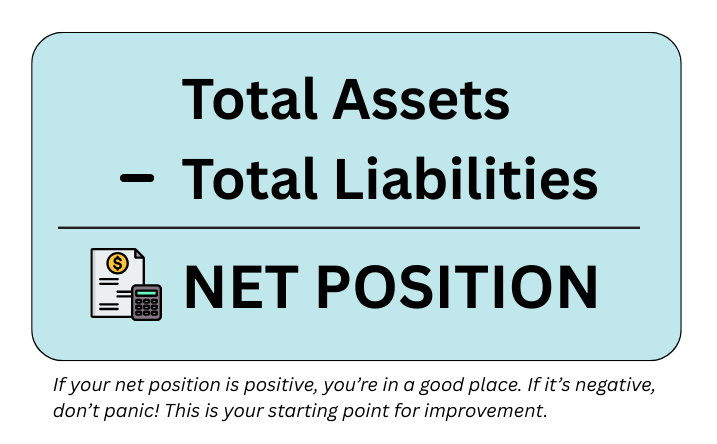
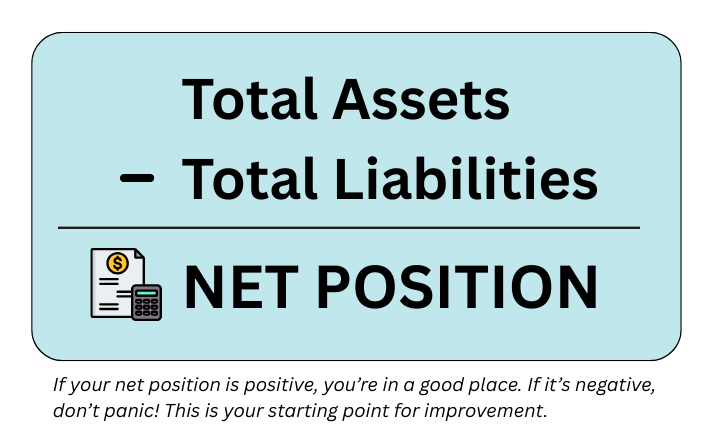
Your net position is the difference between what you own (your assets) and what you owe (your liabilities). It’s essentially your financial scorecard, giving you a snapshot of your overall financial health. Here’s a simple formula:

Net Position

Assets include things like your home, car, savings, and investments. Liabilities include mortgages, credit card debt, personal loans, and other financial obligations. Knowing your net position helps you understand whether you’re building wealth or accumulating debt.

Why Net Position Matters More Than Budgeting

Budgeting is about managing your monthly cash flow, how much money comes in and goes out. While this is important, it doesn’t give you a complete picture of your financial health. Here’s why focusing on your net position is a game-changer:

1. PROVIDES A HOLISTIC VIEW

      • Budgeting focuses on short-term goals, like paying bills or saving for a vacation. Net position shows your long-term financial standing, including the value of your assets and the weight of your debts.

2. HELPS SET REALISTIC GOALS

      • Understanding your net position allows you to set achievable financial goals, whether it’s buying a home, retiring early, or becoming debt-free.

3. REVEALS FINANCIAL TRENDS

      • Tracking your net position over time helps you see whether your financial health is improving or deteriorating.

4. GUIDES BETTER DECISION-MAKING

      • Knowing your net position helps you make informed decisions about spending, saving, and investing.

Common Misconceptions About Net Position

Budgeting is about managing your monthly cash flow, how much money comes in and goes out. While this is important, it doesn’t give you a complete picture of your financial health. Here’s why focusing on your net position is a game-changer:

1. “Only Wealthy People Need to Track Their Net Position”

      • False! Everyone, regardless of income level, can benefit from understanding their net position. It’s about knowing where you stand and where you’re headed.

2. “Budgeting Alone is Enough”

      • While budgeting is crucial for managing day-to-day expenses, it doesn’t address your overall financial health.

3. “It’s Too Complicated”

      • Tracking your net position can be as simple as listing your assets and liabilities in a spreadsheet or using a financial app.

Steps to Improve Your Net Position

1. ELIMINATE HIGH-INTEREST DEBT

      • Focus on paying off credit cards and personal loans first. These often carry the highest interest rates and can significantly impact your financial health.

2. INCREASE YOUR SAVINGS

      • Build an emergency fund with at least three to six months’ worth of living expenses. This provides a financial safety net and reduces the need for high-interest debt during emergencies.

3. INVEST WISELY

      • Grow your assets by investing in a diversified portfolio. Consider long-term investments like retirement accounts or real estate.

4. REDUCE LIABILITIES

      • Pay down loans and avoid taking on new debt unless it’s for a strategic purpose, like buying a home.

5. TRACK YOUR PROGRESS

      • Revisit your net position quarterly or annually to measure your progress and adjust your financial plan as needed.

How Our “Know Your Numbers” Course Can Help

Our “Know Your Numbers” course is designed to take the guesswork out of understanding your net position. Here’s what you’ll learn:

1. HOW TO CALCULATE YOUR NET POSITION 

      • Step-by-step guidance on listing your assets and liabilities.

2. TOOLS AND TEMPLATES

      • Access user-friendly calculators and spreadsheets to track your progress.

3. STRATEGIES FOR IMPROVEMENT

      • Learn actionable steps to grow your assets, reduce your liabilities, and increase your net worth.

4. REAL-LIFE EXAMPLES 

      • See how others have transformed their financial health by focusing on their net position.

Success Stories

1. JOAN’S TRANSFORMATION

Joan discovered her net position was negative due to high credit card debt. Using strategies from the course, she paid off her debt in two years and now has a positive net worth of $20,000.

2. PETER’S JOURNEY

Peter thought he was doing well because he had a high income. After calculating his net position, he realised his debt outweighed his assets. He’s since restructured his finances and is on track to achieve financial independence.

Know Your Numbers

Conclusion

Understanding your net position is the key to unlocking financial freedom. It’s not just about how much you earn or spend; it’s about the bigger picture of what you own versus what you owe. By focusing on your net position, you can make smarter financial decisions, set realistic goals, and build a secure future. Ready to take control? Join our “Know Your Numbers” course today and start your journey toward financial clarity and success.

The Vault
Breaking Free from Scarcity: How to Step into an Abundant Money Mindset

Breaking Free from Scarcity: How to Step into an Abundant Money Mindset

If you’ve ever felt like no matter how much you earn, it’s never enough, or if you catch yourself worrying about money even when things are going well, you might be stuck in a scarcity mindset. This mindset keeps you feeling like there’s never enough; enough money, enough opportunities, enough security. But the truth is, abundance is everywhere; we just have to shift our perspective to see it.

Breaking free from scarcity thinking doesn’t just improve your finances; it transforms how you approach life. Let’s explore how you can step into an abundant money mindset and start seeing possibilities instead of limitations.

Step 1: Recognise the Signs of Scarcity Thinking

The first step to shifting your mindset is awareness. Scarcity thinking can show up in many ways, such as:

      • Feeling like you never have enough money, no matter how much you make.
      • Being afraid to spend, even on things that align with your values.
      • Hoarding money out of fear rather than saving with intention.
      • Avoiding financial planning because you assume there’s no way to improve your situation.
      • Comparing your financial success to others and feeling discouraged.

If any of these resonate with you, don’t worry – you’re not alone, and these patterns can be changed.

Step 2: Reframe Your Money Beliefs

Scarcity isn’t about how much money you have; it’s about how you think about money. If you believe money is hard to earn or that financial success is only for the lucky few, those beliefs will shape your financial reality.

Start by shifting your internal dialogue. Instead of saying, “I can’t afford that,” try, “How can I afford that?” This simple shift turns money from a limitation into an opportunity for creativity and resourcefulness.

Another powerful reframe is to see money as a tool rather than a source of stress. Money is neutral, it’s how we use it and think about it that determines whether it empowers us or controls us.

The True Cost of Financial Stress

Step 3: Cultivate an Abundance Mindset Daily

Shifting from scarcity to abundance requires daily practice. Here are some ways to rewire your thinking:

      • Gratitude Practice: Take a moment each day to appreciate the financial abundance you already have whether it’s a roof over your head, food in your fridge, or even a steady paycheck.
      • Generosity: Giving, even in small ways, signals to your brain that there’s more than enough to go around. It could be donating a small amount to charity, tipping generously, or even sharing knowledge with someone who needs it.
      • Visualisation: Spend time visualising your ideal financial future. Imagine yourself thriving, making wise financial choices, and feeling completely at ease with money.

Step 4: Take Action Toward Abundance

An abundance mindset isn’t just about thinking differently – it’s also about acting differently. Some action steps include:

      • Investing in Yourself: Whether it’s taking a course, hiring a coach, or developing new skills, investing in yourself creates long-term financial and personal growth.
      • Creating Multiple Income Streams: People with an abundance mindset look for opportunities, not just limitations. Could you start a side hustle? Negotiate a raise? Explore passive income options?
      • Letting Go of Money Guilt: If you’ve been conditioned to feel guilty about spending or earning money, it’s time to release that. Money is simply an exchange of value, and you deserve financial prosperity.

Creating Multiple Income Streams

Step 5: Surround Yourself with Abundance Thinkers

Your environment influences your mindset. If you’re constantly surrounded by negativity about money, it’s harder to adopt an abundance perspective. Seek out people, books, podcasts, and communities that reinforce abundance thinking.

This is exactly why I created my Monthly Coaching program, where you gain access to THE VAULT – a wealth of financial education, tools, and resources to shift your mindset and transform your money habits. And for those ready to take full control of their financial future, the Master Your Money program offers step-by-step guidance on building lasting wealth.

Final Thoughts: Abundance is a Choice

Stepping into an abundant money mindset isn’t about waiting until you have “enough” money – it’s about changing how you view the money you already have. When you see possibilities instead of limitations, you unlock new levels of financial growth and confidence.

You are already capable of abundance. Now, it’s time to claim it.

The Vault