Imagine I walked into your business today and handed you a cheque for $50,000.
No strings attached.
No tax implications.
No catch.
Just an extra $50,000 sitting in your business account tomorrow morning.
What would you do with it?
It’s an interesting question.
Most business owners spend so much time trying to make more money that they rarely stop and think about what they would actually do if more money arrived.
- Would you invest it?
- Pay off debt?
- Hire someone?
- Upgrade equipment?
- Increase marketing?
- Take some money out for yourself?
- Put it aside for a rainy day?
The answers are often surprisingly unclear.
And that’s not a criticism.
It’s simply a reality for many business owners.
Because while most businesses focus on generating income, very few spend enough time deciding how to strategically use that income.
The result?
Many businesses work incredibly hard to grow revenue without creating a clear plan for what that growth is supposed to achieve.
And that’s where things become interesting.
More Money Doesn’t Automatically Solve Problems
One of the biggest misconceptions in business is that more money will solve everything.
If revenue increased, life would be easier.
If sales doubled, stress would disappear.
If a big contract landed, everything would fall into place.
Yet I’ve worked with enough business owners over the years to know that’s rarely what happens.
In fact, more money often magnifies existing problems.
- If your systems are weak, growth exposes them.
- If your pricing is wrong, growth exposes it.
- If your team structure isn’t working, growth exposes it.
- If you’re already stretched thin, growth often adds more pressure.
Money doesn’t automatically create clarity.
In many cases, it simply gives you a larger version of the same challenges.
That’s why some businesses can double their revenue and still feel stuck.
Because growth without strategy often creates complexity instead of freedom.
The Real Question Isn’t “How Do I Make More?”
The real question is:
“What am I trying to build?”
It’s surprising how many business owners can’t answer that question clearly.
Not because they lack ambition.
But because they’re busy:
- Busy serving customers.
- Busy managing staff.
- Busy solving problems.
- Busy keeping the wheels turning.
The days become weeks.
The weeks become months.
And before they know it, they’re operating the business rather than intentionally building it.
This is why the $50,000 question matters.
Because it forces you to stop and think.
If extra money arrived tomorrow, what purpose would it serve?
What would it help you achieve?
What would it change?
Because unless you know where you’re going, every dollar becomes reactive rather than strategic.

Four Common Responses to the $50,000 Question
When I ask business owners this question, their answers usually fall into four categories.
1. “I’d Pay Off Debt”
There’s nothing wrong with this answer.
Debt can create pressure.
Reducing debt can improve cash flow and reduce stress.
But here’s the follow-up question:
Would eliminating that debt actually change the way your business operates?
Or, would you simply create new financial pressure six months later?
Without addressing the root cause, debt reduction can sometimes become a temporary fix rather than a permanent solution.
2. “I’d Hire Someone”
This answer is becoming increasingly common.
Many business owners are overwhelmed.
They’re doing too much.
They’re stretched too thin.
Hiring sounds like the obvious answer.
But hiring before understanding where the business is truly constrained can create expensive mistakes.
The right hire can transform a business.
The wrong hire can create frustration, stress and additional costs.
Growth should be intentional.
Not emotional.
3. “I’d Spend More on Marketing”
Marketing is important.
Visibility matters.
Lead generation matters.
But here’s the challenge.
If your business already has operational bottlenecks, adding more customers can actually create more problems.
- More leads.
- More quotes.
- More work.
- More pressure.
- More delivery challenges.
Marketing works best when the foundations underneath it are strong.
Otherwise you’re pouring fuel onto a fire that isn’t burning efficiently.
4. “I’d Keep It in the Bank”
This answer often comes from business owners who have experienced uncertainty.
Cash provides comfort.
Cash provides options.
Cash provides security.
And sometimes that’s exactly the right answer.
But if the money simply sits there without purpose, it isn’t helping the business move forward.
Money should have a job.
- Every dollar should support a goal.
- Every dollar should serve a purpose.
- Every dollar should help build the future you’re trying to create
The Difference Between Busy Businesses and Valuable Businesses
One of the most important lessons business owners can learn is this:
A busy business is not necessarily a valuable business.
You can have:
- Lots of customers
- Lots of staff
- Lots of activity
- Lots of revenue
And still feel trapped.
- Still feel exhausted.
- Still feel uncertain.
- Still feel like you’re running harder every year.
A valuable business looks different.
It creates profit.
It creates cash flow.
It creates options.
It creates freedom.
It creates opportunities.
It creates sustainability.
And most importantly, it supports the life the owner wants to live.
That’s the goal.
Not simply more activity.
Not simply more revenue.
A better business.
Building a Business That Supports Your Life
This is where many business owners experience a shift.
At some point, they stop asking:
“How do I make more money?”
And start asking:
“How do I build a business that works for me?”
That’s a completely different conversation.
Because success isn’t simply measured by turnover.

Success is measured by:
- Time freedom
- Financial confidence
- Peace of mind
- Better decision making
- Sustainable growth
- Enjoyment
After all, what’s the point of building a successful business if you never get to enjoy the rewards?
Too many business owners sacrifice their health, relationships and happiness chasing growth.
Only to realise later that they built a business that depends entirely on them.
That’s not freedom.
That’s dependency.
And it often comes at a significant personal cost.
What Would the Best CEO Do?
Here’s a question worth considering.
If you were the CEO of a large company, how would you allocate that extra $50,000?
Would you make decisions based on emotion?
Or, would you make decisions based on evidence?
Would you react?
Or, would you strategically invest?
Would you focus on short-term relief?
Or, long-term outcomes?
Great CEOs don’t simply spend money.
They allocate resources intentionally.
They understand priorities.
They understand leverage.
They understand the return on investment.
And most importantly, they understand what moves the business forward.
Small business owners need to think the same way.
Not because they need a corporate mindset.
But because they deserve the clarity that comes from making informed decisions.
The Businesses That Grow Best Know Where to Focus
The most successful business owners I’ve met aren’t necessarily the hardest working:
- They’re often the clearest thinkers.
- They know where their opportunities are.
- They know what’s driving results.
- They know what’s slowing them down.
- They know what deserves attention.
- And just as importantly, they know what doesn’t.
That level of clarity changes everything.
Because once you know where to focus, decisions become easier.
Growth becomes easier.
Leadership becomes easier.
Business becomes more enjoyable.
Final Thoughts
The next time you find yourself thinking about how to make more money, pause for a moment.
Ask yourself a different question.
If an extra $50,000 landed in my business tomorrow, what would I do with it?
Your answer may reveal more about your business than you realise.
Because business success isn’t just about generating money.
It’s about knowing how to use it.
It’s about making decisions with confidence.
It’s about building something that supports your goals, your lifestyle and your future.
And that starts with understanding where your business stands today.
Ready to Discover Your Biggest Opportunity?
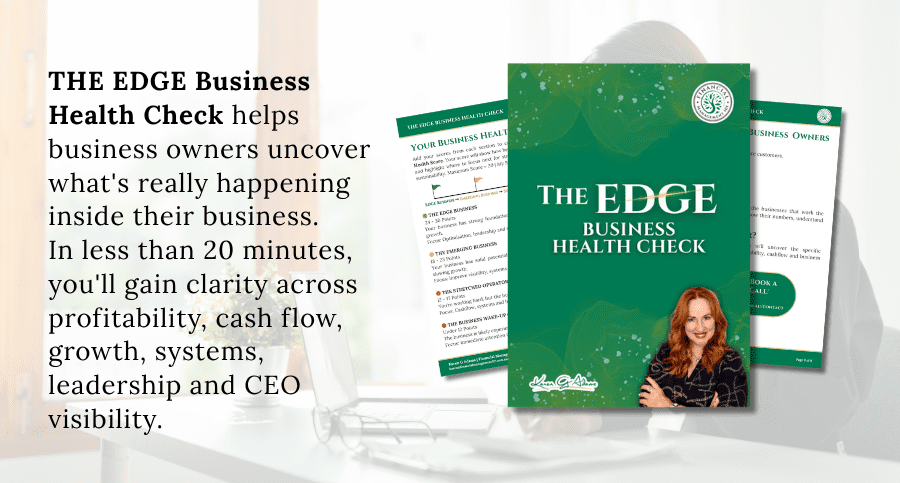
The EDGE Business Health Check helps business owners uncover what’s really happening inside their business.
In less than 20 minutes, you’ll gain clarity across profitability, cash flow, growth, systems, leadership and CEO visibility.
You’ll identify strengths, uncover blind spots and discover opportunities that could make a meaningful difference to your business.
Because better decisions start with better insights.
And better insights create better businesses.
Take The EDGE Business Health Check today and discover where your next opportunity is hiding.
#HowToResetMyMoneyMindset #NewYearFinancialMindset #HowToStartFreshWithMoney emergency fund australia, money management, family savings #SmallBusinessOwner #BusinessGrowth #CashflowManagement #BusinessSuccess
#EntrepreneurMindset