
How Can I Reset My Money Mindset This Year and Finally Feel in Control of My Finances?

How Can I Reset My Money Mindset This Year and Finally Feel in Control of My Finances?

It’s Not Just About the Numbers – It’s About Your Mindset

Look, you can have the best spreadsheet in the world…

You can download all the budget apps, cut back on coffee, and cancel every subscription.

But if your money mindset hasn’t shifted? You’ll still feel stuck, overwhelmed, or like “you’re just not good with money.”

Let’s fix that because 2026 is the year we stop dragging last year’s money baggage into our future.

This blog is your ultimate guide to resetting your mindset, clearing out old financial beliefs, and building a powerful, positive relationship with money.

And yes – it’s fun, it’s doable, and it’s way more effective than another boring budget.

Let’s go.

What Even Is a Money Mindset?

Your money mindset is the collection of beliefs, emotions, and thoughts you have about money. It’s your personal “money story” – the internal script you repeat (often subconsciously) about earning, saving, spending, and wealth.

Some of it comes from your childhood, your past experiences, or society’s weird money rules. And here’s the wild part: It influences every single money decision you make.

Your mindset determines whether you:

  • Save confidently or hoard out of fear
  • Ask for more money or shrink your value
  • Budget with ease or avoid your bank balance like it’s haunted

Signs You Might Need a Money Mindset Reset

?‍♀️ You feel anxious or guilty every time you spend money
? You avoid looking at your bank account or credit card
?‍♂️ You say things like “I’m just bad with money” or “I’ll never get ahead”
?‍♀️ You feel stuck in a paycheck-to-paycheck cycle, even when your income grows

If that sounds like you, it doesn’t mean you’re broken – it means it’s time to reprogram your financial brain.

Step 1: Identify the Old Money Stories Holding You Back

Before you can shift your mindset, you need to see what you’re working with.

Ask yourself:

  • What did I learn about money growing up?
  • What do I believe about wealthy people?
  • When I think about money, do I feel free or fearful?

Some common limiting beliefs:

  • “There’s never enough money.”
  • “Money is hard to manage.”
  • “I’m not good with numbers.”
  • “More money means more stress.”

? None of these are facts. They’re just beliefs. And beliefs can change.

Step 2: Choose Empowering New Money Beliefs

You get to write a new story this year. Start by replacing the old thoughts with intentional, positive ones:

Instead of: “I’m bad with money” → Say: “I’m learning how to manage my money powerfully.”
Instead of: “I’ll never get ahead” → Say: “Every dollar I manage well moves me forward.”
Instead of: “Money is stressful” → Say: “Money is a tool I’m learning to use with confidence.”

✨ Tip: Write your new beliefs down. Post them on your mirror. Make them your phone wallpaper. Say them out loud. Train your brain to believe better.

Step 3: Connect Your Money to What You Actually Value

Ask yourself:

  • What do I want money to do for me this year?
  • What do I value most – freedom? stability? generosity? joy?
  • How can I align my spending and saving with those values?

Example: 

If you value peace of mind, create a savings plan.
If you value freedom, reduce debt.
If you value fun, build in guilt-free spending money.

Money doesn’t just serve numbers – it should serve your life.

Money doesn’t just serve numbers - it should serve your life.

Step 4: Make Mindset Work Part of Your Routine

You don’t go to the gym once and expect abs, right?
Same with your mindset. It takes repetition.

Here’s a weekly reset routine you can follow:

? Money Mindset Reset (10 Minutes):

  • Review your thoughts from the week – what came up around money?
  • Journal one thing you’re proud of financially
  • Write or say one new belief out loud
  • Visualise yourself succeeding with money

? Do this every Sunday before your weekly budget check-in and you’ll be unstoppable.

Step 5: Surround Yourself With New Financial Energy

If you want to upgrade your mindset, you need to upgrade your environment.

That might look like:

  • Listening to empowering money podcasts
  • Following financial educators who speak your language (hello ? yes me ?)
  • Talking about money with friends who are also growing
  • Hiring a coach who helps you reframe, reset, and rise (hello ? yes me again ?)

You can’t change your money mindset in isolation. That’s why I created my Financial Muscle Coaching Membership.  It’s where financial growth meets real community and support.
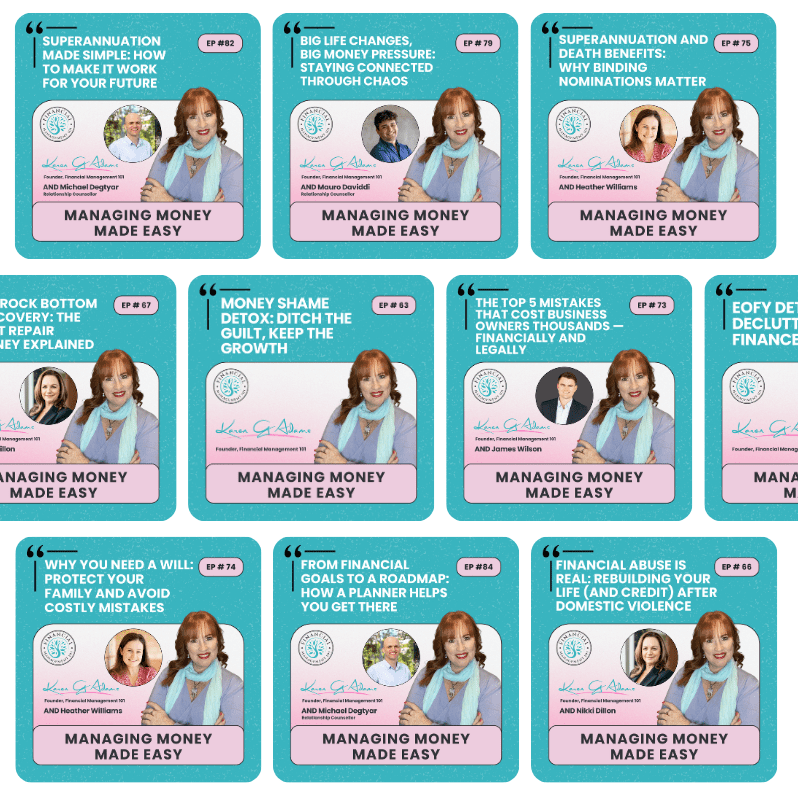
Listen to empowering money podcasts like Managing Money Made Easy

Step 6: Replace Shame With Curiosity

When things go “wrong”  you overspend, forget a bill, or avoid a budget – don’t spiral into shame. Instead, ask:

  • What triggered this?
  • What do I need right now – support, structure, or space?
  • What can I do differently next time?

Every financial hiccup is just data. Don’t let one moment of messiness define your entire money story.

You’re allowed to be a work in progress and a success story at the same time.

Step 7: Set Mindset-Based Goals for the Year

Let’s skip the boring “save more, spend less” vibe.

Try these instead:

  • “This year, I’m building my financial self-trust.”
  • “This year, I’m proving I can stick to one habit consistently.”
  • “This year, I’m learning to enjoy managing my money.”

Then break that into monthly goals:
✅ January: Track every dollar
✅ February: Create a spending plan aligned to my values
✅ March: Build an emergency fund of $300

Momentum creates confidence and mindset fuels momentum.

Final Thoughts: You Can’t Budget Your Way Out of a Scarcity Mindset

If you’re stuck in fear, guilt, or shame around money, no spreadsheet will save you. You have to go deeper. And you have to believe that a new relationship with money is possible for you.

Because it is.

You are not bad with money.
You are not too far behind.
You are not stuck – you’re just getting started.

And when you build a strong, positive money mindset? Everything else gets easier.

Let’s build that mindset muscle together.

? Join Financial Muscle Coaching

If you’re ready to change your money mindset, build real financial confidence, and create a life that feels good – not just looks good on paper – I’ve got you.

Join Financial Muscle Coaching – my coaching community where we:
✅ Rewrite limiting money stories
✅ Build strong, sustainable habits
✅ Create aligned goals you actually want to follow

This isn’t just budgeting. This is mindset, motivation, and muscle – built week by week, with me in your corner.

Your money mindset reset starts here. Let’s go. ?

Join Financial Muscle Coaching Now

#HowToResetMyMoneyMindset #WhyDoIFeelOutOfControlWithMoney #HowToFeelInControlOfFinances #ResetMoneyMindset2025 #NewYearFinancialMindset #HowToStartFreshWithMoney #MindsetShiftForMoney #RebuildMoneyConfidence #WhatIsMoneyMindset #MoneyMindsetTransformation #MoneyMindset #MoneyConfidence #FinancialReset #MoneyHealing #FinancialEmpowerment #AbundanceMindset #WealthMindset #MoneyCoach #MoneyGoals2025 #FinancialMuscle

Mind Over Money: How to Rewrite Your Financial Story & Build a Breakthrough Mindset

Mind Over Money: How to Rewrite Your Financial Story & Build a Breakthrough Mindset

Let’s start with the truth:

You can have the perfect budget, a great-paying job, even a savings plan, and still feel stuck financially.

Why? Because if your mindset doesn’t change, your money won’t either.

In this blog, we’re going to unpack:

  • The power of mindset in creating real financial change
  • How money stories are formed (and how to rewrite them)
  • Common mindset blocks that keep people stuck
  • Simple tools to build a breakthrough mindset
  • How this fits into your journey toward financial freedom

Let’s dive in!

? What Is a Money Mindset (and Why Should You Care)?

Your money mindset is your core belief system around money. It shapes how you:

  • Spend
  • Save
  • Earn
  • Invest
  • React in financial stress

It’s the voice in your head that says:

  • “I’m just not good with money.”
  • “Money always slips through my fingers.”
  • “I have to work hard to survive.”

Or, on the flip side:

  • “I’m in control of my finances.”
  • “I know how to make money work for me.”
  • “Wealth is available to me.”

The difference? Mindset.

This isn’t wishful thinking, this is neuroscience and behavioural psychology. What you believe impacts how you behave. And how you behave impacts your bank account.

? Where Do These Beliefs Come From?

Most of our money beliefs are formed before age 7.

You may have grown up hearing:

  • “Money doesn’t grow on trees.”
  • “We can’t afford that.”
  • “Rich people are greedy.”

Without realising it, those phrases became part of your internal money script – even if they don’t serve you now.

Other money stories come from:

  • Your parents’ relationship with money
  • Cultural or community influences
  • Early financial trauma (like debt, bankruptcy, poverty)

Good news? You can rewrite the script.

? Common Money Mindset Blocks (And How They Show Up)

If you’ve ever thought:

  • “As soon as I get ahead, something always knocks me back.”
  • “I don’t deserve to be wealthy.”
  • “I feel anxious just opening my banking app,”

…you’re not alone.

Here are 5 of the most common mindset blocks we see:

1. Scarcity Thinking

The belief that there’s never enough (time, money, opportunities). This leads to fear-based decisions and self-sabotage.

2. Imposter Syndrome

Feeling like you’re not smart or “good enough” to manage money well. You might under-earn or avoid taking risks.

3. Fear of Success

It sounds weird, but many fear what will change if they actually become successful.

4. Guilt Around Wealth

Especially common if you grew up in struggle or were taught that money = greed.

5. Money Avoidance

This shows up as procrastination, not checking accounts, or avoiding financial conversations.

Getting Out of Debt Starts in Your Mind

The Power of Rewriting Your Financial Story

Here’s the deal: your current money story isn’t your final chapter.

You can shift from:

  • “I’ll always be in debt” → “I’m learning how to manage and reduce my debt.”
  • “I’m terrible with money” → “I’m becoming more financially confident every day.”

Just like you wouldn’t expect physical results without working out, you can’t expect financial change without working on your mindset.

? Simple Tools to Strengthen Your Money Mindset

1. Awareness is Power

Start by journaling or reflecting on your early money memories. What did you hear, see, or feel growing up?

2. Affirmations That Stick

Affirmations are powerful when they’re practiced consistently. Try these:

  • “I am safe and in control of my finances.”
  • “Every dollar I spend and save has purpose.”
  • “I deserve financial abundance.”

3. Surround Yourself With Growth

Follow financial educators, podcasts, and communities that reinforce positive beliefs about money.

4. Set Micro-Goals

Progress builds confidence. Start with tiny, achievable wins – like tracking your expenses or saving $10/week.

5. Visualise the Outcome

Spend 2 minutes a day visualising what your financially free life looks like. Your brain responds powerfully to visualisation.

6. Join a Supportive Program

A structured environment with accountability and coaching helps speed up your mindset shift.

That’s exactly what we provide in the Financial Freedom Breakthrough Program, launching this September.

? The Role of Mindset in the Financial Freedom Diagram

Let’s circle back to the diagram from Financial Management 101.

If you’re stuck at the bottom (overwhelmed, struggling, surviving), it’s not just a numbers issue.

It’s a belief issue.

Mindset is the foundation that supports every other level:

  • Budgeting
  • Saving
  • Debt reduction
  • Credit health
  • Wealth building
  • Estate planning

With the right mindset, these tools feel doable. Without it, even the best strategy will collapse.

? Real Talk: You Are NOT Broken

Maybe you’ve made mistakes. Maybe you’ve felt stuck for years. Maybe you’re scared to even start.

That doesn’t make you broken – it makes you human.

Your past doesn’t define you. Your future is still yours to shape.

And the first step? Believing you can.

Working on your money mindset while paying off debt is so important.

? Ready to Rewrite Your Story?

Here’s how to begin:

  1. Download our Free Money Mindset Workbook (coming soon)
  2. Join the waitlist for the Financial Freedom Breakthrough Program
  3. Share this post with someone who needs to hear it today

    ? Final Thoughts

    Money mindset isn’t fluff, it’s the fuel behind every breakthrough.

    If you want a different result, you need a different belief.

    You’re not meant to just survive. You’re meant to thrive.

    Let’s start believing in that version of you, and take action to bring it to life.

    Your Financial Freedom Breakthrough™
    Are You Ignoring Your Financial Safety Net? Why Wills & Estate Planning Matter (Even If You’re Young!)

    Are You Ignoring Your Financial Safety Net? Why Wills & Estate Planning Matter (Even If You’re Young!)

    Alright, friend… it’s time we talk about something that everyone needs, but almost no one wants to deal with.

    Wills. Estate Planning. Life insurance.

    Did your eyes just glaze over?

    Did you suddenly feel an overwhelming urge to click away or scroll to the fun stuff on Instagram?
    Stay with me, because this may just be one of the most important money conversations you’ll ever have. Here’s the hard truth:

    If you’re ignoring estate planning because you think it’s “only for rich people” or “something I can figure out later,” you’re playing a dangerous game with your financial future, and the people you love most.
    In this post, I’m going to:

    • Bust the biggest myths about wills and estate planning.
    • Show you why everyone (yes, even you!) needs a plan.
    • Break down exactly what you need to do – without confusing legal jargon.
    • Help you take simple, meaningful action to protect your future.

    And don’t worry, this isn’t going to be dry or boring.

    We’re going to make this approachable, empowering, and (dare I say?) a little fun. Because protecting your future should feel like an act of love and self-respect, not something you dread.

    ? Myth #1: “Estate Planning Is Only for Rich People”

    Let’s start here, because this myth is everywhere. When most people hear the phrase “estate planning,” they picture wealthy people with sprawling mansions, yachts, and family fortunes that need protecting. But here’s the truth: If you own anything – even a car, a bank account, or a pet – you have an estate.

    Estate planning isn’t just for millionaires. It’s for:

    • The young professional with a growing savings account.
    • The parent who wants to protect their kids.
    • The small business owner with assets tied to their company.
    • The renter with a car loan and a retirement fund.

    If you have money, possessions, dependents, or even digital assets – estate planning applies to you.

    If you own anything - even a car, a bank account, or a pet - you have an estate.

    ? Why Avoiding Estate Planning Could Cost You (Big Time)

    I get it – thinking about wills, death, and “what ifs” isn’t exactly a fun Friday night activity. But here’s the thing… Avoiding estate planning doesn’t make it go away. It just creates more chaos for the people you care about most. Without a will or estate plan in place:

    • The courts decide who gets your assets – and it may not align with your wishes.
    • Your loved ones could be tied up in legal battles for months (or even years).
    • Minor children could end up with a guardian chosen by the court – not you.
    • Your hard-earned money could get eaten up by legal fees, taxes, or other costs.

    In short, not planning can create stress, delays, and heartache at the worst possible time.

    But when you take just a little time to set up your financial safety net? You give your loved ones clarity, protection, and peace of mind.

    ? “But I’m Too Young for a Will!”

    Another common myth? Thinking you’re too young to need a will. Here’s a little truth bomb:

    Wills aren’t about age – they’re about responsibility.

    You may not think you need one yet, but ask yourself:

    • Do you have savings, retirement accounts, or life insurance?
    • Do you have pets who rely on you?
    • Do you own a car, home, or business?
    • Do you have people who depend on your income?
    • Do you have strong opinions about where your money should go if something happens to you?

    If you answered yes to any of those, it’s time to start planning. Remember—estate planning isn’t about expecting the worst. It’s about being prepared for whatever life throws your way.

    ✨ Estate Planning: It’s Not Just About Death – It’s About Life, Too!

    One of the most overlooked parts of estate planning? It’s not just about what happens after you’re gone. It also protects you while you’re alive, especially if you ever:

    • Become seriously ill.
    • Get injured and can’t manage your finances or healthcare decisions.

    Your estate plan can include documents like:

    • Power of Attorney: Designating someone you trust to manage your finances if you can’t.
    • Healthcare Directive: Outlining your wishes for medical treatment and end-of-life care.
    • Guardianship Designations: Naming who will care for your minor children if you’re unable to.

    These documents ensure your voice is heard – no matter what.

    ? What’s Actually Included in a Basic Estate Plan?

    Let’s strip away the legal jargon and break this down simply. Here’s what most people need in their estate plan:

    1. A Will

    This legal document spells out:

    • Who will inherit your assets (money, property, belongings, etc.).
    • Who will take care of your children or dependents (if applicable).
    • Who will manage your estate (called an executor)

    What To Include in A Basic Estate Plan

    2. Power of Attorney (POA)

    This gives someone legal authority to:

    • Handle your finances if you’re incapacitated.
    • Make decisions on your behalf if you can’t.

    3. Healthcare Directive (Living Will)

    This outlines your medical wishes if you’re unable to communicate them.

    4. Beneficiary Designations

    Certain accounts (like life insurance, retirement accounts, and some bank accounts) allow you to name a beneficiary directly. These override your will, so it’s crucial to keep them updated.

    5. Guardianship Designations (If Applicable)

    If you have minor children, this document names who you want to raise them if you’re unable to.

    Bonus: Trusts (Optional for Some)

    While not necessary for everyone, trusts can:

    • Help avoid probate (the legal process of validating a will).
    • Provide additional control over how and when assets are distributed.
    • Offer potential tax benefits.

    ? How to Get Started with Estate Planning (Without Feeling Overwhelmed)

    Deep breath – this doesn’t have to be complicated! Here’s how to start, step by step:

    Step 1: Take Inventory

    List all your:

    • Bank accounts
    • Retirement accounts
    • Investments
    • Properties
    • Vehicles
    • Insurance policies
    • Personal belongings of high value
    • Digital assets (crypto, social media, etc.)

    Step 2: Clarify Your Wishes

    Think about:

    • Who should inherit your assets?
    • Who do you trust to handle your finances and healthcare if needed?
    • Who would you want to care for your kids or pets?
    • Are there any charitable causes you’d like to support?

    Step 3: Get Legal Help (If Needed)

    While you can create simple wills online for a low cost, it’s often wise to consult an estate attorney, especially if:

    • You have significant assets.
    • You own a business.
    • You have a blended family or complex situation.

    Step 4: Communicate Your Plan

    This is the step most people skip, but it’s essential! Let your loved ones know:

    • That you’ve created an estate plan.
    • Where they can find the documents.
    • Who has been designated for certain roles.

    Transparency now avoids confusion later.

    Step 5: Review & Update Regularly

    Life changes – your estate plan should too. Revisit your documents anytime you:

    • Get married or divorced.
    • Have children.
    • Move to a new state (laws vary).
    • Experience major financial changes.

    ? But What If You Don’t Have Much to Leave Behind?

    Here’s a powerful truth: Estate planning isn’t just about leaving behind money – it’s about leaving behind clarity. Even if your financial picture feels “small” right now, your loved ones will still need to:

    • Handle your debts and bills.
    • Access your accounts.
    • Close out your digital presence.
    • Make healthcare decisions if needed.

    Having a clear plan ensures they can do so smoothly. Plus, it sends a strong message: “I respect myself and the people I care about enough to plan ahead.”

    ? Estate Planning = Empowerment, Not Fear

    I get it – this can all feel heavy. But here’s how I want you to reframe it:

    Estate planning isn’t about preparing for doom and gloom.

    It’s about:

    • Taking ownership of your life.
    • Protecting your family.
    • Making your wishes known.
    • Creating peace of mind, for you and for those you love.

    It’s one of the most profound acts of love and responsibility you can make.

    ? How This Connects to Your Financial Breakthrough

    In my Your Financial Freedom Breakthrough™ – 90 Day Money Makeover program, we don’t just focus on day-to-day money tasks like budgeting and debt. We go deeper, because true financial empowerment covers everything. That includes:

    • Building your savings.
    • Tackling your debt.
    • Creating an intentional spending plan.
    • AND making sure your financial house is in order with estate planning.

    Most programs skip this step, but I refuse to. Why? Because I’ve seen firsthand how having a financial safety net changes lives.

    In the program, you’ll:

    • Learn exactly what legal documents you need.
    • Get simple checklists to help you start (even if you’re a total beginner).
    • Be guided through tough but important questions with compassion and clarity.

    It’s all about making this process approachable, doable, and even empowering.

    ? Ready to Take Action? (Mini Challenge!)

    Let’s get you started today with a bite-sized action step.

    Estate Planning Mini Challenge:

    Make a list of ALL your current accounts and assets. Check the beneficiaries on your bank accounts and retirement funds. Update them if needed.

    Choose ONE document to tackle this month:

    • Will
    • Power of Attorney
    • Healthcare Directive

    Start with the easiest one for you. This tiny step will start creating massive peace of mind, and it’s easier than you think.

    ? Final Thoughts: Your Legacy Starts Now

    Here’s what I want you to remember: Estate planning isn’t just for “older” or “wealthy” people – it’s for everyone who wants to protect their future.

    You don’t need to do it all at once, but starting somewhere is powerful. This isn’t about fear – it’s about empowerment, peace of mind, and love.

    And if you’re ready to take this even further to finally build a money plan that covers everything from budgeting to wills and beyond, get ready. My Your Financial Freedom Breakthrough™ – 90 Day Money Makeover opens on September 10th, and it’s designed to help you:

    • Create lasting financial change.
    • Build a money system that works for your life.
    • Feel empowered, organised, and confident with your finances – once and for all.

    You’ve got this, and I’m cheering you on every step of the way.

    Your Financial Freedom Breakthrough™
    Your Financial Freedom Breakthrough™ - Scope
    From Chaos to Clarity: How to Create a Money Plan That Actually Works

    From Chaos to Clarity: How to Create a Money Plan That Actually Works

    Ever feel like your money is running you instead of the other way around? Like no matter how much you earn, there’s always more month than money?

    If you nodded (or sighed), you’re not alone. The good news? You don’t need a finance degree, a six-figure income, or a strict budget to take control. You just need a money plan that works for you.

    In this blog, we’ll ditch the overwhelm and walk through exactly how to create a simple, empowering money plan that gives you clarity, confidence, and real momentum.

    Let’s go from chaos to clarity – starting today.

    1. Start With Your “Why”: Anchor Your Money to What Matters

    Before we dive into numbers, let’s get clear on your why. Because unless your money plan connects to something meaningful, it won’t stick.

    Ask yourself:

    • What would feeling in control of my money allow me to do?
    • What does financial peace look like to me?
    • What am I working toward?

    Your answers might include:

    • Paying off debt to sleep better at night
    • Saving for a dream trip or home deposit
    • Creating options so you can work less or start a business

    Write your top 2 – 3 motivations down. These are your compass when the budget feels boring or things go off track.

    2. Know Your Numbers (Without the Shame Spiral)

    You can’t improve what you don’t measure. So let’s get honest, not harsh. Gather the basics:

    • Your income (all sources)
    • Your recurring bills
    • Your debt repayments
    • Your spending patterns (groceries, eating out, transport, etc.)
    • Your current savings and investments

    Pro tip: Use the last 2–3 months of bank statements to see where your money actually went. You might be surprised (hello, Uber Eats). This isn’t about judgment. It’s about clarity.

    3. Create a Simple Money Plan (The 70/20/10 Rule)

    Forget complicated budgets with 47 categories. Here’s a simple, flexible formula you can actually stick to:

    • 70% for living: rent/mortgage, groceries, transport, lifestyle
    • 20% for financial goals: savings, debt repayments, investments
    • 10% for the future: extra super, long-term wealth building

    The percentages aren’t set in stone. Adjust based on your situation. The key is having a structure that makes sure you’re not spending 100% of your income with nothing left to show for it.

    Action step: Plug your own numbers into this formula and see where you land. If you’re off track, that’s your roadmap for change.

    Create a Simple Money Plan

    4. Automate Your Money Flow (And Take the Stress Out)

    Once you know where your money should go, make it happen on autopilot.
    Set up automatic transfers:

    • To a separate savings account (nickname it for motivation: “Italy 2026” or “Debt-Free Me”)
    • To cover bills and direct debits
    • To long-term savings or investment accounts

    When you automate, you eliminate the willpower game. You’ll save without thinking and avoid last-minute money panic.

    Bonus tip: Use a separate account for discretionary spending (like a digital “cash envelope”). When it’s empty, it’s empty.

    5. Create an Emergency Buffer (For Life’s “Oh No!” Moments)

    Life is full of surprises. Your washing machine breaks, your car needs fixing, or your job suddenly changes.

    Having even $1,000 in a buffer fund means you don’t have to reach for the credit card every time life happens.

    Aim for 1 month of essential expenses first, then build to 3. But start where you are, every $50 counts. Keep it in a separate high-interest savings account you can access in a true emergency (not Friday night online shopping).

    6. Track Progress Without Obsessing

    You don’t need to check your bank app five times a day. But regular check-ins keep you engaged and help you spot problems early.

    Ideas to stay on track:

    • Weekly money date: review transactions, check balances, update goals
    • Monthly review: celebrate wins, adjust if needed

    Use a simple app or spreadsheet to track goals

    The goal isn’t perfection. It’s progress.

    7. Keep Learning and Stay Inspired

    Your relationship with money is lifelong. The more you understand it, the more confident you’ll feel. Try:

    • Reading a finance book this quarter
    • Listening to a weekly money podcast
    • Following finance educators on socials
    • Booking a session with a financial coach to personalise your plan

    There’s no shame in not knowing something – only in staying stuck.

    Clarity = Confidence = Momentum

    When your money feels chaotic, it can affect everything: your stress levels, your sleep, your relationships, and your ability to plan ahead. But creating a money plan that actually works isn’t about spreadsheets or sacrifice. It’s about:

    • Getting clear on what matters to you
    • Creating a simple, sustainable system
    • Building habits that support your goals

    And the best part? You can start today. One step. One decision. One plan.

    If you’re ready to get out of the fog and into financial clarity, let’s talk. Book your free discovery call and let’s map out your next steps – with zero jargon, zero judgment, and 100% support.

    Because you can feel good about your money. You just need a plan that fits your life.

    No more chaos. It’s your time for clarity. Let’s make it happen.

    Mastering Budgeting and Saving
    The Vault