The Emergency Fund Isn’t Optional – How to Build One Without Feeling Broke (and why it changes everything)

The Emergency Fund Isn’t Optional – How to Build One Without Feeling Broke (and why it changes everything)

Let’s talk about the one money habit that turns chaos into calm faster than almost anything else:

An emergency fund.

Now before you roll your eyes and think, “Karen, I knowww… but I can barely afford groceries,” stay with me.

Because I’m not about to tell you to magically save three months of expenses overnight, live on rice and sadness, and stop enjoying life.

That’s not financial education – that’s financial punishment. 😅

What I am going to do is show you how to build an emergency fund in a way that feels doable, realistic, and actually sticks… even if money is tight.

And here’s why this matters:

An emergency fund isn’t just “money in an account.”
It’s peace, options, and less stress when life does what life does best… surprise you at the worst possible time.

So let’s get your financial house in order by building the foundation that stops everything from wobbling.

Why the Emergency Fund Is Non-Negotiable (Even If You Have Debt)

I want you to imagine your finances like a house.

If your foundation is cracked, everything else feels unstable:

  • you can’t plan properly
  • you can’t relax
  • you’re constantly bracing for impact
  • and one unexpected bill can knock you sideways

An emergency fund is the foundation.

It stops you from:

  • using credit cards “just this once”
  • grabbing BNPL for essentials
  • borrowing from family
  • draining your savings every time something happens
  • feeling like you’re always behind

Even if you’re paying down debt, you still need a buffer.
Because without one, every emergency becomes more debt… and that cycle is exhausting.

An Emergency Fund Is Non-Negotiable Even If You Have Debt

The Biggest Myth: “I’ll Start When I Have More Money”

This is the #1 reason people delay emergency savings.

They think:

  • “I’ll start when I get a pay rise.”

  • “I’ll start when the kids are older.”

  • “I’ll start when the cost of living calms down.” (lol… remember calm?)

  • “I’ll start when things settle.”

But here’s the truth:

Things don’t settle.
You just get stronger and more organised.

And you don’t get stronger by waiting.
You get stronger by starting small and building consistency.

You don’t need a massive emergency fund to change your life.
You need the habit of saving, the system that supports it, and the confidence that you can handle surprises.

What Counts as an “Emergency”? (Let’s Be Clear)

If we don’t define “emergency,” your emergency fund gets eaten by:

  • sales

  • convenience spending

  • spontaneous “self-care” shopping

  • and that “it’s been a week” moment at Target 😄

An emergency is:
✅ urgent
✅ necessary
✅ unexpected
✅ not in the budget

Examples:

  • car repairs

  • urgent medical/dental

  • last-minute travel for family reasons

  • job loss or reduced income

  • essential home repairs

  • unexpected vet bills (pets are adorable little financial liabilities)

Not emergencies:
❌ a holiday
❌ Christmas (it’s predictable, we plan for it)
❌ a new phone because your current one is “annoying”
❌ a birthday gift (also predictable)
❌ a sale (I don’t care how good the sale is)

For those predictable costs, we use sinking funds (we’ll talk about that shortly).

Emergency Fund vs Sinking Funds (The Difference That Changes Everything)

This is a game-changer for getting your financial house in order.

Emergency fund:

For true, unexpected emergencies.

Sinking funds:

For expected expenses that don’t happen weekly or monthly but absolutely happen:

  • car rego and insurance
  • school expenses
  • rates
  • Christmas
  • birthdays
  • holidays
  • annual subscriptions
  • car servicing

When people don’t have sinking funds, they call predictable bills an “emergency”… and then their emergency fund never grows.

So yes, we want both. But we start with a buffer first.

Step One: Build a “Stress Buffer” (The First Goal)

Forget “3 months of expenses” for a second.

Your first goal is what I call a Stress Buffer:

  • $500 if you’re starting from scratch
  • $1,000 if you have a bit more breathing room

This amount won’t solve everything, but it will stop the small stuff from turning into drama.

And you know what? When you see that balance grow, something shifts.

You start trusting yourself. You feel less panicked. You stop living on the edge of your bank balance.

That’s financial muscle building in real time.

“But I Can’t Save” – Yes You Can (Here’s How)

I’m going to say this kindly:

Most people can save something.
They just haven’t had a system that makes it automatic and non-negotiable.

Here are practical ways to start, even if you’re on a tight budget.

1) The Micro-Save Method

Start with:

  • $10 a week

  • or $25 a fortnight

  • or $2 a day

Yes, it feels small. But small done consistently becomes powerful.

The goal is not the amount at the start.
The goal is building the identity of: “I’m someone who saves.”

2) The “Pay Yourself First” Transfer

This is the most important strategy of all:

Set up an automatic transfer on payday into a separate account called:

  • “Emergency Fund”

  • “Stress Buffer”

  • “Do Not Touch” 😄

  • “Future Me’s Peace”

When it’s automatic, you don’t have to think about it.

And thinking less about money is the dream, isn’t it?

3) The Round-Up Hack

Many banks let you round up purchases and move the difference into savings.

It’s not life-changing on its own, but combined with automation?
It’s a lovely little boost.

4) The “Found Money” Rule

Any unexpected money goes to the emergency fund until you hit your first goal:

  • tax returns

  • bonuses

  • cashback

  • refunds

  • gifts

  • overtime

You can still enjoy some of it – I’m not a monster – but Future You gets first dibs until your foundation is built.

Where to Put Your Emergency Fund (So You Don’t Accidentally Spend It)

This part matters because if your emergency fund is sitting next to your spending money… it will be treated like spending money.

Human brains do not like temptation.

Here’s the rule:
✅ separate account
✅ not linked to your everyday card
✅ easy enough to access in an emergency, but not instant-grab easy

A high-interest savings account is often a good option for many people, but the key isn’t the interest rate – it’s the separation.

If you have to take one extra step to access it, you’ll be less likely to raid it for non-emergencies.

How Much Should Your Emergency Fund Be?

Once you’ve built the Stress Buffer, you can level up.

Here are the common tiers:

Tier 1: $500–$1,000 Stress Buffer

Stops small emergencies becoming debt.

Tier 2: 1 month of essential expenses

Covers short-term hiccups.

Tier 3: 3 months of essential expenses

A solid safety net for most households.

Tier 4: 6 months of essential expenses

Great if you’re self-employed, commission-based, or in an industry with variable work.

Important: You don’t have to build this in a week. You build it steadily and that’s what makes it sustainable.

The “Life Is Lifey” List: Why Emergencies Keep Happening

Here are just a few things I see all the time:

  • the car decides it’s done with life
  • unexpected house repair
  • the hot water system taps out
  • the dog eats something it shouldn’t (again)
  • a dentist visit becomes a “how is this $800?” moment
  • your kid needs something for school tomorrow
  • your income changes unexpectedly


These aren’t rare events. They’re predictable unpredictables.

And when you have an emergency fund, you stop being shocked and start being prepared. That is the point.

Life Emergencies Keep Happening

What If You’re Paying Off Debt?

Here’s my professional but real-life approach: If you have debt, you still build a Stress Buffer first.

Why? Because without it, you’ll keep going back into debt every time something happens.

A simple strategy is:

  1. Build $500 – $1,000 buffer
  2. Focus on debt payoff
  3. Build 1 month expenses
  4. Continue debt payoff + build sinking funds
  5. Build to 3 months expenses

This is balanced. Realistic. And it reduces stress.

How to Make Saving Feel Less Painful (Because Yes, It Can)

Saving can feel like deprivation when your brain believes money is scarce.

So we make it feel lighter by doing two things:

1) Make it automatic

If you’re relying on motivation, you’ll save only when you feel inspired.

And motivation is… inconsistent. Automation builds wealth quietly.

2) Give your savings a purpose

Calling it “Savings” is boring. Calling it “Freedom Fund” or “Peace Buffer” hits differently.

Name it like it matters, because it does.

The Secret to Getting Your Financial House in Order: One System That Runs Without You

Here’s the truth:

Most people don’t fail at money because they don’t care.
They fail because they don’t have a system, they’re doing everything manually, with willpower, while stressed.

And that’s like trying to carry groceries without bags. Possible… but messy and exhausting.

A system looks like:

  • separate accounts
  • automatic transfers
  • sinking funds for predictable costs
  • a weekly 10-minute money check-in
  • clear rules for what is/isn’t an emergency

This is what creates calm.

Want Help Building This (So It Actually Sticks)? Join the Membership.

If you’ve read this and thought:

“I want this, but I need help setting it up.” or “I’ve tried to save before and it disappears.” or “I need a plan that’s realistic for my life.”

That’s exactly why I created my Membership.

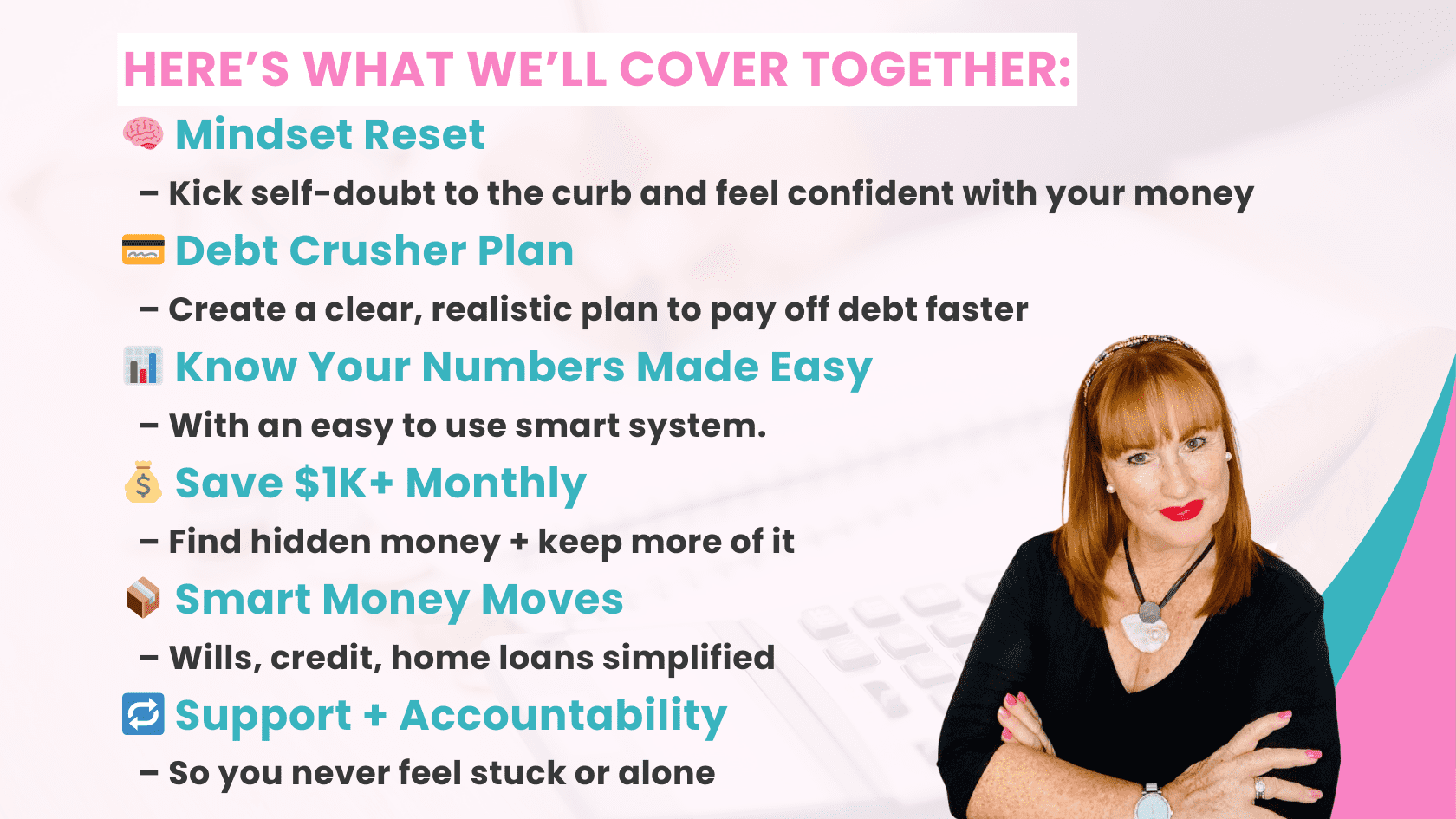
Inside the Membership we don’t just talk about emergency funds – we build the whole system:
✅  Your Stress Buffer plan (based on your income and expenses)
✅  Automated transfers so saving happens without willpower
✅  Sinking funds so predictable expenses stop feeling like emergencies
✅  Amoney map so your cash flow has structure
✅  Support and guidance so you don’t fall off track

You don’t need to “try harder.” You need the right strategy and ongoing support.

If you’re ready to stop living one unexpected bill away from stress, join the Membership.
Let’s build your emergency fund, get your financial house in order, and help you feel calm with money again for good.

Join The Membership at Financial Management 101

#HowToResetMyMoneyMindset #WhyDoIFeelOutOfControlWithMoney #HowToFeelInControlOfFinances #ResetMoneyMindset2025 #NewYearFinancialMindset #HowToStartFreshWithMoney  emergency fund australia, money management, family savings 
 

Are You Ignoring Your Financial Safety Net? Why Wills & Estate Planning Matter (Even If You’re Young!)

Are You Ignoring Your Financial Safety Net? Why Wills & Estate Planning Matter (Even If You’re Young!)

Alright, friend… it’s time we talk about something that everyone needs, but almost no one wants to deal with.

Wills. Estate Planning. Life insurance.

Did your eyes just glaze over?

Did you suddenly feel an overwhelming urge to click away or scroll to the fun stuff on Instagram?
Stay with me, because this may just be one of the most important money conversations you’ll ever have. Here’s the hard truth:

If you’re ignoring estate planning because you think it’s “only for rich people” or “something I can figure out later,” you’re playing a dangerous game with your financial future, and the people you love most.
In this post, I’m going to:

  • Bust the biggest myths about wills and estate planning.
  • Show you why everyone (yes, even you!) needs a plan.
  • Break down exactly what you need to do – without confusing legal jargon.
  • Help you take simple, meaningful action to protect your future.

And don’t worry, this isn’t going to be dry or boring.

We’re going to make this approachable, empowering, and (dare I say?) a little fun. Because protecting your future should feel like an act of love and self-respect, not something you dread.

? Myth #1: “Estate Planning Is Only for Rich People”

Let’s start here, because this myth is everywhere. When most people hear the phrase “estate planning,” they picture wealthy people with sprawling mansions, yachts, and family fortunes that need protecting. But here’s the truth: If you own anything – even a car, a bank account, or a pet – you have an estate.

Estate planning isn’t just for millionaires. It’s for:

  • The young professional with a growing savings account.
  • The parent who wants to protect their kids.
  • The small business owner with assets tied to their company.
  • The renter with a car loan and a retirement fund.

If you have money, possessions, dependents, or even digital assets – estate planning applies to you.

If you own anything - even a car, a bank account, or a pet - you have an estate.

? Why Avoiding Estate Planning Could Cost You (Big Time)

I get it – thinking about wills, death, and “what ifs” isn’t exactly a fun Friday night activity. But here’s the thing… Avoiding estate planning doesn’t make it go away. It just creates more chaos for the people you care about most. Without a will or estate plan in place:

  • The courts decide who gets your assets – and it may not align with your wishes.
  • Your loved ones could be tied up in legal battles for months (or even years).
  • Minor children could end up with a guardian chosen by the court – not you.
  • Your hard-earned money could get eaten up by legal fees, taxes, or other costs.

In short, not planning can create stress, delays, and heartache at the worst possible time.

But when you take just a little time to set up your financial safety net? You give your loved ones clarity, protection, and peace of mind.

? “But I’m Too Young for a Will!”

Another common myth? Thinking you’re too young to need a will. Here’s a little truth bomb:

Wills aren’t about age – they’re about responsibility.

You may not think you need one yet, but ask yourself:

  • Do you have savings, retirement accounts, or life insurance?
  • Do you have pets who rely on you?
  • Do you own a car, home, or business?
  • Do you have people who depend on your income?
  • Do you have strong opinions about where your money should go if something happens to you?

If you answered yes to any of those, it’s time to start planning. Remember—estate planning isn’t about expecting the worst. It’s about being prepared for whatever life throws your way.

✨ Estate Planning: It’s Not Just About Death – It’s About Life, Too!

One of the most overlooked parts of estate planning? It’s not just about what happens after you’re gone. It also protects you while you’re alive, especially if you ever:

  • Become seriously ill.
  • Get injured and can’t manage your finances or healthcare decisions.

Your estate plan can include documents like:

  • Power of Attorney: Designating someone you trust to manage your finances if you can’t.
  • Healthcare Directive: Outlining your wishes for medical treatment and end-of-life care.
  • Guardianship Designations: Naming who will care for your minor children if you’re unable to.

These documents ensure your voice is heard – no matter what.

? What’s Actually Included in a Basic Estate Plan?

Let’s strip away the legal jargon and break this down simply. Here’s what most people need in their estate plan:

1. A Will

This legal document spells out:

  • Who will inherit your assets (money, property, belongings, etc.).
  • Who will take care of your children or dependents (if applicable).
  • Who will manage your estate (called an executor)

What To Include in A Basic Estate Plan

2. Power of Attorney (POA)

This gives someone legal authority to:

  • Handle your finances if you’re incapacitated.
  • Make decisions on your behalf if you can’t.

3. Healthcare Directive (Living Will)

This outlines your medical wishes if you’re unable to communicate them.

4. Beneficiary Designations

Certain accounts (like life insurance, retirement accounts, and some bank accounts) allow you to name a beneficiary directly. These override your will, so it’s crucial to keep them updated.

5. Guardianship Designations (If Applicable)

If you have minor children, this document names who you want to raise them if you’re unable to.

Bonus: Trusts (Optional for Some)

While not necessary for everyone, trusts can:

  • Help avoid probate (the legal process of validating a will).
  • Provide additional control over how and when assets are distributed.
  • Offer potential tax benefits.

? How to Get Started with Estate Planning (Without Feeling Overwhelmed)

Deep breath – this doesn’t have to be complicated! Here’s how to start, step by step:

Step 1: Take Inventory

List all your:

  • Bank accounts
  • Retirement accounts
  • Investments
  • Properties
  • Vehicles
  • Insurance policies
  • Personal belongings of high value
  • Digital assets (crypto, social media, etc.)

Step 2: Clarify Your Wishes

Think about:

  • Who should inherit your assets?
  • Who do you trust to handle your finances and healthcare if needed?
  • Who would you want to care for your kids or pets?
  • Are there any charitable causes you’d like to support?

Step 3: Get Legal Help (If Needed)

While you can create simple wills online for a low cost, it’s often wise to consult an estate attorney, especially if:

  • You have significant assets.
  • You own a business.
  • You have a blended family or complex situation.

Step 4: Communicate Your Plan

This is the step most people skip, but it’s essential! Let your loved ones know:

  • That you’ve created an estate plan.
  • Where they can find the documents.
  • Who has been designated for certain roles.

Transparency now avoids confusion later.

Step 5: Review & Update Regularly

Life changes – your estate plan should too. Revisit your documents anytime you:

  • Get married or divorced.
  • Have children.
  • Move to a new state (laws vary).
  • Experience major financial changes.

? But What If You Don’t Have Much to Leave Behind?

Here’s a powerful truth: Estate planning isn’t just about leaving behind money – it’s about leaving behind clarity. Even if your financial picture feels “small” right now, your loved ones will still need to:

  • Handle your debts and bills.
  • Access your accounts.
  • Close out your digital presence.
  • Make healthcare decisions if needed.

Having a clear plan ensures they can do so smoothly. Plus, it sends a strong message: “I respect myself and the people I care about enough to plan ahead.”

? Estate Planning = Empowerment, Not Fear

I get it – this can all feel heavy. But here’s how I want you to reframe it:

Estate planning isn’t about preparing for doom and gloom.

It’s about:

  • Taking ownership of your life.
  • Protecting your family.
  • Making your wishes known.
  • Creating peace of mind, for you and for those you love.

It’s one of the most profound acts of love and responsibility you can make.

? How This Connects to Your Financial Breakthrough

In my Your Financial Freedom Breakthrough™ – 90 Day Money Makeover program, we don’t just focus on day-to-day money tasks like budgeting and debt. We go deeper, because true financial empowerment covers everything. That includes:

  • Building your savings.
  • Tackling your debt.
  • Creating an intentional spending plan.
  • AND making sure your financial house is in order with estate planning.

Most programs skip this step, but I refuse to. Why? Because I’ve seen firsthand how having a financial safety net changes lives.

In the program, you’ll:

  • Learn exactly what legal documents you need.
  • Get simple checklists to help you start (even if you’re a total beginner).
  • Be guided through tough but important questions with compassion and clarity.

It’s all about making this process approachable, doable, and even empowering.

? Ready to Take Action? (Mini Challenge!)

Let’s get you started today with a bite-sized action step.

Estate Planning Mini Challenge:

Make a list of ALL your current accounts and assets. Check the beneficiaries on your bank accounts and retirement funds. Update them if needed.

Choose ONE document to tackle this month:

  • Will
  • Power of Attorney
  • Healthcare Directive

Start with the easiest one for you. This tiny step will start creating massive peace of mind, and it’s easier than you think.

? Final Thoughts: Your Legacy Starts Now

Here’s what I want you to remember: Estate planning isn’t just for “older” or “wealthy” people – it’s for everyone who wants to protect their future.

You don’t need to do it all at once, but starting somewhere is powerful. This isn’t about fear – it’s about empowerment, peace of mind, and love.

And if you’re ready to take this even further to finally build a money plan that covers everything from budgeting to wills and beyond, get ready. My Your Financial Freedom Breakthrough™ – 90 Day Money Makeover opens on September 10th, and it’s designed to help you:

  • Create lasting financial change.
  • Build a money system that works for your life.
  • Feel empowered, organised, and confident with your finances – once and for all.

You’ve got this, and I’m cheering you on every step of the way.

Your Financial Freedom Breakthrough™
Your Financial Freedom Breakthrough™ - Scope