
How Can I Reset My Money Mindset This Year and Finally Feel in Control of My Finances?

How Can I Reset My Money Mindset This Year and Finally Feel in Control of My Finances?

It’s Not Just About the Numbers – It’s About Your Mindset

Look, you can have the best spreadsheet in the world…

You can download all the budget apps, cut back on coffee, and cancel every subscription.

But if your money mindset hasn’t shifted? You’ll still feel stuck, overwhelmed, or like “you’re just not good with money.”

Let’s fix that because 2026 is the year we stop dragging last year’s money baggage into our future.

This blog is your ultimate guide to resetting your mindset, clearing out old financial beliefs, and building a powerful, positive relationship with money.

And yes – it’s fun, it’s doable, and it’s way more effective than another boring budget.

Let’s go.

What Even Is a Money Mindset?

Your money mindset is the collection of beliefs, emotions, and thoughts you have about money. It’s your personal “money story” – the internal script you repeat (often subconsciously) about earning, saving, spending, and wealth.

Some of it comes from your childhood, your past experiences, or society’s weird money rules. And here’s the wild part: It influences every single money decision you make.

Your mindset determines whether you:

  • Save confidently or hoard out of fear
  • Ask for more money or shrink your value
  • Budget with ease or avoid your bank balance like it’s haunted

Signs You Might Need a Money Mindset Reset

?‍♀️ You feel anxious or guilty every time you spend money
? You avoid looking at your bank account or credit card
?‍♂️ You say things like “I’m just bad with money” or “I’ll never get ahead”
?‍♀️ You feel stuck in a paycheck-to-paycheck cycle, even when your income grows

If that sounds like you, it doesn’t mean you’re broken – it means it’s time to reprogram your financial brain.

Step 1: Identify the Old Money Stories Holding You Back

Before you can shift your mindset, you need to see what you’re working with.

Ask yourself:

  • What did I learn about money growing up?
  • What do I believe about wealthy people?
  • When I think about money, do I feel free or fearful?

Some common limiting beliefs:

  • “There’s never enough money.”
  • “Money is hard to manage.”
  • “I’m not good with numbers.”
  • “More money means more stress.”

? None of these are facts. They’re just beliefs. And beliefs can change.

Step 2: Choose Empowering New Money Beliefs

You get to write a new story this year. Start by replacing the old thoughts with intentional, positive ones:

Instead of: “I’m bad with money” → Say: “I’m learning how to manage my money powerfully.”
Instead of: “I’ll never get ahead” → Say: “Every dollar I manage well moves me forward.”
Instead of: “Money is stressful” → Say: “Money is a tool I’m learning to use with confidence.”

✨ Tip: Write your new beliefs down. Post them on your mirror. Make them your phone wallpaper. Say them out loud. Train your brain to believe better.

Step 3: Connect Your Money to What You Actually Value

Ask yourself:

  • What do I want money to do for me this year?
  • What do I value most – freedom? stability? generosity? joy?
  • How can I align my spending and saving with those values?

Example: 

If you value peace of mind, create a savings plan.
If you value freedom, reduce debt.
If you value fun, build in guilt-free spending money.

Money doesn’t just serve numbers – it should serve your life.

Money doesn’t just serve numbers - it should serve your life.

Step 4: Make Mindset Work Part of Your Routine

You don’t go to the gym once and expect abs, right?
Same with your mindset. It takes repetition.

Here’s a weekly reset routine you can follow:

? Money Mindset Reset (10 Minutes):

  • Review your thoughts from the week – what came up around money?
  • Journal one thing you’re proud of financially
  • Write or say one new belief out loud
  • Visualise yourself succeeding with money

? Do this every Sunday before your weekly budget check-in and you’ll be unstoppable.

Step 5: Surround Yourself With New Financial Energy

If you want to upgrade your mindset, you need to upgrade your environment.

That might look like:

  • Listening to empowering money podcasts
  • Following financial educators who speak your language (hello ? yes me ?)
  • Talking about money with friends who are also growing
  • Hiring a coach who helps you reframe, reset, and rise (hello ? yes me again ?)

You can’t change your money mindset in isolation. That’s why I created my Financial Muscle Coaching Membership.  It’s where financial growth meets real community and support.
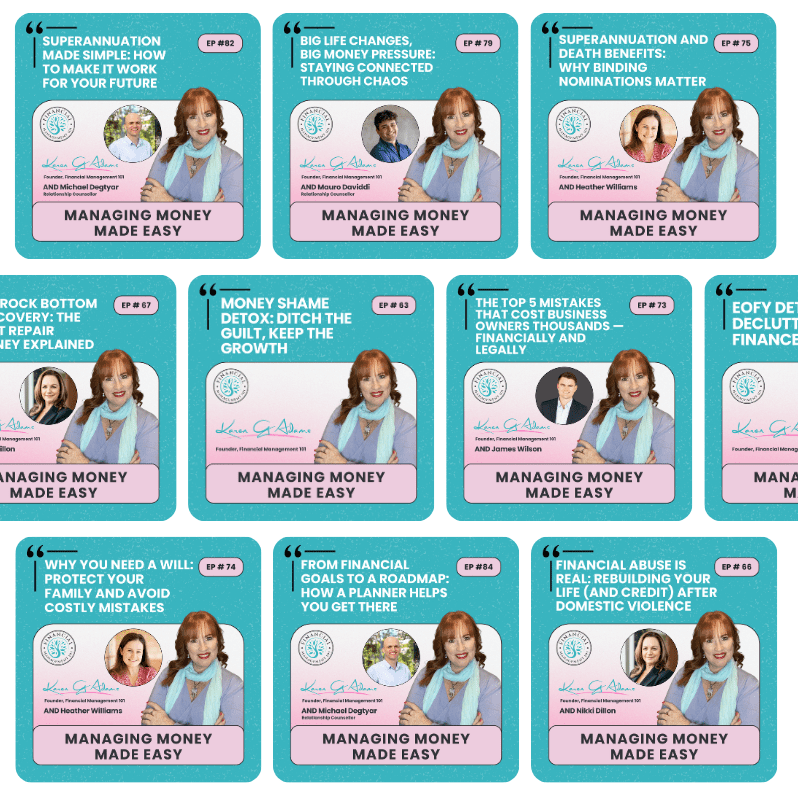
Listen to empowering money podcasts like Managing Money Made Easy

Step 6: Replace Shame With Curiosity

When things go “wrong”  you overspend, forget a bill, or avoid a budget – don’t spiral into shame. Instead, ask:

  • What triggered this?
  • What do I need right now – support, structure, or space?
  • What can I do differently next time?

Every financial hiccup is just data. Don’t let one moment of messiness define your entire money story.

You’re allowed to be a work in progress and a success story at the same time.

Step 7: Set Mindset-Based Goals for the Year

Let’s skip the boring “save more, spend less” vibe.

Try these instead:

  • “This year, I’m building my financial self-trust.”
  • “This year, I’m proving I can stick to one habit consistently.”
  • “This year, I’m learning to enjoy managing my money.”

Then break that into monthly goals:
✅ January: Track every dollar
✅ February: Create a spending plan aligned to my values
✅ March: Build an emergency fund of $300

Momentum creates confidence and mindset fuels momentum.

Final Thoughts: You Can’t Budget Your Way Out of a Scarcity Mindset

If you’re stuck in fear, guilt, or shame around money, no spreadsheet will save you. You have to go deeper. And you have to believe that a new relationship with money is possible for you.

Because it is.

You are not bad with money.
You are not too far behind.
You are not stuck – you’re just getting started.

And when you build a strong, positive money mindset? Everything else gets easier.

Let’s build that mindset muscle together.

? Join Financial Muscle Coaching

If you’re ready to change your money mindset, build real financial confidence, and create a life that feels good – not just looks good on paper – I’ve got you.

Join Financial Muscle Coaching – my coaching community where we:
✅ Rewrite limiting money stories
✅ Build strong, sustainable habits
✅ Create aligned goals you actually want to follow

This isn’t just budgeting. This is mindset, motivation, and muscle – built week by week, with me in your corner.

Your money mindset reset starts here. Let’s go. ?
Join Financial Muscle Coaching Now

#HowToResetMyMoneyMindset #WhyDoIFeelOutOfControlWithMoney #HowToFeelInControlOfFinances #ResetMoneyMindset2025 #NewYearFinancialMindset #HowToStartFreshWithMoney #MindsetShiftForMoney #RebuildMoneyConfidence #WhatIsMoneyMindset #MoneyMindsetTransformation #MoneyMindset #MoneyConfidence #FinancialReset #MoneyHealing #FinancialEmpowerment #AbundanceMindset #WealthMindset #MoneyCoach #MoneyGoals2025 #FinancialMuscle

Mind Over Money: How to Rewrite Your Financial Story & Build a Breakthrough Mindset

Mind Over Money: How to Rewrite Your Financial Story & Build a Breakthrough Mindset

Let’s start with the truth:

You can have the perfect budget, a great-paying job, even a savings plan, and still feel stuck financially.

Why? Because if your mindset doesn’t change, your money won’t either.

In this blog, we’re going to unpack:

  • The power of mindset in creating real financial change
  • How money stories are formed (and how to rewrite them)
  • Common mindset blocks that keep people stuck
  • Simple tools to build a breakthrough mindset
  • How this fits into your journey toward financial freedom

Let’s dive in!

? What Is a Money Mindset (and Why Should You Care)?

Your money mindset is your core belief system around money. It shapes how you:

  • Spend
  • Save
  • Earn
  • Invest
  • React in financial stress

It’s the voice in your head that says:

  • “I’m just not good with money.”
  • “Money always slips through my fingers.”
  • “I have to work hard to survive.”

Or, on the flip side:

  • “I’m in control of my finances.”
  • “I know how to make money work for me.”
  • “Wealth is available to me.”

The difference? Mindset.

This isn’t wishful thinking, this is neuroscience and behavioural psychology. What you believe impacts how you behave. And how you behave impacts your bank account.

? Where Do These Beliefs Come From?

Most of our money beliefs are formed before age 7.

You may have grown up hearing:

  • “Money doesn’t grow on trees.”
  • “We can’t afford that.”
  • “Rich people are greedy.”

Without realising it, those phrases became part of your internal money script – even if they don’t serve you now.

Other money stories come from:

  • Your parents’ relationship with money
  • Cultural or community influences
  • Early financial trauma (like debt, bankruptcy, poverty)

Good news? You can rewrite the script.

? Common Money Mindset Blocks (And How They Show Up)

If you’ve ever thought:

  • “As soon as I get ahead, something always knocks me back.”
  • “I don’t deserve to be wealthy.”
  • “I feel anxious just opening my banking app,”

…you’re not alone.

Here are 5 of the most common mindset blocks we see:

1. Scarcity Thinking

The belief that there’s never enough (time, money, opportunities). This leads to fear-based decisions and self-sabotage.

2. Imposter Syndrome

Feeling like you’re not smart or “good enough” to manage money well. You might under-earn or avoid taking risks.

3. Fear of Success

It sounds weird, but many fear what will change if they actually become successful.

4. Guilt Around Wealth

Especially common if you grew up in struggle or were taught that money = greed.

5. Money Avoidance

This shows up as procrastination, not checking accounts, or avoiding financial conversations.

Getting Out of Debt Starts in Your Mind

The Power of Rewriting Your Financial Story

Here’s the deal: your current money story isn’t your final chapter.

You can shift from:

  • “I’ll always be in debt” → “I’m learning how to manage and reduce my debt.”
  • “I’m terrible with money” → “I’m becoming more financially confident every day.”

Just like you wouldn’t expect physical results without working out, you can’t expect financial change without working on your mindset.

? Simple Tools to Strengthen Your Money Mindset

1. Awareness is Power

Start by journaling or reflecting on your early money memories. What did you hear, see, or feel growing up?

2. Affirmations That Stick

Affirmations are powerful when they’re practiced consistently. Try these:

  • “I am safe and in control of my finances.”
  • “Every dollar I spend and save has purpose.”
  • “I deserve financial abundance.”

3. Surround Yourself With Growth

Follow financial educators, podcasts, and communities that reinforce positive beliefs about money.

4. Set Micro-Goals

Progress builds confidence. Start with tiny, achievable wins – like tracking your expenses or saving $10/week.

5. Visualise the Outcome

Spend 2 minutes a day visualising what your financially free life looks like. Your brain responds powerfully to visualisation.

6. Join a Supportive Program

A structured environment with accountability and coaching helps speed up your mindset shift.

That’s exactly what we provide in the Financial Freedom Breakthrough Program, launching this September.

? The Role of Mindset in the Financial Freedom Diagram

Let’s circle back to the diagram from Financial Management 101.

If you’re stuck at the bottom (overwhelmed, struggling, surviving), it’s not just a numbers issue.

It’s a belief issue.

Mindset is the foundation that supports every other level:

  • Budgeting
  • Saving
  • Debt reduction
  • Credit health
  • Wealth building
  • Estate planning

With the right mindset, these tools feel doable. Without it, even the best strategy will collapse.

? Real Talk: You Are NOT Broken

Maybe you’ve made mistakes. Maybe you’ve felt stuck for years. Maybe you’re scared to even start.

That doesn’t make you broken – it makes you human.

Your past doesn’t define you. Your future is still yours to shape.

And the first step? Believing you can.

Working on your money mindset while paying off debt is so important.

? Ready to Rewrite Your Story?

Here’s how to begin:

  1. Download our Free Money Mindset Workbook (coming soon)
  2. Join the waitlist for the Financial Freedom Breakthrough Program
  3. Share this post with someone who needs to hear it today

    ? Final Thoughts

    Money mindset isn’t fluff, it’s the fuel behind every breakthrough.

    If you want a different result, you need a different belief.

    You’re not meant to just survive. You’re meant to thrive.

    Let’s start believing in that version of you, and take action to bring it to life.

    Your Financial Freedom Breakthrough™
    What are Some Smart Ways to Handle Unexpected Financial Emergencies?

    What are Some Smart Ways to Handle Unexpected Financial Emergencies?

    Handling unexpected financial emergencies requires a mix of planning, resourcefulness, and informed decision-making. Here are some smart ways to manage such situations:

    EMERGENCY FUND

    The best strategy is to have an emergency fund. This should ideally cover 3-6 months of living expenses and be easily accessible.

    BUDGET ADJUSTMENTS

    Review and adjust your budget to cut non-essential expenses. Temporarily reducing discretionary spending can free up funds.

    LIQUIDATE NON-ESSENTIAL ITEMS

    Consider selling items you don’t need. This could include electronics, jewellery, or other valuables.

    Emergency Fund

    Emergency funds create a financial buffer that can keep you afloat in a time of need without having to rely on credit cards or high-interest loans.

    USE OF CREDIT WISELY

    If you have access to credit lines or credit cards, use them wisely. Ensure that you understand the terms and interest rates to avoid worsening your financial situation.

    PAYMENT PLANS

    Contact creditors or service providers to negotiate payment plans or extensions. Many are willing to work with you during hardships.

    INSURANCE CLAIMS

    If your emergency is due to events like accidents, natural disasters, or health issues, check if your insurance policies can provide financial relief.

    GOVERNMENT ASSISTANCE AND COMMUNITY RESOURCES

    Explore if you’re eligible for any government relief programs or community assistance during your crisis.

    SIDE JOBS OR FREELANCING

    Consider taking on temporary work or freelancing to generate additional income.

    FAMILY AND FRIENDS

    As a last resort, consider borrowing from family or friends. Be sure to treat it as a formal loan and communicate clearly about repayment terms.

    FINANCIAL COUNSELLING

    Seek advice from a financial counsellor or advisor. They can offer personalised advice and help you plan for the future.

    INVEST IN EDUCATION AND SKILL DEVELOPMENT

    In the long term, improving your skills can lead to better job opportunities and higher income, making you more resilient to financial emergencies.

    REGULAR FINANCIAL REVIEWS

    Regularly review your financial situation to adjust your savings and spending, keeping potential emergencies in mind.

    Remember, personal finance is personal. Your priorities and goals will dictate how you manage your spending, so tailor these steps to fit your unique situation.

    Invest in Education and Skill Development

    Learn the fundamental concepts of how budgeting and saving are important to your financial well-being. Registration is now open for the course: Mastering Budget and Saving Techniques. This is a hands-on course with me guiding you on how to budget, track and look at managing your money like a pro.

    ENTER THE CODE WORD: BUDGETING2024 to get $100 off this course.

    Mastering Budget and Saving Techniques
    How Can I Improve My Credit Score?

    How Can I Improve My Credit Score?

    Your credit report and score plays a huge role not only with future borrowing, but sometimes with future employment opportunities, if you’re applying for jobs that look at handling money and finances.

    How Can I Improve My Credit Score?

    Improving your credit score is an important step towards financial stability and can be achieved through several key practices:

    PAY YOUR BILLS ON TIME

    Late payments can significantly impact your credit score. Ensure that all your bills, including utilities, credit cards, and loans, are paid on time. Setting up automatic payments can be helpful to avoid missing due dates.

    KEEP CREDIT CARD BALANCES LOW

    High credit card balances can negatively affect your credit score. Aim to keep your credit utilisation ratio (the amount of credit you use compared to your credit limit) below 30%. Paying down existing balances is crucial to achieving this.

    AVOID OPENING TOO MANY NEW ACCOUNTS AT ONCE

    Each time you apply for credit, a hard inquiry is made, which can slightly lower your credit score. Opening several new accounts in a short period of time can compound this effect. It’s better to apply for new credit sparingly.

    CHECK YOUR CREDIT REPORTS REGULARLY

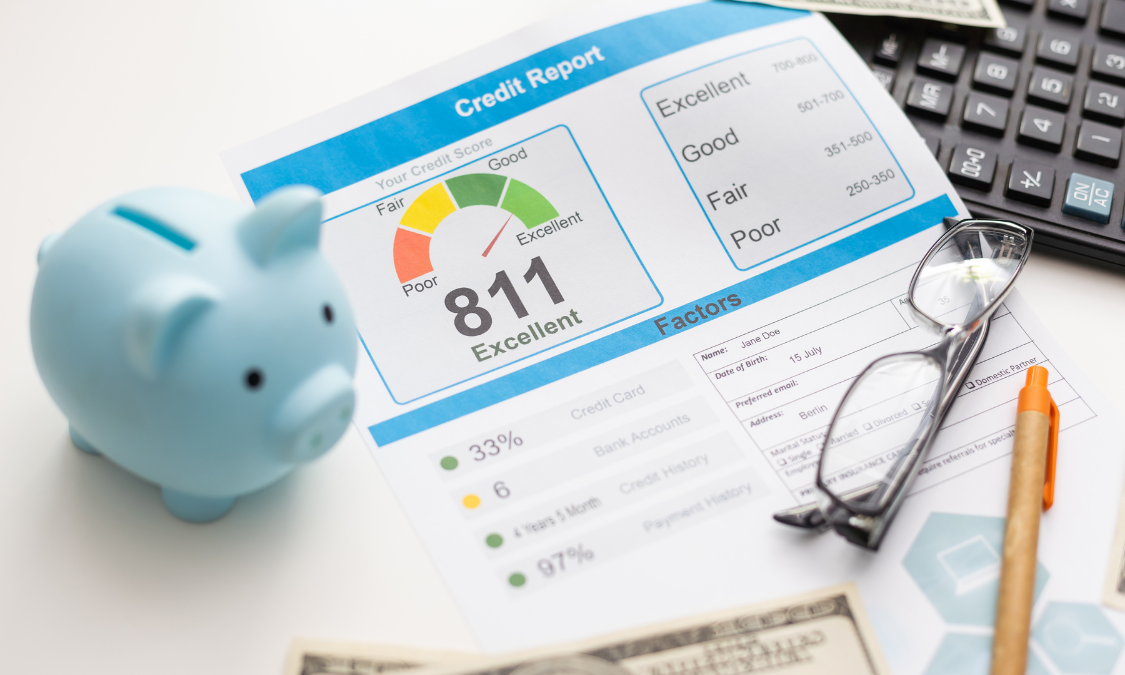
    Errors on your credit report can harm your score. Regularly checking your credit reports allows you to spot and dispute any inaccuracies. You are entitled to a free credit report from each of the three major credit bureaus (Equifax, Experian, and TransUnion) every year.

    MAINTAIN A MIX OF CREDIT TYPES

    If possible, have a mix of different types of credit, such as revolving credit (like credit cards) and installment loans (like auto or student loans). This can positively impact your credit score, but only take on debt that you can manage.

    Check Your Credit Reports Regularly

    KEEP OLD ACCOUNTS OPEN

    The length of your credit history affects your score. Keeping older accounts open, even if you don’t use them, can be beneficial. However, ensure they don’t have high fees.

    LIMIT HARD INQUIRIES

    When you apply for credit, a hard inquiry is recorded on your credit report, which can lower your score. Be cautious about applying for new credit unless necessary.

    NEGOTIATE WITH CREDITORS 

    If you’re struggling with debt, try negotiating with creditors. Some may offer solutions, like lower interest rates or payment plans.

    SEEK PROFESSIONAL HELP IF NEEDED

    If you’re overwhelmed, consider consulting a credit counselor. They can provide personalised advice and help you develop a plan to improve your credit.

    Remember, improving your credit score is a gradual process. It requires consistent effort and financial discipline. Avoid quick-fix solutions, as they are often ineffective and can lead to further financial troubles.

    Looking to get some knowledge and skills to effectively read, interpret, and manage your credit report? Join the course “Mastering Your Credit Report – A Comprehensive Guide,” FREE for a limited time. HURRY, slots are filling up fast!

    Mastering Your Credit Report - A Comprehensive Guide