
How Can I Reset My Money Mindset This Year and Finally Feel in Control of My Finances?
It’s Not Just About the Numbers – It’s About Your Mindset
Look, you can have the best spreadsheet in the world…
You can download all the budget apps, cut back on coffee, and cancel every subscription.
But if your money mindset hasn’t shifted? You’ll still feel stuck, overwhelmed, or like “you’re just not good with money.”
Let’s fix that because 2026 is the year we stop dragging last year’s money baggage into our future.
This blog is your ultimate guide to resetting your mindset, clearing out old financial beliefs, and building a powerful, positive relationship with money.
And yes – it’s fun, it’s doable, and it’s way more effective than another boring budget.
Let’s go.
What Even Is a Money Mindset?
Your money mindset is the collection of beliefs, emotions, and thoughts you have about money. It’s your personal “money story” – the internal script you repeat (often subconsciously) about earning, saving, spending, and wealth.
Some of it comes from your childhood, your past experiences, or society’s weird money rules. And here’s the wild part: It influences every single money decision you make.
Your mindset determines whether you:
- Save confidently or hoard out of fear
- Ask for more money or shrink your value
- Budget with ease or avoid your bank balance like it’s haunted
Signs You Might Need a Money Mindset Reset
?♀️ You feel anxious or guilty every time you spend money
? You avoid looking at your bank account or credit card
?♂️ You say things like “I’m just bad with money” or “I’ll never get ahead”
?♀️ You feel stuck in a paycheck-to-paycheck cycle, even when your income grows
If that sounds like you, it doesn’t mean you’re broken – it means it’s time to reprogram your financial brain.
Step 1: Identify the Old Money Stories Holding You Back
Before you can shift your mindset, you need to see what you’re working with.
Ask yourself:
- What did I learn about money growing up?
- What do I believe about wealthy people?
- When I think about money, do I feel free or fearful?
Some common limiting beliefs:
- “There’s never enough money.”
- “Money is hard to manage.”
- “I’m not good with numbers.”
- “More money means more stress.”
? None of these are facts. They’re just beliefs. And beliefs can change.
Step 2: Choose Empowering New Money Beliefs
You get to write a new story this year. Start by replacing the old thoughts with intentional, positive ones:
Instead of: “I’m bad with money” → Say: “I’m learning how to manage my money powerfully.”
Instead of: “I’ll never get ahead” → Say: “Every dollar I manage well moves me forward.”
Instead of: “Money is stressful” → Say: “Money is a tool I’m learning to use with confidence.”
✨ Tip: Write your new beliefs down. Post them on your mirror. Make them your phone wallpaper. Say them out loud. Train your brain to believe better.
Step 3: Connect Your Money to What You Actually Value
Ask yourself:
- What do I want money to do for me this year?
- What do I value most – freedom? stability? generosity? joy?
- How can I align my spending and saving with those values?
Example:
If you value peace of mind, create a savings plan.
If you value freedom, reduce debt.
If you value fun, build in guilt-free spending money.
Money doesn’t just serve numbers – it should serve your life.

Step 4: Make Mindset Work Part of Your Routine
You don’t go to the gym once and expect abs, right?
Same with your mindset. It takes repetition.
Here’s a weekly reset routine you can follow:
? Money Mindset Reset (10 Minutes):
- Review your thoughts from the week – what came up around money?
- Journal one thing you’re proud of financially
- Write or say one new belief out loud
- Visualise yourself succeeding with money
? Do this every Sunday before your weekly budget check-in and you’ll be unstoppable.
Step 5: Surround Yourself With New Financial Energy
If you want to upgrade your mindset, you need to upgrade your environment.
That might look like:
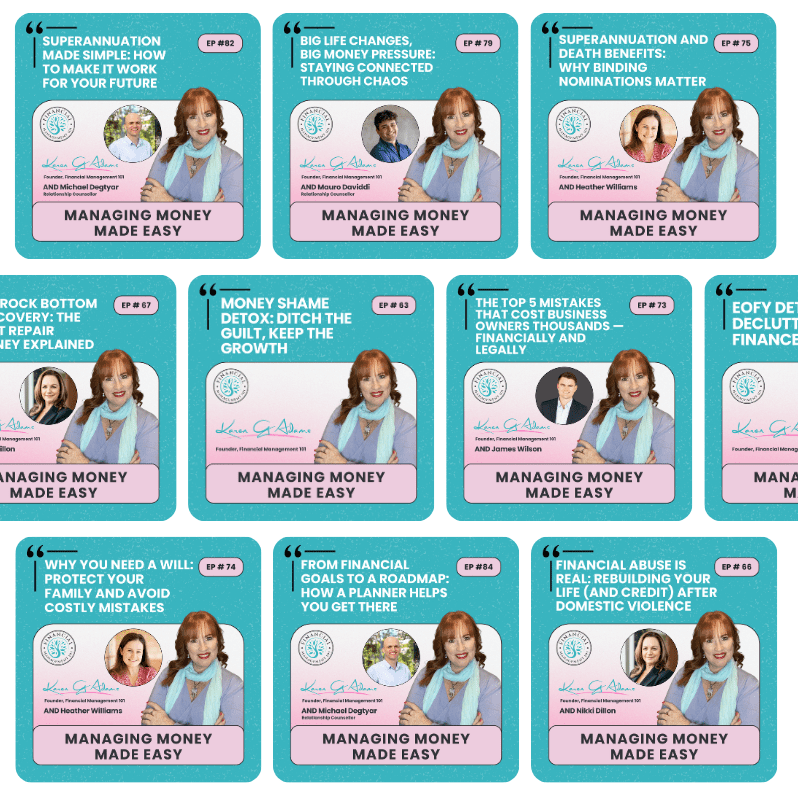
- Listening to empowering money podcasts
- Following financial educators who speak your language (hello ? yes me ?)
- Talking about money with friends who are also growing
- Hiring a coach who helps you reframe, reset, and rise (hello ? yes me again ?)
You can’t change your money mindset in isolation. That’s why I created my Financial Muscle Coaching Membership. It’s where financial growth meets real community and support.
Step 6: Replace Shame With Curiosity
When things go “wrong” you overspend, forget a bill, or avoid a budget – don’t spiral into shame. Instead, ask:
- What triggered this?
- What do I need right now – support, structure, or space?
- What can I do differently next time?
Every financial hiccup is just data. Don’t let one moment of messiness define your entire money story.
You’re allowed to be a work in progress and a success story at the same time.
Step 7: Set Mindset-Based Goals for the Year
Let’s skip the boring “save more, spend less” vibe.
Try these instead:
- “This year, I’m building my financial self-trust.”
- “This year, I’m proving I can stick to one habit consistently.”
- “This year, I’m learning to enjoy managing my money.”
Then break that into monthly goals:
✅ January: Track every dollar
✅ February: Create a spending plan aligned to my values
✅ March: Build an emergency fund of $300
Momentum creates confidence and mindset fuels momentum.
Final Thoughts: You Can’t Budget Your Way Out of a Scarcity Mindset
If you’re stuck in fear, guilt, or shame around money, no spreadsheet will save you. You have to go deeper. And you have to believe that a new relationship with money is possible for you.
Because it is.
You are not bad with money.
You are not too far behind.
You are not stuck – you’re just getting started.
And when you build a strong, positive money mindset? Everything else gets easier.
Let’s build that mindset muscle together.
? Join Financial Muscle Coaching
If you’re ready to change your money mindset, build real financial confidence, and create a life that feels good – not just looks good on paper – I’ve got you.
Join Financial Muscle Coaching – my coaching community where we:
✅ Rewrite limiting money stories
✅ Build strong, sustainable habits
✅ Create aligned goals you actually want to follow
This isn’t just budgeting. This is mindset, motivation, and muscle – built week by week, with me in your corner.
Your money mindset reset starts here. Let’s go. ?