Money Mindfulness: 5 Minutes a Day to Financial Clarity (How to Stop Emotional Spending and Start Feeling Good About Your Finances)

Money Mindfulness: 5 Minutes a Day to Financial Clarity (How to Stop Emotional Spending and Start Feeling Good About Your Finances)

? “I don’t even know where it all went…”

Sound familiar?

You check your bank account and – bam – another $200 gone. You didn’t buy anything major, and yet somehow… the money disappeared.

Chances are, it wasn’t the big purchases that threw you off. It was the mindless spending the “I’ve had a hard day” scroll-n-shop or the “I deserve this” lunch splurge.

We’ve all been there.

But what if you could create a sense of clarity, calm, and control around your finances… in just five minutes a day?

Welcome to the power of money mindfulness.

? What Is Money Mindfulness?

Mindfulness is simply the practice of being present. When applied to money, it means becoming aware of:

  • Why you spend
  • How you feel before and after
  • Whether your actions align with your goals

Mindfulness isn’t about restriction or guilt. It’s about observation and intention.

When you’re financially mindful, you don’t stop spending – you stop spending on autopilot.

? “Mindfulness is the key to making better choices that align with your goals – not your mood.”

? Why We Spend Emotionally (And Don’t Even Know It)

Let’s be honest: Most financial decisions are not logical they’re emotional.

Here’s what emotional spending often looks like:

  • Stress shopping after a long day
  • Treating yourself out of boredom or frustration
  • Buying something just because it was on sale
  • Avoiding looking at your accounts because it “feels bad”


These moments aren’t about the money.
They’re about soothing an emotion.

But here’s the problem: The relief is temporary. The guilt lingers. And your financial goals get buried under impulse buys.

?️ How Mindfulness Helps You Take Control

Mindfulness breaks the cycle. When you pause and observe before spending, you give yourself the chance to:

  • Choose consciously instead of reacting emotionally
  • Align your decisions with your long-term goals 
  • Reduce shame and increase self-trust

And guess what? You don’t need an hour of meditation or a financial planner on speed dial.

All it takes is five intentional minutes a day.

Create a monthly payment plan that includes money for fun and savings.

?‍♀️ The 5-Minute Daily Money Ritual (Your Calm in the Chaos)

Here’s a simple yet powerful practice that clients in my Master Your Money program love. You can do this in the morning, at lunch, or before bed. Set a timer if needed.

?️ Step 1: Check In With Yourself

Ask:

  • How do I feel about money today?

  • What emotions am I carrying – stress, avoidance, pride, guilt?

No judgment. Just notice.

? Step 2: Review Yesterday’s Spending

Look at:

  • Where your money went

  • Whether the spending was intentional

  • What felt good vs. what felt regretful

Even if it’s uncomfortable, face it with compassion.

✍️ Step 3: Name a Money Win

Celebrate something:

  • Packed lunch instead of takeaway?

  • Cancelled a subscription?

  • Said “no” to impulse buying?

Big or small – wins compound.

? Step 4: Reconnect to Your Financial Goal

Write down one short-term goal:

  • “Save $100 this month”

  • “Check my account balance daily”

  • “Stick to my grocery budget this week”

This builds consistency and clarity.

? Step 5: Affirm Your Financial Identity

Say your affirmations out loud (just one is fine):

“I am mindful with money.”
“I trust myself to make wise financial choices.”
“I am calm, confident, and in control.”

? What Clients Say About This Practice:

? “That 5 minutes changed everything. I used to avoid my finances, now I check in like I would with a friend.” – Nadia, 36

? “I didn’t realise how emotionally charged money was for me. Mindfulness helped me break the shame loop.” – Josh, 41

? Mindfulness = Better Habits That Stick

When you’re financially mindful, you naturally:

  • Spend less impulsively
  • Save more consistently
  • Make decisions from calm, not chaos
  • Feel good about your money – even before you hit your goals

And here’s the thing: The results aren’t just emotional, they’re practical.

Mindfulness helps you:
✅ Stick to a budget
✅ Pay off debt faster
✅ Avoid financial burnout
✅ Stay on track even when life gets messy

? What Money Mindfulness Is Not

Just to be clear, money mindfulness is not:

  • Never spending on yourself
  • Obsessively checking your bank account
  • Denying your cravings or fun
  • A one-time fix

It’s a daily habit of checking in, aligning your choices, and leading with intention.

✨ Want to Try It? Here’s Your 7-Day Money Mindfulness Challenge

Take five minutes a day and follow this plan:

Day

Focus

Prompt

1

Awareness

How do I feel about money today?

2

Review

What did I spend on yesterday, and how did it feel?

3

Win

What money decision am I proud of this week?

4

Trigger Check

When do I usually overspend? (Time of day, emotion?)

5

Intentionality

What can I do today to align with my goals?

6

Gratitude

What am I grateful for in my financial life right now?

7

Celebration

How have I grown this week in money awareness?

By Day 7, you’ll feel clearer, calmer, and more in control.

? Ready to Build a Money Mindset That Lasts?

If you’ve tried budgeting apps and spreadsheets and still feel stuck, it’s time to try a new approach.

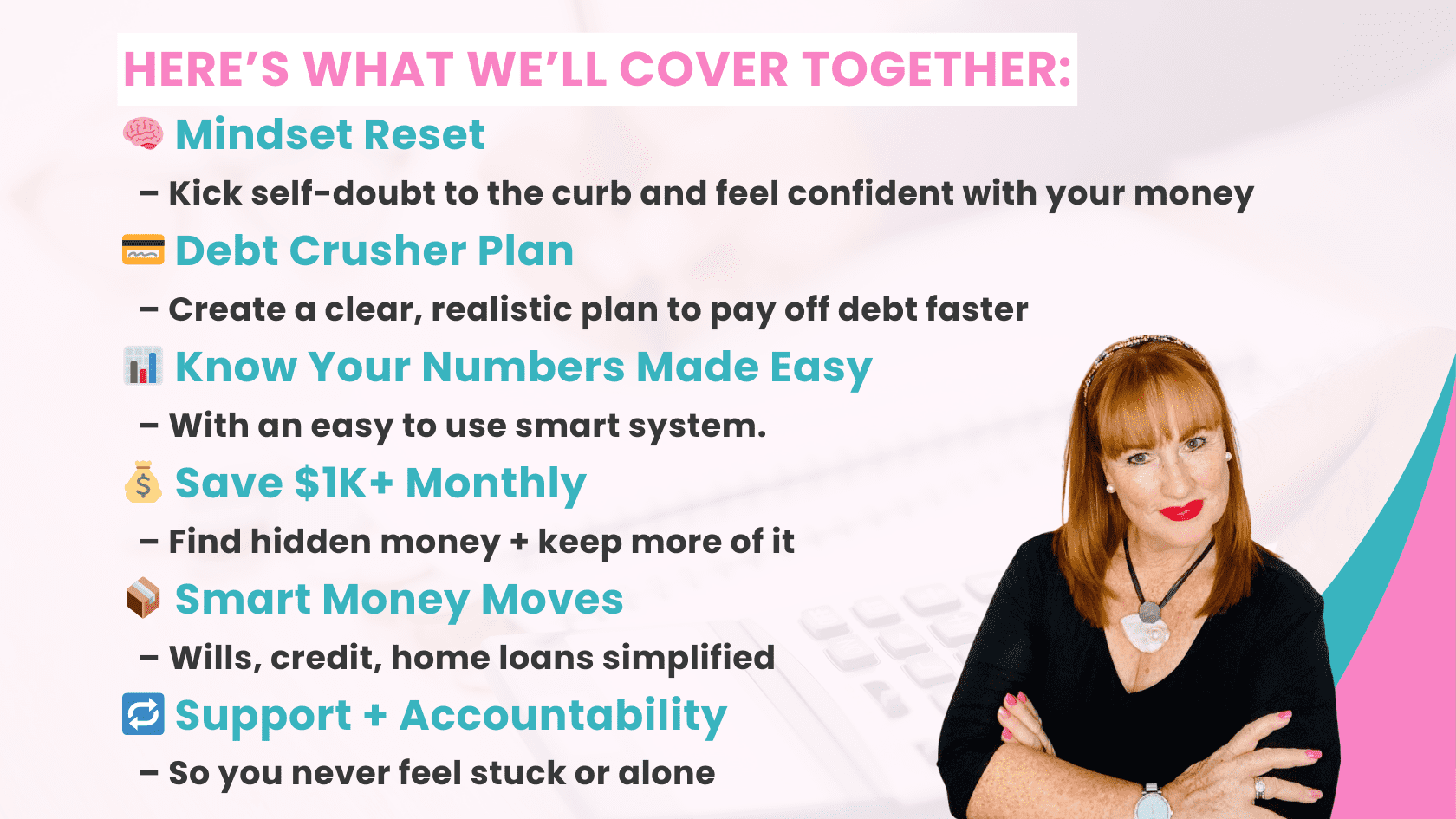
Inside the Master Your Money program, we help you:

  • Practice daily money mindfulness (without the overwhelm) 
  • Create habits that align with your values
  • Rewire emotional triggers around money
  • Feel confident and calm – even when money is tight

This isn’t about obsessing over every dollar.
It’s about building a peaceful, powerful relationship with your money, on your terms.

?‍♀️ “Clarity creates confidence. Confidence creates momentum.”

? Final Thought: It Was Never About the Money

You don’t need to overhaul your entire financial life overnight.
You just need to pause, reflect, and pay attention – for five minutes a day.

Because once you become mindful with money, you stop feeling out of control…
And start building a financial life that feels calm, clear, and totally aligned.
Your Financial Freedom Breakthrough™
Debt Freedom: 3 Simple Shifts That Accelerate Your Payoff Plan (Without Losing Your Mind!)

Debt Freedom: 3 Simple Shifts That Accelerate Your Payoff Plan (Without Losing Your Mind!)

Let’s get honest for a second. Debt… it’s a heavy word, right? For many of us, just hearing it triggers:

  • A knot in the stomach.
  • A wave of shame or regret.
  • That overwhelming thought: “Will I ever get out of this?”

If this sounds familiar, take a deep breath – you are not alone. Whether it’s credit cards, student loans, car payments, or that lingering medical bill, debt can feel like a mountain that just keeps growing. But here’s the truth most people won’t tell you:

Debt freedom isn’t just about paying more toward your balances – it’s about shifting the way you think, act, and plan with your money.

Today, I’m going to walk you through:

  • Why traditional debt payoff advice often backfires.
  • The three powerful mindset shifts that can accelerate your debt payoff (without sucking all the joy out of your life).
  • How your credit score, saving, and debt freedom are more connected than you think.
  • Simple steps you can take right now to start feeling empowered and in control.

And yes, we’ll keep it light, fun, and inspiring, because you deserve to feel good about your money journey, even while tackling debt.

? The Problem with Traditional Debt Advice (Why It Doesn’t Work for Most People)

Let’s start here. If you’ve ever Googled “how to pay off debt fast,” you’ve probably seen some version of this advice:

  • “Cut out all unnecessary spending.”
  • “Stop eating out.”
  • “Work a second (or third) job.”
  • “Sell everything you own.”

And sure… some of these tips can help in extreme situations. But for most people, this kind of advice:

  • Feels impossible to stick with long-term.
  • Creates a cycle of guilt and burnout.
  • Ignores the emotional and psychological side of debt.

Here’s the truth:

Debt isn’t just a numbers problem, it’s a behavior and mindset problem, too. Yes, we need to talk about strategy, but if we skip the emotional side of debt, we’ll never create lasting results.

Getting Out of Debt Starts in Your Mind

Why Getting Out of Debt Starts in Your Mind (Not Just Your Wallet)

Debt can feel like quicksand, but it’s often not just about the math. It’s about:

  • The stories you tell yourself about money.
  • The shame or guilt you carry from past mistakes.
  • The anxiety that makes you want to avoid looking at your accounts.

Think about it:

  • How many times have you avoided checking your credit card balance?
  • How often do you think, “I’ll deal with this later,” when it comes to debt?
  • How many times have you paid off a balance, only to end up back in debt again later?

This isn’t about being “bad” with money – it’s about being human.

We live in a world that encourages overspending, instant gratification, and comparison. Debt happens. But freedom from it? That happens when you combine practical steps with internal shifts.

? The 3 Simple Shifts That Can Speed Up Your Debt Freedom Journey

Let’s dive into the real magic. Here are the three powerful mindset shifts that can help you:

  • Pay off debt faster.
  • Stop the cycle of yo-yo debt.
  • Build financial confidence along the way.

Shift #1: From Shame to Ownership

Here’s the thing about debt: It thrives in secrecy.

The more we hide from it, the more it grows, and the worse we feel. Shame sounds like:

  • “I should have known better.”
  • “I’m terrible with money.”
  • “I’ll never get ahead.”

But here’s the truth:

  • Debt doesn’t define you.
  • Your past mistakes don’t determine your future.
  • You can learn new skills and create different results.

The first step toward debt freedom isn’t cutting expenses, it’s cutting the shame.

Action Step:

  • Write down your total debt, every dollar, every balance.
  • Look at it with neutrality – this is data, not a character flaw.

Say this out loud:

“This is where I am right now. It’s not permanent. I have the power to change it.” This simple shift from shame to ownership changes everything.

Shift #2: From Scarcity to Empowered Planning

Many people approach debt payoff from a place of fear:

“I need to get rid of this ASAP or else!”

“I have to sacrifice everything until I’m debt-free.”

But here’s the problem:

  • Extreme approaches rarely last.
  • Scarcity leads to burnout and yo-yo spending.

Instead, approach debt payoff from a place of empowerment: “I am intentionally choosing where my money goes each month.”

This means:

  • Making a realistic debt payoff plan that fits your actual life.
  • Balancing progress with joy, you don’t have to cut everything you love.
  • Prioritising consistency over speed.

Action Step: Choose a debt payoff method that feels good to you:

  • Debt Snowball: Pay off the smallest balance first for quick wins.
  • Debt Avalanche: Pay off the highest-interest debt first to save money long-term.

Create a monthly payment plan that includes money for fun and savings. This way, you’ll stay motivated—and avoid slipping back into debt later.

Create a monthly payment plan that includes money for fun and savings.

Shift #3: From Avoidance to Proactive Credit Care

Ah, credit scores, the mysterious numbers that somehow rule our financial lives. Many people either obsess over their credit or completely avoid it. But here’s the truth:

  • Your credit score isn’t your enemy, it’s just a tool.
  • You don’t need to obsess over it daily, but ignoring it won’t help either.

Proactive credit care means:

  • Checking your credit report at least once a year (you can do this for free!).
  • Disputing any errors that could be dragging your score down.
  • Making consistent, on-time payments to build positive credit history.
  • Keeping credit utilization low (aim for under 30% of your limits).

Action Step:

  • Go to equifax.com.au and pull your free credit report.
  • Check for errors or suspicious activity.
  • Set up automatic payments for at least the minimum on all debts to protect your score.

When you face your credit head-on, it becomes a tool, not a threat.

? Debt Freedom & Saving: The Power Duo

Here’s something most debt advice misses: Paying off debt without saving at the same time can backfire. Why? Because if you throw every dollar at debt but don’t have any savings, guess what happens the next time life throws a curveball? Yep – you end up right back in debt.

Even while you’re paying off debt, it’s essential to:

  • Build a starter emergency fund (even just $500 to $1,000).
  • Save a little every month, even if it’s $10 or $25.

This small cushion keeps you from relying on credit when unexpected expenses pop up, and they will.

Action Step:

  • Open a separate savings account (nicknamed “Safety Net” if you like!).
  • Set up automatic transfers – even small ones.
  • Celebrate every deposit, no matter how small.

This helps break the cycle of debt for good.

? Why Debt Freedom Is More Emotional Than You Think

Here’s something I see all the time in my coaching work: People think paying off debt will automatically make them feel better.

But here’s the secret:

  • Debt freedom feels amazing, but it also brings up unexpected emotions.
  • Many people feel a strange sense of loss when they finish paying off debt.
  • Others struggle with identity shifts – “Who am I without debt?”
  • And some even self-sabotage and fall back into debt again.

This is why working on your money mindset while paying off debt is so important. It’s not just about the numbers, it’s about your emotional relationship with money, freedom, and self-worth.

Working on your money mindset while paying off debt is so important.

? Your Debt-Free Future Starts with One Step (But It’s Not What You Think)

If you’re feeling overwhelmed by your debt right now, here’s what I want you to know:

You don’t need to:

  • Have a perfect plan.
  • Pay it all off overnight.
  • Deprive yourself to succeed.

You just need to:

  • Get clear on your numbers.
  • Shift your mindset from shame to empowerment.
  • Take consistent, small actions.

And yes – this is exactly why inside my Your Financial Freedom Breakthrough™ – 90 Day Money Makeover program, we don’t just talk about debt payoff tactics. We go deep into:

  • Money mindset shifts that last.
  • Customised debt payoff strategies that work for your real life.
  • Credit confidence – so you’re empowered, not intimidated.
  • Saving alongside debt payoff to build true financial stability.

It’s about creating a debt-free life you love – not one that feels like a punishment. 

? Ready to Take Action? (Mini Challenge!)

Let’s finish this post with a quick action step to help you get started today.

Debt Freedom Mini Challenge:

  1. Write down your current total debt balance – no judgment, just facts.
  2. Choose your preferred payoff method: Snowball (smallest balance first) or Avalanche (highest interest first).
  3. Set a realistic target date for your first major milestone – paying off ONE account.
  4. Automate your minimum payments, plus an extra small amount toward your top-priority debt.
  5. Start a tiny emergency fund – even just $10 this week – to protect your progress.

Take one step at a time, and watch the momentum build.

? Final Thoughts: You’re Closer to Debt Freedom Than You Think

Here’s what I want you to walk away with today: Debt freedom isn’t about punishment – it’s about empowerment. You don’t have to wait to feel good about your money – you can start now, even while in debt. Small, consistent shifts – both practical and emotional – are what create lasting change.

And if you’re ready to take this work deeper – so you can finally break free from debt, grow your savings, and feel peaceful with your money? Your Financial Freedom Breakthrough™ – 90 Day Money Makeover program opens on September 10th. Inside, we’ll tackle:

  • Debt payoff (without shame or extreme restrictions).
  • Credit confidence (in plain English!).
  • Sustainable saving habits.
  • And the deep money mindset work that makes all the difference.

This isn’t just another debt payoff plan, it’s a total transformation for your financial life. Get ready, friend – your next chapter starts soon.

Your Financial Freedom Breakthrough™
Your Financial Freedom Breakthrough™ - Scope
Budgeting Without Deprivation: Why Your Budget Isn’t Working (Yet!)

Budgeting Without Deprivation: Why Your Budget Isn’t Working (Yet!)

Raise your hand if you’ve ever tried to stick to a budget…

…only to find yourself breaking it faster than you can say “unexpected Amazon purchase.”

Yep, I see you. And you’re not alone.

Budgets have gotten a bad rap over the years.

For many people, the word “budget” feels about as appealing as:

  • Giving up your daily coffee runs.
  • Saying “no” to dinners out with friends.
  • Counting every single penny and feeling like you’re constantly falling short.

But here’s the truth nobody talks about:

Your budget isn’t failing because you’re bad with money.

It’s likely failing because it wasn’t built to work for you in the first place. Today, I’m going to show you:

  • Why most budgets backfire (and it has nothing to do with willpower).
  • How to reframe budgeting as a freedom tool – not a punishment.
  • My favorite tips to create a budget that actually sticks (without feeling deprived!).

By the end of this post, you’ll feel empowered to take control of your money in a way that feels personal, realistic, and – dare I say it – fun. Ready? Let’s dive in.

? The Real Reason Most Budgets Fail

Here’s the million-dollar question:

Why do so many budgets start with excitement… but crash and burn within weeks?

Simple:

Most people create budgets from a place of restriction, not intention.

Think about it.

When people sit down to “get serious” about money, they often whip out a budgeting app or spreadsheet and immediately start slashing everything they love:

  • No more takeout.
  • No more fun shopping.
  • No more travel.

It’s like putting your money on a crash diet. And just like a crash diet, it’s unsustainable. You might stick with it for a week or two. Maybe even a month. But eventually, you’ll start to feel suffocated. Deprived. Frustrated.

And then? You rebel.

Suddenly, you’re splurging on things you “shouldn’t” buy, feeling guilty, and thinking, “I just suck at budgeting.”

Sound familiar?

? Why Budgeting Doesn’t Have to Feel Like Deprivation

Here’s the mindset shift that changes everything: Your budget isn’t a punishment. It’s a permission slip.

Let me say that again, louder for the people in the back: Your budget is a tool that gives you permission to spend on what truly matters to you.

Budgeting isn’t about cutting everything out of your life. It’s about:

  • Getting clear on your values.
  • Prioritising what brings you joy and security.
  • Being intentional with every dollar.

It’s the ultimate act of self-respect and self-care. Because when you create a budget that aligns with your goals, you’re telling yourself: “I trust myself with money. I’m creating a life that feels good today and tomorrow.”

    Your budget isn’t a punishment. It’s a permission slip.

    Your budget isn’t a punishment. It’s a permission slip. Your budget is a tool that gives you permission to spend on what truly matters to you.

    ✨ The 3 Most Common Budget Mistakes (And How to Fix Them!)

    Let’s get specific. Here are the biggest budgeting mistakes I see over and over and how you can fix them starting today.

    Mistake #1: You’re Budgeting for a Fantasy, Not Your Real Life

    So many people create their budget based on what they wish their life looked like, not how they actually live. You might be thinking:

    • “I’ll just cut my grocery spending in half.”
    • “I’ll stop eating out completely.”
    • “No more personal spending for the next three months!”

    But here’s the problem:

    • You still have to eat.
    • You still want to enjoy your life.
    • You’re not going to suddenly become a minimalist monk overnight.

    Solution: Budget for your real life, not your fantasy version.

    Ask yourself:

    • What are my non-negotiables? (Coffee, takeout, hobbies, etc.)
    • Where am I willing to cut back (for now)?
    • How can I adjust slowly instead of all at once?

    Mistake #2: You’re Not Building in Flexibility

    Life happens. Unexpected expenses come up. Surprise celebrations pop onto the calendar. Your car decides to remind you it needs repairs (usually at the worst possible time).

    Most budgets fail because they’re too rigid. Every dollar is assigned perfectly… until reality hits.

    Solution: Build in buffer zones.

    In your budget, always include:

    • A miscellaneous category for unexpected expenses.
    • A “fun money” allowance—even if it’s small—to spend guilt-free.
    • A savings cushion for bigger unexpected costs over time.

    This way, your budget can bend without breaking.

    Tie every budgeting choice to a goal that lights you up.

    ? How to Create a Budget You’ll Actually Stick To (Without Feeling Deprived)

    Let’s get into the practical part! Here’s my step-by-step process for creating a feel-good, flexible, empowering budget that works for real people with real lives.

    Step 1: Know Your Numbers (Without Shame!)

    You can’t improve what you don’t measure. Start by gathering:

    • Your monthly income (after taxes).
    • Fixed expenses (rent, utilities, insurance, subscriptions).
    • Variable expenses (groceries, gas, dining out, etc.).
    • Minimum debt payments.

    Remember, this isn’t about judging yourself. It’s about getting honest with where you’re at.

    Step 2: Identify Your Financial Priorities

    Ask yourself:

    • What matters most to me right now?
    • Which goals am I working toward over the next 3–6 months?

    Examples:

    • Paying off credit card debt.
    • Saving for a vacation.
    • Building an emergency fund.

    Rank them in order of importance.

    Step 3: Allocate Your Income (The Empowered Way!)

    Now it’s time to assign your dollars. Start with this simple formula:

    • Fixed Expenses – Cover your essentials first.
    • Savings & Debt Goals – Direct money toward your top priorities.
    • Variable Expenses – Budget realistically for your daily life.
    • Fun Money & Flex Funds – Yes, this is non-negotiable!

    Every dollar should have a job, but make sure some of those jobs bring you joy!

    Step 4: Automate Where You Can

    Take the mental work out of budgeting by automating:

    • Bill payments
    • Minimum debt payments
    • Savings contributions (even small ones!)

    Automation reduces decision fatigue and makes it easier to stay on track.

    Step 5: Check In Weekly (Not Just Monthly!)

    Most people only check their budget once a month… or never. That’s like driving with your eyes closed until you crash. Instead, commit to a weekly money date with yourself.

    Ask:

    • What went well this week?
    • Where did I overspend or underspend?
    • Do I need to adjust anything for the week ahead?

    This keeps you engaged and in control, without feeling overwhelmed.

    ? Yes, You Can Still Have Lattes and Takeout (Here’s How!)

    Let’s address the elephant in the room. Do you have to give up your favorite things to succeed financially? Absolutely not.

    Here’s the trick:

    • Budget for them intentionally.
    • Scale back elsewhere if needed.
    • Enjoy them guilt-free.

    Maybe that means fewer takeout nights… but keeping your Friday sushi ritual. Maybe it means making coffee at home most days… but savoring your weekend café visits.

    It’s about balance, not restriction.

    You can still keep your Friday sushi ritual with the fam!

    If you budget intentionally, you can still keep your Friday sushi ritual with the fam without the guilt!

    It’s about balance, not restriction.

    ? How This Ties Into the Your Financial Freedom Breakthrough™ – 90 Day Money Makeover

    This is exactly why I spend a full section of my Your Financial Freedom Breakthrough™ – 90 Day Money Makeover guiding people through budgeting in a whole new way. We don’t just talk numbers – we talk values:

    • What makes you feel secure?
    • What experiences light you up?
    • How can your money fuel the life you want, both today and in the future?

    You’ll learn how to:

    • Build a flexible budget that supports your goals.
    • Ditch the guilt around spending.
    • Create a money plan that feels empowering—not restrictive.

    And the best part? You’ll have support, accountability, and expert guidance every step of the way.

    ? Ready to Take the First Step? (Mini Challenge!)

    Here’s a quick exercise to get you started today:

    The Budget Clarity Challenge:

    • Write down your top 3 financial goals for the next 90 days.
    • Review your last month of spending (no judgment!).
    • Highlight every purchase that didn’t align with your goals.

    Ask yourself:

    What can I adjust next month to better support my goals, without cutting out everything I enjoy?

    Choose one small change you’ll make this week. This simple process can open your eyes to how you’re currently spending, and show you just how much power you have to shift it.

    ? Final Thoughts: Budgeting Is About Freedom, Not Frustration

    Here’s what I want you to remember:

    Budgeting isn’t about deprivation – it’s about designing a life you love. Your money can support your dreams, your joy, and your future security – all at the same time.

    You don’t need to be “perfect” with your budget. You just need to stay consistent and flexible.

    And if you’re ready to dive deeper into this work, to finally build a money system that sticks – keep your eyes open. My Your Financial Freedom Breakthrough™ – 90 Day Money Makeover program opens for enrollment on September 10th.

    Together, we’ll build a budget that works with your life, not against it, and set you up for financial freedom that lasts.

    Your Financial Freedom Breakthrough™ - 90 Day Money Makeover
    The #1 Money Habit That Changes Everything (And It’s Not What You Think!)

    The #1 Money Habit That Changes Everything (And It’s Not What You Think!)

    Let’s play a little game.

    Quick – what’s the first thing that pops into your mind when you hear the words “financial makeover”? Is it…

    Cutting up credit cards?

    Pinching coins until your wallet cries?

    Living on a “beans and rice” budget?

    If you said yes to any of the above, take a deep breath.

    Because I’ve got some really good news for you.

    The real secret to transforming your finances isn’t about spreadsheets, budgeting apps, or even how much you make.

    The secret is something you carry with you every single day.

    It’s your money mindset.

    And yep – that’s what this post is all about.

    By the end of this article, you’ll see why the most important financial habit you’ll ever master has nothing to do with crunching numbers and everything to do with the way you think about money. Trust me, this one shift can change your life forever (and yes, your bank account too).

    ? Why Your Mindset Matters More Than Math

    I know, I know… mindset talk can sound a little fluffy.

    After all, what does thinking differently about money have to do with paying off your credit card or saving for that vacation you’ve been dreaming about?

    Here’s the truth:

    Your mindset drives every single financial decision you make.

    It shapes:

    • How you spend
    • How you save
    • How you handle debt
    • How you invest

    Even how much money you believe you’re capable of earning. Most people don’t have a money problem – they have a money mindset problem. Here’s what that looks like in the real world:

    • You set a budget… but keep overspending.
    • You say you want to save… but somehow the money disappears.
    • You try to pay down debt… but the balance never seems to go down.

    Sound familiar?

    That’s not a lack of discipline or intelligence. It’s a deep-seated pattern playing out from within.

    ? What Is Money Mindset, Really?

    Let’s break this down simply.

    Your money mindset is the collection of beliefs, thoughts, and emotions you have about money, most of which were shaped long before you started earning your first paycheck.

    Here are some common money mindsets (see if any of these feel familiar):

    1. Scarcity Mindset:
    “There’s never enough money.”
    “Money comes in, but it always goes right back out.”

    2. Avoidance Mindset:

    “I hate thinking about money – it stresses me out.”
    “I’m just not good with numbers.”

    3. Security Mindset:
    “As long as I have enough to cover the basics, I’m fine.”
    “Money isn’t that important.”

    4. Abundance Mindset (Healthy & Empowered):
    “Money is a tool that helps me live my best life.”
    “I can learn how to grow and manage my money wisely.”

    Here’s the kicker: Most people are operating on autopilot with their money beliefs, without even realising it.

    ? How Your Money Beliefs Keep You Stuck (Without You Noticing)

    Let’s get real for a moment.

    If you grew up in a household where money was tight, you may have absorbed the belief that:

    • Money is stressful.
    • Rich people are greedy.
    • It’s dangerous to want more.

    On the flip side, maybe you heard phrases like:

    • “We can’t afford that.”
    • “Money doesn’t grow on trees.”
    • “You have to work hard for every penny.”

    Even if those sayings were innocent, they may have planted deep-rooted beliefs that:

    • Money is hard to get.
    • You shouldn’t ask for more.
    • You don’t deserve financial ease.

    And those beliefs? They’re running the show in your adult life.

    ? The #1 Money Habit You Need to Master: Awareness

    Here it is. The one habit that changes everything: Awareness of your money mindset. That’s it.

    When you begin noticing what you believe about money – without judgment – you unlock the ability to change your financial reality. Here’s how it works:

    Step 1: Catch Your Thoughts

    Next time you face a money decision, pause and notice your immediate reaction.

    Example:

    • You see something you want to buy.
    • You automatically think, “I can’t afford it.”
    • Or maybe you think, “I deserve this, even if I can’t really pay for it.”

    That’s your money mindset speaking.

    Catch Your Thoughts<br />

    Step 2: Question the Belief

    Ask yourself:

    • “Is this really true?”
    • “Where did I learn this?”
    • “Is this belief helping or harming me?”

    Step 3: Choose a New Thought

    You don’t have to go from “I’m broke” to “I’m a millionaire” overnight. But you can shift gently, like:

    • “I’m learning to manage my money better every day.”
    • “I’m making choices that align with my goals.”

    This habit of noticing and questioning your money thoughts is like turning on a light switch. Once it’s on, you can’t unsee the patterns anymore.

    ? How Money Mindset Shows Up in Real Life (3 Sneaky Examples)

    Here are some common ways your money mindset might be running the show right now:

    1. Budgeting Resistance

    If you’ve ever thought, “Budgets feel too restrictive,” you might have a scarcity or rebellion-based money mindset.

    Shifting your thought to:
    “My budget is a permission slip to spend on what truly matters.”

    …can make budgeting feel empowering instead of limiting.

    Budgeting

    2. Debt Denial

    Avoiding your debt? That’s often rooted in avoidance or fear-based money beliefs.

    Try this thought:

    “Facing my debt is the first step toward my financial freedom.”

    3. Under-Saving

    If saving feels impossible or boring, your belief might be:

    “I’ll never have enough to make a difference.”

    Shift it to:

    “Every dollar saved builds my future security and freedom.”

    ? Why Money Mindset Isn’t About Toxic Positivity

    Let’s be clear—this isn’t about pretending everything is fine when it isn’t. If you’re dealing with debt, low income, or financial instability, you’re not expected to just “think happy thoughts.”

    But here’s what does work:

    • Facing your financial reality with honesty.
    • Believing in your ability to improve it.
    • Taking small, consistent actions to build new habits.

    Mindset work isn’t about ignoring reality. It’s about empowering yourself to change it.

    ? How This Mindset Work Connects to Your Money Goals

    This is exactly why in my 90 Day Money Makeover program, we don’t just dive into budgeting and debt. We start with mindset, because if you don’t shift how you think, no amount of budgeting tools or savings hacks will stick.

    Inside the program, we go deep into:

    • Uncovering your personal money story.
    • Rewriting limiting beliefs about money.
    • Learning to set goals that are emotionally connected to your values.

    And yes, we also tackle budgeting, saving, debt, and even your will and estate planning—but all of that becomes easier once you’ve adjusted your financial lens.

    ✨ Ready to Start Shifting Your Mindset Right Now? (Mini Challenge!)

    Let’s get you started with a quick, powerful exercise:

    Money Mindset Reset Challenge:

    1. Write down 3 common thoughts you have about money.
    2. Circle any that feel negative or limiting.
    3. Rewrite each one into a more supportive, empowering statement.
    4. Say your new money affirmations out loud every morning this week.

    Example:

    • Old Thought: “I’ll never get ahead financially.”
    • New Thought: “I’m learning to grow my finances one step at a time.”

    This tiny habit can plant the seed for massive change.

    ? Final Thoughts: Your Money Mindset Is the Foundation for Everything

    Here’s what I want you to remember:

    Your money situation isn’t set in stone.

    Your past does not define your future.

    Your financial life can transform faster than you think—but it starts inside.

    And if you’re ready to go deeper with this work (and finally create the lasting financial change you’ve been craving), get ready, because my Your Financial Freedom Breakthrough™ – 90 Day Money Makeover opens for enrollment on September 10th.

    This isn’t just another budget bootcamp.

    It’s a complete personal money transformation – from the inside out. Stay tuned… and get ready to make your next 90 days your most financially empowering yet.

    Your Financial Freedom Breakthrough™ - 90 Day Money Makeover