
Managing Financial Stress for a Happier Life

Managing Financial Stress for a Happier Life

Financial stress is a common concern for individuals in their mid-30s to 50s. Balancing the costs of daily living, children’s education, mortgage payments, and saving for retirement can be overwhelming. However, there are effective ways to manage this stress, leading to a more balanced and happier life.

1. ACKNOWLEDGE YOUR FINANCIAL STRESS

Recognising that you have financial stress is the first step toward managing it. Determine which aspects of your finances are causing stress. Is it debt, a lack of savings, or concern about the future? Identifying the underlying cause is critical to finding a solution.

2. CREATE A SOLID FINANCIAL PLAN

A financial plan can significantly alleviate stress. This should include a budget, debt repayment plan, savings goals, and a retirement strategy. Knowing you have a plan in place can help you feel in control and at ease.

Turn Hobbies into Income

Recognising that you have financial stress is the first step toward managing it. Determine which aspects of your finances are causing stress.

3. PRIORITISE AND ORGANISE

Prioritise your financial goals. Not everything can be achieved at once. Focus on what’s most important, whether it’s paying down debt, saving for a child’s education, or investing for retirement.

4. BUILD AN EMERGENCY FUND

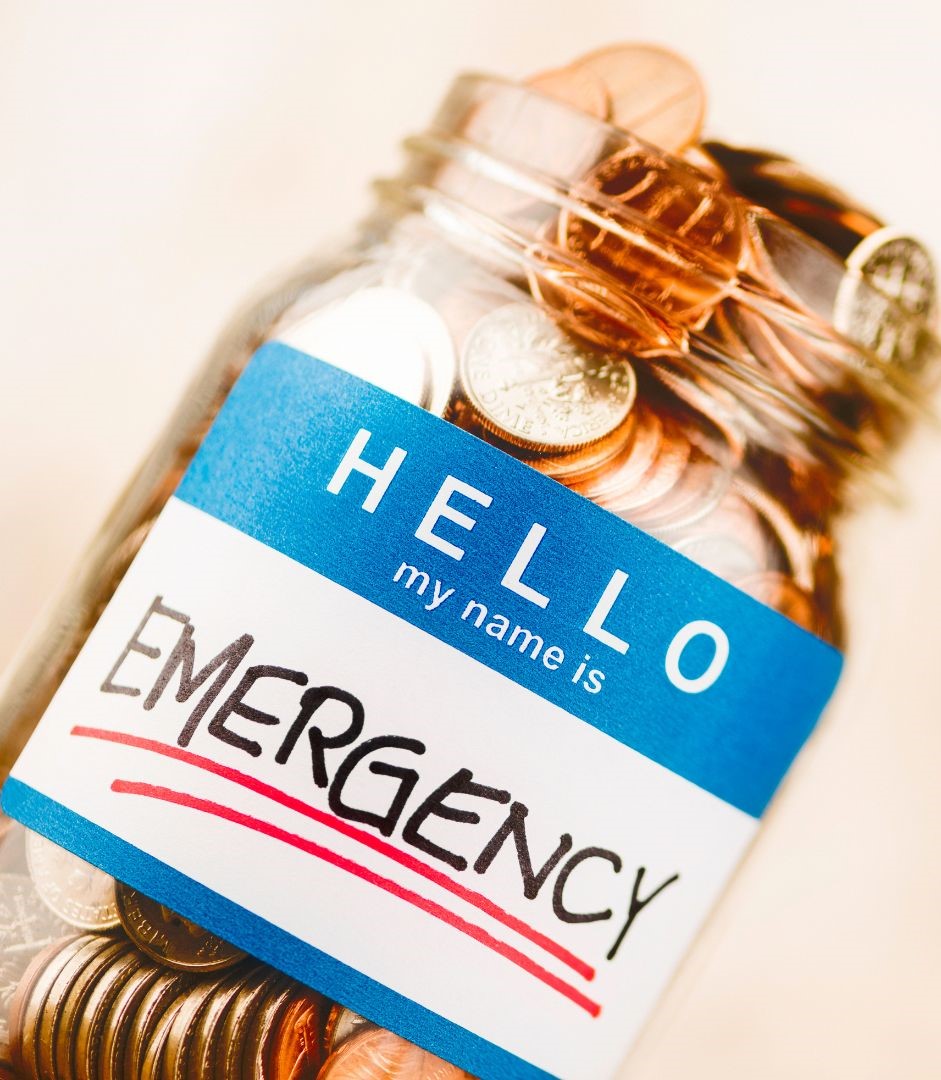
An emergency fund serves as a financial safety net and can be extremely reassuring. Aim to save enough money to cover three to six months’ worth of living expenses.

5. EDUCATE YOURSELF ABOUT FINANCES

Knowledge is power. Learn about financial management, investment opportunities, and retirement planning. This not only allows for more informed decisions, but it also reduces anxiety associated with the unknown.

6. MINDFULNESS AND STRESS-REDUCTION TECHNIQUES

Incorporate stress-relieving techniques like mindfulness, meditation, or yoga into your daily routine. These techniques can help with overall stress, including financial anxiety.

7. SEEK PROFESSIONAL ADVICE

Do not be afraid to seek advice from a financial advisor. Professional advice can help you gain clarity, explore new options, and navigate complex financial situations.

8. OPEN COMMUNICATION WITH FAMILY

Talk about your financial worries with your partner or family. Working together to resolve financial issues can strengthen relationships and distribute emotional burdens.

9. REVIEW AND ADJUST REGULARLY

Regularly review your financial situation and be willing to make changes. Your financial plan should change as your life does.

Talk about your financial worries with your partner or family.

10. CELEBRATE SMALL VICTORIES

Celebrate your financial successes, no matter how small. Whether it is paying off a credit card, reaching a savings goal, or simply sticking to your monthly budget, celebrating these accomplishments can boost your motivation and help keep you on track.

Managing financial stress is more than just crunching numbers; it is about taking proactive steps toward financial wellness and achieving balance in your life. Remember that your financial journey is unique, as is your path to a happier, more stress-free life.

The LEARNING HUB at Financial Management 101 aims to help you gain more financial knowledge, while providing you with the support and help you need. Join the Learning Hub today for only $79 per month.
Join the Learning Hub - Financial Management 101 by Karen G Adams
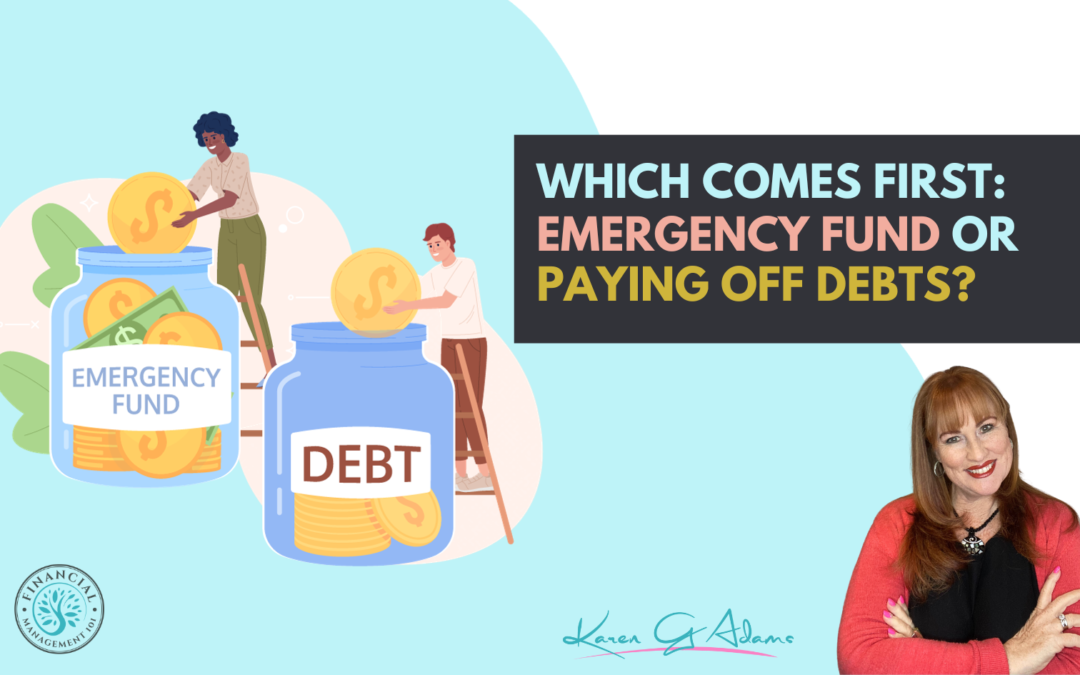
Which Comes First: Emergency Fund or Paying Off Debts?

Which Comes First: Emergency Fund or Paying Off Debts?

When money is tight, it can be hard to pay down debt and build up an emergency savings fund at the same time. But it is still possible with careful budgeting and good money management. 

Here’s a step-by-step plan on how to do this:

1. ASSESS YOUR FINANCIAL SITUATION

Start by looking carefully at your money. Write down everything you earn and everything you owe, including the balances, interest rates, and minimum monthly payments.

2. MAKE A BARE-BONES BUDGET

Make a simple budget that covers only the most important costs, such as housing, utilities, groceries, transportation, and insurance. Cut back as much as you can on spending you do not have to.

3. PAY OFF HIGH-INTEREST DEBTS

Pay off your debts with the highest interest rates first, as this will save you money in the long run. All debts should have the minimum payment made, but any extra money should be put toward the debt with the highest interest rate.

4. SET REALISTIC GOALS

Find out how much you can afford to put toward debt repayment and savings each month. Be careful and make paying off debt your first priority.

5. BUILD A SMALL EMERGENCY FUND

Even though it is important to pay down debt, having a small emergency fund can help you avoid going deeper into debt if you have to pay for something unexpected. Start with a small goal, like $500 or $1,000, and slowly raise it as time goes on.

Having a small emergency fund can help you avoid going deeper into debt if you have to pay for something unexpected.

6. USE WINDFALLS/UNEXPECTED MONEY WISELY

If you get money you did not expect, like a tax refund or a bonus, put some of it toward paying off debt and some into an emergency fund. This helps you move forward in both areas.

7. SAVE AND PAY OFF DEBTS AUTOMATICALLY

Set up automatic transfers to your emergency fund and to your debt payments whenever you can. This makes sure that you always move closer to both goals.

8. LOOK FOR WAYS TO MAKE MORE MONEY

Look for ways to make more money, like part-time work, freelance gigs, or selling things you do not use. The extra money can be used to pay off debts and save money.

Talk with your creditors about your money situation. In some cases, you may be able to negotiate lower interest rates, lower minimum payments, or a delay in payments to make it easier to handle your debt.<br />

    9. TALK WITH YOUR CREDITORS

    Talk with your creditors about your money situation. In some cases, you may be able to negotiate lower interest rates, lower minimum payments, or a delay in payments to make it easier to handle your debt.

    10. REVIEW AND ADJUST REGULARLY

    Check in on your budget and financial goals every so often. Change how you pay off debt and save money when your income and expenses change.

    11. CELEBRATE MILESTONES

    Celebrate your successes, no matter how small they are. Every dollar you save in an emergency fund or pay off of a debt is a step toward financial stability.

    Remember that building an emergency fund and paying off debt are long-term goals. It’s okay to progress slowly if your income is limited.

     The important thing is to keep working toward both goals, even if progress is slow. Your money situation will get better over time, and you will have a stronger financial base.

    At Financial Management 101 – we are committed to providing YOU with excellent financial education, training and support so that you can live the life you truly desire.  Join our LEARNING HUB today!

    Join the Learning Hub - Financial Management 101 by Karen G Adams

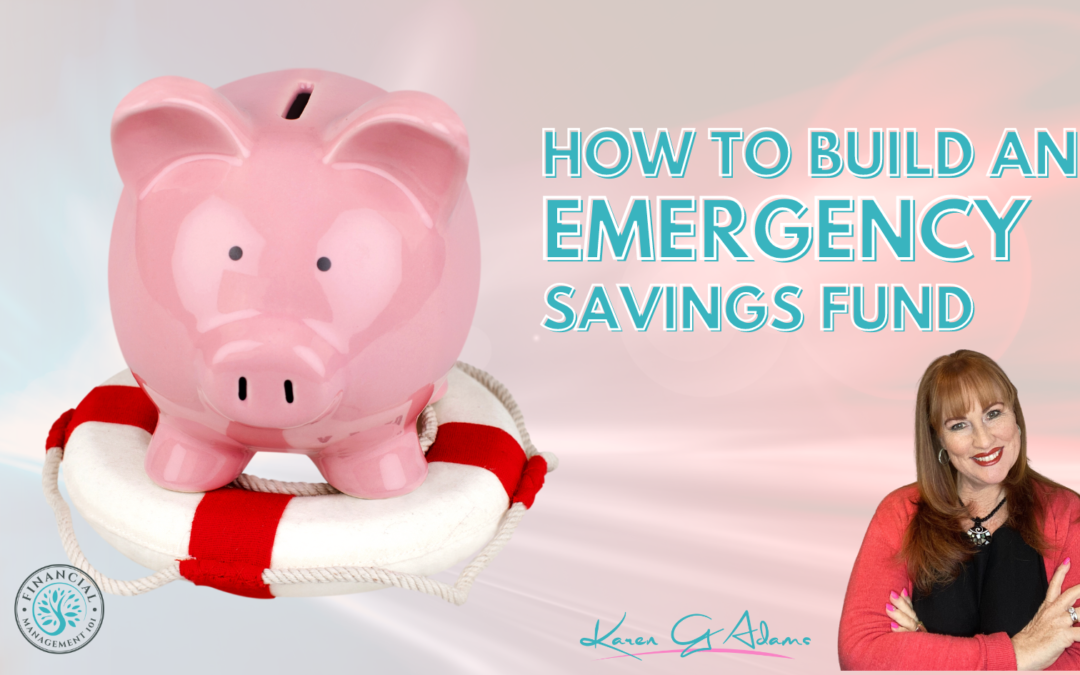
    How To Build An Emergency Savings Fund

    How To Build An Emergency Savings Fund

    Building an emergency savings fund is a crucial step in achieving financial security and peace of mind. 

    Here are some strategies to assist with building an emergency savings fund:

    1. SET CLEAR GOALS

    Determine how much you want to save in your emergency fund. It is often recommended to have at least three to six months’ worth of living expenses, but you can start with a smaller goal and work your way up.

    2. CREATE A BUDGET

    Develop a detailed monthly budget to track your income and expenses. This will help you identify areas where you can cut back and allocate more money to savings.

    3. PAY YOURSELF FIRST

    Think of the money you save for an emergency fund as a must-have expense. Set up transfers from your regular account, where your pay goes, to your savings account when you get paid. This makes sure that you always save.

    4. REDUCE UNNECESSARY COSTS

    Review how you spend your money and see if there are any expenses you can temporarily cut back on or stop. Put the money you save into your emergency fund.

    Reviewing your monthly subscriptions is a wise financial habit that can help you save money over time.

    5. INCREASE YOUR INCOME

    Look for opportunities to boost your income, such as taking on a part-time job, freelancing, or selling items you no longer need around your home. All and any extra income can then be put into your emergency fund.

    6. USE BONUSES AND UNEXPECTED MONEY/WINDFALLS

    Any unexpected windfalls, such as tax refunds, work bonuses, or cash gifts, can be a great way to jumpstart your emergency fund. Instead of spending this money, save it.

    Remember that building an emergency savings fund takes time, and it is fine to start small. The key is to develop a consistent savings habit and stick to your plan over time.<br />

    7. OPEN A SEPARATE SAVINGS ACCOUNT

    Consider opening a separate savings account specifically for your emergency fund. Look for a savings account that offers a better interest rate than a regular savings account, allowing your money to grow faster.

    8. BUILD GRADUALLY

    Do not feel like you have to hit your savings goal right away. It takes time to build up an emergency fund. Celebrate small steps along the way to stay motivated.

    9. AVOID USING THE FUND FOR NON-EMERGENCIES

    Define what you think of as an emergency and promise to only use your emergency fund for real emergencies, like medical bills, car repairs you did not plan for, or losing your job.

    10. REVIEW AND ADJUST

    Check in on your budget and savings progress. Change your savings goals and how much you put in as your finances change.

    11. CONSIDER THE WINDFALL STRATEGY

    If you get a big bonus, like an inheritance or money from a legal settlement, you might want to put some of it in your emergency fund to save money faster.

    12. SEEK PROFESSIONAL ADVICE AND HELP

    If you’re struggling to save or need some help, consider consulting a financial advisor or financial educator who can help you create a savings plan tailored to your specific situation.

    Check in on your budget and savings progress. Change your savings goals and how much you put in as your finances change.

    Remember that building an emergency savings fund takes time, and it is fine to start small. The key is to develop a consistent savings habit and stick to your plan over time. 

    Having an emergency fund can give you peace of mind and financial security when unplanned expenses come up.

    Interested to learn more?  Then head over to the LEARNING HUB and take the 5 Day Challenge or the 21 Day Kick Start program to help you get on your way. 

    Join the Learning Hub - Financial Management 101 by Karen G Adams

    What are the Top 5 Money Stresses?

    What are the Top 5 Money Stresses?

    Money stress is a common problem for many people, and it can come from a variety of sources.

    Here are five of the most common money worries that people face:

    1. DEBT

    Having a lot of debt, like from credit cards, student loans, mortgages, or personal loans, can put a lot of financial stress on you. Keeping up with monthly payments and interest on debt can be hard for many people and families.

    2. EMERGENCY EXPENSES

    Worrying about medical bills, car repairs, or home repairs that come up out of the blue can cause a lot of stress. Many people worry about how they would pay for these costs if they came up suddenly.

    3. INSUFFICIENT SAVINGS

    Not having enough savings for emergencies, retirement, or future goals can be a major source of stress. People may be concerned about their financial security and whether they will be able to meet their long-term financial goals.

    4. JOB SECURITY

    Concerns about job security and the fear of losing a job can cause financial stress. People may worry about how they will pay their bills if they lose their job or have their income go down.

    It is important to prepare for retirement.

    5. LIVING EXPENSES

    The rising cost of living, including housing, healthcare, education, and utilities, can put pressure on people’s finances. Meeting everyday expenses can be challenging, and this can lead to financial stress.

    People often have to deal with more than one of these money worries at the same time.

    Creating a budget, paying down debt, building an emergency fund, and getting financial advice when needed are common ways to deal with stress related to money.

    It is important to deal with these worries ahead of time to improve your financial health and reduce stress.

    At Financial Management 101 – we are committed to providing YOU with excellent financial education, training and support so that you can live the life you truly desire.  Join our LEARNING HUB today!

    Building Financial Muscle - This book is a must-have for anyone who wants to live without financial stress forever!

    5 Reasons Why You May Want to Get a Personal Loan

    5 Reasons Why You May Want to Get a Personal Loan

    1. CONSOLIDATING HIGH-INTEREST DEBT 

    If you have multiple high-interest debts, such as credit card balances or payday loans, you may choose to get a personal loan to consolidate them. By doing so, you can simplify your finances and potentially secure a lower interest rate, reducing your overall debt burden.

    2. FINANCING A LARGE PURCHASE

    A personal loan can provide the funds you need to make a large purchase, such as buying a car, renovating your home, or paying for a wedding. Rather than depleting your savings or relying on high-interest credit cards, a personal loan provides a structured repayment plan and a potentially lower interest rate.

    3. COVERING UNEXPECTED EXPENSES

    Life is unpredictable, and unexpected expenses can arise, such as medical bills, home repairs, or emergency travel. In such situations, a personal loan can provide immediate funds to cover these unexpected costs without disrupting your financial stability.

    Emergency Expenses can arise and a personal loan can provide immediate funds to cover these unexpected costs without disrupting your financial stability.<br />

    4. FUNDING EDUCATIONAL EXPENSES

    If you’re considering furthering your education or pursuing a degree, a personal loan can be a viable option for covering tuition fees, purchasing textbooks, or paying for other education-related expenses. Personal loans can offer more favourable terms compared to student loans, especially for non-traditional students or those attending part-time.

    5. IMPROVING CREDIT SCORE

    If you have a limited credit history or a low credit score, managing a personal loan responsibly can help you improve your credit profile. Making consistent, on-time payments demonstrates creditworthiness, which may improve your credit score over time. A higher credit score can help you get better interest rates on future loans.

    Remember that the decision to take out a personal loan should be based on careful consideration of your financial situation, repayment ability, and the terms offered by lenders. It’s important to compare loan options, understand the associated costs and fees, and ensure that borrowing fits within your overall financial plan.

    Consider your financial situation, repayment ability, and the terms offered by lenders before getting a personal loan

    At Financial Management 101 – we are committed to providing YOU with excellent financial education, training and support so that you can live the life you truly desire.  Join our LEARNING HUB today!

    Building Financial Muscle - This book is a must-have for anyone who wants to live without financial stress forever!