Debt Consolidation: A Midlife Financial Tune-Up

Debt Consolidation: A Midlife Financial Tune-Up

As we navigate our 30s, 40s, and early 50s, managing multiple debts can be like juggling with too many balls in the air. Whether it’s credit card debts, personal loans, or car payments, keeping track can be overwhelming. This is where debt consolidation comes in as a practical financial strategy, providing a much-needed tune-up for your finances.

1. UNDERSTANDING DEBT CONSOLIDATION

Debt consolidation is the process of combining multiple debts into a single loan with a lower interest rate. This simplifies payments and may save you money on interest, making debt management easier and less stressful.

2. ASSESS YOUR DEBTS

Begin by making a list of all your debts, including their balances, interest rates, and monthly payments. This exercise provides you with a clear picture of your overall debt, which is essential for effective debt consolidation.

3. FINDING THE RIGHT CONSOLIDATION LOAN

Look for a consolidation loan with a lower interest rate than the one you have now. Consider the loan term as well; a longer term may result in lower monthly payments but higher interest over time.

4. BEWARE OF HIDDEN COSTS

Keep an eye out for any fees associated with debt consolidation. Origination fees, balance transfer fees, and early repayment penalties can sometimes cancel out the benefits of a lower interest rate.

5. BUDGETING POST-CONSOLIDATION

It is critical to adjust your budget after consolidating. The goal is not only to effectively manage the new loan, but also to avoid incurring new debt.

6. BUILDING HEALTHY FINANCIAL HABITS

Debt consolidation is an excellent way to establish better financial habits. To avoid falling back into debt, commit to spending within your means and saving for emergencies.

It is critical to adjust your budget after consolidating. The goal is not only to effectively manage the new loan, but also to avoid incurring new debt.

7. CREDIT SCORE CONSIDERATIONS

Understand how debt consolidation may affect your credit score. Initially, it may cause a dip due to the hard inquiry from applying for a new loan. However, consistent payments can improve your credit score over time.

8. AVOIDING THE DEBT TRAP AGAIN

Consolidating debt should not be seen as a green light to rack up more debt. Avoid using credit cards or taking out new loans unless absolutely necessary.

9. SEEKING PROFESSIONAL ADVICE

Consult with a financial advisor to determine the best debt consolidation strategy for your unique situation and long-term financial goals.

10. CELEBRATIONG FINANCIAL MILESTONES

Track your progress and celebrate when you reach significant milestones in your debt repayment journey. This keeps you motivated and focused on your financial goals.

Debt consolidation, when done right, can be a game-changer in your financial journey. It’s not just about easing the burden of multiple debts but also about setting the stage for a more secure and stress-free financial future.

The LEARNING HUB at Financial Management 101 aims to help you gain more financial knowledge, while providing you with the support and help you need. Join the Learning Hub today for only $79 per month.


Join the Learning Hub - Financial Management 101 by Karen G Adams
Navigating Your Mortgage in Your Prime Years

Navigating Your Mortgage in Your Prime Years

If you are between the ages of 35 and 50, chances are you have a mortgage. It is an important part of your financial picture, but it does not have to be overwhelming. Navigating your mortgage during these prime years can be both empowering and financially rewarding if you take the right approach.

 UNDERSTANDING YOUR MORTGAGE

The first step in mastering your mortgage is understanding the terms of your loan – the interest rate, the type of rate (fixed or variable), the term, and any associated fees or penalties for early repayment. Knowledge is power, and understanding these basics is key.

2. CONSIDERING REFINANCING

The world of interest rates is ever-changing. If interest rates have fallen since you took out your mortgage, refinancing could save you a lot of money. But refinancing is not just about lower rates; it can also help you pay off your mortgage faster or free up cash for other investments.

3. EXTRA PAYMENTS: A LITTLE GOES A LONG WAY

Making extra mortgage payments can significantly reduce the amount of interest you pay over the life of the loan and shorten your payment term. Even small additional payments can add up over time.

4. BALANCING MORTGAGE WITH OTHER DEBTS

If you have other high-interest debts, such as credit cards or personal loans, it may be more advantageous to pay these off before making additional mortgage payments. It all comes down to prioritising your debts according to interest rates and financial impact.

5. UTILISING MORTGAGE OFFSET ACCOUNTS

Take advantage of any offset accounts that your mortgage may provide. Money in these accounts is used to offset the balance of your mortgage, lowering your interest payments while not committing to a longer repayment schedule.

Balancing Mortgage with Other Debts

6. EXPLORING MORTGAGE BREAK OPTIONS

Life can be unpredictable, and financial situations can change. Know your options for deferring mortgage payments if you ever need to, whether due to job loss, illness, or other major life events.

7. BE MORTGAGE-SAVVY WITH TAX

Learn how your mortgage affects your tax situation. There may be tax benefits associated with your mortgage for some people, particularly those who own investment properties.

8. SEEK PROFESSIONAL ADVICE

As a mortgage broker, we can be a valuable resource for you. We can provide tailored advice, assist you in understanding your options, and even assist you in obtaining a better mortgage deal.

9. PLAN FOR THE FUTURE

While you are focused on your current mortgage, do not forget to plan ahead. How will your financial situation look as you approach retirement? What role does your mortgage play in this picture?

Karen G Adams - Perth Mortgage Broker

10. CELEBRATE MILESTONES

Paying off your mortgage is a marathon, not a sprint. Celebrate the milestones, like reaching the halfway point or getting below a certain balance. It’s important to recognise and celebrate your financial achievements.

Managing your mortgage during your prime years requires a combination of strategy, knowledge, and foresight. You can transform your mortgage from a financial burden to a key component of your financial success by understanding your options and making informed decisions.

If you want to know whether your home loan is working effectively for you and your personal finances contact me at karen@harkenfinance.com for a chat.

Kickstart 2024 - Journey to a New You & New Year
New Year – New Financial Goals

New Year – New Financial Goals

Smart Money Management and Mortgage Strategies for 2024

As we welcome the year 2024, it’s the perfect time to reflect on our financial journeys and set new goals. For many, this means re-thinking our money management habits and looking at our mortgage options. Let’s dive into some key strategies that can help you achieve financial success in the New Year.

Reviewing Your Budget for 2024

The foundation of effective money management is a solid budget. This year, take a fresh look at your income and expenses. Could you allocate more funds to savings or investments? Are there any expenses you could trim or cut back on? Consider using budgeting apps or tools to track your finances more efficiently. I do have an easy spreadsheet that calculates your net position, so feel free to download this and link is at the bottom of this post.  Remember, a budget isn’t just about restricting expenses; it’s about making your money work effectively for your goals.

Invest in Financial Education

Knowledge is power, especially when it comes to finances. Dedicate time this year to educate yourself about investment options, market trends, and updated mortgage products. Whether it’s through books or joining my Learning Hub to access the online courses, coaching, and live events, enhancing your financial knowledge can lead to more informed decisions and better outcomes. 

Review and Refinance Your Mortgage

Interest rates fluctuate, as do your financial circumstances. It might be a good idea to review your current mortgage this year. Could you possibly get a better deal? Are there better mortgage products available to meet your current needs? Consulting with a mortgage broker like myself can provide insights into refinancing options that could save you money in the long run. Mortgages are not set-and-forget product.. This year, it’s crucial to review your current mortgage terms in light of the changing economic landscape.

Embrace Technology in Money Management

Technology is transforming the way we manage money. There are numerous tools at your disposal, ranging from online banking to investment apps. Explore how technology can help you simplify your financial management this year, whether it is setting up automatic savings, tracking investments, or managing mortgage payments.

Set Clear Financial Goals

What are your financial goals for this year? Maybe it is paying off a certain amount of debt, saving for a large purchase, or investing in real estate. Set clear, achievable goals and create a plan to reach them. Remember, goals are more effective when they are specific, measurable, and time-bound.  Goal setting for some is not an easy task, so getting support and having someone that can keep you on track is important.  More information and support can be found in the Learning Hub to get you started.

Join the Learning Hub - Financial Management 101 by Karen G Adams

Work with Professionals

Finally, don’t hesitate to seek professional advice. Money management and mortgage broking are both complicated fields, and working with someone like myself and a financial advisor can provide tailored advice specific to your own situation.

In conclusion, 2024 presents a new chapter in your financial journey. By reevaluating your budget, enhancing your financial knowledge, optimising your home loan, embracing technology, setting clear goals, and seeking professional advice, you can take control of your finances and make informed decisions that pave the way to financial stability and success.  Let’s make this year your best financial year yet!

Flat Chat: Why Units Could Soon Become Hot Property

Flat Chat: Why Units Could Soon Become Hot Property

Could a smaller dwelling be a solution for you, with apartments, units and townhouses widening their appeal in the property market? If you’re considering your options, reach out to discuss your situation today, there could be a rewarding solution for you!

Apartments stand out as an affordable choice when it comes to cracking the property market, not to mention downsizing. But a looming shortage may soon push unit values higher.

Apartments stand out as an affordable choice when it comes to cracking the property market, not to mention downsizing. But a looming shortage may soon push unit values higher.

For many of us, buying a house on its own block of land is the ‘great Australian dream’. While plenty of people achieve this goal, our property journey is often book-ended by apartment living.

For first home buyers, units can be an affordable choice, costing around 30% less than houses according to CoreLogic.

Then, as we head into our senior years, an apartment offers secure, low-maintenance living, often with a wealth of amenities right on the doorstep.

Apartment demand is outstripping supply

Apartments may be affordable today, but a lack of new apartment construction, coupled with rising immigration levels, points to a looming apartment shortage according to CoreLogic.  And that could push values higher.

Over the next few years, new apartment construction is forecast to be 40% lower in the 2010s, leading to a shortfall of over 100,000 homes by 2027. Close to 60% of the new home shortfall is expected to be in the apartment market.

On the demand side, CoreLogic says a stronger-than-expected level of migration into Australia has seen overall housing demand “skyrocket”. Historically, new migrants head to the high-density areas of our big cities, putting extra pressure on the unit market.

As CoreLogic explains, with interest rates potentially easing in 2024, greater demand and tight supply could fuel a “price boom” in the unit market.

Why more of us are choosing apartment living

Modern apartments are packed with the latest design and sustainability features, meaning they are no longer the poor relation of freestanding houses.

Across our major cities, apartments now account for 30% of all homes, up from 23% in 2010. And the appeal doesn’t just lie in affordability.

Today’s apartments usually come with a wealth of benefits, including:

Government Schemes: because apartments are generally cheaper than houses, they’re more often under the price caps for a range of government schemes, including the Home Guarantee Scheme, stamp duty concessions, and first home owner grants (usually for new builds). These schemes can be combined to potentially save you tens of thousands of dollars and get you into the property market years sooner.

Sought-after Locations: apartment living can be the difference between living close to work, or facing a long daily commute from the outer suburbs.

Lifestyle Advantages: the days of apartments being cramped and lacklustre are over. A variety of on-site amenities, from barbecue areas to pools, gyms and car-wash bays, make unit living convenient and relaxing.

Low maintenance Living: not interested in spending precious spare time mowing the lawns or cleaning the gutters? It turns out plenty of others aren’t either. Unlike houses, units require minimal upkeep, letting residents enjoy more quality time.

Improved Security: if you’re after a lock-and-leave lifestyle, modern apartments fit the bill. Advanced security features add up to a safe and secure living environment.

Modern apartments are packed with the latest design and sustainability features, meaning they are no longer the poor relation of freestanding houses.

Is now the time to take the leap?

Right now, apartments still present an affordable option for first-home buyers, downsizers and investors.

The median apartment price across our state capitals is currently $637,593 – but if CoreLogic is correct, that figure could soon increase as demand outstrips supply.

So if you’d like help exploring your options to purchase your first property – for example, with just a 5% deposit via the Home Guarantee Scheme – then get in touch today to discover your borrowing power.

Disclaimer: The content of this article is general in nature and is presented for informative purposes. It is not intended to constitute tax or financial advice, whether general or personal nor is it intended to imply any recommendation or opinion about a financial product. It does not take into consideration your personal situation and may not be relevant to circumstances. Before taking any action, consider your own particular circumstances and seek professional advice. This content is protected by copyright laws and various other intellectual property laws. It is not to be modified, reproduced or republished without prior written consent.

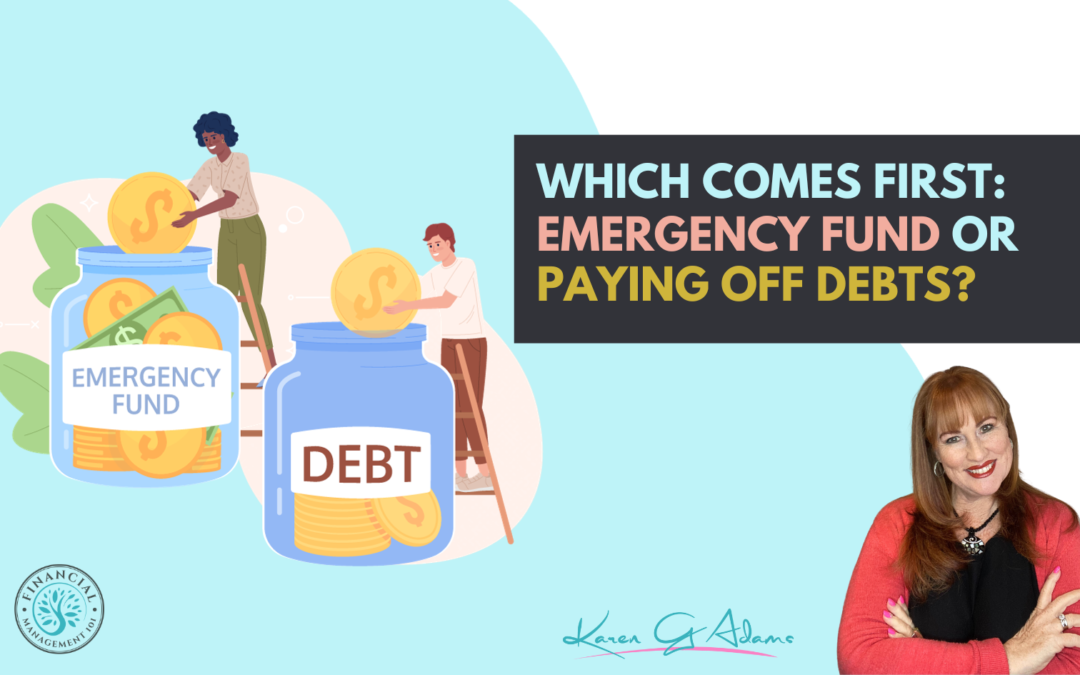
Which Comes First: Emergency Fund or Paying Off Debts?

Which Comes First: Emergency Fund or Paying Off Debts?

When money is tight, it can be hard to pay down debt and build up an emergency savings fund at the same time. But it is still possible with careful budgeting and good money management. 

Here’s a step-by-step plan on how to do this:

1. ASSESS YOUR FINANCIAL SITUATION

Start by looking carefully at your money. Write down everything you earn and everything you owe, including the balances, interest rates, and minimum monthly payments.

2. MAKE A BARE-BONES BUDGET

Make a simple budget that covers only the most important costs, such as housing, utilities, groceries, transportation, and insurance. Cut back as much as you can on spending you do not have to.

3. PAY OFF HIGH-INTEREST DEBTS

Pay off your debts with the highest interest rates first, as this will save you money in the long run. All debts should have the minimum payment made, but any extra money should be put toward the debt with the highest interest rate.

4. SET REALISTIC GOALS

Find out how much you can afford to put toward debt repayment and savings each month. Be careful and make paying off debt your first priority.

5. BUILD A SMALL EMERGENCY FUND

Even though it is important to pay down debt, having a small emergency fund can help you avoid going deeper into debt if you have to pay for something unexpected. Start with a small goal, like $500 or $1,000, and slowly raise it as time goes on.

Having a small emergency fund can help you avoid going deeper into debt if you have to pay for something unexpected.

6. USE WINDFALLS/UNEXPECTED MONEY WISELY

If you get money you did not expect, like a tax refund or a bonus, put some of it toward paying off debt and some into an emergency fund. This helps you move forward in both areas.

7. SAVE AND PAY OFF DEBTS AUTOMATICALLY

Set up automatic transfers to your emergency fund and to your debt payments whenever you can. This makes sure that you always move closer to both goals.

8. LOOK FOR WAYS TO MAKE MORE MONEY

Look for ways to make more money, like part-time work, freelance gigs, or selling things you do not use. The extra money can be used to pay off debts and save money.

Talk with your creditors about your money situation. In some cases, you may be able to negotiate lower interest rates, lower minimum payments, or a delay in payments to make it easier to handle your debt.<br />

    9. TALK WITH YOUR CREDITORS

    Talk with your creditors about your money situation. In some cases, you may be able to negotiate lower interest rates, lower minimum payments, or a delay in payments to make it easier to handle your debt.

    10. REVIEW AND ADJUST REGULARLY

    Check in on your budget and financial goals every so often. Change how you pay off debt and save money when your income and expenses change.

    11. CELEBRATE MILESTONES

    Celebrate your successes, no matter how small they are. Every dollar you save in an emergency fund or pay off of a debt is a step toward financial stability.

    Remember that building an emergency fund and paying off debt are long-term goals. It’s okay to progress slowly if your income is limited.

     The important thing is to keep working toward both goals, even if progress is slow. Your money situation will get better over time, and you will have a stronger financial base.

    At Financial Management 101 – we are committed to providing YOU with excellent financial education, training and support so that you can live the life you truly desire.  Join our LEARNING HUB today!

    Join the Learning Hub - Financial Management 101 by Karen G Adams