
The 5 Biggest Money Mistakes Small Business Owners Make (And How to Fix Them Fast)

The 5 Biggest Money Mistakes Small Business Owners Make (And How to Fix Them Fast)

Let’s face it – being a small business owner is no joke.

You’re juggling clients, projects, quoting jobs, doing the work, chasing payments, paying staff or suppliers, and – somewhere in there – trying to make sure you actually get paid.

But if it feels like you’re always hustling and still living week to week, chances are… your money systems are working against you, not for you.

And here’s the thing: it’s not about how smart you are or how hard you work. Most business owners weren’t taught how to manage their money. You were probably just thrown into the deep end, figuring it out as you go.

The good news? You can stop spinning your wheels, and it starts by avoiding the most common financial traps.

In this blog, I’ll walk you through the 5 biggest money mistakes I see every week and more importantly, show you how to fix them fast so you can take back control and finally feel financially secure in your business.

Mistake #1: Not Paying Yourself a Regular Wage

Let’s talk about one of the most common (and painful) mistakes small business owners make: they don’t pay themselves consistently.

You might be saying:

“I take money out when I need it.”

“There’s never enough to pay myself regularly.”

“I’ll pay myself properly when things settle down.”

Here’s the problem with that: you’re running your business like an ATM, not a real operation. And that mindset will keep you broke – even when you’re making good money.

? The Fix:

Set up a dedicated Owner’s Pay account, and start paying yourself a consistent wage every week or fortnight. Even if it’s only $200 to start, build the habit. When you get paid from clients, transfer a fixed percentage into your Owner’s Pay account – just like you’d pay an employee.
This does two things:

  • It forces you to treat your income seriously.
  • It allows you to plan and budget your personal life better.

The Edge coaching program teaches you how to calculate your break-even wage and build a cash flow system that actually works for your business.

Why Hard Work Alone Isn’t Paying Off

Mistake #2: Mixing Personal and Business Finances

It might seem harmless to buy a Bunnings tool on your personal card or pay the rego for the work ute from your grocery account – but over time, this creates a total mess.

It’s impossible to track how your business is performing if everything is muddled together. You won’t know what you’re spending, earning, or saving – and when tax time rolls around, you’ll be in a world of pain.

? The Fix:

Set up two separate bank accounts at the bare minimum:

  • One for business income and expenses
  • One for personal living

Better yet, I recommend creating five simple business accounts:

  1. Income – all revenue lands here
  2. Owner’s Pay – your regular wage
  3. Expenses – for bills, tools, and running costs
  4. Tax & BAS – set aside 25 – 30% per payment
  5. Profit – for business growth or rainy days

Once this is in place, your financial clarity skyrockets. You’ll know exactly where your money is going, and you’ll be less tempted to “accidentally” spend it.

Mistake #3: Ignoring the Numbers

This one’s a biggie, and I get it. Many small business owners avoid looking at their numbers because they’re overwhelmed, too busy, or just afraid of what they’ll find.
But let’s be honest – if you don’t know your numbers, you don’t know your business.
You can’t improve what you don’t measure.

? The Fix:

Start by checking these numbers weekly:

  • Revenue: What came in?
  • Expenses: What went out?
  • Net Profit: What’s left over after expenses?
  • Break-even: How much do you need to earn to cover costs and pay yourself?

Create a simple weekly “money date” even just 30 minutes every Friday, to review your finances, send invoices, follow up on payments, and track your progress.

In The Edge, we give you simple templates to track this in under 10 minutes a week (no accountant brain required).

Mistake #4: No System for Tax and BAS

You know the drill: things are going well… until BAS time hits. Suddenly the ATO wants thousands you didn’t put aside, and you’re scrambling to pay.

Sound familiar?

Many small biz owners treat BAS like a nasty surprise – but it’s completely avoidable if you plan for it. Any case remember it’s not your money in the first place.

? The Fix:

Every time you get paid, immediately transfer 25 – 30% into your Tax Account for taxes and BAS. Pretend it’s not yours. Because technically – it’s not. That’s the ATO’s cut.

If you’re registered for GST, track your income and expenses monthly and lodge on time. Using software like Xero, QuickBooks, or even a simple spreadsheet will make this 10x easier.

Imagine having a tax bill and already having the money sitting there ready. That’s the kind of peace The Edge helps you create.

Mistake #5: Undercharging for Your Work

This one hurts because you’re working hard, showing up, and doing great work… but the money just isn’t adding up.

Often, it’s because you’re undercharging. Maybe you’re pricing based on what others charge, or you’re too scared to raise your rates in case you lose clients.

But here’s the thing: if your pricing doesn’t cover your expenses, time off tools, admin time, and leave a profit – you’re not running a business. You’re running a charity.

? The Fix:

  • Add up everything it costs to run your business monthly (including paying yourself)
  • Work out how many hours you realistically work and how many jobs you can do
  • Divide your monthly costs by the number of billable hours or jobs – that’s your true minimum rate
  • Add a profit margin

Also, factor in time spent quoting, driving, admin, and materials. You’re not just being paid for the hour on site, you’re being paid for all the time and expertise it takes to do the job well.

In The Edge, we give you a simple pricing tool to calculate your true rate with confidence – so you never wonder, “Am I charging enough?” again.

Bonus Tip: You Don’t Have to Figure This Out Alone

Here’s the thing most people won’t tell you: money stress isn’t about how much you make. It’s about how you manage what you’ve got.

And most small business owners were never taught how to do this. You’ve just been doing the best you can with what you know.

But what if there was a better way?

What if, in just 6 weeks, you could:

✅ Pay yourself regularly
✅ Get your tax sorted and stop panicking at BAS time
✅ Know your numbers and feel in control
✅ Charge with confidence
✅ Build a buffer so you’re never caught off guard
✅ Actually enjoy running your business again?

Introducing: The Edge – Your 6-Week Business Financial Reset

The Edge is a coaching program for tradies, franchisees and small business owners who are sick of just “getting by” and ready to build a business that actually pays them.

Inside The Edge, you’ll get:

? Weekly coaching calls
? Easy-to-use templates and systems
? Real-life strategies that work for time-poor business owners
? Support and accountability from someone who gets it
? A full money makeover – without the financial jargon

It’s not about being perfect – it’s about taking action, building structure, and finally feeling confident with your money.

Final Thoughts: You Can Fix This. Fast.

The biggest money mistakes small business owners make aren’t about numbers, they’re about habits.
If you’re not paying yourself, mixing finances, ignoring your numbers, or winging it at tax time… it’s costing you more than you know. Not just money, but peace of mind, time with your family, and the freedom you started your business for.

You don’t have to keep doing it the hard way.

Let’s fix it – fast, together, and for good.

? Ready to stop surviving and start thriving?

Join The Edge 6-Week Coaching Program Now and get the tools, systems, and support you need to take control of your business money – once and for all.

THE EDGE - 6-WEEK PROGRAM
How to Stop the Feast and Famine Cycle and Finally Take Control of Your Business Money

How to Stop the Feast and Famine Cycle and Finally Take Control of Your Business Money

Let’s get real for a moment.

Running a small business is a wild ride. One month you’re rolling in sales and feeling unstoppable. The next, you’re counting coins, putting off paying that supplier, and wondering if you’ll need to dip into your personal savings again (that’s if you have any left).

Sound familiar?

If you’re living in the stressful loop of feast and famine, you’re not alone – and it’s not your fault. Most business owners start their business because they’re great at what they do, not because they’re experts in money management.

But here’s the good news: you can absolutely break the cycle and build a business that pays you consistently, without losing your mind in the process.

Let’s dive into what causes this rollercoaster and, more importantly, how to hop off it for good.

What is the Feast and Famine Cycle, Anyway?

It’s the classic small business trap. When you’re in “feast” mode, you’re busy delivering services, taking on all the clients, and hustling hard. You’re making money, and it feels great.

But because you’re so busy working in the business, you’re not working on it. Marketing falls off. You don’t follow up on leads. You’re not planning ahead.

Then, suddenly – bam! – the work dries up. The cash stops flowing, and panic sets in. So, you hustle hard again to find more clients. And the cycle repeats.

It’s exhausting, stressful, and totally unsustainable.


Feast and Famine Cycle

Why It Happens (And Why It’s Not Your Fault)

Here’s what no one tells you when you start your own business: Cash flow is everything.

But too many small business owners don’t have a plan for their money. They treat their business account like a personal piggy bank, or they’re too busy wearing 15 hats to track expenses properly.

Without systems, buffers, and strategy, you’re flying blind. And that’s a dangerous way to run a business – no matter how good you are at what you do.

How to Break the Cycle: 7 Steps to Consistent, Confident Business Finances

It’s time to turn your financial chaos into clarity. Here’s how you do it – step by step.

1. GET CLEAR ON YOUR NUMBERS

Let’s start with a little tough love: if you don’t know your numbers, you don’t know your business.

That means knowing:

  • How much it really costs to run your business monthly
  • Your average monthly revenue
  • Your break-even point
  • How much you need to earn to pay yourself properly

This doesn’t have to be complicated. Use a simple spreadsheet or accounting tool (like Xero, QuickBooks, or even a Google Sheet) to track everything that comes in and goes out.

Knowledge is power, and in business, it’s the difference between survival and success.

2. SEPARATE YOUR PERSONAL AND BUSINESS FINANCES

If you’re still using one bank account for everything, we need to talk.

Mixing personal and business money is a recipe for confusion, stress, and tax-time nightmares.

Set up a separate business account, and commit to paying yourself a “business wage” regularly, even if it starts small. This not only helps you manage your cash flow better, it makes you feel more like the CEO you are.

3. CREATE A MONEY FLOW SYSTEM THAT WORKS FOR YOU

Ever heard of Profit First? It’s a simple but powerful cash management system where you allocate money into separate “buckets” every time income comes in.

Here’s a basic version you can try:

  • Income Account – where all your revenue lands
  • Profit Account – set aside 5-10% for long-term savings or growth
  • Owner’s Pay Account – your regular wage
  • Tax Account – avoid nasty surprises at BAS time
  • Expenses Account – to cover day-to-day costs

The goal is to become intentional with every dollar. This way, you’re not wondering where all the money went at the end of the month. 

4. PLAN FOR THE LOWS – WHILE YOU’RE IN THE HIGHS

In “feast” mode, it’s easy to feel like the good times will last forever.

They won’t. And that’s okay, if you’re prepared.

Start building a business buffer fund – at least one month’s worth of operating expenses. When things slow down, you’ve got breathing room and don’t have to make decisions from a place of fear.

Pro tip: Automate transfers to your buffer fund after every client payment. Out of sight, out of spend.

5. SET REGULAR MONEY DATES (WITH YOURSELF OR WITH YOUR BOOKKEEPER)

You wouldn’t ignore a partner for months and expect the relationship to thrive, right? Same goes for your business finances.

Block out 30–60 minutes every week to:

  • Check your cash flow
  • Send invoices
  • Pay bills
  • Review your numbers
  • Track your goals

Make it fun – grab a coffee and put on your favourite playlist. The more you connect with your money, the more empowered you’ll feel.

6. DITCH THE HUSTLE CULTURE AND CREATE RECURRING REVENUE

Feast and famine often come from project-based or one-off work. If every sale requires a new client or fresh hustle, your income will always be up and down.

What can you do to create consistent income?

  • Offer monthly retainers or packages
  • Launch a membership or group program
  • Create digital products (courses, ebooks, templates)
  • Automate a funnel that sells for you in the background

Even just one recurring income stream can bring serious stability.

7. GET HELP SOONER, NOT LATER

You don’t have to do this alone.

If you’re constantly stuck in financial stress, it’s time to call in some support. A good financial coach (?‍♀️ like me!) can help you set up systems, build a plan, and create a business that pays you – without the burnout.

Sometimes the biggest breakthrough is admitting you need help and taking that first step toward real change.

Bonus Tips for Aussie Small Biz Owners

Since I’m based in Australia and many of my clients are too, here are a few extra pointers:

  • Stay on top of BAS and GST obligations – set aside a percentage of income as soon as you get paid.
  • Consider using accounting software like Xero to automate your BAS and income tracking.
  •  Use the ATO’s small business cash flow projection tool to forecast your months ahead.
  •  Look into government grants or support – there may be funding or mentoring programs available. 

Final Thoughts: You Deserve Consistent Cash, Not Constant Stress

Here’s the truth: You didn’t start your business to feel financially anxious all the time. You started it for freedom, flexibility, and fulfillment.

The feast and famine cycle might feel normal – but it’s not healthy, and it’s not inevitable.

With the right systems, support, and mindset, you can step into a whole new way of doing business. One where you feel in control, empowered, and finally able to enjoy the fruits of your hard work.

Ready to Ditch Feast and Famine for Good?

If this blog lit a fire in you, and you’re ready to say goodbye to cash flow stress, I’ve got your back.

Book a call so we can talk about how I can help you build your financial muscle, take control of your cash flow, and finally get paid like the boss you are.

? Let’s stop just surviving—and start thriving. 

The Vault
The Big Picture: Why Net Position Matters More Than Budgeting

The Big Picture: Why Net Position Matters More Than Budgeting

When people think about managing their finances, budgeting is often the first thing that comes to mind. While budgeting is an essential tool, it’s only one piece of the puzzle. To truly take control of your financial life, you need to understand your net position. This bigger-picture view is the cornerstone of long-term financial success. In this blog, we’ll dive into what net position is, why it matters, and how it can transform your approach to money management.

What is Net Position?

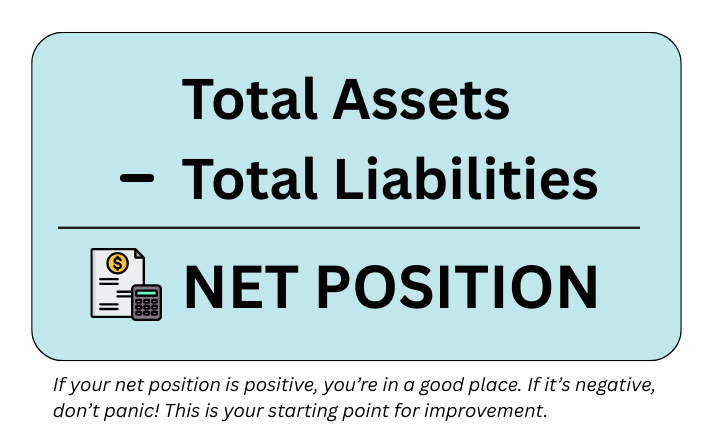
Your net position is the difference between what you own (your assets) and what you owe (your liabilities). It’s essentially your financial scorecard, giving you a snapshot of your overall financial health. Here’s a simple formula:

Net Position

Assets include things like your home, car, savings, and investments. Liabilities include mortgages, credit card debt, personal loans, and other financial obligations. Knowing your net position helps you understand whether you’re building wealth or accumulating debt.

Why Net Position Matters More Than Budgeting

Budgeting is about managing your monthly cash flow, how much money comes in and goes out. While this is important, it doesn’t give you a complete picture of your financial health. Here’s why focusing on your net position is a game-changer:

1. PROVIDES A HOLISTIC VIEW

      • Budgeting focuses on short-term goals, like paying bills or saving for a vacation. Net position shows your long-term financial standing, including the value of your assets and the weight of your debts.

2. HELPS SET REALISTIC GOALS

      • Understanding your net position allows you to set achievable financial goals, whether it’s buying a home, retiring early, or becoming debt-free.

3. REVEALS FINANCIAL TRENDS

      • Tracking your net position over time helps you see whether your financial health is improving or deteriorating.

4. GUIDES BETTER DECISION-MAKING

      • Knowing your net position helps you make informed decisions about spending, saving, and investing.

Common Misconceptions About Net Position

Budgeting is about managing your monthly cash flow, how much money comes in and goes out. While this is important, it doesn’t give you a complete picture of your financial health. Here’s why focusing on your net position is a game-changer:

1. “Only Wealthy People Need to Track Their Net Position”

      • False! Everyone, regardless of income level, can benefit from understanding their net position. It’s about knowing where you stand and where you’re headed.

2. “Budgeting Alone is Enough”

      • While budgeting is crucial for managing day-to-day expenses, it doesn’t address your overall financial health.

3. “It’s Too Complicated”

      • Tracking your net position can be as simple as listing your assets and liabilities in a spreadsheet or using a financial app.

Steps to Improve Your Net Position

1. ELIMINATE HIGH-INTEREST DEBT

      • Focus on paying off credit cards and personal loans first. These often carry the highest interest rates and can significantly impact your financial health.

2. INCREASE YOUR SAVINGS

      • Build an emergency fund with at least three to six months’ worth of living expenses. This provides a financial safety net and reduces the need for high-interest debt during emergencies.

3. INVEST WISELY

      • Grow your assets by investing in a diversified portfolio. Consider long-term investments like retirement accounts or real estate.

4. REDUCE LIABILITIES

      • Pay down loans and avoid taking on new debt unless it’s for a strategic purpose, like buying a home.

5. TRACK YOUR PROGRESS

      • Revisit your net position quarterly or annually to measure your progress and adjust your financial plan as needed.

How Our “Know Your Numbers” Course Can Help

Our “Know Your Numbers” course is designed to take the guesswork out of understanding your net position. Here’s what you’ll learn:

1. HOW TO CALCULATE YOUR NET POSITION 

      • Step-by-step guidance on listing your assets and liabilities.

2. TOOLS AND TEMPLATES

      • Access user-friendly calculators and spreadsheets to track your progress.

3. STRATEGIES FOR IMPROVEMENT

      • Learn actionable steps to grow your assets, reduce your liabilities, and increase your net worth.

4. REAL-LIFE EXAMPLES 

      • See how others have transformed their financial health by focusing on their net position.

Success Stories

1. JOAN’S TRANSFORMATION

Joan discovered her net position was negative due to high credit card debt. Using strategies from the course, she paid off her debt in two years and now has a positive net worth of $20,000.

2. PETER’S JOURNEY

Peter thought he was doing well because he had a high income. After calculating his net position, he realised his debt outweighed his assets. He’s since restructured his finances and is on track to achieve financial independence.

Know Your Numbers

Conclusion

Understanding your net position is the key to unlocking financial freedom. It’s not just about how much you earn or spend; it’s about the bigger picture of what you own versus what you owe. By focusing on your net position, you can make smarter financial decisions, set realistic goals, and build a secure future. Ready to take control? Join our “Know Your Numbers” course today and start your journey toward financial clarity and success.

The Vault